
Dive St Helena
★ 5/5 (4 reviews)
Saint Helena · St. Helena · Atlantic
Max. depth · 35 mDescend to 35 metres to explore the scattered remains of a 17th-century Dutch cargo ship, a silent witness to a 1613 battle off Saint Helena.
Diving the White Lion offers a direct connection to Saint Helena's maritime past, a canvas on the seafloor where a 17th-century battle played out. As you descend into James Bay, the light shifts, gradually revealing the scattered remains of a Dutch cargo ship that succumbed to Portuguese forces in 1613. This site encourages a careful approach, allowing you to appreciate the historical significance of each piece while adapting to the unique underwater landscape of the wreck.
The White Lion, or Witte Leeuw, is the oldest diveable wreck around Saint Helena, an East Indiaman cargo ship sunk while carrying spices, Ming porcelain, and diamonds. Rediscovered in the 1970s, the site has yielded artifacts like pepper, porcelain, and cannons, though the diamonds remain elusive. Jacques Cousteau himself explored these remains during his visits to the island, adding to its historical allure.
The primary features of the White Lion are its robust cannons, which lie among sections of timber, remnants of the ship's hull, and concentrated piles of ballast stones. These stones once stabilised the vessel and now clearly mark the ship's original footprint on the seabed. Exploring these features requires a keen eye and a sense of history, as you navigate around the artifacts that have become an integral part of the seabed ecosystem.
The wreck lies largely broken down on a sandy bottom, with structural elements scattered rather than forming an intact superstructure. You will find ribs of the hull, an anchor, and various other pieces of the ship's framework. This dispersed nature means the dive is less about penetrating a hull and more about tracing the outline of a historical event across the seafloor, observing how the ocean has reclaimed the vessel over centuries.
While the specific marine life directly associated with the White Lion wreck is still being documented, the ambient conditions and historical structure provide shelter and substrate. As you explore the scattered timbers and ballast, you may encounter resident macro life, moray eels (Muraenidae), lobsters (Nephropidae), and octopuses (Octopoda) that often seek refuge within such structures. These creatures have made the wreck their home, adding a living dimension to the historical remains.
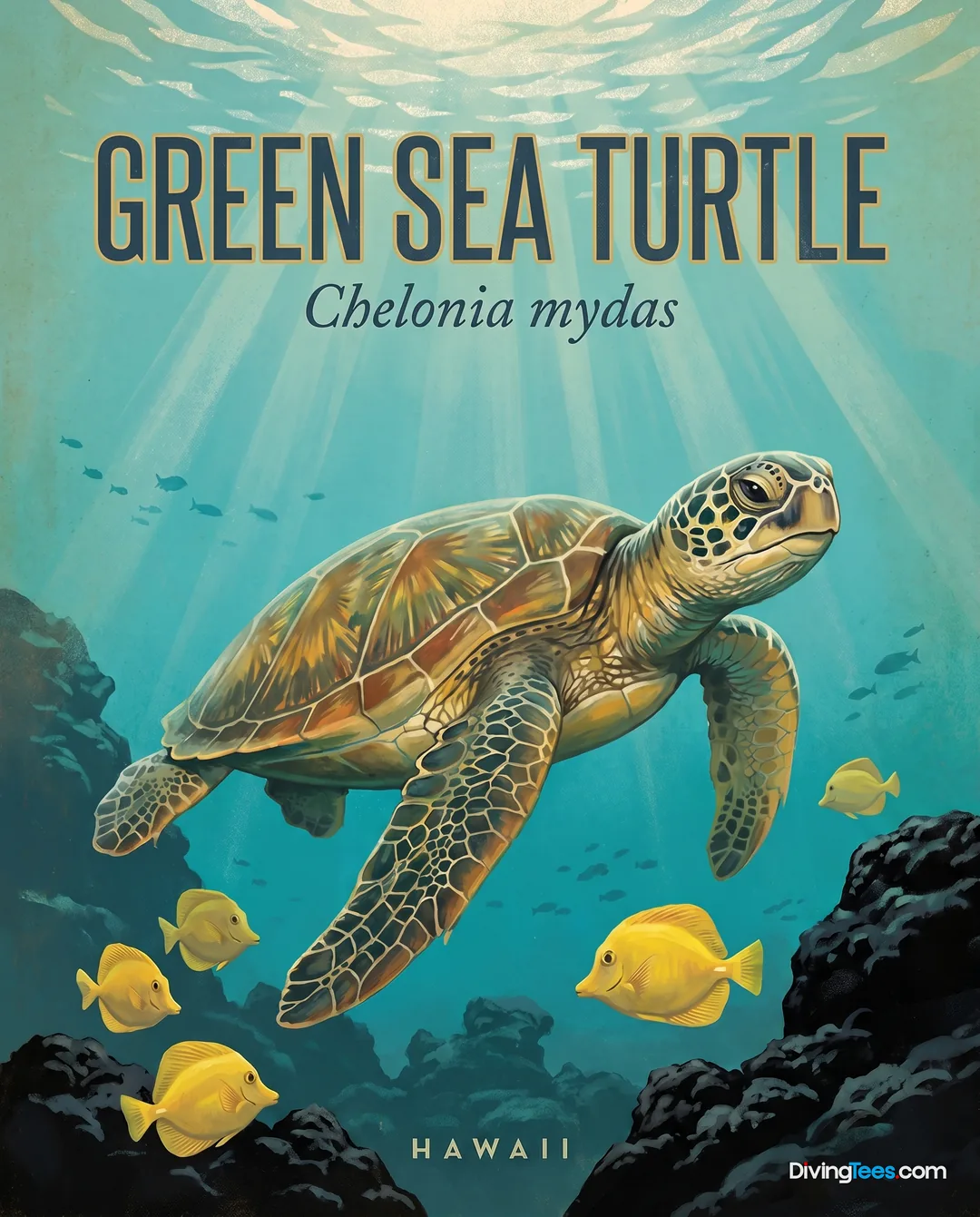
Beyond the wreck itself, the surrounding waters can bring encounters with larger pelagic species. Butterflyfish are commonly seen around the site, adding colour to the historical backdrop. Green turtles (Chelonia mydas) are also known to frequent the area, often gliding gracefully over the wreck site, providing a contrast between the ancient human endeavour and the enduring natural world.
The dive profile typically involves a boat descent in James Bay, a sheltered location on the leeward side of Saint Helena. This allows for a controlled approach to the wreck, which rests at a maximum depth of 35 metres. The visibility at the site generally ranges from 15 to 25 metres, offering clear views of the scattered artifacts and the surrounding marine environment, though conditions can vary.
The White Lion wreck is accessible to Advanced Open Water divers or equivalent, with a requirement for comfort at depths between 30 and 35 metres and experience in guided wreck diving. All dives on Saint Helena wrecks must be conducted with a local guide. Current at the site is variable; local descriptions indicate it can range from small to moderate, but stronger currents are possible depending on swell and tides. Visibility typically ranges from 15 to 25 metres.