
The Dive Factory Tokyo
★ 4.9/5 (251 reviews)
4.9 km away as the crow flies
Japan · Asia
Futo Hole drops to 30 metres above sandy macro bottoms, while ferry-linked islands and coastal sites bring seasonal pelagics and schooling fish beyond Tokyo’s city centre.
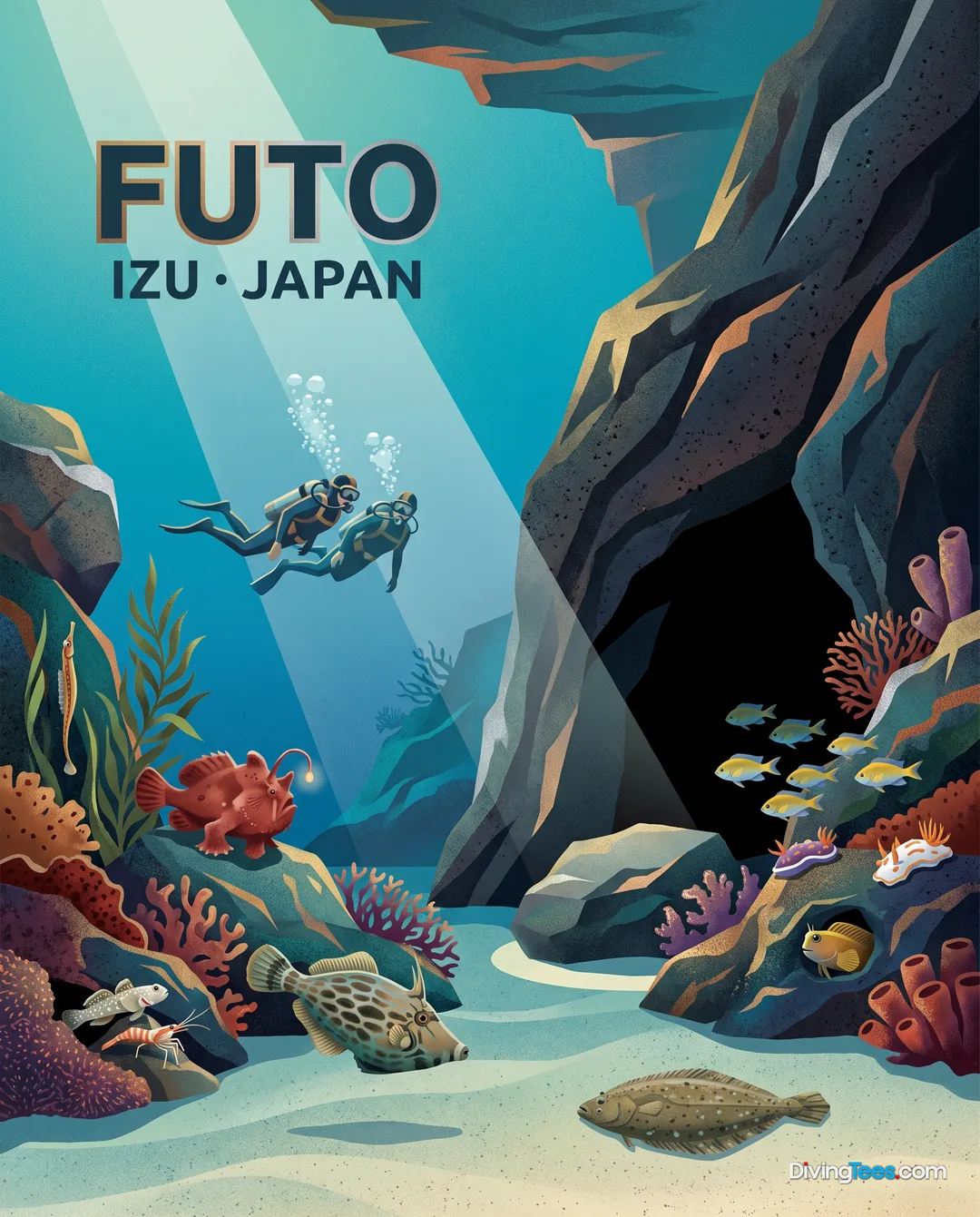
Futo Hole, descending to 28–30 metres, gives Tokyo-area diving one of its most recognisable underwater features. Beyond that cavern, sandy bottoms provide a reason to slow down and search for macro life. The wider region links Tokyo with the Izu Peninsula and offshore islands, so the diving is temperate, seasonal and spread across coastal and ferry-access locations rather than concentrated in the city. It suits divers who want to combine Japanese city time with planned boat and island outings.
The diving changes with the setting. Futo combines a defined cavern with broad sandy areas, so a dive can shift from looking into an overhead environment to close observation of small life on the bottom. The Futo Hole reaches 28–30 metres, making depth and comfort overhead relevant even though the site is generally approachable across certification levels. Elsewhere, the region mixes peninsula boat dives, ferry-linked island diving and more sheltered local sites. Currents are variable rather than a constant feature, and visibility is not uniform across the wider Tokyo area. At Futo, typical visibility is given as 8–15 metres in July and up to 15 metres in June. The practical implication is to expect temperate-water diving with changing conditions, not a single predictable reef pattern or a purely shore-based city break.
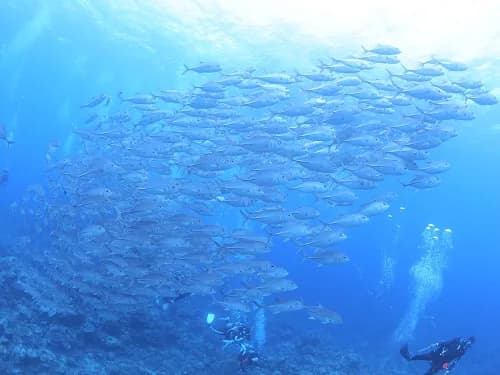
The attraction is less about a fixed list of named tropical species than about changing temperate-water encounters. Futo’s sandy bottoms reward a slow macro search, with small marine life providing the detail between the larger features of the dive. Schooling fish are part of the wider Tokyo-region character, while seasonal pelagics add a different scale when conditions and timing bring them within reach. Because the area includes the Izu Peninsula, offshore islands and bay sites, the underwater character shifts from one zone to another. Divers should therefore leave room for both close inspection of the bottom and open-water fish encounters, rather than planning the trip around one guaranteed animal or one uniform seasonal pattern.
The measured diving window is from May to October, when the Tokyo-area itinerary is most sensibly built around several days in the water. June and July are particularly useful reference months for Futo visibility, with readings reaching 15 metres, although the wider region does not share one fixed visibility pattern. November to February brings the lowest rainfall, which can help a city-and-coast itinerary, but island diving remains more exposed to transport and weather disruption than ordinary sightseeing. May to October is therefore the practical choice for a diving-led visit, while winter is better treated as a flexible city trip with diving added where conditions allow.
The region is suitable for all levels when dives remain within a diver’s normal experience, but Futo Hole deserves more care than its general accessibility suggests. Anyone entering the cavern should be comfortable in an overhead environment, and the 28–30-metre depth makes sound gas planning and buoyancy particularly important. Advanced certification is useful, alongside PADI, SSI or BSAC training, for divers planning deeper or more committing profiles. Those who prefer open water can still focus on the sandy-bottom macro aspect without treating the cavern as obligatory.
From London or Manchester, Tokyo is the air gateway, but it is not the end of the journey. Allow roughly 15–20 hours of flying before the onward domestic transfer, with the exact arrangement depending on whether the itinerary uses the Izu Peninsula or an offshore island. Peninsula diving means continuing by road to a port; island diving requires a ferry or a domestic flight, and the ferry crossing is a structural part of the plan rather than an optional extra. Once in Tokyo, the first leg to a dive centre or port is normally by train, taxi or local shuttle. Keeping city accommodation, road transfers and boat departures as separate stages makes missed connections less likely.
Treat Tokyo as a transport hub with diving attached, not as a city where the boat leaves from the end of the nearest hotel street. Fix the inland city nights first, then build the coastal or island diving around the available road and ferry connections. Keep a buffer day: a disrupted crossing can remove an entire diving day, and a tightly packed return to Tokyo leaves little room to recover. A mixed itinerary makes more sense than committing to one style, because the region moves between Futo’s cavern and sandy macro terrain, peninsula boat dives and ferry-linked islands. Do not assume that visibility, currents or site character will be the same across the whole area. Divers entering Futo Hole should be realistic about the overhead environment and its 28–30-metre depth. Pack and plan for temperate-water diving, rather than arriving with tropical reef expectations.
Seven to ten days gives the itinerary breathing room for Tokyo, several diving days and the possibility of transport disruption. A sensible arrangement places the urban stay alongside a separate Izu Peninsula or island section, rather than trying to commute from the city for every dive. Day boats and ferry-linked outings suit the area better than a liveaboard. Non-divers are well served by Tokyo’s museums, markets and districts while diving days take place beyond the urban centre.
Hello, I'm Marina, DivingDeal.com's AI assistant. I guide you through destinations, areas and countries.

Thinking about the whole trip and the flights? Talk it over with Edith →
Marina is an AI. Some links are affiliate links: DivingDeal may earn a commission, at no extra cost to you. Bookings are made with the partner.
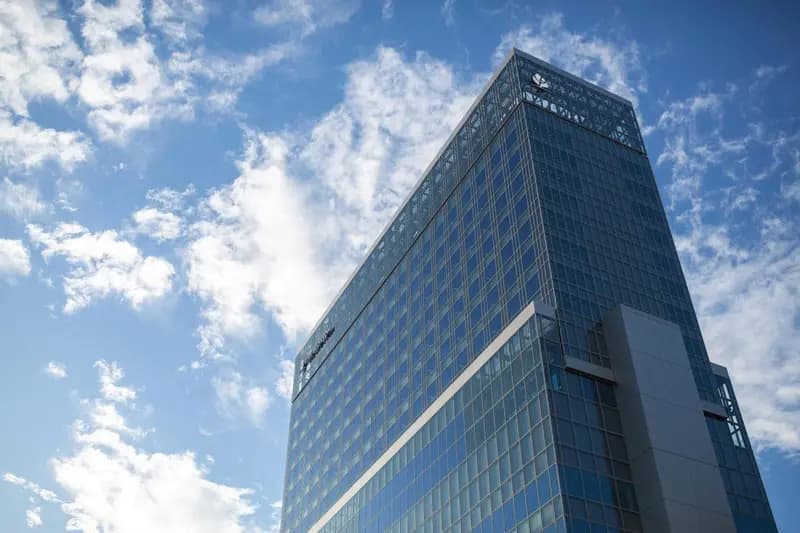
★★★★
★ 9/10 (7,364 reviews)
4.9 km away as the crow flies
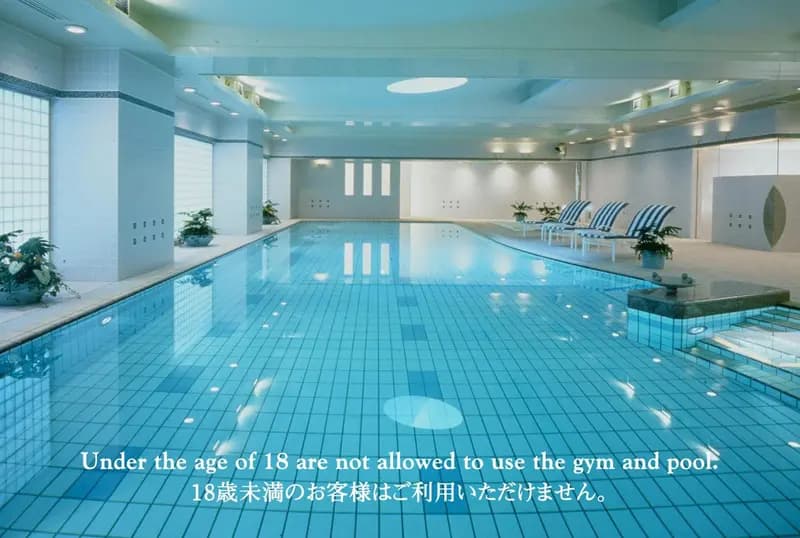
★★★★
★ 9/10 (2,809 reviews)
5 km away as the crow flies

★★★
★ 8.9/10 (2,580 reviews)
8.5 km away as the crow flies
★★★★
★ 9.4/10 (159 reviews)
6.8 km away as the crow flies
Your last day stays dry: no diving in the 18-24 hours before a flight the perfect window to see the destination from another angle.
 Culture
⏱ 4 h · ★ 5.0 (266 reviews)
from €114
see on Viator ↗
 Culture
⏱ 3 h · ★ 5.0 (156 reviews)
from €269
see on Viator ↗
 Nature
⏱ 8 h · ★ 5.0 (69 reviews)
from €310
see on Viator ↗
 City
City⏱ 1 h · ★ 5.0 (64 reviews)
from €52
see on Viator ↗
Ratings and reviews collected by Viator and Tripadvisor.