
Diving Shop Lei
Google 5/5 (3,134 reviews)
Japan · Asia
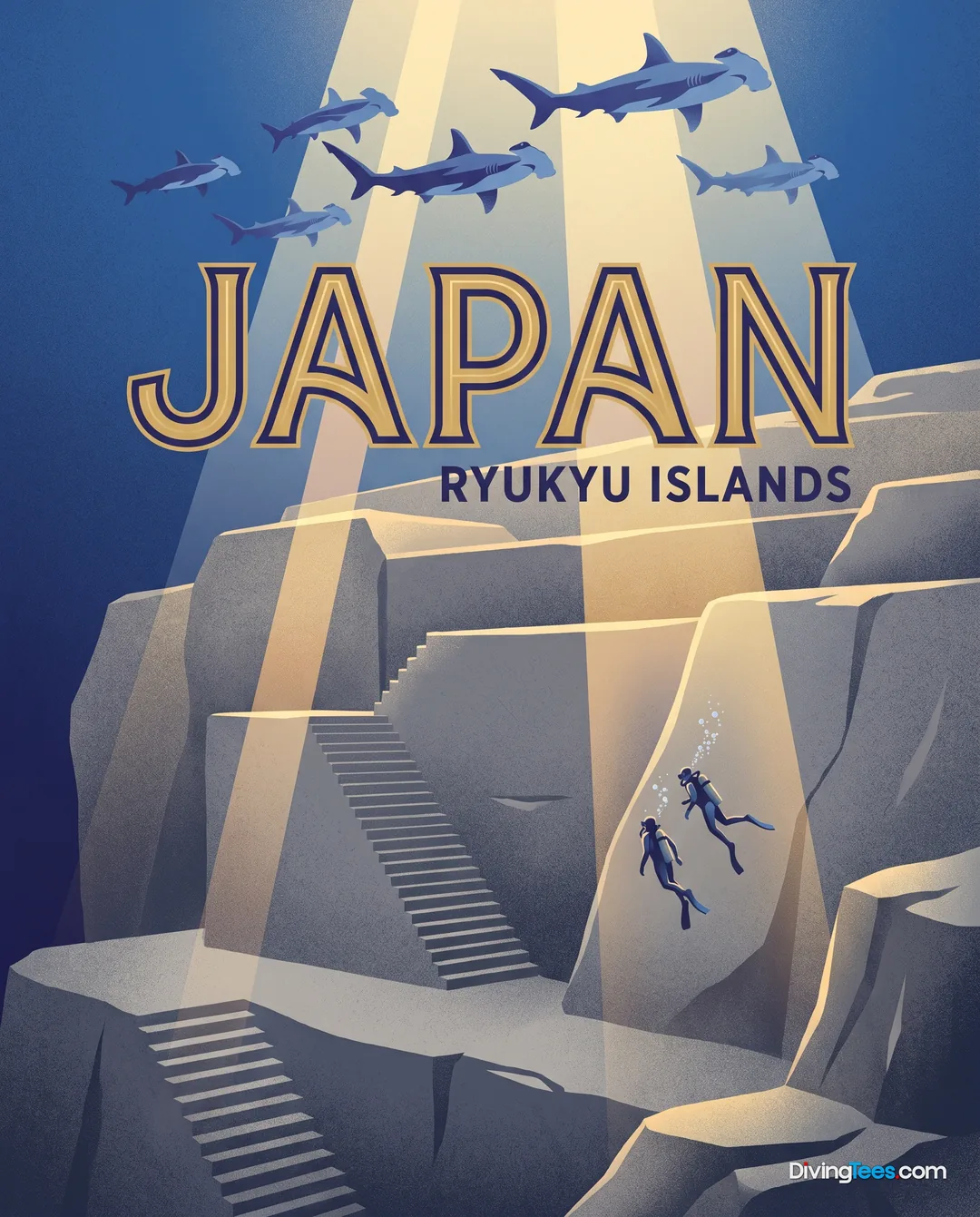
Okinawa brings shallow coral gardens, Kerama drift dives, sea turtles and the deep wartime wreck of USS Emmons across a scattered Japanese archipelago.
For subtitles in English: start the video firstthen click the gearat the top right of the video, select “Subtitles/CC”, then “Auto-translate” and choose “English”.
Okinawa is not one compact dive centre but a chain of very different bases. From Naha, boats reach the Kerama Islands; elsewhere, Miyako and Yaeyama open up their own reefs, walls, caves and specialist sites. Yonehara offers a gentle introduction over shallow coral, while USS Emmons is a serious deep wreck for experienced divers. The reward is variety, but the price is planning: the island chosen largely determines the diving available.
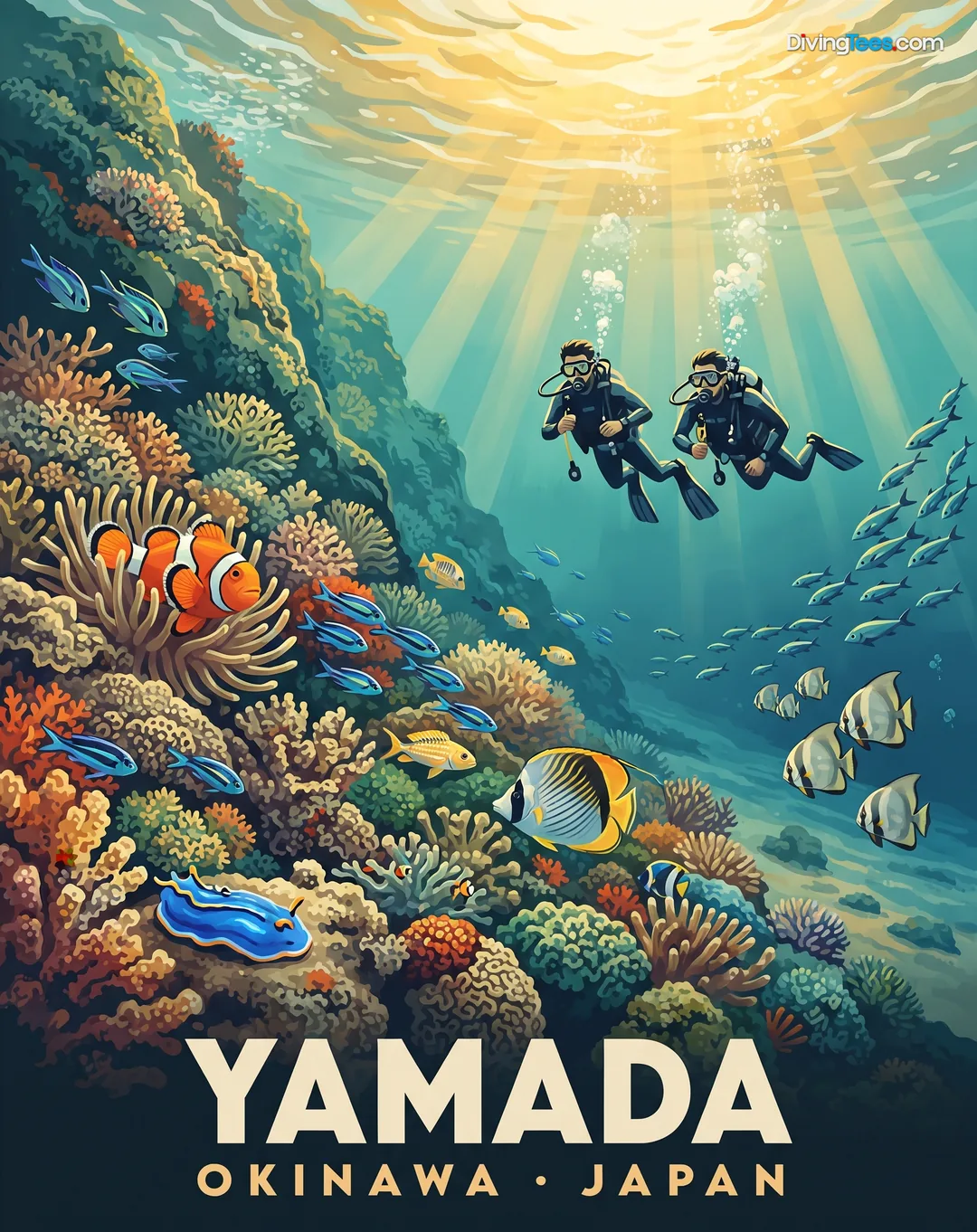
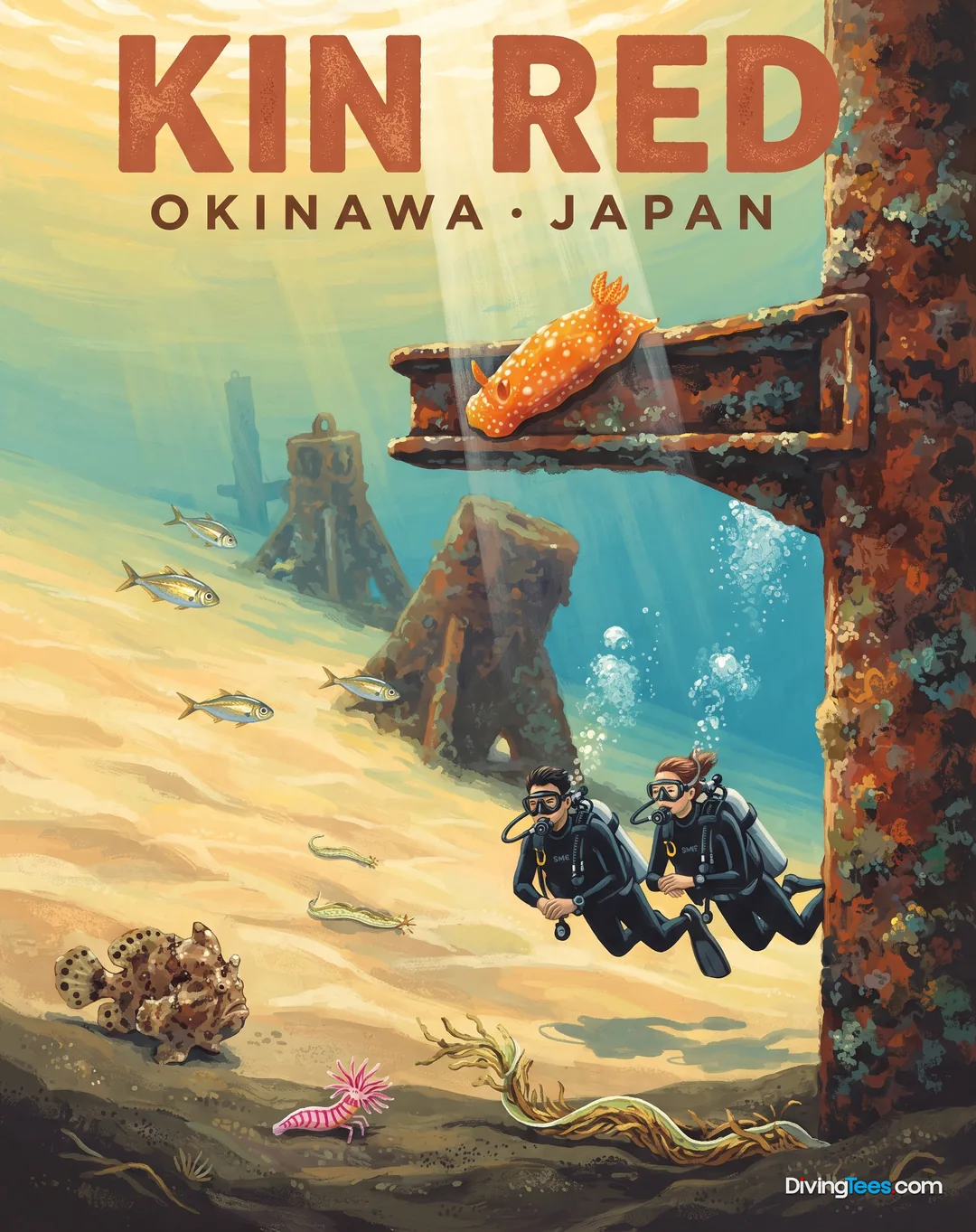
Most diving is by boat, with coral reefs forming the everyday background and drift diving adding movement where currents run. The Kerama Islands combine reef slopes, tropical fish, nudibranchs, sea turtles and occasional manta rays, while Yonehara begins in water as shallow as one metre before falling away along an offshore slope. Conditions on the outer reef can change with the sea state. USS Emmons is a different proposition: the wartime destroyer rests at about 43 metres, with strong currents and sometimes reduced visibility making the wreck demanding rather than a casual sightseeing dive. Okinawa also offers caves and other deeper sites, so the character of a week depends on the island and the weather. Expect boat logistics, early departures and a flexible plan rather than a shore-diving routine.
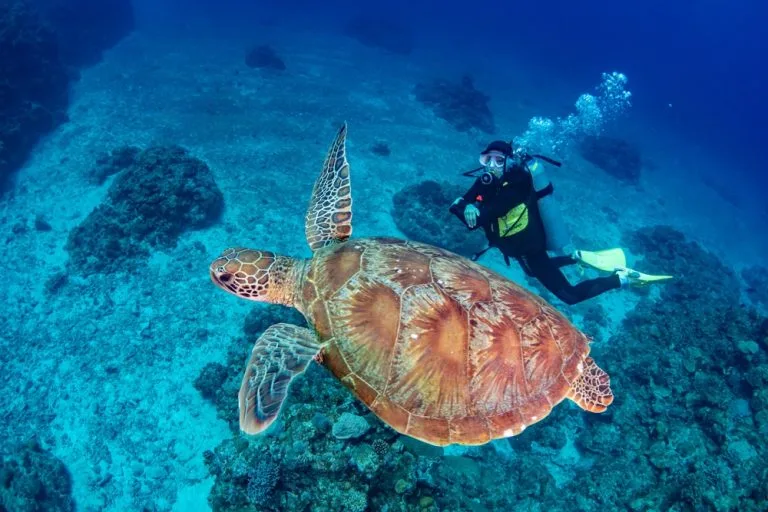
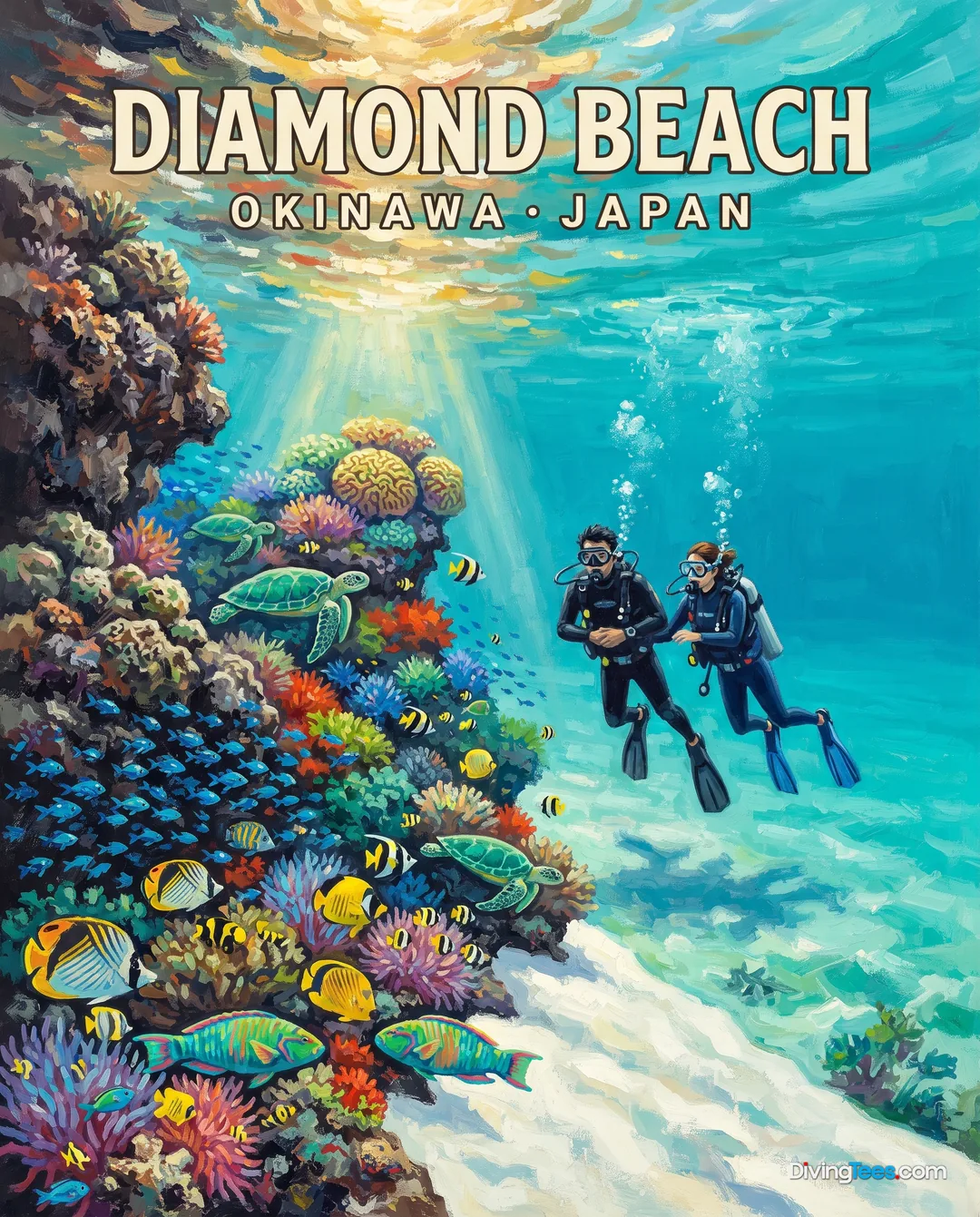
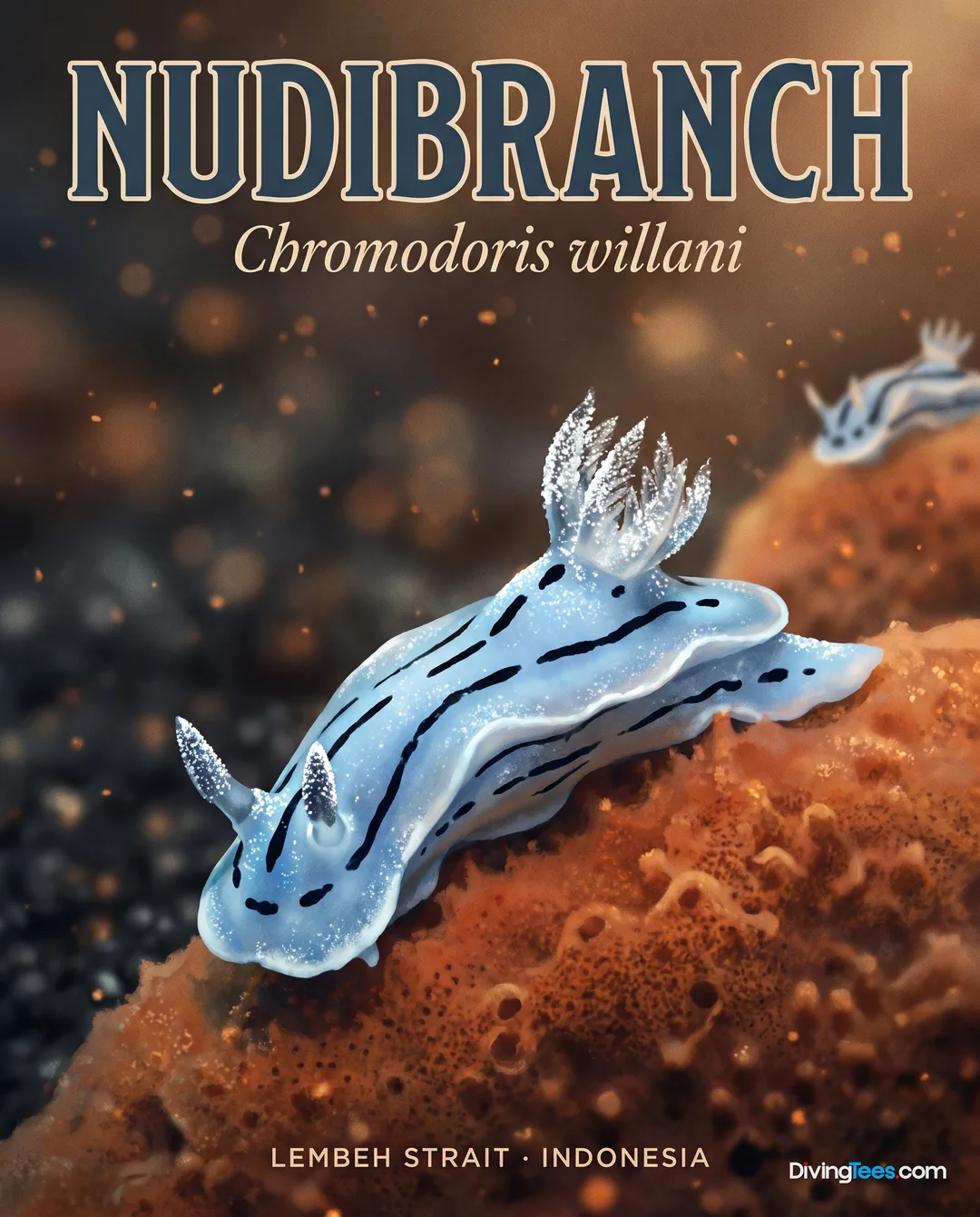
Sea turtles are a regular possibility and may be encountered throughout the year, particularly around reef sites such as Kerama. Tropical reef fish provide the constant movement over coral, while schools of trevally add interest when the water opens out. Yonehara is suited to watching fish above shallow coral, with the reef’s shape making it easy to combine a relaxed dive with a closer look at smaller life. Kerama also has nudibranchs for divers who slow down and search the reef rather than simply following the current. Manta rays are an occasional seasonal attraction around parts of Yaeyama, especially in the warmer months. Whale sharks are likewise occasional and depend on the particular site, operator schedule and biological conditions, so they are a bonus rather than the foundation of an Okinawa itinerary.
Measured conditions show the calmest sea from April to October, and diving sites are generally most comfortable between April and May or again in October and November. That balance matters because summer brings greater heat, more swell and a higher risk of typhoon disruption, particularly from June through September. Rainfall is lowest from September to March, but the calm-sea window remains useful when boat access is the priority. April to October also gives the best broad chance of encountering seasonal mantas around Yaeyama, although sightings remain occasional. A light three-millimetre wetsuit suits many divers, with thicker protection worth considering for longer repetitive days or anyone who feels the cold.
Okinawa has suitable diving for all levels, particularly on sheltered reef sites and the inner reef at Yonehara. Advanced Open Water is useful for deeper profiles and drift diving, while Nitrox makes sense for repetitive boat diving when the diver is properly qualified. Drift training is valuable where currents are part of the site, not merely an occasional nuisance. USS Emmons demands a clear step up: Advanced Open Water, substantial logged experience and deep-diving competence are expected, with a check dive commonly required for visiting divers.
From London Heathrow, London Gatwick or Manchester, the journey normally involves an international flight and at least one Asian connection before reaching Okinawa, usually via a domestic flight to Naha. Naha is the practical starting point for the main island and boat trips towards Kerama, but it does not put Miyako or Yaeyama within easy day-trip range. Those areas require an additional domestic flight, while ferries serve some inter-island journeys and boats are the only practical final link for certain dive locations. Once on an island, transfers may be on foot in urban Naha, or by taxi or accommodation shuttle to a coastal port. Staying near the harbour can simplify early boat departures.
Decide on the actual diving region before booking the accommodation. A Naha stay does not automatically provide access to Miyako, Ishigaki or the Yaeyama sites, and trying to cross the archipelago casually can turn a diving day into a transport day. Group the dives by archipelago rather than attempting to cover Okinawa in one sweep. Keep spare days for Kerama or a remote island: wind and sea conditions can cancel the boat that matters most to the itinerary. Sleeping close to the port is often more useful than choosing a hotel farther inland, particularly when departures are early. Do not treat shore diving as the default; most of the described diving is boat-based. If mantas or whale sharks are the aim, allow a broad seasonal window and accept that encounters are occasional. At Keramashoto National Park, follow local marine rules, keep fins and equipment off coral, and take nothing from the water.
Seven to ten days works well for a land-based itinerary built around one principal island, with enough time to add a second family of sites or an outing to another island. Naha suits travellers wanting cultural visits, beaches and coastal activities alongside diving; more remote bases are more tightly focused on the water. Build non-diving time around transfers and keep the final day for gentle shore activities rather than an immersion before flying.
Hello, I'm Marina, DivingDeal.com's AI assistant. I guide you through destinations, areas and countries.
Thinking about the whole trip and the flights? Talk it over with Edith →
Marina is an AI. Some links are affiliate links: DivingDeal may earn a commission, at no extra cost to you. Bookings are made with the partner.
Your last day stays dry: no diving in the 18-24 hours before a flight, the perfect window to see the destination from another angle.
 Culture
⏱ 2 h · ★ 5.0 (37 reviews)
from £56$74€66
see on Viator ↗
 Nature
⏱ 2 h · ★ 5.0 (24 reviews)
from £24$32€29
see on Viator ↗
 Culture
⏱ 1 h · ★ 5.0 (19 reviews)
from £63$85€76
see on Viator ↗
 Nature
⏱ 1 h · ★ 5.0 (11 reviews)
from £24$32€29
see on Viator ↗
Ratings and reviews collected by Viator and Tripadvisor.
Sea conditions are generally calmer from April to October, while April, May, October and November are described as comfortable periods for diving. Summer brings greater heat, more swell and increased typhoon disruption, especially from June through September. Rainfall is lowest from September to March, but boat access remains the priority.
Okinawa suits all levels on sheltered reefs and at Yonehara’s inner reef. Advanced Open Water skills help with deeper profiles and drift diving, while drift training is useful where currents are part of the site. USS Emmons requires Advanced Open Water, substantial logged experience, deep-diving competence and commonly a check dive.
You can explore shallow coral gardens, tropical reef fish, nudibranchs, sea turtles, caves, wrecks and sloping drop-offs. Kerama offers drift dives with turtles and occasional manta rays, while Yonehara has coral beginning in very shallow water. USS Emmons is a deep wartime wreck, and Yaeyama may have seasonal mantas or whale sharks.
Choose the diving region before booking accommodation because Naha, Miyako and Yaeyama provide different access and sites. Group dives by archipelago, stay near a harbour for early boat departures, and keep spare days for weather cancellations. Most diving is boat-based, so allow time for transfers and avoid treating shore diving as the default.