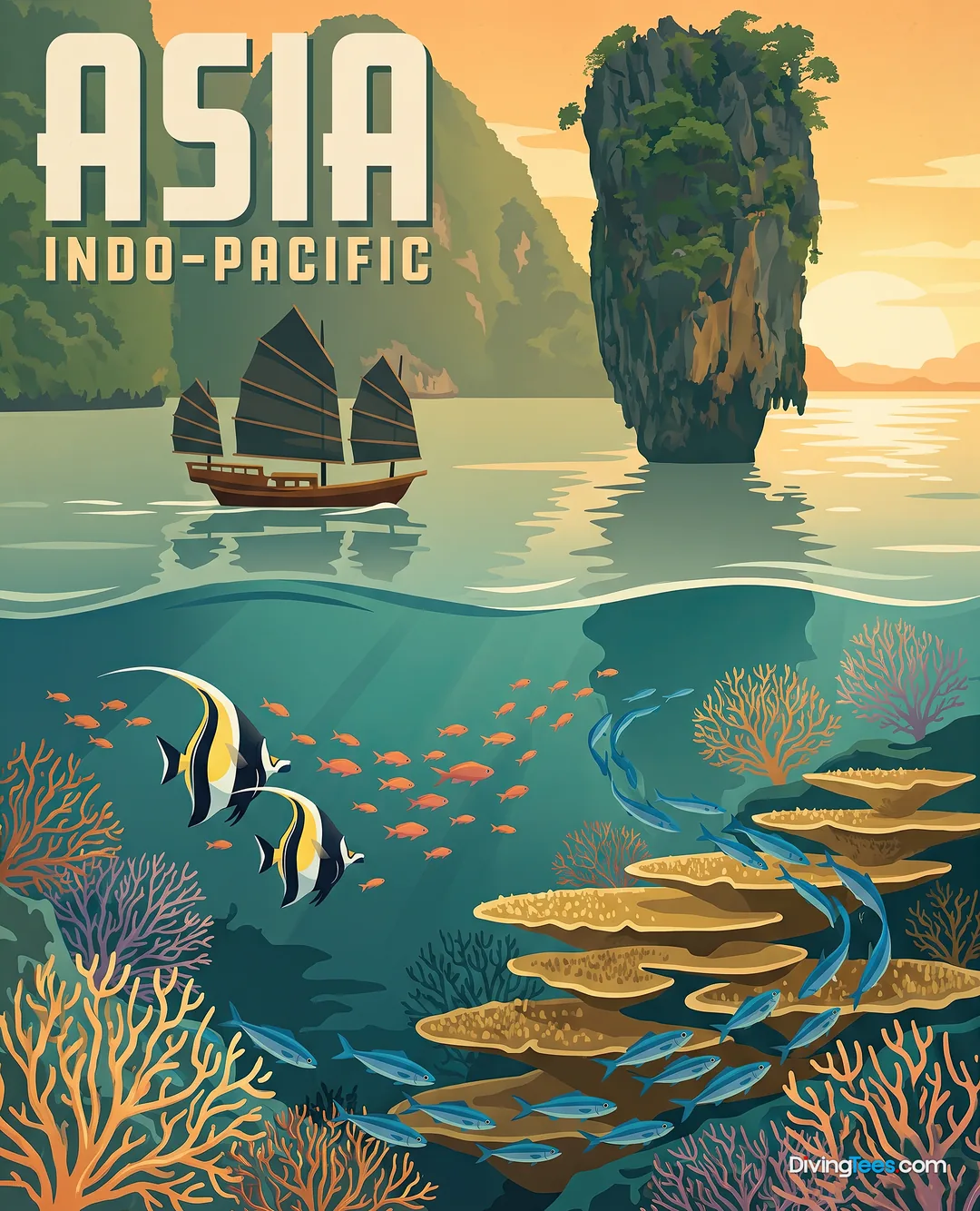
Asia
Japan: reefs, wrecks and coastal contrasts
Japan pairs the USS Emmons with the Kerama Islands, while Tokyo and Numazu bring temples, markets and the tastes of coastal Honshū.
What makes this country unique
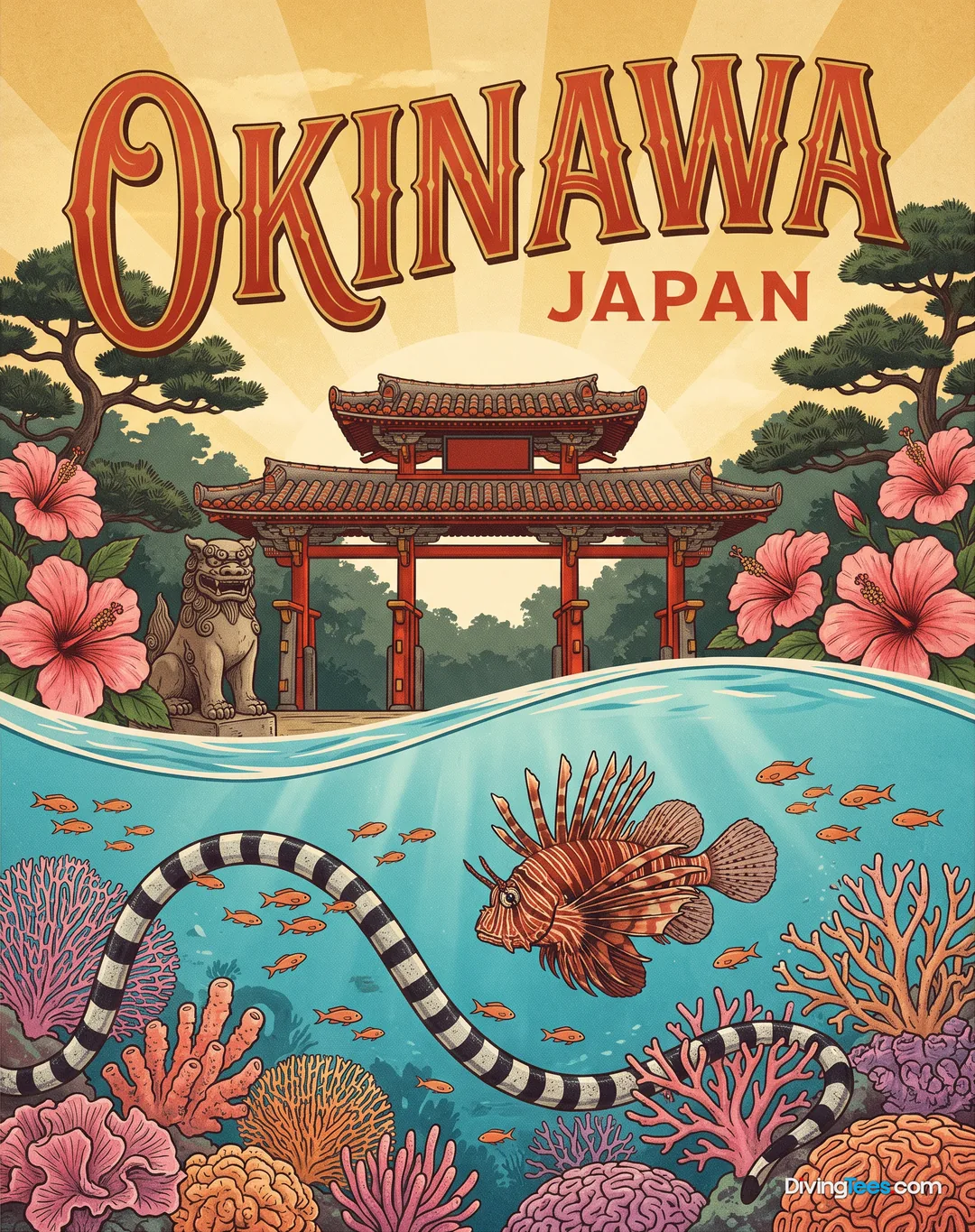
- Okinawa reefs from April through October
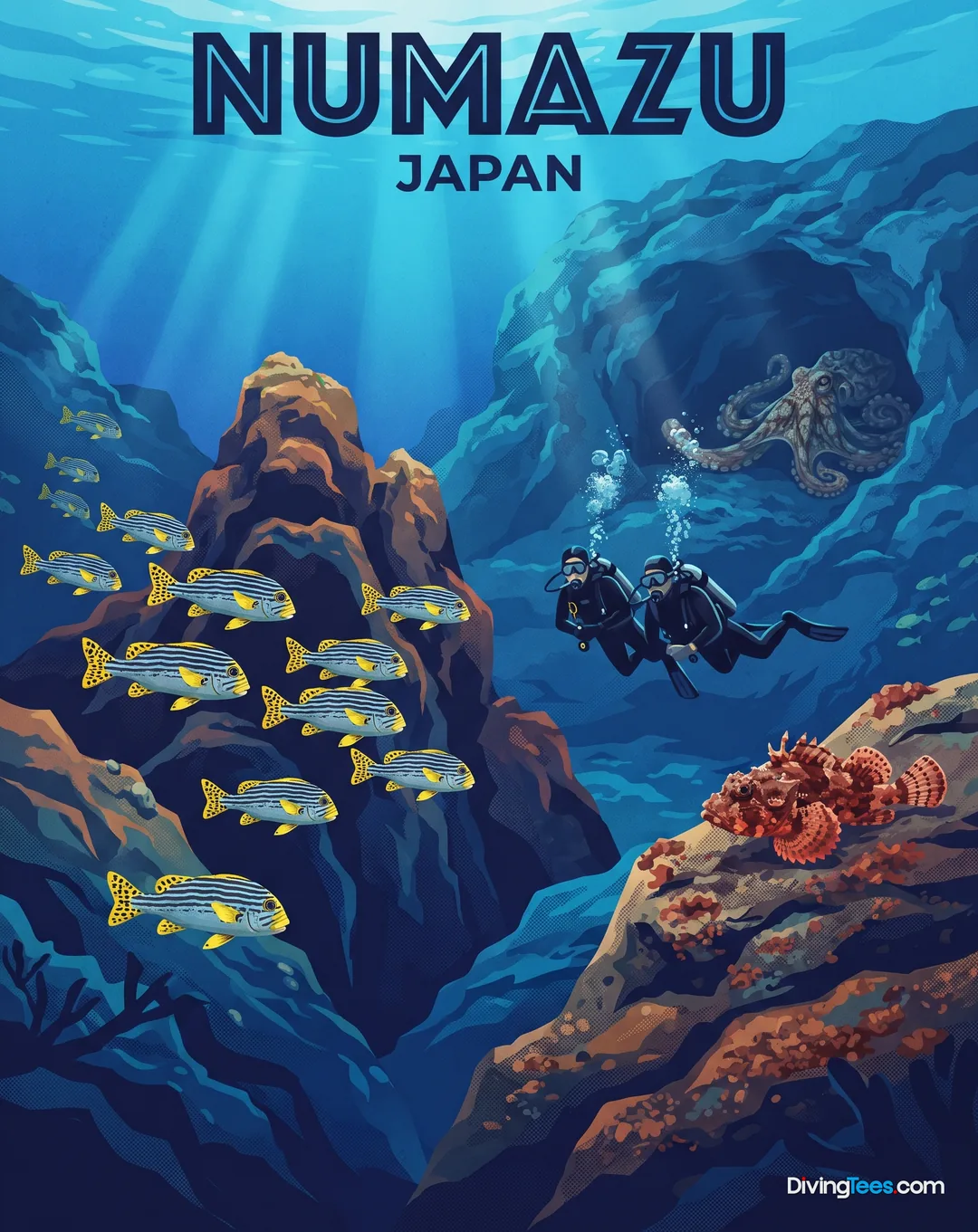
- Numazu’s Osezaki and the Suruga Bay coast
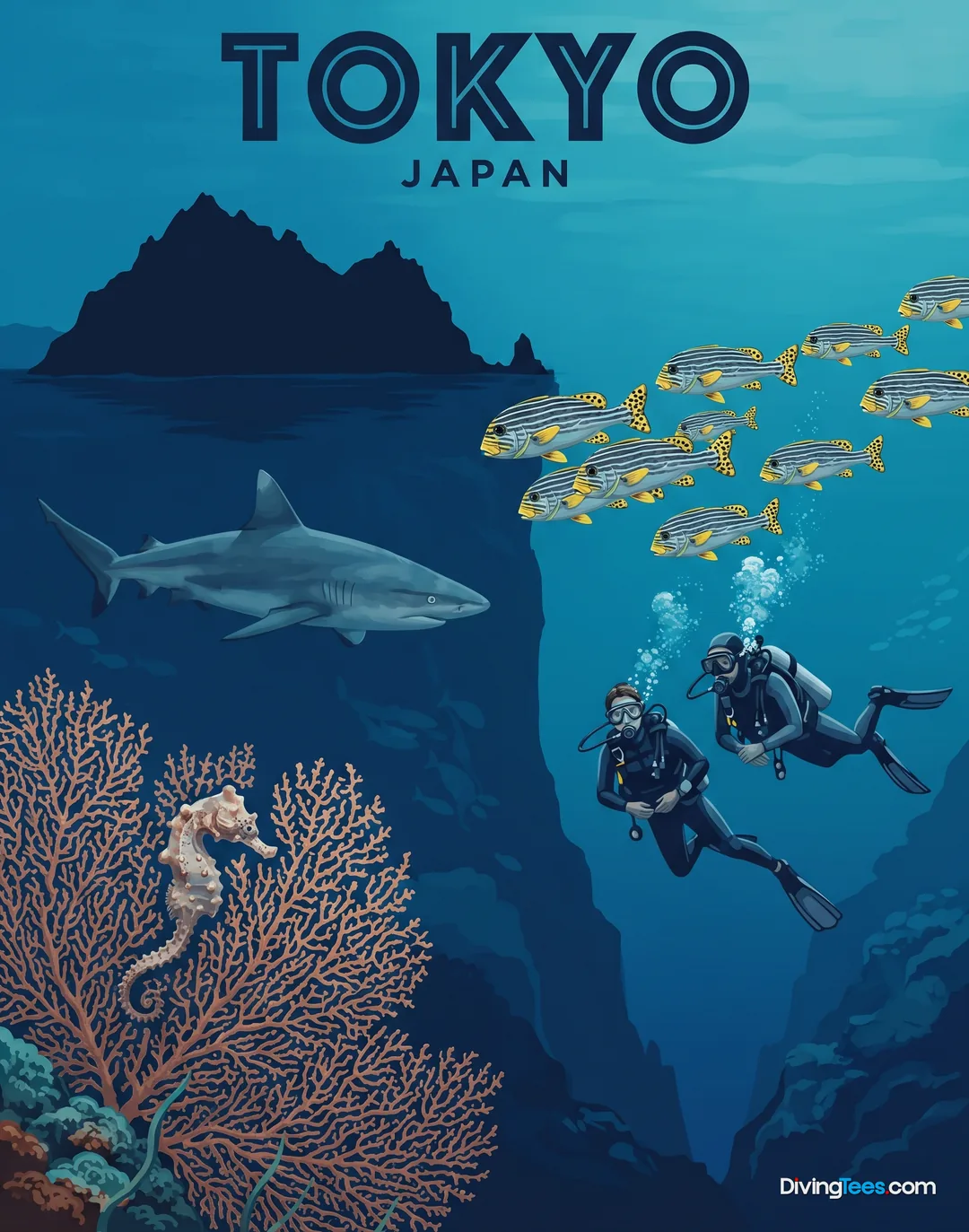
- Tokyo’s Futo season from May to October
- Green turtles and sea turtles around Okinawa
- Tokyo’s monjayaki on Tsukishima Monja Street
- Awamori and Ryūkyū cuisine in Okinawa
- View-O overlooking Fuji and Suruga Bay
For subtitles in English: start the video firstthen click the gearat the top right of the video, select “Subtitles/CC”, then “Auto-translate” and choose “English”.
This country for a diver
Japan gives a dive trip an unusual split personality: subtropical island diving around Okinawa, and temperate coastal diving close to the great cities of Honshū. The country’s areas share a broad welcome for all levels, but conditions remain variable and the diving itself is mixed rather than tied to one signature habitat. That makes Japan different from a straightforward reef holiday. A diver may base a trip around the Kerama Islands, then switch to the urban and maritime culture of Tokyo or the working port of Numazu, without pretending these are interchangeable experiences.
How the country divides
Okinawa is the island grouping, with Naha as its practical cultural centre and the Kerama Islands extending the choice beyond the main island. It suits divers who want a distinctly Ryūkyūan setting alongside warm-water sites such as the USS Emmons, Yonehara or the Kerama Islands. The Tokyo–Numazu grouping belongs to the Pacific side of Honshū and is easier to treat as one broad travel corridor. Tokyo offers Futo alongside temples, markets and dense city districts; Numazu leads towards Osezaki and the maritime landscape of Suruga Bay. This pairing is for travellers who prefer rail-based movement, a city break and coastal diving in the same itinerary. Okinawa feels like a separate island holiday, while Tokyo and Numazu work as a connected mainland plan. The choice is therefore less about ranking sites than deciding whether the trip should be island-led or built around Honshū’s cities and seaboard.
Diving destinations
Dive centres

Hotels
When to go, and where by month
The calendar moves in a clear progression rather than an opposite-season pattern. Okinawa opens the diving year in April and remains in season through October. Tokyo joins in May and also runs through October, while Numazu starts in June and continues into November. May is therefore an Okinawa-and-Tokyo month; from June through October, the three areas overlap. November leaves Numazu as the mainland option, and the winter months offer no area-wide season in this plan. The practical point is the stagger: Okinawa gives the earliest window, Tokyo adds a mainland choice one month later, and Numazu extends the finish at the other end. Summer brings the broadest choice but also greater exposure to weather disruption, so a city-and-island itinerary benefits from a buffer day. Ferry-linked diving is more sensitive to conditions than ordinary sightseeing, making flexibility especially valuable when the plan includes the Kerama Islands.
Marine life, coast by coast
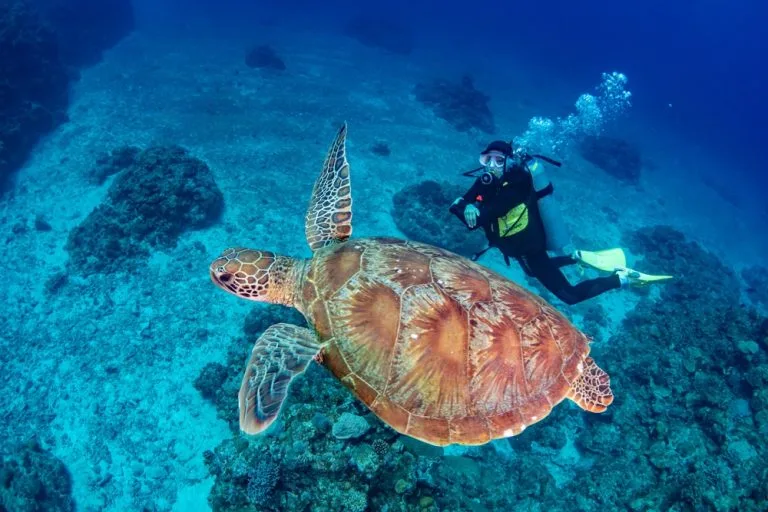
At country level, the clearest wildlife identity belongs to Okinawa. The named creatures there are clownfish, sea turtles and green turtles, giving an island itinerary a recognisable tropical thread rather than a merely geographic label. Yonehara, the Kerama Islands and the USS Emmons can therefore sit within a broader Okinawa plan shaped around reef life and turtle encounters. This matters when choosing between the country’s two travel patterns: Okinawa offers the strongest wildlife-led reason to make the long journey, while Tokyo and Numazu are better understood through their coastal setting and access to Honshū culture. A diver who values a memorable animal theme should keep Okinawa together as one block, rather than expecting the same emphasis from a Tokyo–Numazu combination.
Getting between the areas
Tokyo and Numazu are the sensible mainland combination, separated by 109 kilometres and linked by Japan’s efficient rail network. That makes it possible to pair Futo with Osezaki without turning the trip into a sequence of major transfers. Numazu also sits naturally within a Shizuoka and Suruga Bay plan, while Tokyo provides the larger urban base and the strongest transport connections. Okinawa is different in practical terms. It lies 1,430 kilometres from Numazu and 1,539 kilometres from Tokyo, so the connection is a domestic flight rather than a casual rail extension. There are no direct ferries from the main Okinawa island to Tokyo, Nagoya or Osaka, and no direct ferry between Okinawa-hontō and Miyako or Ishigaki. A Tokyo–Numazu–Okinawa journey is feasible over two weeks, but the flight and transfer day argue for two settled bases rather than constant movement.
Take off your mask
Japan’s character out of the water changes sharply between its coastal regions. In Numazu, the port brings together fish markets, quay-side restaurants, the Numazu Deep Sea Aquarium and View-O, whose platform looks across Suruga Bay towards Mount Fuji and Osezaki. Tokyo is more urban and tightly specialised: Sensō-ji anchors Asakusa, Meiji Jingū offers a wooded counterpoint, and Toyosu Market and Tsukiji Outer Market turn seafood into a daily ritual. For dinner, Tsukishima Monja Street is the place for monjayaki, while Tokyo also has Edomae sushi and Nihonbashi-style tempura. Okinawa has a different cultural vocabulary, from Nakagusuku Castle Ruins and Sefa-utaki to the pottery workshops of Tsuboya Yachimun-dori. Its food includes goyā champurū, rafutē and Okinawa soba, with awamori alongside them. Festivals add another layer: Sanja Matsuri animates Asakusa in May, Gion Matsuri fills July in Kyoto, and summer celebrations such as Nebuta Matsuri and Awa Odori bring large-scale street traditions elsewhere in Japan.
What holds true everywhere here
Across Japan, assume that currents may be variable and that a dive plan can change with conditions. A drift dive should be treated as a specific plan, not an automatic feature of every coastal outing, and a careful safety stop remains part of disciplined diving when the site and conditions require it. On Okinawa’s busy reef sites, buoyancy matters: avoid contact with the reef, collecting anything or disturbing the seabed. Summer offers the widest overlap between Okinawa, Tokyo and Numazu, but it is also more exposed to disruption, so a weather margin is sensible. Island transfers deserve particular care because ferries can be affected while city sightseeing continues normally. The country suits all levels, yet its mixed diving and variable current mean that the same itinerary should not be forced onto every diver.
Frequently asked questions about Japan
When is Japan a good choice for seasonal diving?
For Japan, plan Okinawa reef diving from April through October. Tokyo’s Futo is in season from May to October. These periods can shape a split itinerary: choose Okinawa for reefs, clownfish and turtles, or combine Tokyo’s seasonal diving with coastal culture during the same trip.
What marine life and dive sites can you see in Japan?
Japan offers reef life and turtle encounters around Okinawa, including clownfish, green turtles and sea turtles. You can include Yonehara, the Kerama Islands and the USS Emmons in an Okinawa plan. Around Numazu, Osezaki and the Suruga Bay coast provide a different coastal diving setting.
How should you plan a Japan diving stay?
Plan Okinawa as one part of your Japan stay if wildlife is your main interest, bringing together Yonehara, the Kerama Islands and the USS Emmons. A separate Tokyo and Numazu combination works well for coastal diving alongside temples, markets and access to Honshū culture.
What food and cultural experiences can you add to a Japan dive trip?
In Japan, add Tokyo’s monjayaki on Tsukishima Monja Street to a city stay. Okinawa offers awamori and Ryūkyū cuisine, while Numazu provides access to coastal Honshū experiences. You can also visit View-O for views overlooking Fuji and Suruga Bay alongside your diving itinerary.