
Islands Dive
Google 5/5 (529 reviews)
Taiwan · Asia
Volcanic reefs, steep drop-offs, green turtles and clear Kuroshio-influenced water frame shore and boat diving around Taiwan’s small Green Island.
Green Island is a small volcanic island reached from Taitung, where a diving day can begin from the shore or continue by boat around reefs, drop-offs and volcanic formations. Green turtles are a regular possibility, while the Kuroshio brings moving water and often good visibility. The appeal is the contrast: an easy-going island base, straightforward shore diving in places such as Chaikou, and more exposed water where current, depth and surface conditions demand greater judgement.
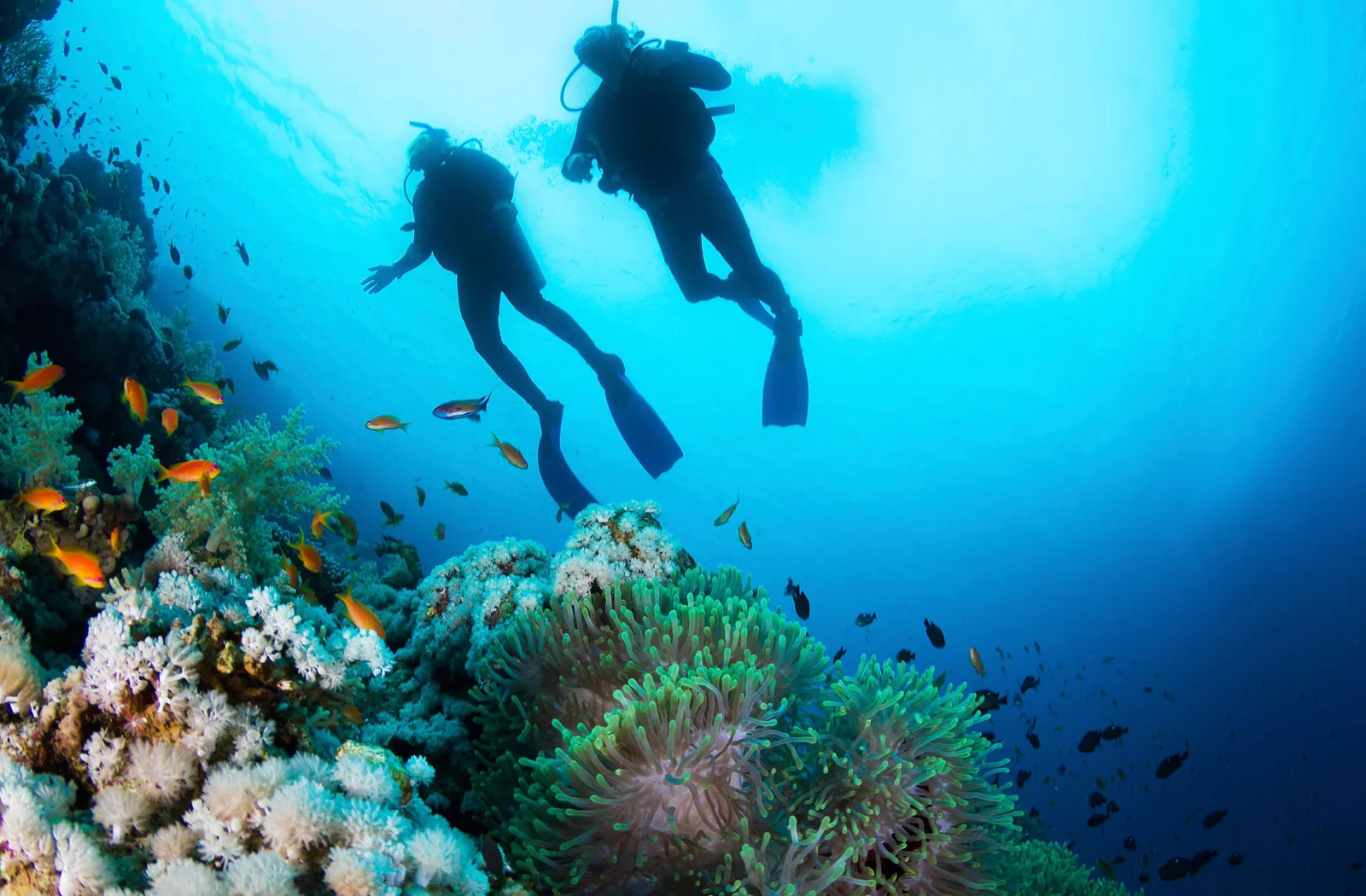
Underwater, Green Island alternates between coral reef, volcanic contours and steep walls rather than presenting one uniform seascape. Shilang and Chaikou provide shore-diving options, while boat trips reach areas where the Kuroshio can make the water move decisively. Current is variable: some dives are calm enough for a measured look at the reef, others may become a drift dive with a downcurrent risk if the briefing is ignored. Visibility is commonly around fifteen to thirty metres, particularly from May to September, although swell, rain runoff and tropical weather can change it quickly. Expect the wind to influence which coast is usable on a given day. The practical rhythm is a mixture of shore dives and day-boat outings, with a safety stop planned conservatively when conditions or current have made the dive more demanding.
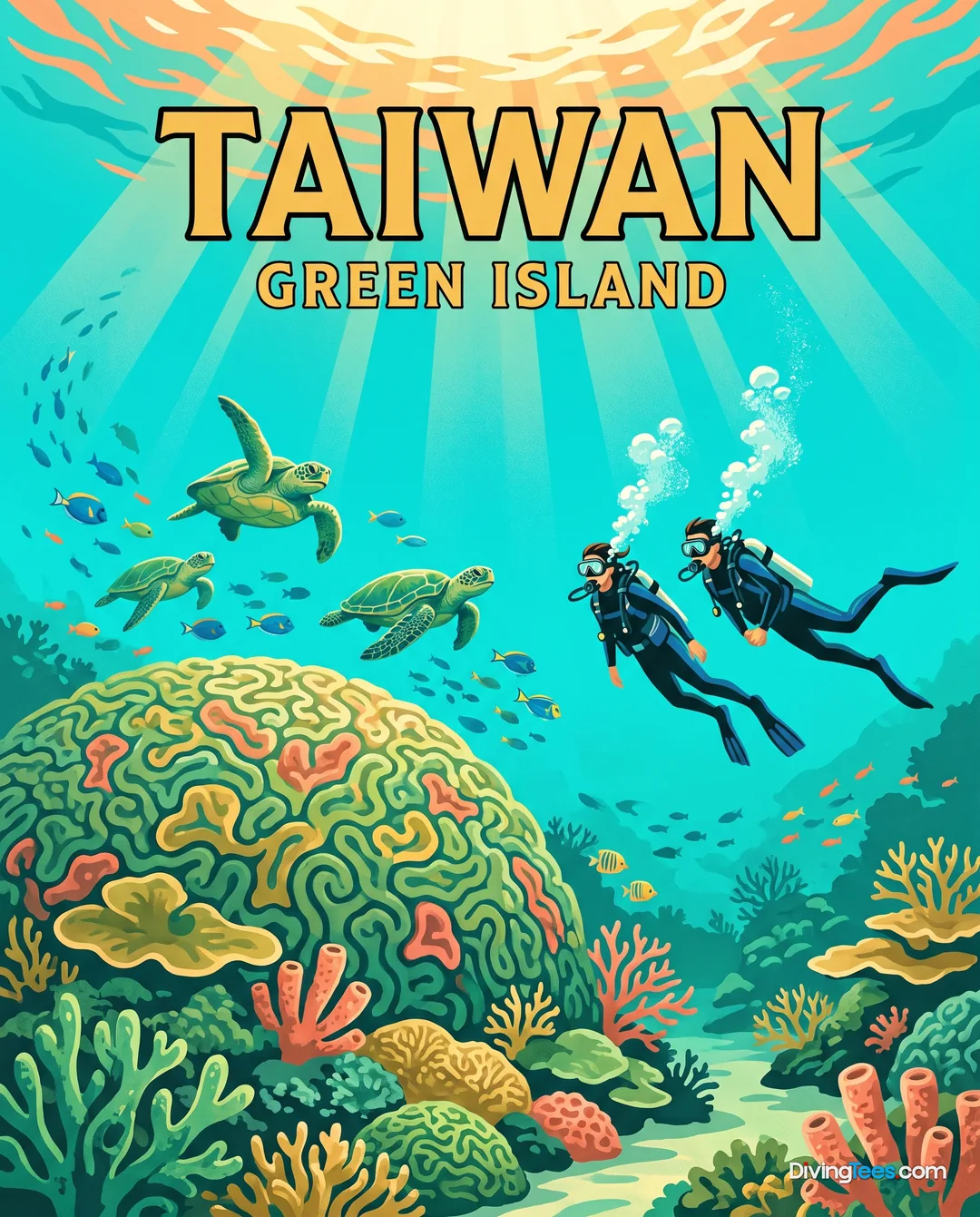
Green turtles are Green Island’s dependable animal encounter, with sightings possible throughout the year where site conditions allow. They fit naturally into the island’s reef diving, appearing against coral and volcanic structure rather than as a guaranteed feature of every entry. The Kuroshio helps keep the surrounding water rich, and healthy-looking reef sections provide plenty to examine at close range. A torch and macro equipment are worthwhile for divers who enjoy searching for smaller reef life, although the island’s strongest consistently documented wildlife draw remains the turtles. Visibility is often good enough to appreciate the broader terrain, but a rough sea, coastal runoff or a passing tropical system can reduce both the view and the likelihood of a relaxed encounter.
April to October is generally the workable diving season, with April, May, June, September and October offering the most dependable balance of sea conditions and transport. May to September usually brings the clearest water, although July to September also requires attention to typhoons. From December through March, the north-east monsoon can make the ferry unpleasant or impossible, restrict boat operations and close off the northern and eastern coasts. That seasonal wind matters as much as visibility, because it decides which side of the island can actually be dived. Build the trip around a few flexible days rather than treating the crossing as guaranteed.
Green Island suits a broad range of divers, including beginners who stay with the calmer, more sheltered shore sectors and follow local site selection. Chaikou is a sensible place to start before moving towards more exposed water. Advanced Open Water is useful for deeper or current-affected dives, while Drift Diver training is relevant if the plan includes moving-water sites. Experience with surface awareness and controlled ascents matters more than collecting a particular qualification, because conditions can change between coasts and a routine dive may become a current dive.
From London Heathrow, London Gatwick or Manchester, travel first to Taiwan and continue to Taitung. From Taitung, reach Fugang fishing harbour for the ferry to Nanliao harbour on Green Island, a crossing of roughly fifty to sixty minutes. The alternative is a small aircraft from Taitung airport, taking about fifteen to twenty minutes, with limited capacity. Neither link should be treated as a tight connection: wind, swell and typhoons can cancel ferries or flights. Once on the island, accommodation and dive centres sit around the villages and coastal roads. Walk if staying nearby, use a centre’s arranged transfer, or hire a scooter for independent movement between coasts and shore entries.
Keep a full buffer day at either end of the stay. A cancelled ferry or small-plane service can remove both a planned dive and the onward connection, so avoid booking the next flight immediately after a crossing. If taking the ferry, bring your own seasickness treatment and take it before boarding, because the ride can be rough even when conditions look acceptable from land. Check with the centre the evening before which coast is usable and whether the plan is shore or boat based. Do not assume that clear visibility makes every site available: wind controls access. Start at a sheltered sector such as Chaikou, then consider the stronger-current sites once you know the local pattern. During the north-east monsoon, avoid building a trip around the northern and eastern coasts. Book small-plane seats early, and favour weekday morning dives outside Taiwanese holiday periods if you want less crowded boats. Keep a land-based alternative ready for a cancelled crossing.
Plan on a land-based stay of four to seven days, rather than a liveaboard. The island’s compact layout makes it practical to combine shore dives with occasional day boats, while scooters, walking and arranged transfers cover the gaps between accommodation, villages and coastal entries. Keep at least one day free for weather disruption, and use a non-diving day for the saltwater hot springs, coastal viewpoints, volcanic scenery or sheltered snorkelling. The island is small, so its appeal lies in an unhurried routine rather than a long list of evening diversions.
Hello, I'm Marina, DivingDeal.com's AI assistant. I guide you through destinations, areas and countries.
Thinking about the whole trip and the flights? Talk it over with Edith →
Marina is an AI. Some links are affiliate links: DivingDeal may earn a commission, at no extra cost to you. Bookings are made with the partner.
April to October is generally the workable diving season, with April, May, June, September and October offering a dependable balance of sea conditions and transport. May to September usually brings clearer water, but typhoons require attention from July to September. The north-east monsoon can disrupt ferries, boats and coastal access.
Green Island suits beginners who stay with calmer, sheltered shore sectors and follow local site selection. Chaikou offers a gentler introduction before you consider more exposed water. Advanced Open Water experience is useful for deeper or current-affected dives, while Drift Diver training helps if you plan moving-water sites.
Green Island combines coral reef, volcanic contours and steep walls, with shore diving at Shilang and Chaikou and boat trips to more exposed formations. Green turtles may appear throughout the year. Visibility is often around fifteen to thirty metres, while a torch and macro equipment can help you search for smaller reef life.
Plan a land-based stay of four to seven days, combining shore dives with occasional day boats and leaving a full buffer day for disruption. Travel through Taitung, then use the ferry or small aircraft to reach the island. Check the usable coast with your dive centre, and keep saltwater hot springs or sheltered snorkelling for non-diving days.