Kariwak Wellness Village, Hotel and Holistic Haven
★ 8.1/10 (43 reviews)
1.5 km away as the crow flies
Dive centre · Crown Point · Trinidad & Tobago
4.9124 Google reviewsDive the historic wrecks and vibrant coral walls of Tobago from the private sands of Coco Reef Resort.
For subtitles in English: start the video firstthen click the gearat the top right of the video, select “Subtitles/CC”, then “Auto-translate” and choose “English”.
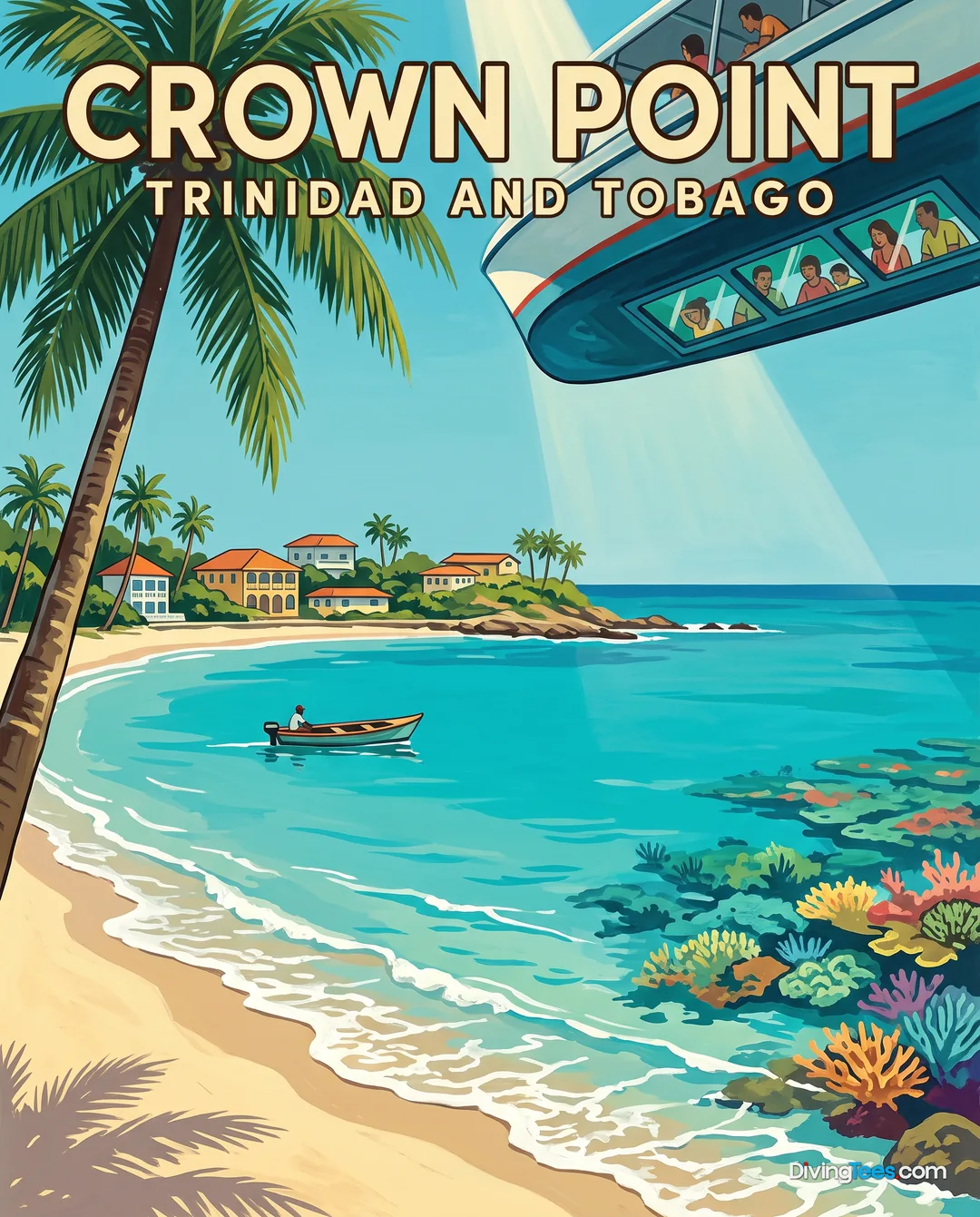
Undersea Tobago is a PADI Dive Resort situated directly on the private beach of the Coco Reef Resort in Crown Point. The centre serves as a primary diving hub for many of the local hotels and villas in the area, providing a professional base for both local residents and visiting divers.
Owned and operated by Derek and Evelyn Chung, the centre has been a fixture of the Tobago diving community since 1987. This long-standing presence ensures that every excursion is backed by deep local knowledge of the island's currents, topography, and marine life.
The centre is run by the husband-and-wife team of Derek and Evelyn Chung, who have been diving these waters for over three decades. Their experience allows them to offer a highly personalised service, tailoring dive plans and training to the specific needs of each diver.
As a PADI Dive Resort, the facility is geared towards providing professional and safe instruction for all ages. They run specialised programmes for younger divers, including SASY Diver and Bubblemaker, alongside a full range of adult certifications.
Undersea Tobago offers a comprehensive curriculum of PADI courses. Beginners can start with Discover Scuba Diving or the Scuba Diver course, progressing through to the Open Water Diver and Advanced Open Water Diver certifications.
For more experienced divers, the centre provides several specialty courses, including PADI Wreck Diver, Nitrox, Drift, and Deep Diver. They also offer Open Water Referrals and various upgrade paths for those looking to formalise their existing skills.
The centre provides a full range of equipment hire for those not travelling with their own kit. This includes regulators, BCDs, fins, and masks, as well as torches available for night dives.
For those looking to manage their nitrogen loading, Nitrox 32 is available. The facility is also equipped to handle equipment maintenance and sales for the local diving community.
The Maverick Wreck is the most frequently visited wreck in Tobago, making it an ideal site for those completing their Advanced Open Water, Deep Diver, or Wreck Diver specialties. It provides a vital habitat for marine life in an otherwise open seabed.
Mt. Irvine Wall offers a range of depths from 9 to 15 metres, featuring beautiful canyons, fissures, and ledges. The site transitions into a massive coral reef where you might encounter tarpon, cobia, and eagle rays.
The Sisters features steep rocky walls on its north and west sides, contrasted by a shallower coral reef on the eastern side. Divers can explore these walls looking for sharks or rare species like the cherubfish and flame angelfish.
Flying Reef is a classic drift dive site where the current carries you along the reef edge. It is an excellent location for seeing green moray eels, turtles, lobsters, and nurse sharks.
And some of the dive sites the centre runs.
The reefs are teeming with life, from large schools of brown chromis and creole wrasse to the more elusive residents. You will often see stingrays resting on the sandy patches and various species of snapper, such as schoolmaster snapper, patrolling the reef.
Macro enthusiasts can look for seahorses tucked into the coral and various species of moray eels. The area is also home to several species of lobster and various crustaceans hiding within the reef structure.
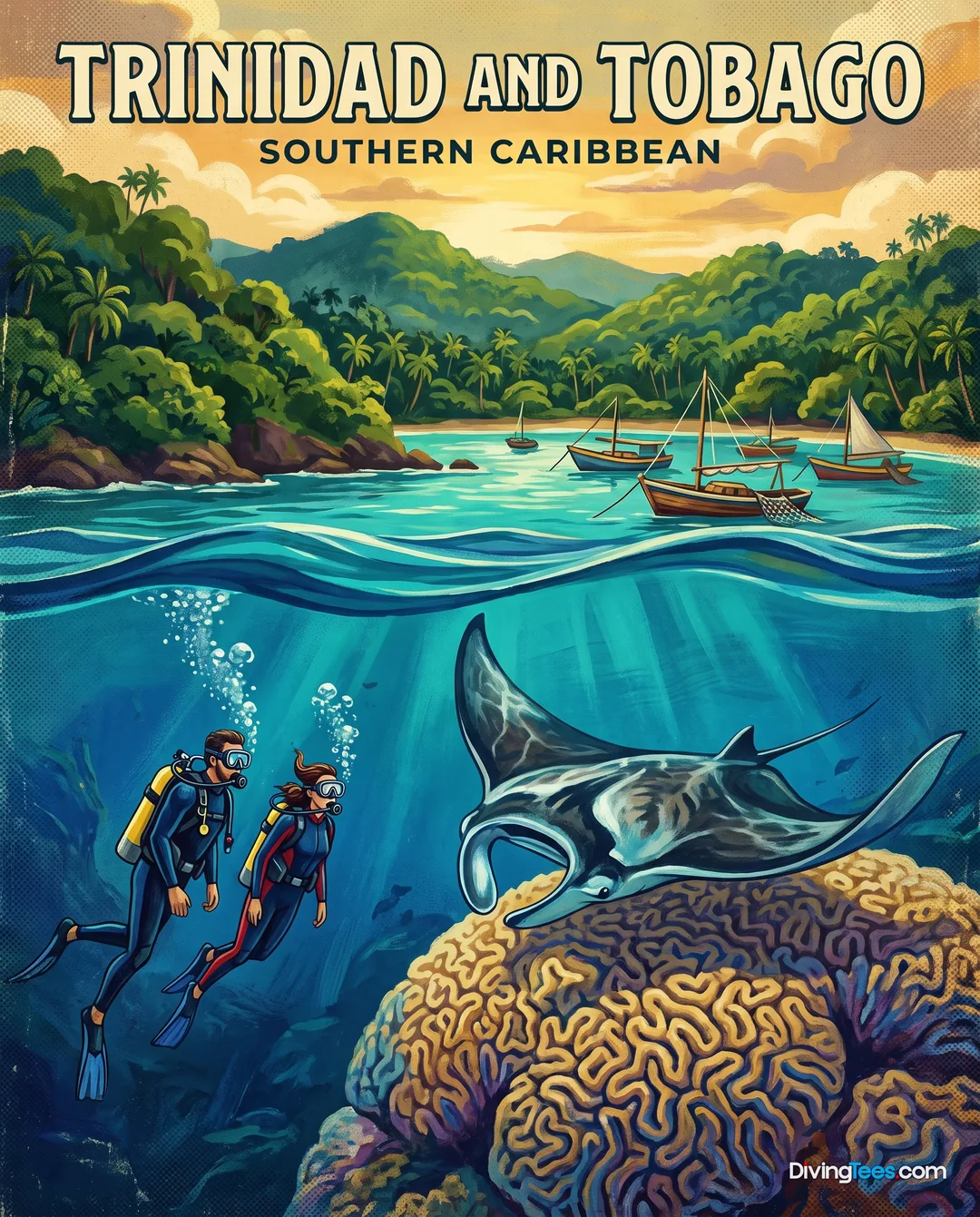
For those seeking larger pelagics, the waters around Tobago regularly host nurse sharks, eagle rays, and large barracuda. If you are diving at sites like the Sisters or Bookends, keep a lookout for manta rays and sharks passing through the area.
Diving on the Atlantic coast typically involves drift diving due to the prevailing currents. In contrast, the Caribbean side of the island is known for having almost no current, offering more controlled environments.
Entry into the water is generally performed via a back roll, with exits facilitated by a ladder. For those diving in slightly cooler conditions, a 2mm or 3mm shorty wetsuit is recommended.
Hello, I'm Marina, DivingDeal.com's AI assistant. I answer in detail about hotels, dive centres and liveaboards.

Thinking about the whole trip and the flights? Talk it over with Edith →
Marina is an AI. Some links are affiliate links: DivingDeal may earn a commission, at no extra cost to you. Bookings are made with the partner.