
Undersea Tobago Ltd.
Google 4.9/5 (124 reviews)
Trinidad & Tobago · Caribbean
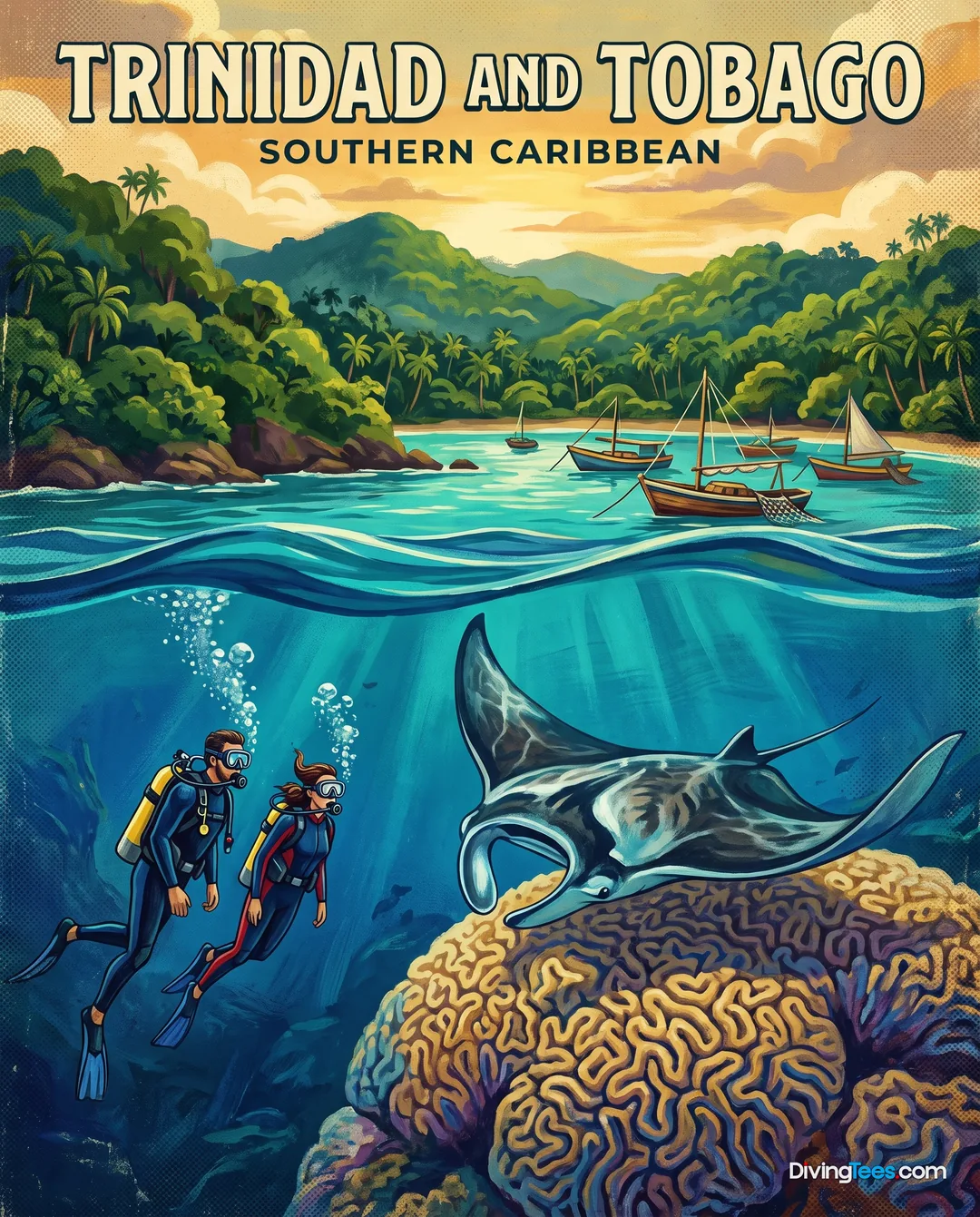
At Crown Point, shallow coral gardens, Buccoo Reef boat trips, Atlantic current lines, sea turtles and rays shape Tobago’s south-western diving base.
For subtitles in English: start the video firstthen click the gearat the top right of the video, select “Subtitles/CC”, then “Auto-translate” and choose “English”.
Buccoo Reef’s shallow coral gardens make Crown Point an easy place to settle into Tobago, while Mount Irvine, Dutchman’s Reef and Kariwak add calm reef diving close to the south-west coast. From the same land-based base, boats can head towards more exposed Atlantic sites, where the character changes sharply. That combination suits a week of mixed diving, with sheltered mornings, more demanding outings when conditions allow, and plenty for a non-diver around Store Bay and the Buccoo Reef area.
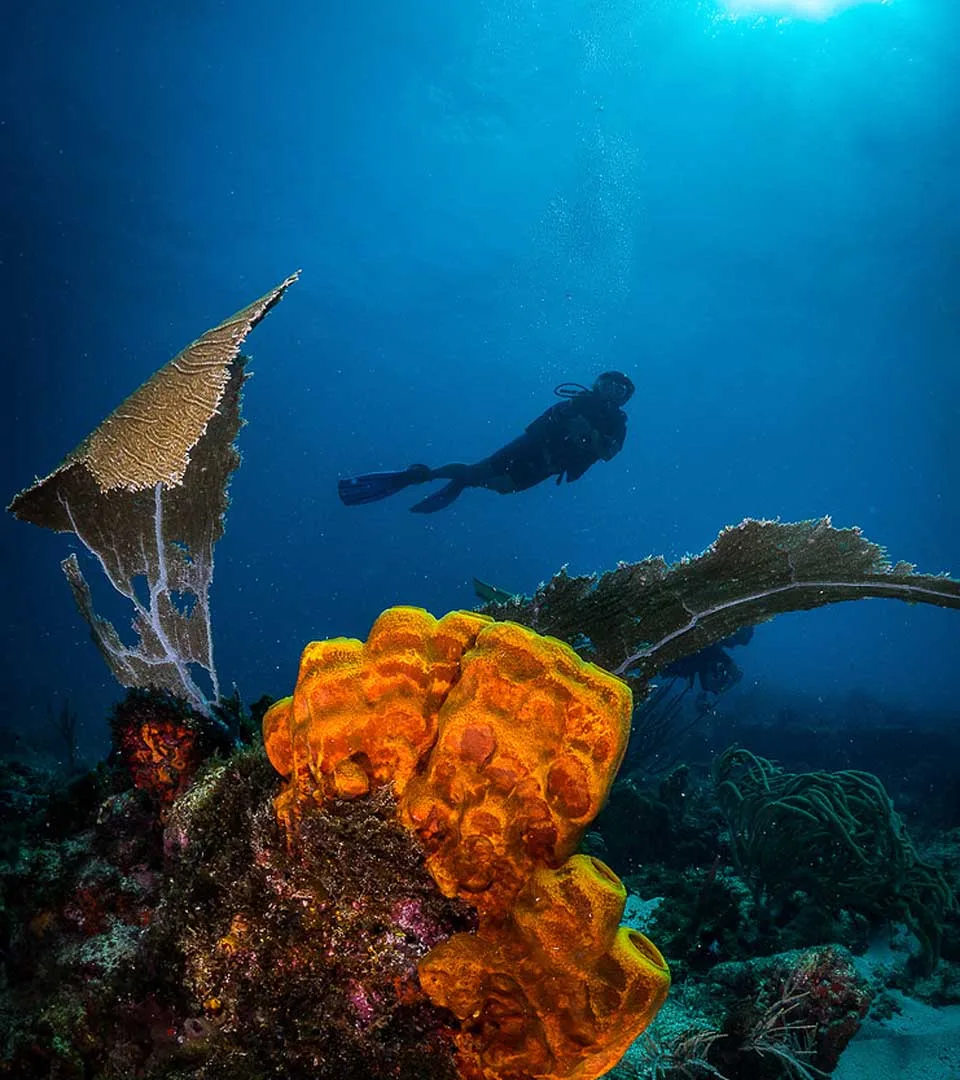
The underwater scenery shifts from shallow coral gardens to mini-walls, canyons, tunnels and projecting shoulders. Buccoo Reef, Mount Irvine, Dutchman’s Reef and Kariwak are the gentler end of the programme, with boat diving forming the main pattern and some coastal access around Kariwak. Visibility is commonly around 15 to 30 metres, although south-western reefs can turn hazier after rain or when sediment carried from the Orinoco reaches the area. On the Atlantic side, Diver’s Dream and Diver’s Thirst are a different proposition: current can be strong, changeable and suitable for a proper drift dive rather than a leisurely circuit. A downcurrent is a possibility to treat seriously, not a feature to discover casually. Site choice therefore depends on wind, sea state and current on the day, and a planned Atlantic outing may need replacing.
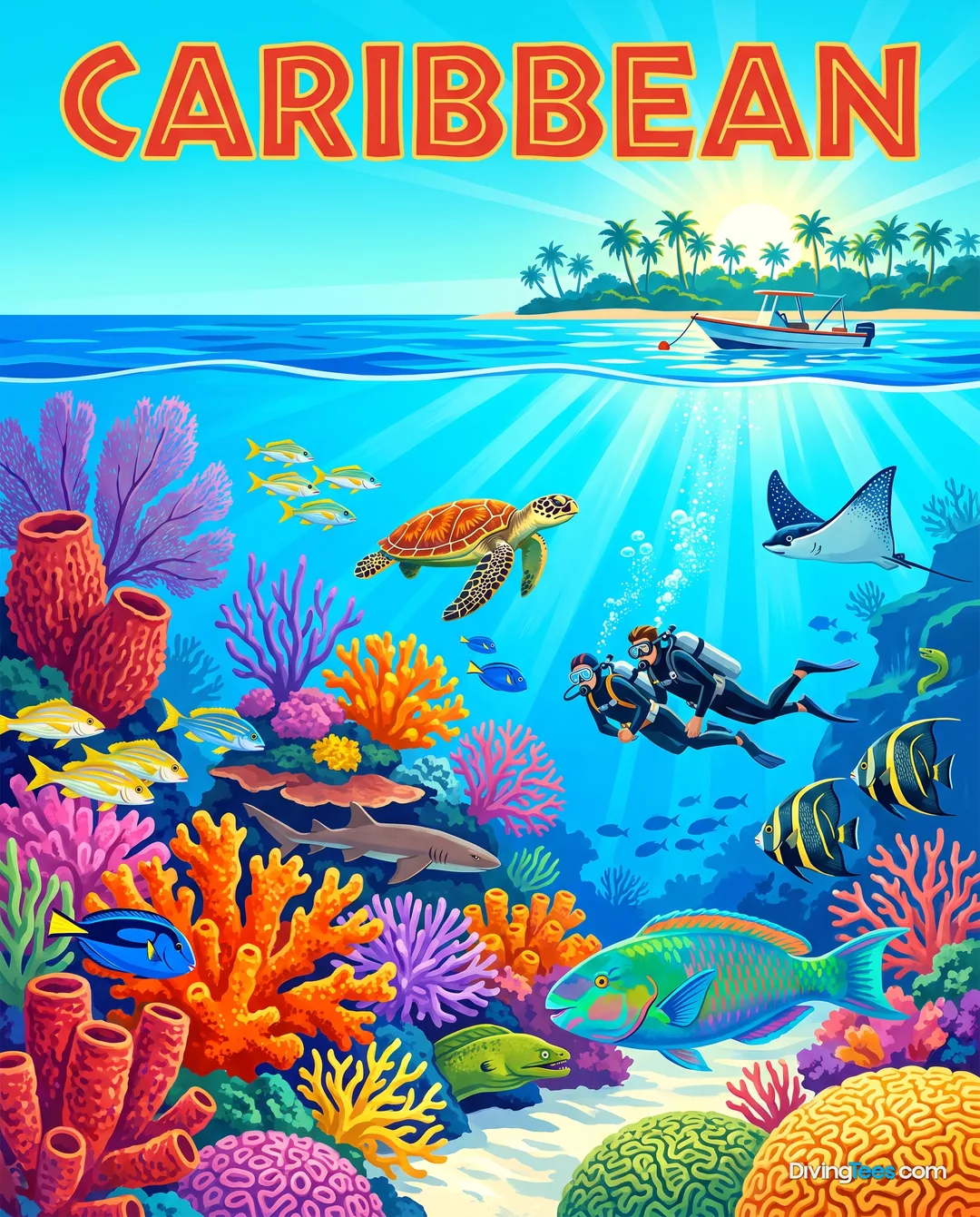
Sea turtles and rays are regular encounters around Crown Point’s reefs, adding movement to dives that otherwise focus on coral formations, sandy patches, walls and swim-throughs. Sharks are occasional rather than a dependable reason to book a particular day. Black jack are seen regularly from May to July, giving that period an extra point of interest for divers who enjoy schooling fish. Buccoo Reef and the quieter south-western sites are sensible places to look slowly, especially when the water is clear. Wildlife sightings remain variable, and the Atlantic sites should not be chosen on the assumption that stronger current automatically means more animals. The appeal here is the combination of reef structure, open-water movement and the chance of turtles, rays and seasonal Black jack in one stay.
January to June is the more dependable window, when visibility is generally better and the water is less affected by heavy rain. From July through December, the rainy season can bring more runoff and sediment, including material carried towards Tobago from the Orinoco, so the south-west coast may look less clear and conditions become less regular. Diving remains possible throughout the year, but photographers have the strongest reason to favour the drier part of the calendar. Black jack are a regular possibility from May to July, which overlaps the clearer season without making sightings predictable. Leave room to switch coast if the weather closes in.
Crown Point works for all levels, provided the sites are matched to experience. Beginners and divers returning after a break can start around Buccoo Reef, Mount Irvine, Dutchman’s Reef or Kariwak, where shallow, comparatively calm reef sections make a sensible first outing. Advanced Open Water is useful for deeper and more exposed Atlantic dives. A Drift speciality is relevant for Diver’s Dream and Diver’s Thirst, where currents may be strong or change direction. A first shallow dive is wise before committing to the Atlantic side.
From London Heathrow, London Gatwick or Manchester, reach Tobago by air and continue by road to Crown Point. There is no compulsory sea crossing from Europe, and the Trinidad to Tobago ferry is not required when flying into Tobago. The exact routing depends on the connection chosen, so allow sensible flexibility between flights rather than building a tight onward plan. Once in Crown Point, many accommodation options near the resort area are close to dive operations, but not all are within an easy walk. A taxi or a shuttle arranged locally may be needed from outlying areas. The airport-to-road transfer is straightforward in structure, with the main planning variable being the flight connection.
Ask for the day’s diving to be planned around the more sheltered coast. Conditions on the Caribbean and Atlantic sides can be entirely different on the same day, and an Atlantic booking should have a realistic replacement option. Do not make Diver’s Dream or Diver’s Thirst the first dive of the holiday, and do not fill every day with exposed sites. Start with a shallow reef such as Buccoo Reef, Mount Irvine, Dutchman’s Reef or Kariwak, then judge the current and your comfort. Early departures help avoid some of the boat traffic near Crown Point. After heavy rain, expect the nearshore water to be more turbid, and do not use visibility at Crown Point as a guide to the Atlantic side. Keep camera plans flexible, favouring calmer Caribbean reefs in the clearer months. Bring thermal protection suited to repeated dives, rather than relying on a single arrangement.
Allow seven to ten days for a comfortable land-based stay. That gives enough time to combine sheltered Caribbean reefs with an Atlantic outing, while keeping spare days for wind, sea state or current to disrupt the plan. Stay near Crown Point if convenient, but check the practical distance to the dive operation, as a taxi or shuttle may be needed. Non-divers can fill the quieter days with Store Bay, Buccoo Reef boat trips, snorkelling, the Bon Accord lagoon, inland walks or Scarborough.
Hello, I'm Marina, DivingDeal.com's AI assistant. I guide you through destinations, areas and countries.
Thinking about the whole trip and the flights? Talk it over with Edith →
Marina is an AI. Some links are affiliate links: DivingDeal may earn a commission, at no extra cost to you. Bookings are made with the partner.
January to June is the more dependable period for Crown Point, with generally better visibility and less influence from heavy rain. July through December can bring runoff and sediment, making south-western reefs less clear and conditions less regular. May to July also offers a regular possibility of seeing Black jack, although sightings remain unpredictable.
Crown Point suits different experience levels when you choose sites carefully. Beginners and returning divers can start at Buccoo Reef, Mount Irvine, Dutchman’s Reef or Kariwak, where shallow, comparatively calm reef sections provide a sensible introduction. Advanced Open Water is useful for exposed Atlantic sites, while Drift training is relevant when currents are strong or changeable.
Crown Point combines shallow coral gardens with mini-walls, canyons, tunnels, swim-throughs and projecting coral shoulders. Sea turtles and rays are regular reef encounters, while Black jack are seen regularly from May to July. Buccoo Reef and the quieter south-western sites offer coral formations and sandy patches, while Atlantic dives add open-water movement and current.
Plan a flexible land-based stay in Crown Point, beginning with a shallow dive at Buccoo Reef, Mount Irvine, Dutchman’s Reef or Kariwak before considering exposed Atlantic sites. Keep replacement options for wind, sea state or current, and leave spare days in the schedule. Check your accommodation’s distance from the dive operation, as a taxi or shuttle may be needed.