
Tobago Dive Experience
Google 5/5 (48 reviews)
Trinidad & Tobago · Caribbean
Tobago puts coral gardens, a 30-metre ferry wreck, schooling fish and reef sharks within reach of a land-based Caribbean dive holiday.
For subtitles in English: start the video firstthen click the gearat the top right of the video, select “Subtitles/CC”, then “Auto-translate” and choose “English”.
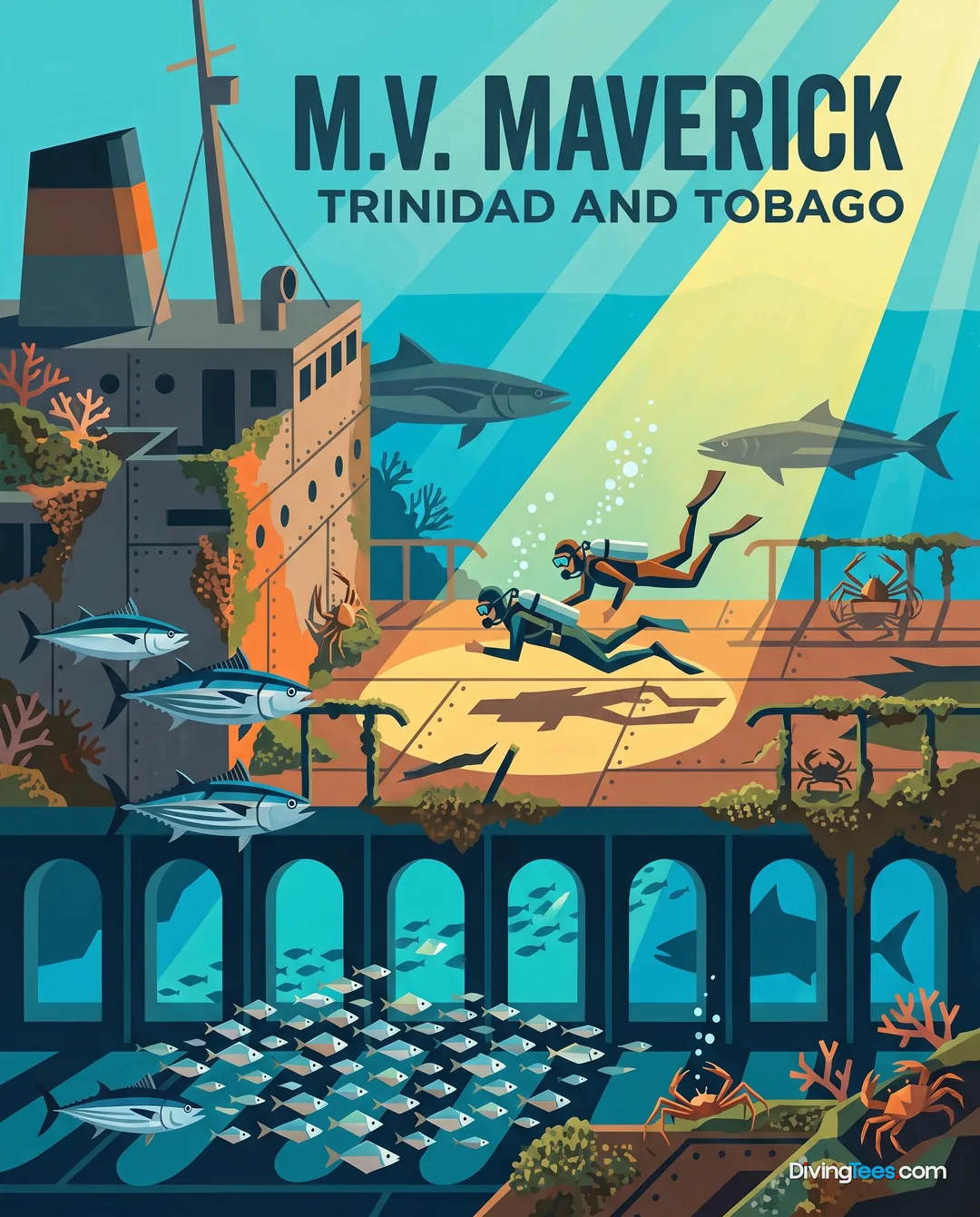
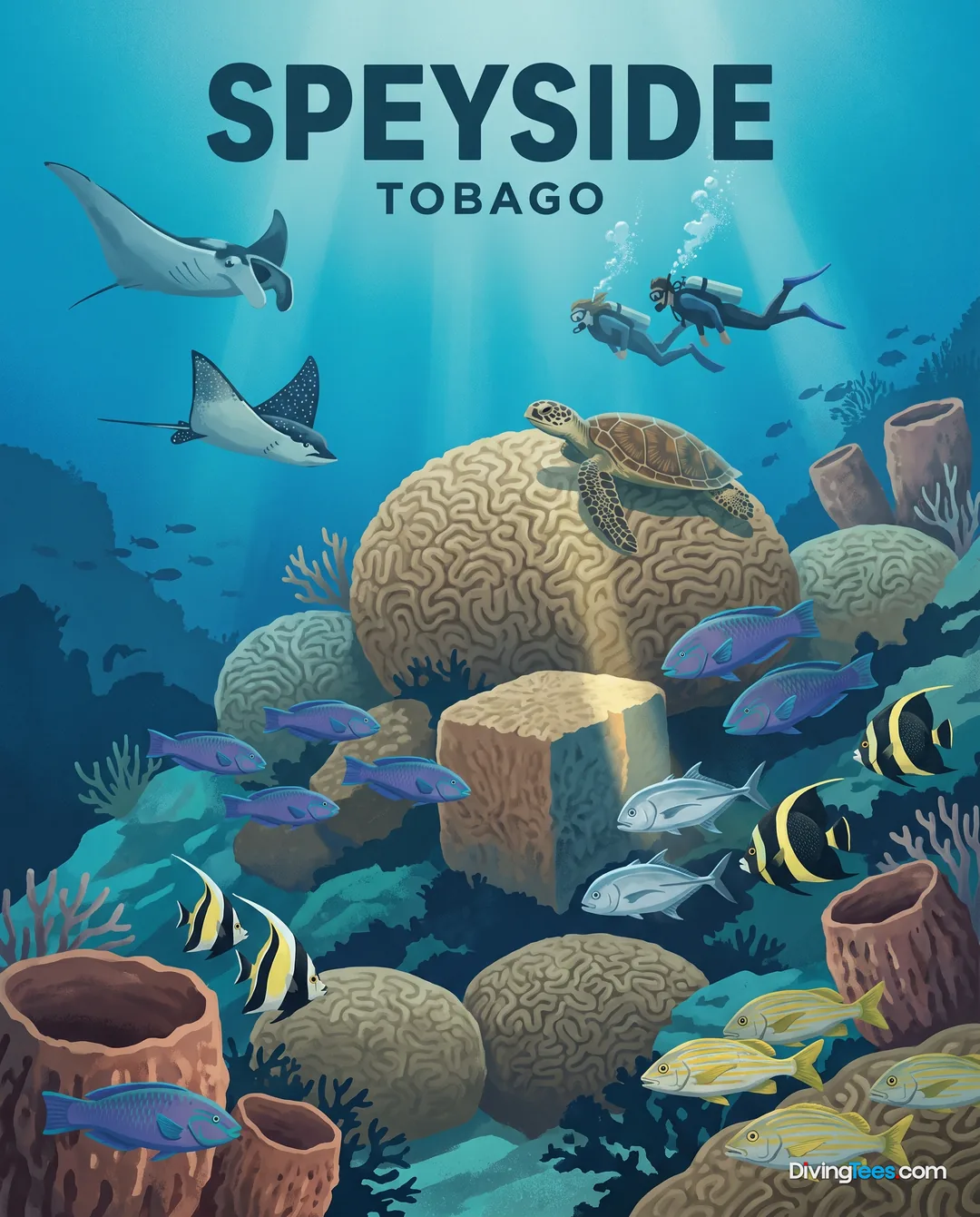
The Sisters’ sheltered reefs, Speyside’s coral gardens and the 30-metre M.V. Maverick wreck show what Tobago offers: a land-based island trip built around boat diving. Reef fish, turtles, schooling fish, rays, sharks and wreck life all have a place in the programme. The diving is not confined to one signature site or one style. Shallow bays suit relaxed exploration, while offshore plateaux, walls and deeper wreck profiles give experienced divers something more demanding to work towards.
Tobago’s underwater terrain shifts from shallow, sheltered reefs to walls, pinnacles, fissures and offshore plateaux. Mt. Irvine - The Wall reaches only 9 metres, with crevices and overhangs worth a slow look, while Rainbow Reef extends to 21 metres and M.V. Maverick descends from 17 to 30 metres. Speyside combines coral gardens around Goat Island and Little Tobago with nutrient-rich Atlantic currents; some dives are moderate to strong and suit drift-diving skills. Divers Dream, from 6 to 25 metres, is exposed to strong current, while Cove Reef offers a gentler drift between 11 and 21 metres. Visibility is generally good, with reported ranges from 15 to 30 metres at Rainbow Reef and 24 to 37 metres at Pirates Bay. Most outings are boat-based, although Castara and Charlotteville also provide shore-diving possibilities.
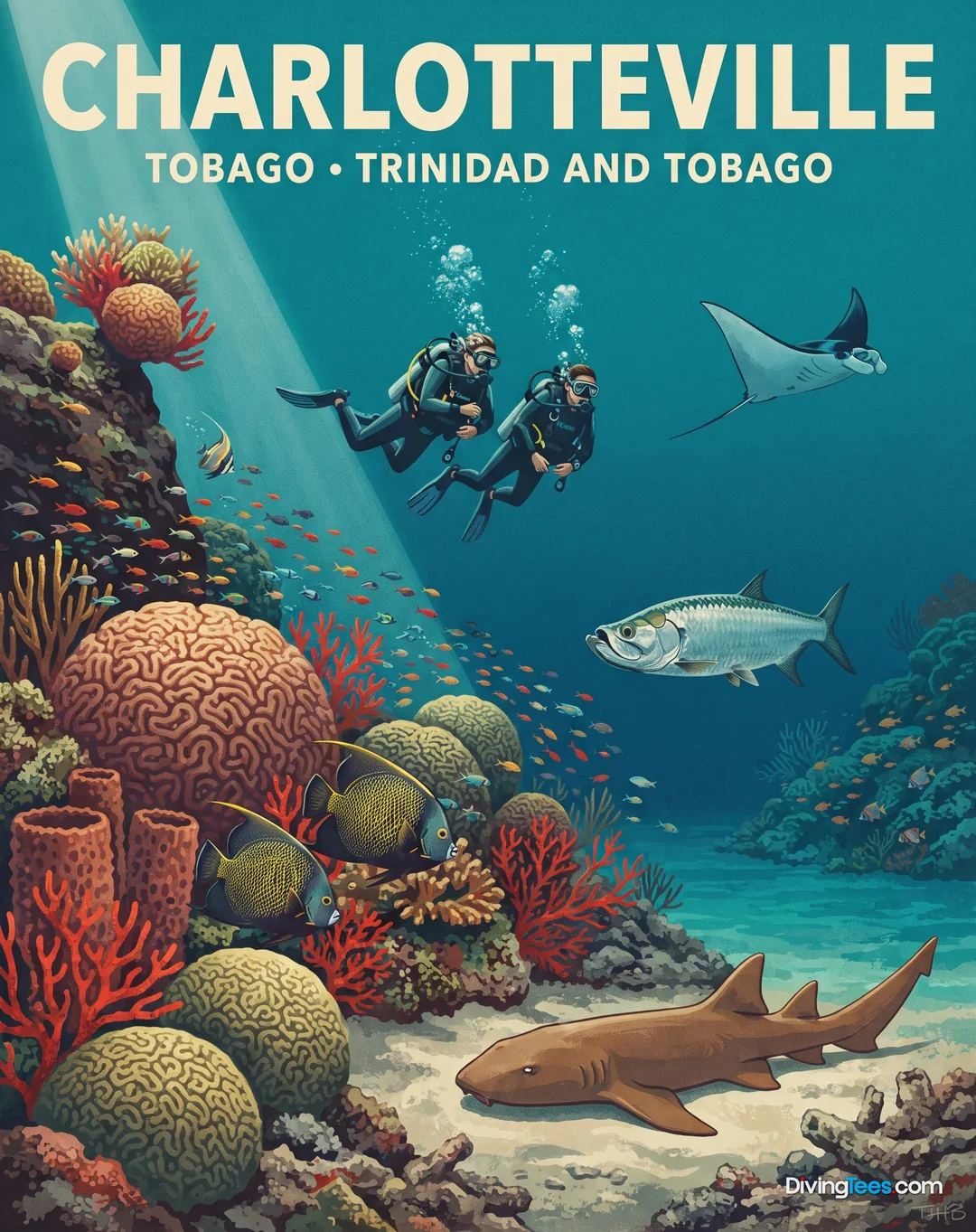
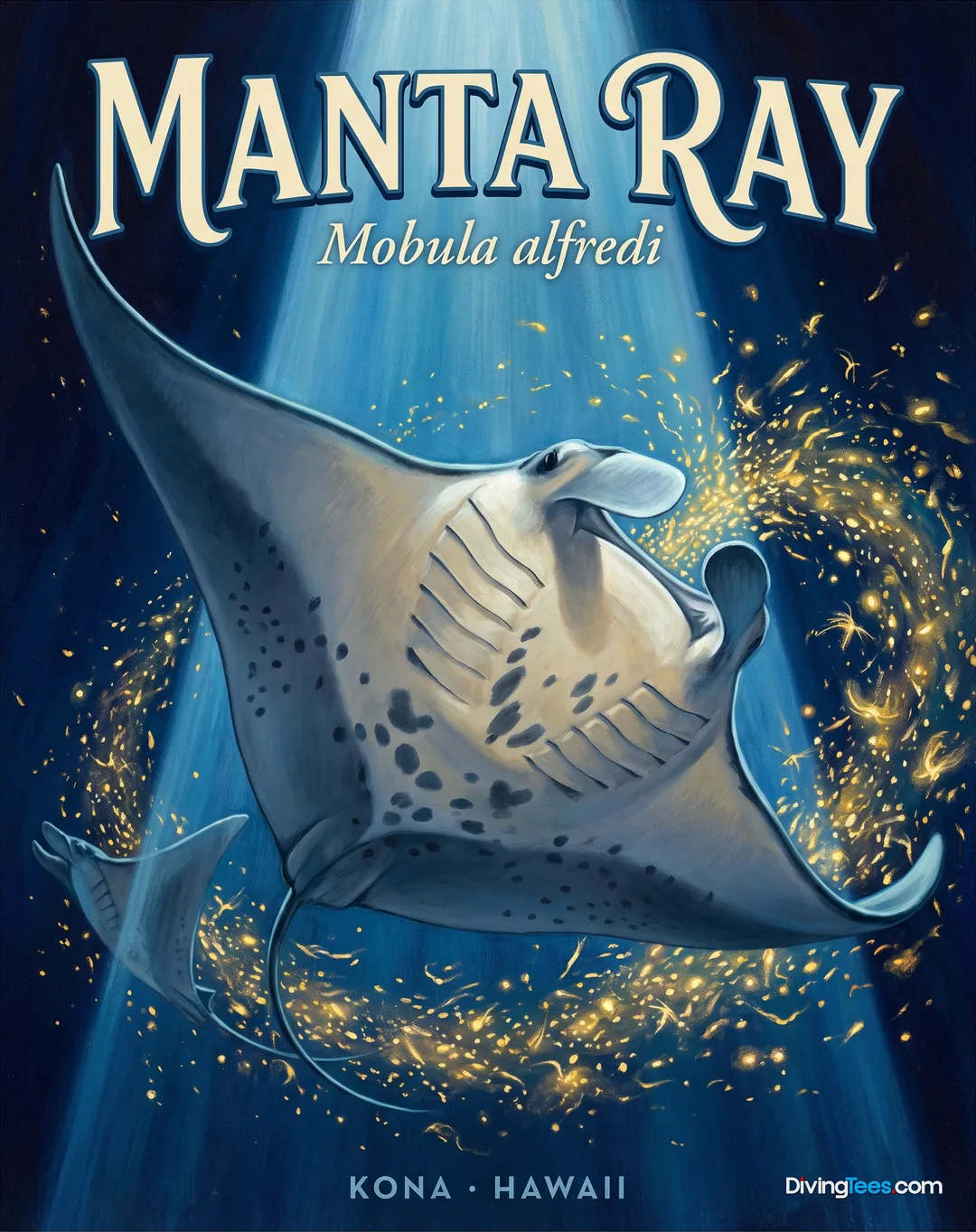
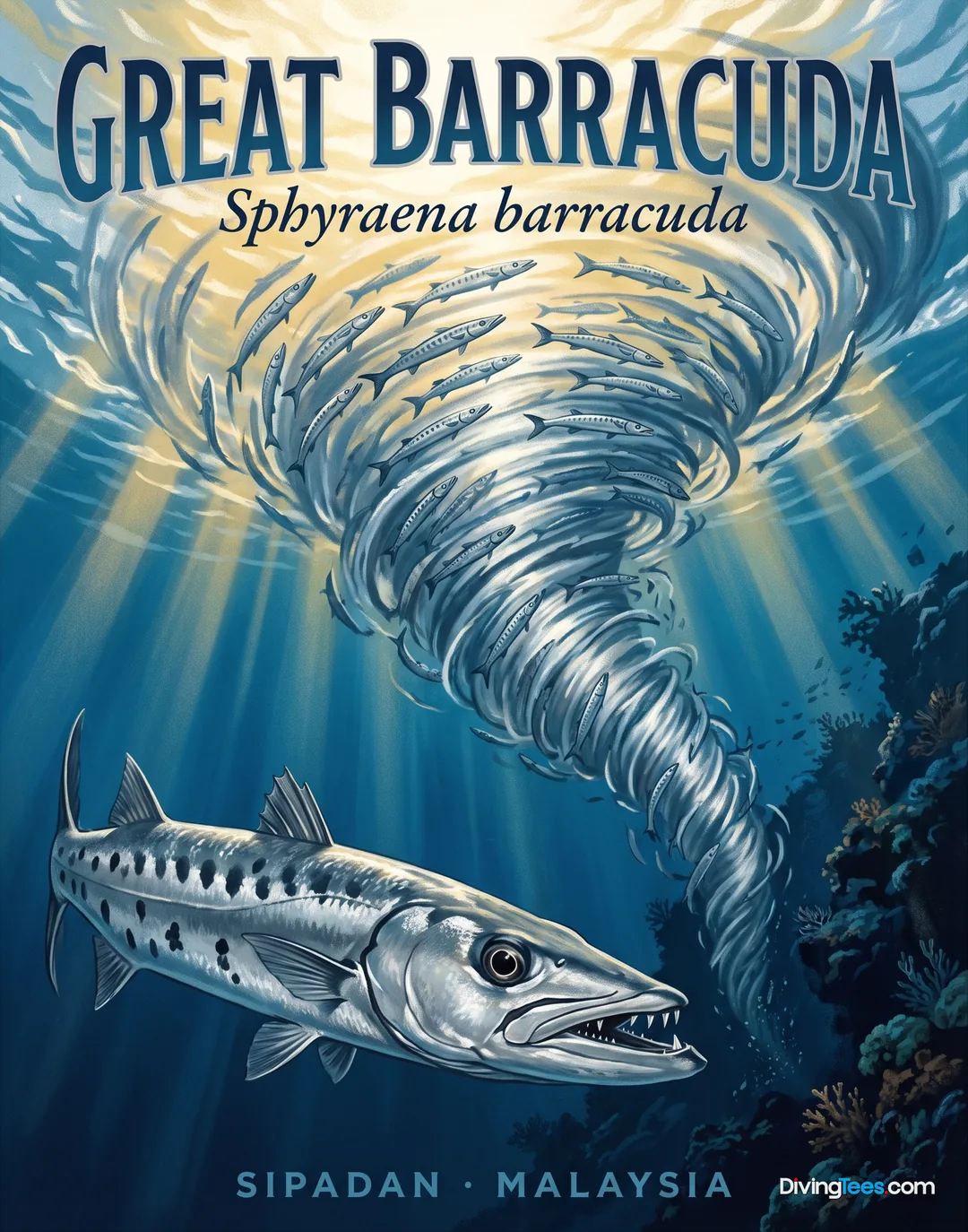
The fish life changes with the shape and exposure of the site. Reef fish occupy the shallow walls and overhangs at Mt. Irvine, while schooling fish gather over isolated structures such as Divers Dream and the reefs around Speyside. Turtles and spotted eagle rays are associated with the deeper reef areas, including Mt. Irvine - Extension, and Cove Reef offers caves and coral shelter for large Cubera snapper. Reef sharks, nurse sharks, groupers and great barracuda add weight to the larger-animal list. M.V. Maverick, an artificial reef, attracts bonitos and cobias. Manta rays are possible around Speyside, but the material supports possibility rather than a guaranteed seasonal encounter. Sites with stronger current are the sensible choice when pelagic movement is the main aim.
The measured window from July to October combines the calmest sea conditions with the most comfortable boat-diving rhythm. That matters in Tobago because the destination is organised around day boats, and exposed Atlantic-side sites such as Speyside, Divers Dream and Divers Thirst are more dependent on workable water movement than sheltered bays. December to May brings the lowest rainfall, which can make the island pleasant above water, but it is not the measured calm-sea window. A July-to-October visit therefore suits divers who want to keep offshore reefs and current-influenced sites in the plan rather than relying only on protected locations.
This coast is exposed to sargassum strandings, whose intensity varies greatly from year to year. To find out more, see the “Sargassum” panel on this page.
Tobago accommodates beginners at sites such as Pirates Bay, Charlotteville and Mt. Irvine - The Wall, where shallow water and light current allow careful practice. The wider destination also rewards divers with more experience: Speyside can carry moderate to strong current, Divers Dream requires confidence in strong current, and Divers Thirst is an advanced profile between 18 and 25 metres. Advanced Open Water, or the equivalent BSAC experience, is useful for deeper boat dives. Nitrox helps with repeated profiles, while wreck training is appropriate for divers intending to make more of M.V. Maverick.
From London Heathrow, London Gatwick or Manchester, Tobago is reached by flying to the island, or by travelling onward from Trinidad. A ferry crossing forms part of the wider Trinidad-and-Tobago link, but the diving itself is island-based, so the ferry is not an inter-site diving requirement. The important practical point is to plan the arrival chain before booking dive days: once on Tobago, local roads connect accommodation with the coast, and the principal underwater highlights are normally reached by day boat. This is not a liveaboard itinerary with transfers between islands and dive grounds. Allowing a little flexibility around the arrival day is sensible, particularly when the chosen plan depends on boat access to exposed sites. Local island travel is therefore part of the dive logistics, rather than something that disappears once the flight lands.
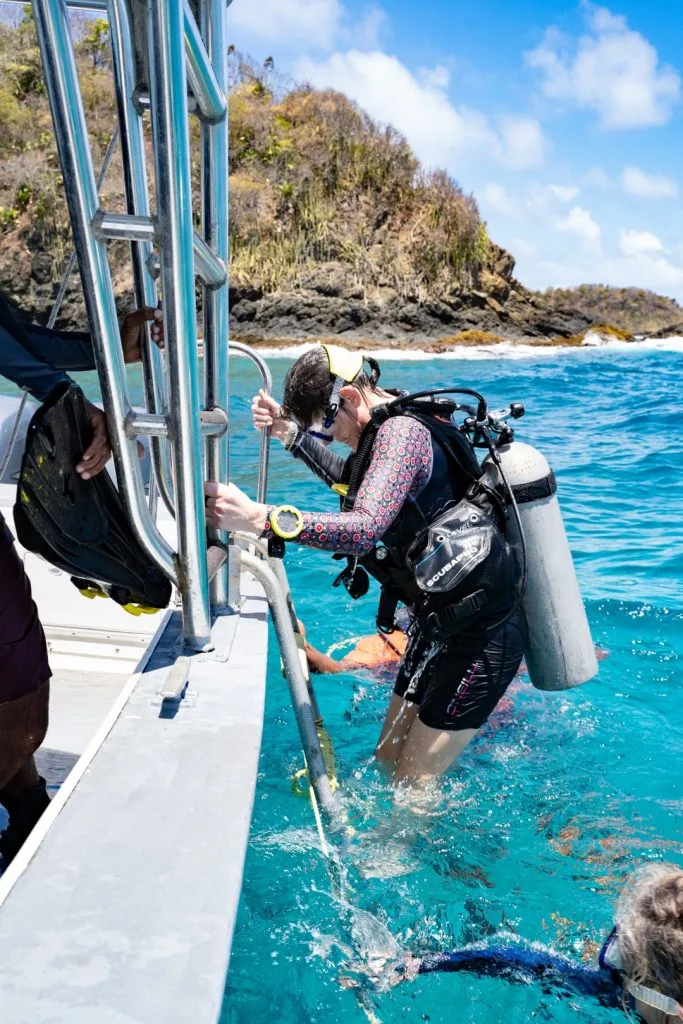
Treat Tobago as a boat-diving island from the outset. Accommodation that looks convenient on a map can still leave the diver dependent on road transfers to the coast and on the day’s boat schedule, so the diving plan should be built around those movements rather than around shore access. Keep a multi-day stay in mind: the point is to combine sheltered reefs, Atlantic-side current and wreck profiles, not to judge the destination after one easy dive. If M.V. Maverick matters, bring the relevant wreck experience or plan suitable training; its 17-to-30-metre profile is not simply another shallow reef. Pack personal buoyancy equipment that fits properly, since precise hovering matters around the managed Buccoo Reef / Bon Accord Lagoon environment. Expect moorings and no-touch practice, and do not treat protected reef as open seabed for anchoring or handling. Finally, keep expectations mixed: Tobago can deliver sharks, rays and wreck life, but it is not a pure macro itinerary or a wreck-only trip.
A sensible Tobago stay alternates boat-diving days with slower island time, allowing different coasts and site types to be used rather than forcing every day through one weather pattern. Non-divers can remain on land for beaches, coastal scenery and general island activities, which makes the destination workable for couples or mixed groups. A final non-diving day fits naturally before departure, rather than turning the holiday into a dive-only schedule.
Hello, I'm Marina, DivingDeal.com's AI assistant. I guide you through destinations, areas and countries.
Thinking about the whole trip and the flights? Talk it over with Edith →
Marina is an AI. Some links are affiliate links: DivingDeal may earn a commission, at no extra cost to you. Bookings are made with the partner.
Your last day stays dry: no diving in the 18-24 hours before a flight, the perfect window to see the destination from another angle.
 Nature
⏱ 3 h · ★ 5.0 (5 reviews)
from £137$183€164
see on Viator ↗
 Culture
⏱ 2 h · ★ 5.0 (30 reviews)
from £37$50€45
see on Viator ↗
 Nature
⏱ 8 h · ★ 4.8 (10 reviews)
from £122$163€145
see on Viator ↗
 City
City⏱ 5 h
from £583$779€696
see on Viator ↗
Ratings and reviews collected by Viator and Tripadvisor.
Visit Tobago from July to October if you want calmer sea conditions and a more comfortable boat-diving rhythm. This period suits plans that include exposed Atlantic-side sites, Speyside, Divers Dream and Divers Thirst, rather than relying only on sheltered bays. December to May brings lower rainfall, but not the measured calm-sea window.
Tobago suits beginners at Pirates Bay, Charlotteville and Mt. Irvine The Wall, where shallow water and light current support careful practice. More experienced divers can explore Speyside, Divers Dream and Divers Thirst, where currents and depth demand greater confidence. Advanced Open Water or equivalent experience helps with deeper boat dives, while wreck training suits M.V. Maverick.
Tobago offers coral gardens, walls, pinnacles, caves, a ferry wreck and offshore plateaux. You may encounter reef fish, schooling rainbow runners, turtles, rays, reef sharks, nurse sharks, groupers and barracuda. Cove Reef has Cubera snapper, while M.V. Maverick attracts bonitos and cobias. Manta rays are possible around Speyside, not assured.
Plan Tobago as a land-based, boat-diving holiday, with accommodation, road transfers and the daily boat schedule considered together. Allow flexibility around arrival, especially for exposed sites, and keep a multi-day stay to combine sheltered reefs, Atlantic currents and wreck profiles. Alternate diving with slower island time, and include a final non-diving day before departure.