
Dolphin Excursions SARL
Google 4.5/5 (31 reviews)
Djibouti · Red Sea
Young whale sharks, volcanic drop-offs and the exposed Seven Brothers give Djibouti a distinctly expedition-style character beneath the surface.
For subtitles in English: start the video firstthen click the gearat the top right of the video, select “Subtitles/CC”, then “Auto-translate” and choose “English”.
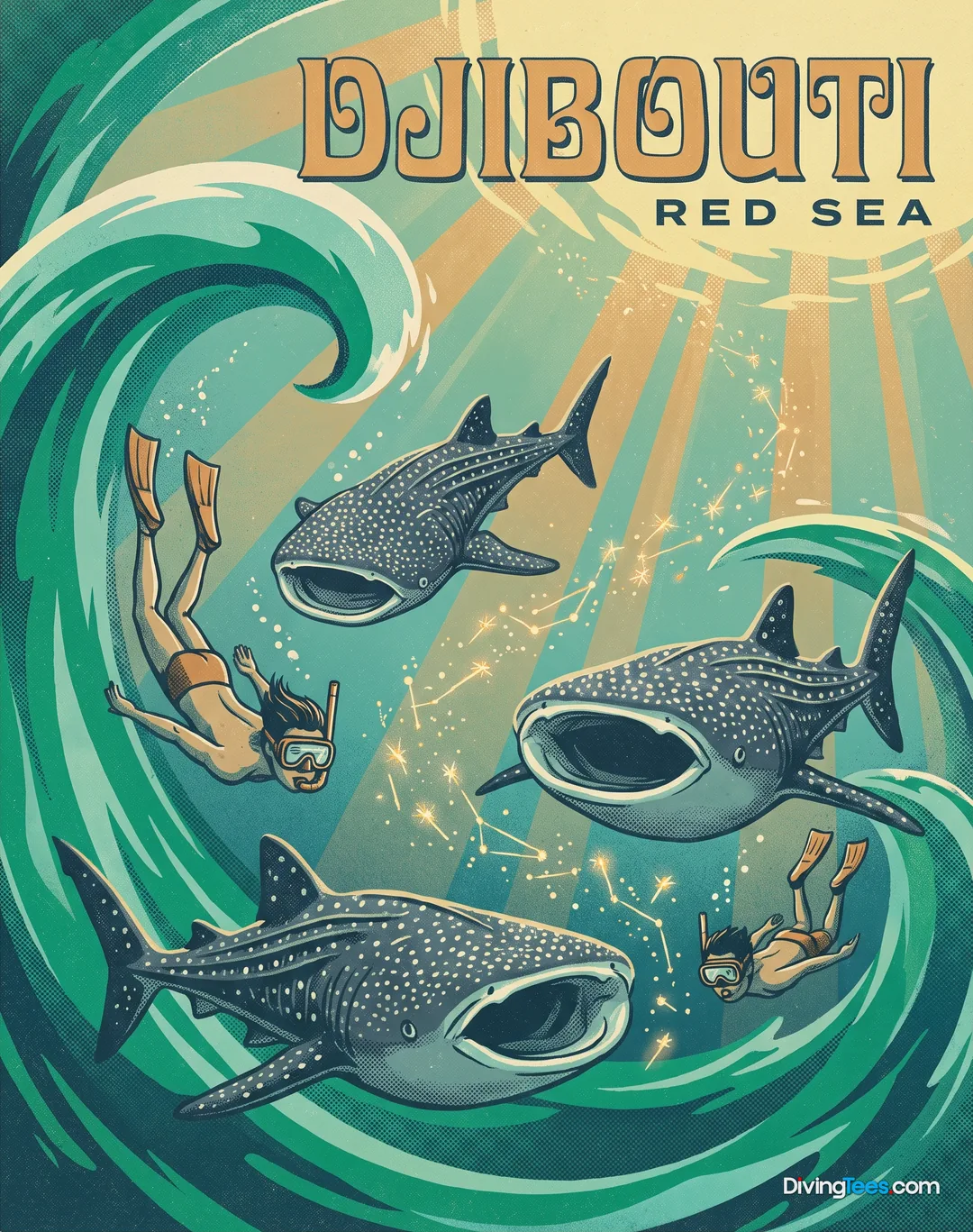
Young whale sharks gather in the plankton-rich waters of the Gulf of Tadjoura and Ghoubet al-Kharab, while volcanic walls and exposed sites lead towards the Seven Brothers. Djibouti is for divers who are happy to trade a conventional beach-resort routine for boats, changing conditions and a properly planned expedition. The reward is a combination of coral reefs, pelagic encounters and stark volcanic scenery, with the remote northern sites adding a more serious edge to the trip.
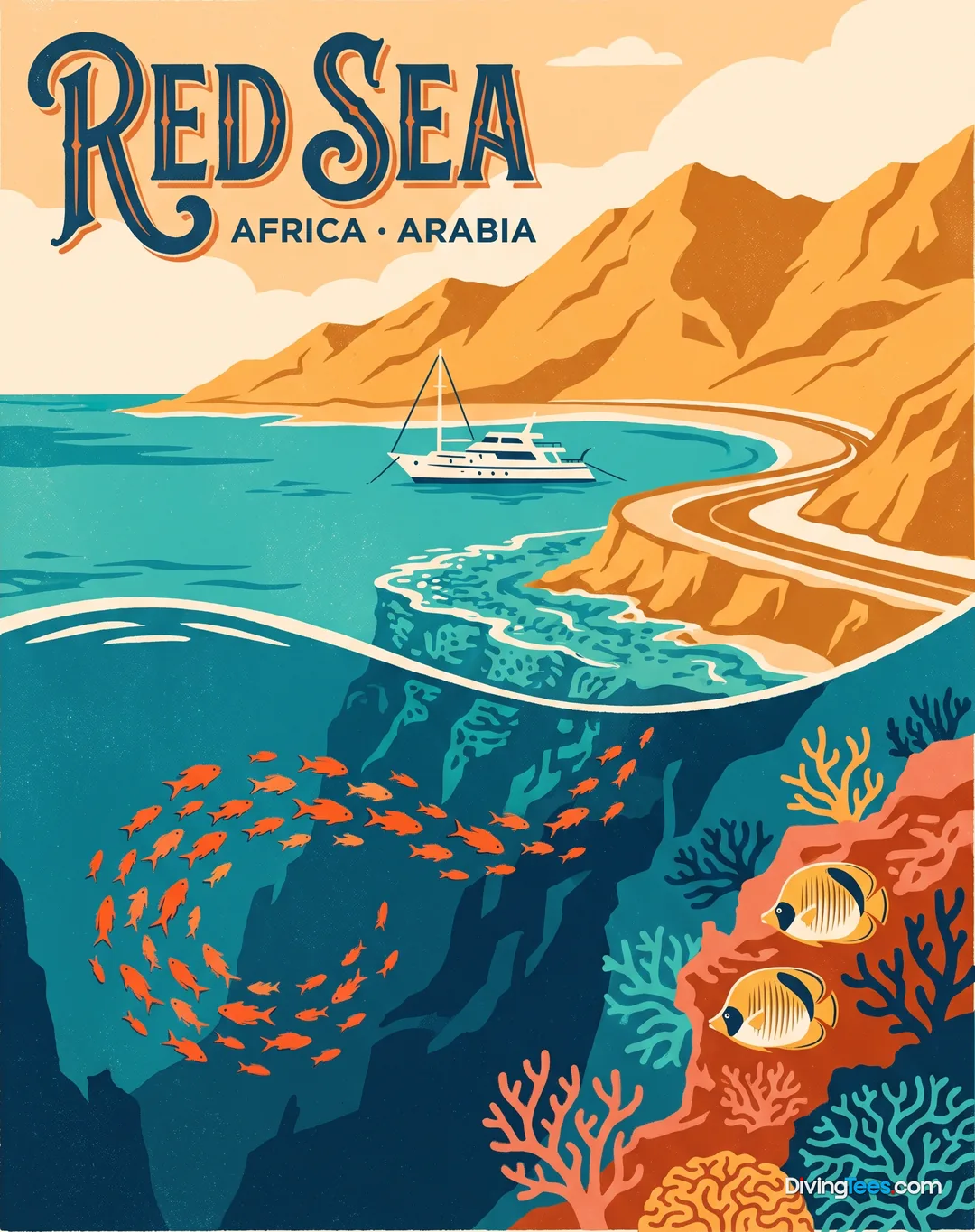
Diving ranges from coral reefs and volcanic formations to walls, drifts and pelagic water. The Seven Brothers and Ras Siyyan are the more exposed propositions, reached by liveaboard or a long excursion rather than treated as an ordinary coastal outing. Tidal changes can produce marked, variable currents, so a drift dive may involve a faster pace than the sheltered-looking surface suggests. Visibility is not fixed either. Around the whale-shark season it is often about fifteen metres, as plankton and changing tides cloud the water, while April to early July can bring nearer thirty-metre visibility. Expect boat-based diving, current-aware descents and a controlled safety stop rather than a uniform reef circuit. The landscape beneath the boat is part of the attraction: dark volcanic relief, drop-offs and open water shaped by the Gulf of Tadjoura and the Bab-el-Mandeb passage.
The headline encounter is the whale shark, particularly young animals gathering in the Gulf of Tadjoura and Ghoubet al-Kharab from October to February, with November to January the most consistent period. Plankton draws them in, but the same food-rich water can reduce visibility, so a close encounter may be more memorable than a long-distance view across blue water. Coral reefs and substantial fish assemblages form the resident background, while the open-water character brings a chance of manta rays during plankton-rich periods. Other large pelagics are part of the regional picture, but should not be treated as a fixed seasonal appointment. The Seven Brothers and Ras Siyyan add the possibility of seeing marine life against remote volcanic walls rather than beside a busy coastal base.
Come from November to January if whale sharks are the priority. This is when plankton-rich water attracts young animals to the Gulf of Tadjoura and Ghoubet al-Kharab, although the bloom can cut visibility to around fifteen metres. Choose April to early July when clearer water matters more than whale-shark timing, with visibility sometimes approaching thirty metres. March to June can also suit divers hoping for quieter conditions around the Seven Brothers. July and August are poor choices for a boat-dependent itinerary: seasonal monsoon winds may restrict or suspend operations from roughly mid-July into early September.
Djibouti suits experienced divers more than newcomers looking for a forgiving first trip. Advanced Open Water training is useful for walls, deeper dives and changing conditions, while drift-diving experience is valuable where tidal currents strengthen. The Gulf of Tadjoura can offer a manageable introduction, but the Seven Brothers are remote, exposed and less tolerant of poor judgement or weak surface skills. A BSAC, PADI or SSI diver should be comfortable with boat procedures, current changes and leaving enough gas and time for a properly planned ascent.
From London Heathrow, London Gatwick or Manchester, travel by air to Djibouti-ville, allowing sensible time for connections before the boat programme begins. Djibouti-ville is the practical starting point for dives in the Gulf of Tadjoura and for whale-shark outings. Ghoubet al-Kharab and the remote sectors require organised sea trips, while the Seven Brothers are normally reached by liveaboard or by a long excursion from Obock. There is no regular passenger ferry linking travellers directly with the dive areas, and no domestic flight serving them. Arrange transfers locally from Djibouti-ville, then expect the sea journey itself to determine how the outlying sites are reached.
Build spare days into any itinerary that includes the Seven Brothers. Wind and sea state can cancel a departure, and a short booking can lose its most distant section before the first fin enters the water. Ask exactly which sites are reached from Djibouti-ville and which require several days at sea, because a broad destination label can conceal a very different transport plan. Do not book July or August for a programme that depends on boats, with restrictions possible from mid-July into early September. If whale sharks matter most, accept that plankton may reduce visibility; expecting both a dense gathering and exceptionally clear water is unrealistic. If clear water matters more, look towards April to early July. March to June may be a quieter window for the Seven Brothers. Treat that archipelago as an exposed expedition, not a routine coastal excursion, and keep a weather day available before and after the remote run.
A seven- to ten-day stay gives the best chance of combining Gulf of Tadjoura outings with an expedition to the Seven Brothers. Stay-based diving works for Djibouti-ville, Ghoubet al-Kharab and whale-shark trips, with transfers arranged locally rather than assumed to be included. A liveaboard is the more coherent way to link the Seven Brothers, Ras Siyyan and other distant sites. Djibouti-ville and the surrounding coast also offer volcanic, geological and boat excursions for non-diving companions, although remote sectors are chiefly organised around divers.
Hello, I'm Marina, DivingDeal.com's AI assistant. I guide you through destinations, areas and countries.
Thinking about the whole trip and the flights? Talk it over with Edith →
Marina is an AI. Some links are affiliate links: DivingDeal may earn a commission, at no extra cost to you. Bookings are made with the partner.
Visit Djibouti from November to January if young whale sharks are your priority, accepting plankton-rich water and reduced visibility. For clearer water, choose April to early July. March to June may suit quieter Seven Brothers trips. Avoid boat-dependent plans in July and August, when monsoon winds can restrict or suspend operations.
Djibouti suits experienced divers who are comfortable with boats, changing currents and planned ascents. Advanced Open Water training is useful for walls, deeper dives and variable conditions, while drift-diving experience helps where tides strengthen. The Gulf of Tadjoura can provide a manageable introduction, but the exposed Seven Brothers demand sound judgement and surface skills.
Underwater in Djibouti, you can encounter young whale sharks in the Gulf of Tadjoura and Ghoubet al-Kharab, alongside coral reefs, fish assemblages and possible manta rays during plankton-rich periods. Volcanic walls, drop-offs, drifts and open water shape the diving, while the Seven Brothers and Ras Siyyan add remote scenery and pelagic possibilities.
Plan Djibouti as a boat-based expedition rather than a conventional coastal holiday. Fly to Djibouti-ville, arrange local transfers, and confirm which sites need a long excursion or liveaboard. Build spare weather days into remote plans, especially for the Seven Brothers, and ask how the programme links Djibouti-ville, Ghoubet al-Kharab, Ras Siyyan and distant sites.