
Pacific Pro Dive, Ltd.
Google 4.9/5 (46 reviews)
Canada · Americas
Reefs, walls and wrecks lead from Courtenay’s shore and boats towards the Comox Valley, Port Hardy and God’s Pocket Marine Park.
For subtitles in English: start the video firstthen click the gearat the top right of the video, select “Subtitles/CC”, then “Auto-translate” and choose “English”.
Reefs, walls and wrecks are the underwater landmarks around Courtenay, but the town’s real value is above water: it gives cold-water divers a practical base in the Comox Valley. Local shore dives can support Open Water training, while boats extend the programme towards more ambitious sites around Vancouver Island. Courtenay also functions as a staging point for expeditions to Port Hardy and God's Pocket Marine Park. It suits divers who want proper cold-water support, not a tropical escape dressed up with a drysuit.
The diving changes with the way you use Courtenay. From the shore, the emphasis is on accessible training dives in the Comox Valley. By boat, the choice broadens to reefs, walls and wrecks, with variable currents requiring a sensible briefing and a willingness to alter the plan. Some outings are local day trips; others are charters aimed at distant sectors of Vancouver Island. Courtenay’s operators also cater for technical divers and rebreather users, so the diving can be built around more demanding equipment and deeper objectives. Treat the town as a base for different kinds of water rather than as one self-contained reef. A safety stop, surface interval and return plan matter particularly when a local dive is followed by a boat outing or an expedition.
Marine life here is tied to the habitat you choose: reef structure, wall faces and wrecks provide the setting, while the wider British Columbia programme brings the region’s marine fauna into play. A shore training dive and a boat trip should not be expected to deliver the same encounters. The appeal is the change of scale, from working slowly over a local reef to spending a full outing on the structures and wildlife of a remote marine park. God's Pocket Marine Park is the destination to keep in mind when fauna is central to the trip, although it remains a separate expedition rather than a local Courtenay dive. Plan by habitat and itinerary, not by a promised animal sighting.
Choose the timing according to the diving you want, rather than looking for a tropical high season. Courtenay is a cold-water base, so the drysuit, boat support and chosen programme shape the trip more than any monsoon pattern. A local training break can be organised around shore diving, while a Port Hardy or God's Pocket expedition needs its own charter planning. That makes flexibility more useful than chasing a particular month. Before travelling, match the intended dates to the equipment, boat and expedition arrangements you actually need, especially if technical or rebreather diving is the main purpose of the visit.
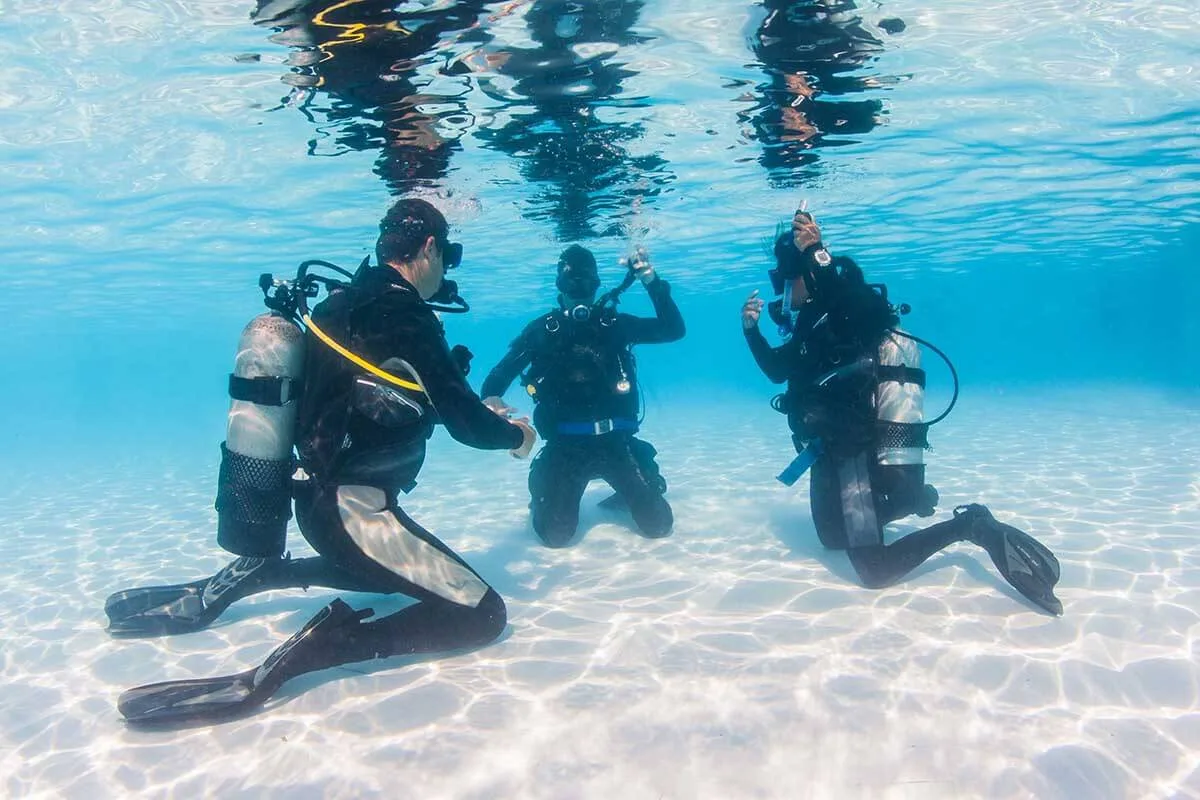
Courtenay can suit beginners when the plan is built around shore-based training, including Open Water courses. Regular diving is better approached with a drysuit qualification and a configuration designed for cold water. Boat sites, deeper objectives and remote expeditions call for more experience, with Advanced or equivalent training useful for the range on offer. A Wreck qualification is sensible for wreck outings. Technical divers and rebreather users are also catered for, provided their support requirements are arranged before arrival.
From London Heathrow, London Gatwick or Manchester, reach Courtenay as a planned connected journey, allowing time for the changes before the final approach to Vancouver Island. Do not build the itinerary around Courtenay as though Port Hardy or God's Pocket were nearby local sites. They are separate expedition destinations and need additional transport and boat arrangements. Once in Courtenay, organise movements around the diving schedule, particularly the departure time of a charter or the start of a shore-based training day. The town is the land base, while the boat and expedition legs must be arranged as distinct parts of the journey rather than assumed extensions of arrival.
Bring a drysuit and a cold-water configuration, not a lightweight tropical set-up. Courtenay’s diving centres are geared towards equipment maintenance, technical support and rebreather diving, so check in advance that the fills, servicing and specialist support you need are available for your dates. Be clear about the format you are booking: shore diving in the Comox Valley is not the same as a local boat charter, and neither is the same as an expedition to Port Hardy or God's Pocket. If you want Open Water training, ask specifically for shore-based dives. If wrecks, deeper sites or technical equipment are involved, confirm the relevant qualification and boat requirements before travelling. Keep the expedition expectation realistic: God's Pocket is a separate destination, not a day’s casual add-on from Courtenay.
Organise the stay around a land base in Courtenay, using shore days in the Comox Valley alongside pre-arranged boat outings. Leave the more distant ambitions, such as Port Hardy or God's Pocket Marine Park, as separate expedition blocks rather than trying to squeeze them into a local diving schedule. This split makes room for training, equipment checks and weather-related changes without confusing a Courtenay dive with a remote charter. The result is a flexible cold-water trip, with local practice and bigger journeys kept in their proper places.
Hello, I'm Marina, DivingDeal.com's AI assistant. I guide you through destinations, areas and countries.
Thinking about the whole trip and the flights? Talk it over with Edith →
Marina is an AI. Some links are affiliate links: DivingDeal may earn a commission, at no extra cost to you. Bookings are made with the partner.
Choose your timing around the type of diving you want rather than a tropical high season. Courtenay is a cold-water base, so your drysuit, boat support and chosen programme shape the trip. Match your dates to equipment, charter and expedition arrangements, particularly for technical or rebreather diving.
Courtenay can suit beginners when you choose shore-based Open Water training in the Comox Valley. Regular diving is better approached with a drysuit qualification and cold-water configuration. Boat sites, deeper objectives and remote expeditions need more experience, while wreck outings call for suitable wreck training. Technical and rebreather support is available.
You can explore reefs, walls and wrecks from Courtenay’s shore and boats, with the habitat shaping the encounters. Local shore training and boat trips offer different experiences. For marine fauna within a wider British Columbia programme, God’s Pocket Marine Park provides a remote marine-park setting, but it requires a separate expedition.
Use Courtenay as a land base, combining Comox Valley shore days with pre-arranged boat outings. Keep Port Hardy and God’s Pocket Marine Park as separate expedition blocks with their own transport and boat arrangements. Bring a drysuit, confirm fills and specialist support, and allow room for equipment checks and weather-related changes.