
Kocher's Diving Locker, Ltd.
Google 5/5 (485 reviews)
Canada · Americas
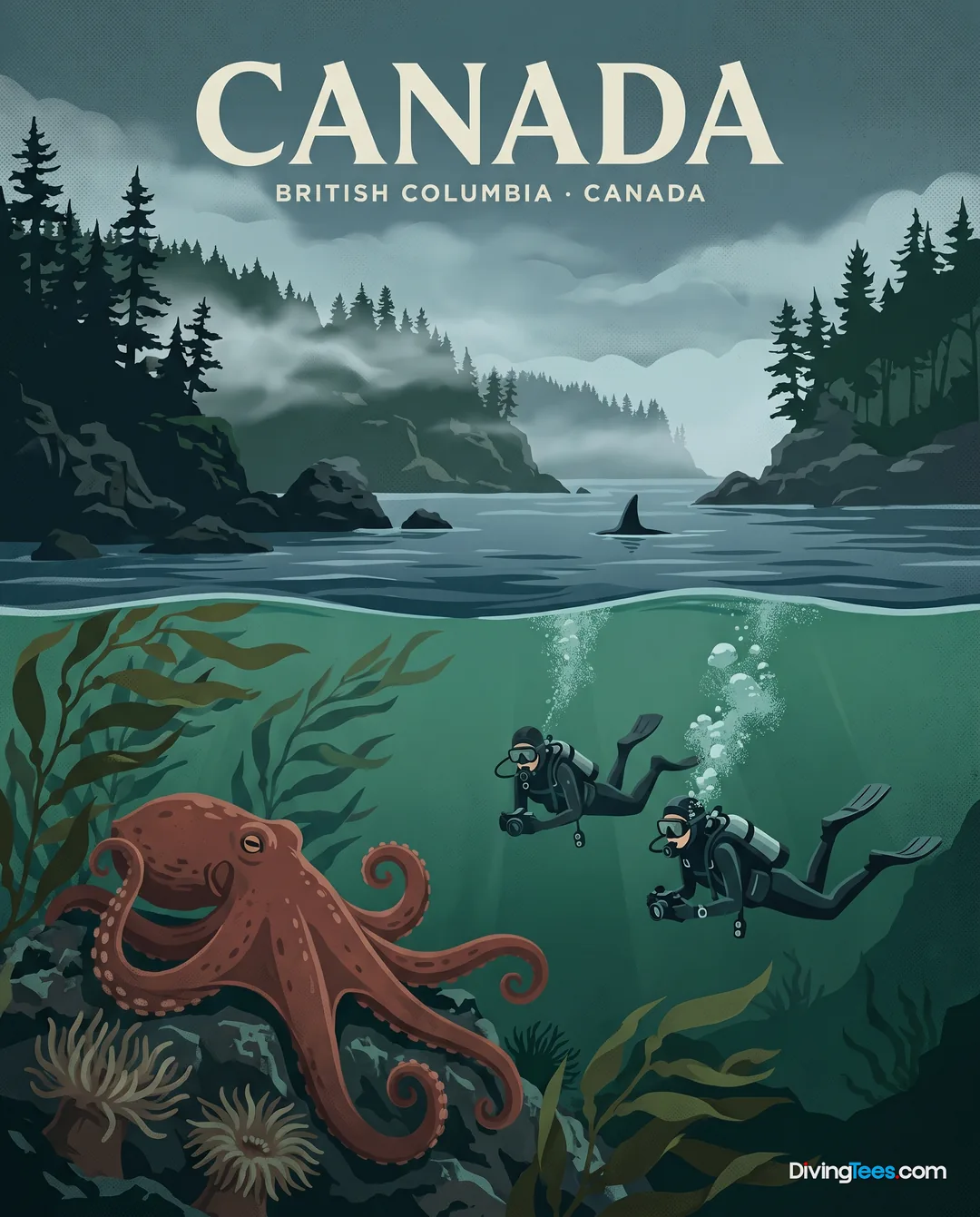
Rocky walls, kelp forests, wrecks, giant Pacific octopus and anemone gardens make Vancouver a serious cold-water shore-diving base for divers who enjoy close work.
For subtitles in English: start the video firstthen click the gearat the top right of the video, select “Subtitles/CC”, then “Auto-translate” and choose “English”.
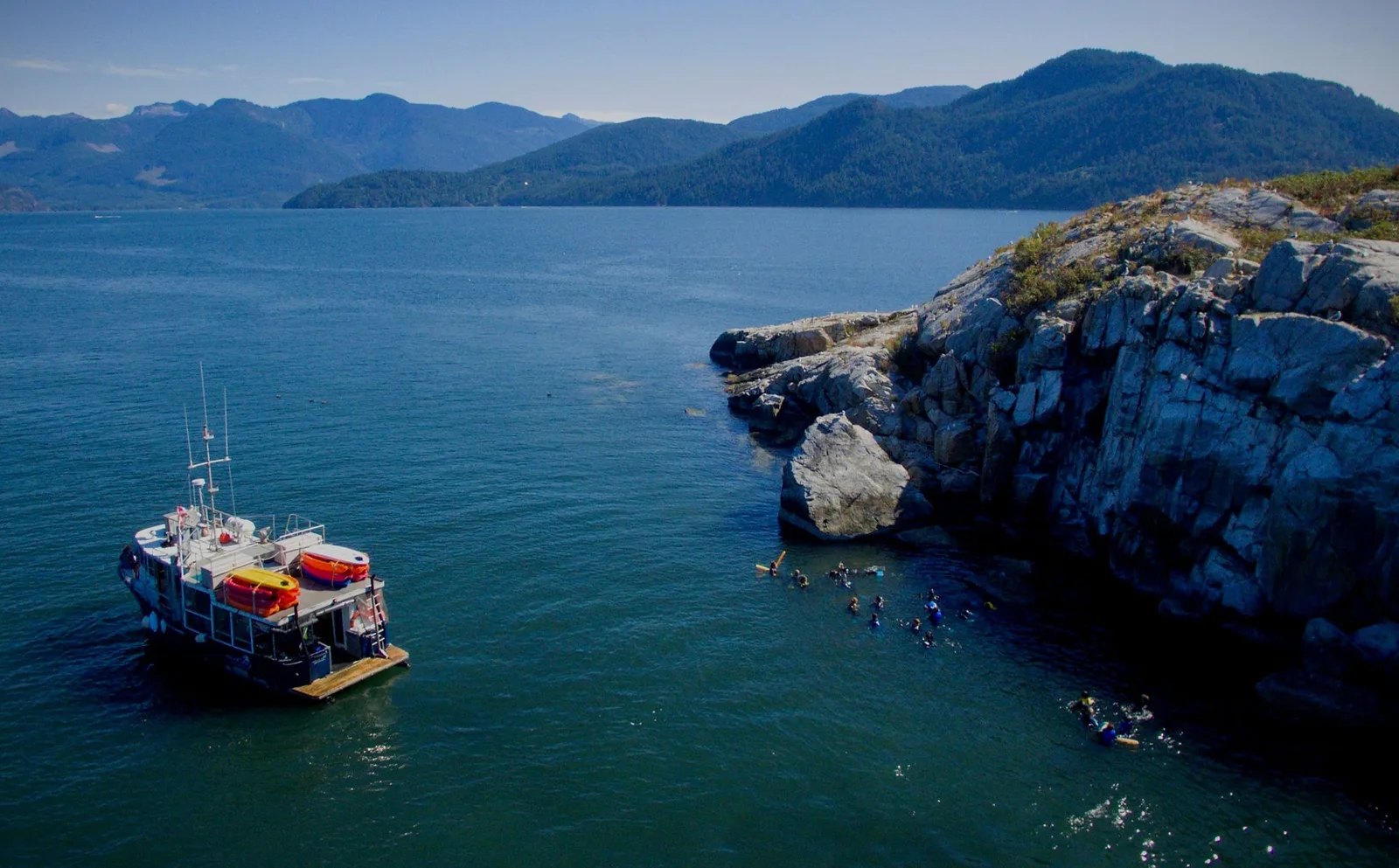
Giant Pacific octopus, wolf eels and curtains of kelp give Vancouver its character underwater. The diving is built around rocky walls, anemone gardens, wrecks and close observation of small life rather than a single headline attraction. Several rewarding outings begin from the shore around Vancouver and West Vancouver, while boats open up Howe Sound and nearby coastal sites. It is a practical base for divers who want cold-water wildlife by day and Vancouver’s food, museums and mountain scenery between dives.
Expect a mixture of shore dives, boat trips, rocky drop-offs, kelp forests, anemone gardens and wrecks. The shallow sections suit training and patient macro photography, but some walls fall away quickly, so a modest-looking start can become a deep dive sooner than expected. Currents are variable, with surface flow particularly important at Whytecliff Park, where the tide and local conditions should determine the timing. Visibility is often more appealing from September through April, while summer runoff and plankton or algae blooms can turn the water green and obscure the detail that makes these sites worthwhile. Treat the wrecks as exterior viewing only where their structure is deteriorating. A dive here is generally about moving slowly over rock, kelp and fixed life, rather than covering ground in search of one large animal.
The regular cast includes rockfish, lingcod, wolf eels, giant Pacific octopus, nudibranchs, crabs and anemones, all present throughout the year. The smaller subjects reward a slow pace: look into the folds of an anemone, under ledges and across the rock for nudibranchs, gobies and small sculpins rather than swimming past in search of a bigger sighting. Kelp adds height and movement to the scene, while sea lions and seals are possible but not dependable. A sixgill shark is a rare possibility, not a reason to plan the trip. Whytecliff Park’s protected setting helps concentrate rockfish, lingcod, anemones, sponges and other invertebrates, although urban and marine pressures mean careful buoyancy and hands-off observation matter.
Plan around autumn, winter and early spring, broadly from September through April. Visibility is generally more favourable then, and marine life remains active, while the sites are usually less crowded than during the summer training season. June to August can bring warmer air but poorer underwater conditions, as runoff and plankton or algae blooms reduce clarity. Whytecliff Park remains popular year-round, so the quieter calendar does not remove the need to work around tides, surface currents and boat availability. For repeated dives outside summer, a drysuit is the sensible default; a thick 7 mm wetsuit may suit some summer divers, depending on cold tolerance and dive length.
Vancouver works for all levels, provided the site matches the diver. Sheltered, shallow areas can support training and macro diving, while the rapidly deepening walls and stronger surface currents call for sound local advice and calm, controlled skills. Advanced Open Water or equivalent experience is useful for deeper wall dives. A drysuit qualification is valuable for repeated cold-water diving, and wreck training is appropriate for the relevant sites, but deteriorating wrecks should be observed from outside rather than entered. BSAC, PADI and SSI divers should plan around their actual cold-water experience, not simply their certificate level.
From London Heathrow, Gatwick or Manchester, reach Vancouver by air, allowing roughly twelve to sixteen hours for the journey with a connection, before any delays. Once there, the practical constraint is not a compulsory ferry but distance between the dive areas. Vancouver shore sites, West Vancouver, Horseshoe Bay, Howe Sound and the road towards Squamish are spread out, so a hire car, taxi or organised transfer is more useful than relying on walking. Allow roughly thirty to ninety minutes by road for North Shore sectors, depending on where the dive is. Boat trips are arranged locally and remain dependent on sea conditions and operator availability. Plan the driving by geographical sector, rather than crossing the metropolitan area repeatedly with wet equipment.
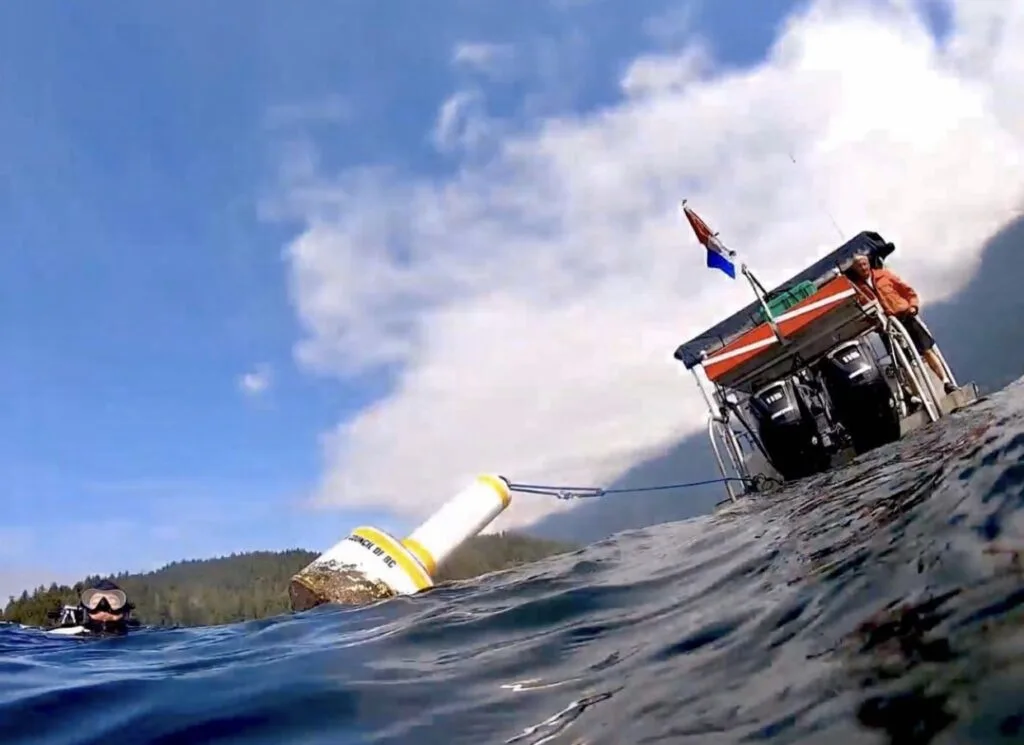
Treat Whytecliff Park as a tide-and-current dive, not a site where the start time is chosen simply for the light. Ask locally which window suits the surface flow, and do not let a shallow entry encourage you beyond a marker or rocky feature without checking how quickly the bottom drops away. Take a real thermal plan for repeated dives: cold, rather than depth, often becomes the limiting factor over a full day. Bring your own mask, snorkel and mouthpiece when hiring equipment, and arrange parking and kit transport in advance because shore sites are not necessarily equipped bases. Group dives by area, keeping Vancouver and West Vancouver separate from Howe Sound and the Squamish road. Carry and display a dive flag where boat traffic is present. Do not enter a wreck that is breaking up, and keep a spare day for tide, weather and boat changes instead of forcing an exposed dive into the schedule.
A five- to seven-day land stay gives room for shore dives, at least one Howe Sound boat outing and replacement days when tides, weather or transport interfere. Keep the urban base flexible, since sites are spread between Vancouver, West Vancouver and the coastal road. Non-divers are well catered for with museums, neighbourhoods, restaurants, North Shore viewpoints, forests, hiking and Howe Sound scenery. A drysuit-friendly routine also benefits from sensible time between dives rather than packing every day with water work.
Hello, I'm Marina, DivingDeal.com's AI assistant. I guide you through destinations, areas and countries.
Thinking about the whole trip and the flights? Talk it over with Edith →
Marina is an AI. Some links are affiliate links: DivingDeal may earn a commission, at no extra cost to you. Bookings are made with the partner.
Plan for autumn, winter or early spring, when visibility is generally more favourable and marine life remains active. Summer can bring warmer air, but runoff and plankton or algae blooms may reduce clarity. Whytecliff Park is popular year-round, so you still need to consider tides, surface currents and boat availability.
Vancouver suits different experience levels when you match the site to your skills. Sheltered, shallow areas support training and macro diving, while rapidly deepening walls and stronger surface currents require calm control and local advice. Advanced Open Water or equivalent experience helps with deeper walls, and repeated cold-water diving benefits from drysuit training.
You can explore rocky walls, kelp forests, anemone gardens, wrecks and rocky drop-offs while looking for rockfish, lingcod, wolf eels and giant Pacific octopus. Nudibranchs, crabs, gobies, small sculpins and other invertebrates reward slow observation. Sea lions and seals are possible, while rare larger encounters should not shape your plans.
Use Vancouver as a flexible base for shore dives around Vancouver and West Vancouver, plus boat trips into Howe Sound. A hire car, taxi or organised transfer helps because sites are spread out. Group dives by area, plan around tides and conditions, arrange kit transport and parking, and keep replacement time for weather or boat changes.