Cayos Cochinos · Honduras · Americas
Max. depth · 35 mSea Mount de Cayos Cochinos: Pinnacles in the Open Ocean
Descend onto these submerged pinnacles between Roatán and Cayos Cochinos, and you'll be met by the vibrant dance of extensive schools of barracuda and jacks.
What makes this site special
- Diving two submerged pinnacles in the open ocean.
- Large schools of barracuda (Sphyraena barracuda).
- Numerous schools of jacks (Carangidae).
- Well-preserved coral gardens on the seamount slopes.
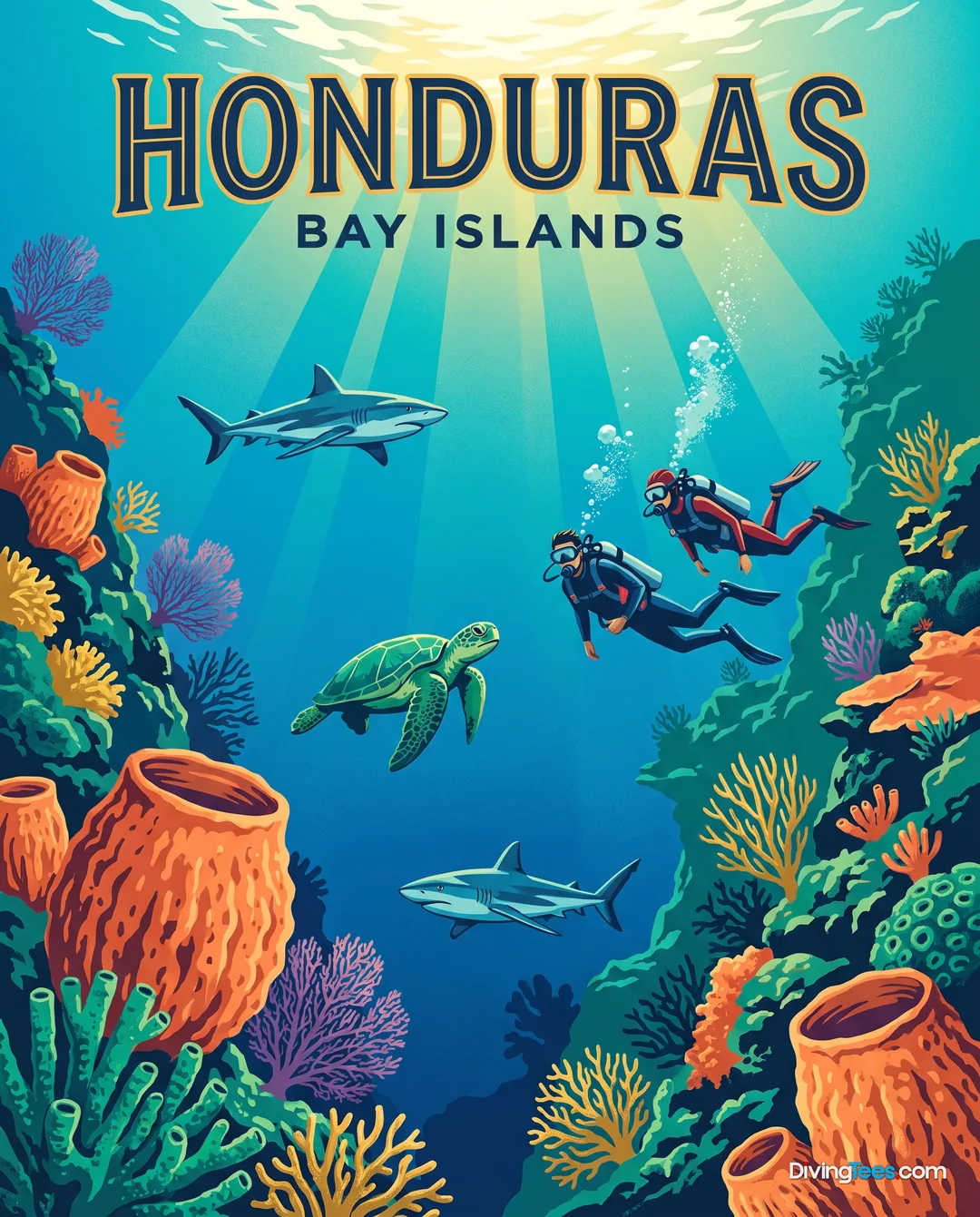
- Encounters with pelagic species like spotted eagle rays and reef sharks.
- Distinct blue-water diving experience away from coastal reefs.
Sea mount de Cayos cochinos about the site
The Sea Mount de Cayos Cochinos isn't a typical coastal reef; it's a pair of imposing pinnacles that ascend from the deep ocean floor, situated between Roatán and the Cayos Cochinos islands. Your dive begins on the summit of these underwater mountains, where life congregates, drawn by nutrient-rich currents. From the moment you start your descent, you're immersed in a vibrant ecosystem, a characteristic of oceanic seamounts that act as beacons for marine life in the open blue.
As you approach the pinnacles, their distinct topography becomes clear. These seamounts, with their defined contours, create a series of microhabitats supporting a surprising biodiversity. The coral here is notably well-preserved, forming extensive gardens that carpet the slopes and summits, providing shelter and food for countless species. The excellent visibility allows you to appreciate the sheer scale of these structures, watching them disappear into the deep blue as sunlight plays across their surfaces.
What truly sets Sea Mount de Cayos Cochinos apart are the massive schools of fish that inhabit it. You'll encounter huge aggregations of barracuda (Sphyraena barracuda) forming compact, swirling formations, moving with a hypnotic synchronicity. Similarly, jacks (Carangidae) swarm in impressive numbers, creating a scene of frenetic activity as they hunt among the coral or in the open waters surrounding the pinnacles. These interactions with pelagic species are a constant reminder of the richness of this oceanic environment.
Diving this site is a dynamic exploration. It's not just a place to observe; it's an opportunity to immerse yourself in the flow of marine life. The pinnacles serve as natural gathering points for marine fauna, consistently attracting these large schools of fish, meaning each descent can offer different encounters. The structure of the seamount allows for a natural progression along its flanks, providing divers with panoramic views of the activity unfolding around them, and even revealing reef species sheltering within the coral.
These seamounts are offshore pinnacles, rising from significant depths to within 12 to 18 metres of the surface. This creates isolated, mountain-like structures in open water, distinct from the fringing reefs closer to shore. The tops form relatively shallow plateaus or ridges that then slope away into much greater depths on all sides, offering a three-dimensional profile that draws in pelagic life.
The currents at Cayos Cochinos seamounts are variable, ranging from mild to strong. This variability is often linked to nutrient-rich water being pushed up the pinnacles, which in turn attracts the schooling pelagic fish. Divers should be prepared for changing current strength and direction during a dive, as these conditions are part of what makes the site so vibrant and alive with activity.
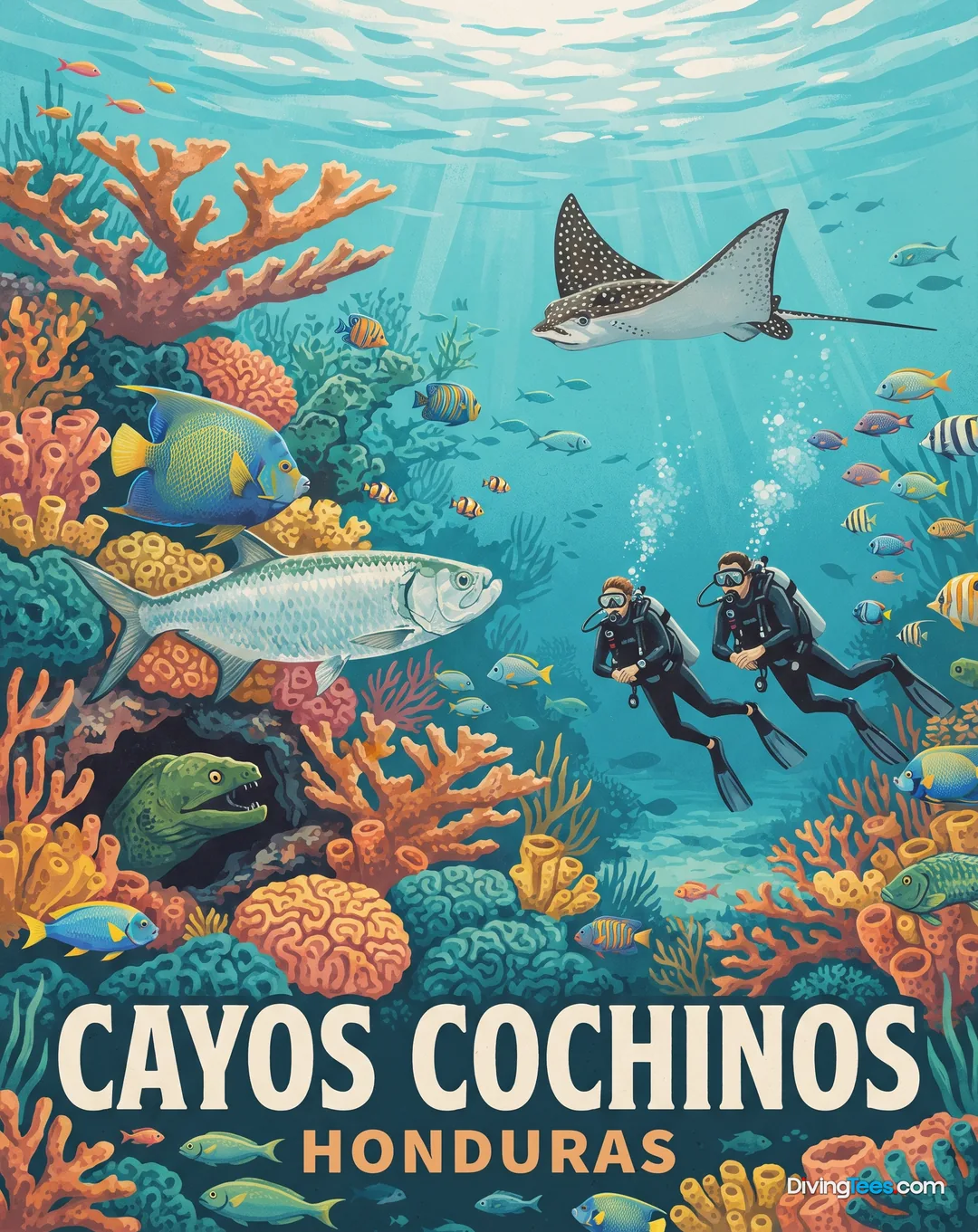
Beyond the large schools, you'll also encounter a variety of other marine life. Keep an eye out for snapper, groupers, parrotfish, angelfish, and wrasses closer to the reef. In the blue, spotted eagle rays, reef sharks, and sea turtles are often seen. Moray eels can be found tucked into the coral formations, adding to the diverse ecosystem supported by these isolated underwater mountains.
Diving Sea mount de Cayos cochinos: the marine life you’ll meet

Diving conditions
This dive site is accessible from a minimum of Advanced Open Water certification, and generally recommended for divers with good buoyancy control and comfort in blue-water, current-affected dives. Depths range from 12 metres on the pinnacle tops down to 35 metres. Visibility typically holds between 25 and 30 metres. Currents can be variable, ranging from mild to strong, and can shift in direction during the dive. The best conditions are usually found from February through June, during the dry season, which offers calmer seas for the offshore boat crossing.