Americas
Honduras: islands, reefs and living cultures
Honduras links Roatán’s Caribbean diving with Utila’s village rhythm, Copán’s Maya carvings and the coconut-rich cooking of the Garifuna coast.
What makes this country unique
- Roatán and Utila, two very different island bases
- Late autumn months centred on Utila’s seasonal window
- Copán Ruinas and the carved Maya world inland
- Garifuna cooking with tapado and sopa de caracol
- Marcala coffee on the cool Honduran highlands
- West End Wall on Roatán’s Caribbean side
- Cayos Cochinos and its Sea mount
For subtitles in English: start the video firstthen click the gearat the top right of the video, select “Subtitles/CC”, then “Auto-translate” and choose “English”.
This country for a diver
Honduras gives European divers direct access to the Mesoamerican Barrier Reef from the Bay Islands, while keeping Maya archaeology and Lenca highlands within the same national journey. Its diving bases share light currents, mixed diving and a moderate level of tourism, but their character differs sharply. Roatán leans towards resort comfort and organised boat operations; Utila feels more concentrated around village life and dive schools. Reef health is mixed: bleaching and disease have reduced hard-coral cover in some historic zones, leaving sponges, canyons and marine life important parts of the experience.
How the country divides
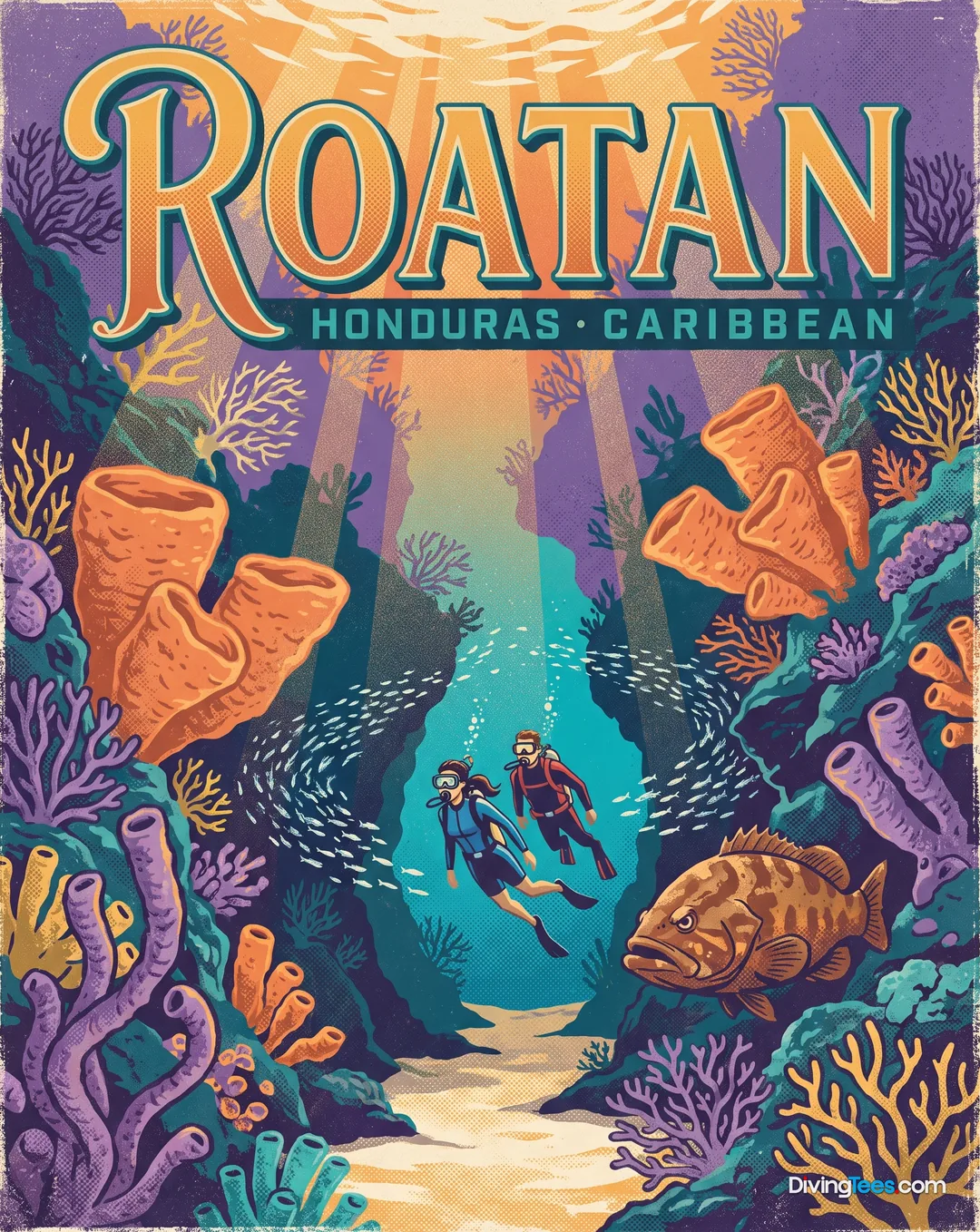
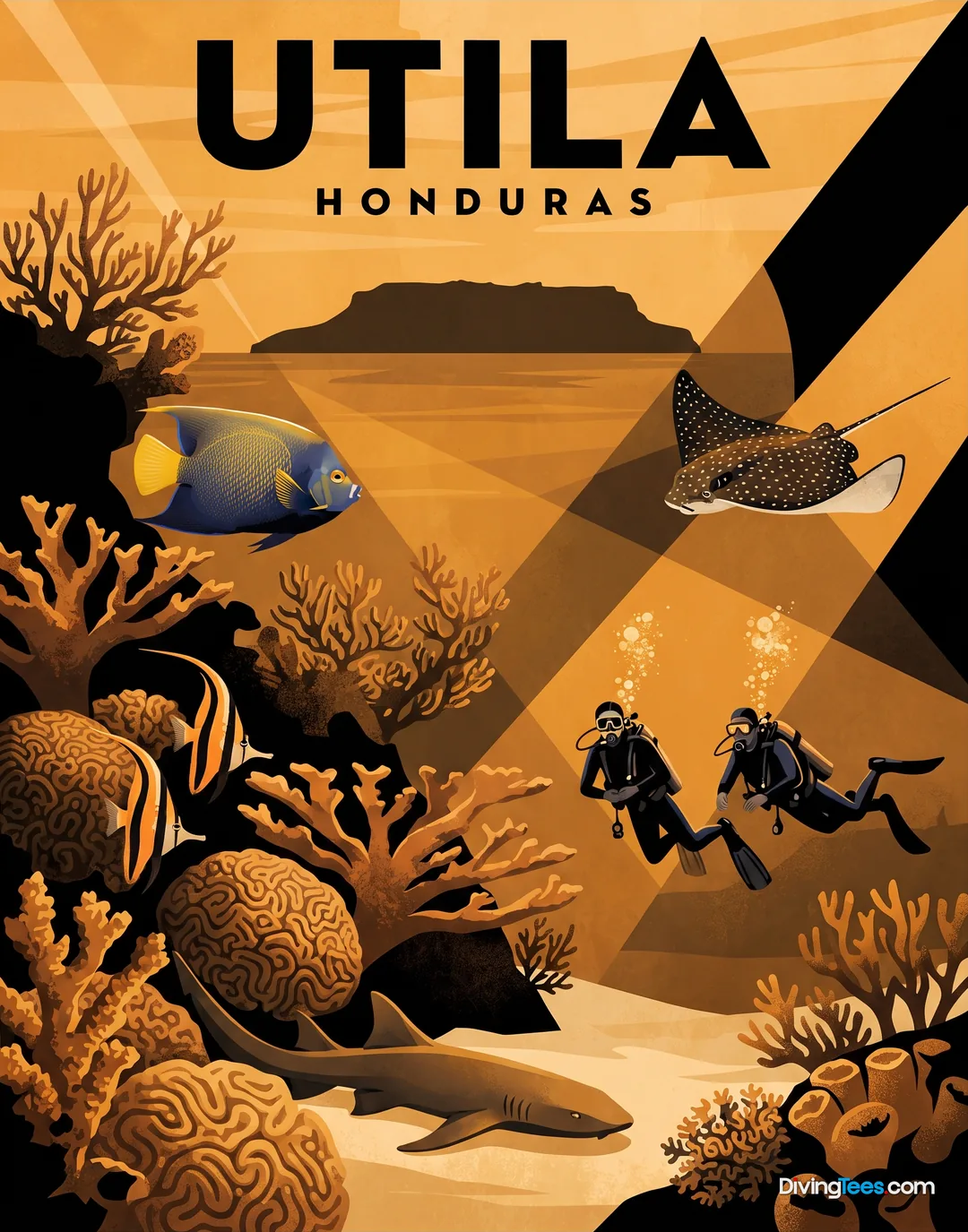
The practical divide is between Roatán and Utila, two island bases only forty kilometres apart but aimed at different kinds of trip. Roatán suits divers who want resort infrastructure, easier access to walls and the possibility of a liveaboard-style programme; its price level is moderate. Utila is the more budget-conscious choice, with dive schools, a compact village atmosphere and no liveaboard option. The distinction matters more than the map suggests: Roatán works well for a comfortable, structured holiday, while Utila rewards travellers who prefer a concentrated island routine and a stronger connection with local streets and cafés. Cayos Cochinos belongs to the wider Caribbean setting rather than functioning as a like-for-like base, and is better considered as a marine-reserve outing from the northern coast or an island itinerary. Around Roatán, named anchors include West End Wall and El Aguila Wreck; Utila’s The Canyons represents the other island’s site identity.
Diving destinations
Dive centres


Hotels
Liveaboards
When to go, and where by month
August, September, October and November form the clear seasonal window for Utila, so these are the months to choose when the itinerary is built around that island. The country does not present a simple seesaw in which one diving coast closes as another opens: Roatán has a more flexible year-round role, while Utila provides the defined late-season focus. This makes timing a matter of priority rather than chasing a national opposite-season pattern. Divers hoping to see whale sharks should also think beyond a Roatán-only plan. Encounters around Roatán are more random, whereas Utila is the stronger regional reference during periods of aggregation in spring or late autumn. A day reserved for an Utila outing can therefore change the logic of a Roatán holiday, particularly when the large-animal expectation matters as much as reef diving.
Marine life, coast by coast
Honduras does not reduce to one wildlife signature shared evenly between every island. The most important itinerary distinction concerns whale sharks: around Roatán, encounters are comparatively unpredictable, while Utila is the place to build into a plan when regional gatherings are expected in spring or late autumn. That difference is significant for divers paying for a carefully structured holiday, because a whale-shark hope should not be allowed to overshadow Roatán’s reef programme. Elsewhere, the appeal is often smaller-scale and structural rather than a single headline animal. Guides may steer macro-minded divers towards areas associated with seahorses and blennies, while sponges, canyons and black coral add character where hard-coral cover has been affected by bleaching and disease.
Getting between the areas
Roatán and Utila are the natural island pairing, separated by roughly forty kilometres, but combining them still means planning around boats rather than treating the distance as a short road transfer. La Ceiba is the main continental hinge: ferries to Roatán and Utila generally take about one to one and a half hours, depending on the service, and small local aircraft can save time for travellers willing to trade simplicity for speed. A wider circuit becomes slower. Reaching Copán Ruinas or Gracias from the northern coast can consume a full day by bus and connections, so adding the Maya west or the Lenca highlands requires protected time rather than a spare afternoon. In two weeks, one principal island followed by Copán is comfortable; several islands, inland parks and the Garifuna coast create a transport-heavy holiday.
Take off your mask
Away from the water, Honduras changes register quickly. Copán Ruinas gives the trip its Maya centre, with carved stelae, the hieroglyphic stairway and the Sculpture Museum making a full day feel substantial. Gracias places you in the Lenca highlands beneath Montaña Celaque, whose cloud forest offers a cooler contrast to island life. Around Tegucigalpa, Valle de Ángeles combines a colonial setting with pottery, woven textiles, carved wood and silver jewellery. On the Caribbean side, La Ceiba and Tela carry Garifuna culture through punta music, beach gatherings and coconut-based cooking; Punta Sal adds a protected coastal landscape, while Lancetilla Botanical Garden supplies shaded paths and tropical plant collections. Food shifts with the setting: baleadas are everyday staples, sopa de caracol belongs to the Caribbean coast, and tapado brings fish, seafood, green plantain and spicy coconut milk to Garifuna tables. Inland, look for nacatamales, yuca con chicharrón and the rounded, chocolate-toned café de Marcala.
What holds true everywhere here
Island logistics shape the Honduran dive experience more than a first glance at the map suggests. Ferry times, boat departures and weather exposure can turn a tightly fixed site plan into an uncomfortable day, especially when a north wind or swell makes an exposed choice unattractive. It is sensible to ask guides which sheltered alternatives currently offer the most structured reef, rather than insisting on a famous name. That matters because bleaching and disease have altered hard-coral cover in parts of the country. Good buoyancy, no contact with coral or mangroves and no rubbish overboard are particularly relevant here. Divers interested in macro should say so at the briefing: the guide can then favour areas associated with seahorses and blennies and adjust the pace. After repeated deep wall dives, leave a proper interval before flying, and remember that ferry and small-boat planning is part of the trip, not an afterthought.
Frequently asked questions about Honduras
When should you visit Honduras for diving?
Plan Honduras around Utila’s seasonal whale-shark window in spring or late autumn, when regional gatherings are expected. Around Roatán, whale-shark encounters are comparatively unpredictable, so choose your timing there for its reef programme rather than relying on a sighting. Late autumn is specifically associated with Utila’s diving appeal.
What kind of diving can you plan in Honduras?
Honduras suits divers who enjoy varied reef and smaller-scale marine life rather than one uniform wildlife experience. Macro-minded divers can look for areas associated with seahorses and blennies, while sponges, canyons and black coral add structure and character. Roatán also offers a reef programme that does not depend on whale sharks.
What can you see while diving in Honduras?
In Honduras, you may encounter whale sharks around Utila when regional gatherings are expected, while Roatán sightings are less predictable. Guides may point macro-minded divers toward seahorses and blennies. Underwater scenery can include sponges, canyons and black coral, with hard-coral cover affected by bleaching and disease.
How should you plan your Honduras diving stay?
Build your Honduras itinerary around the island base that matches your interests. Roatán and Utila offer different settings, with Roatán linked to Caribbean reef diving and Utila suited to a seasonal whale-shark plan. You can also include Cayos Cochinos, Copán Ruinas, the Garifuna coast or Marcala’s highlands.