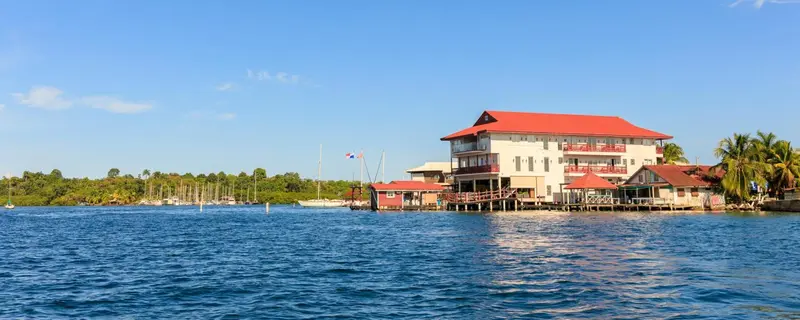
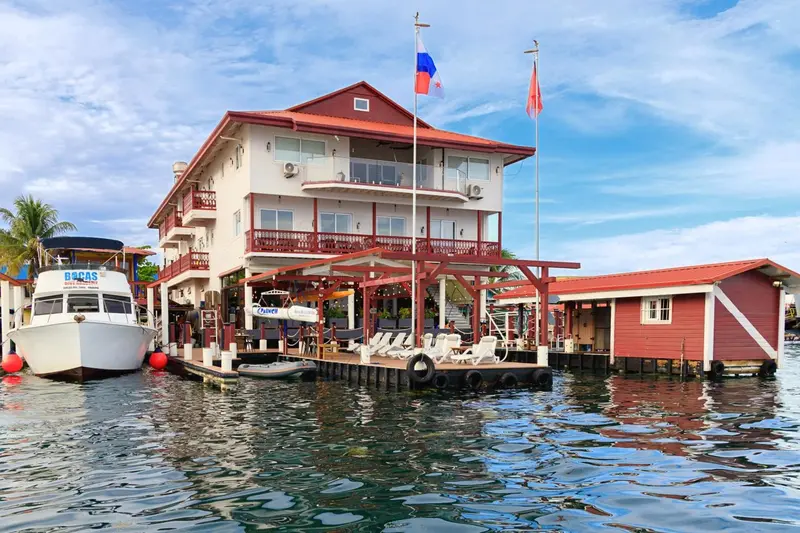
 Dive centre in the hotel
Divers Paradise Boutique Hotel
Google 4.7/5 (331 reviews)
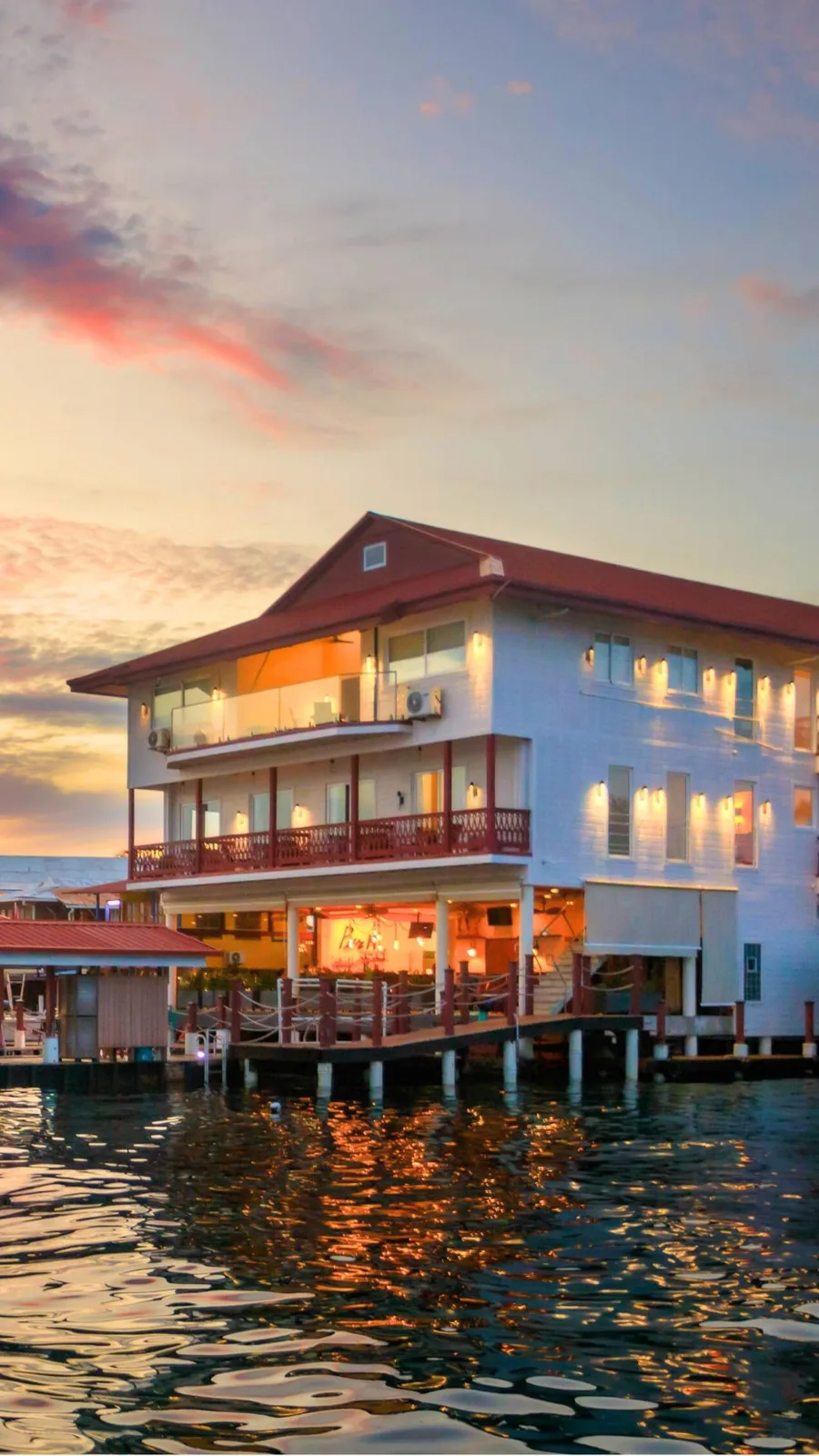
The dive centre
Bocas Dive Center
PADI
Google 4.7/5 (333 reviews)
Dives: Mayday, Tiger Rock, Dolphin Rock
Panama · Americas
Shallow coral reefs, mangrove channels, rocky walls and caves put nudibranchs, seahorses, turtles and nurse sharks within reach around Panama’s island archipelago.
For subtitles in English: start the video firstthen click the gearat the top right of the video, select “Subtitles/CC”, then “Auto-translate” and choose “English”.
Mangrove channels open onto coral reefs, rocky walls and shallow caves around Bocas del Toro, with Isla Colón as the practical base. This is a place for divers who enjoy changing scenery rather than a single underwater signature: one day may bring seagrass and sheltered reef, another a more exposed northern site such as Tiger Rock. Most diving is approachable, while macro life gives patient photographers plenty to examine between encounters with turtles, rays and nurse sharks.
The underwater landscape mixes coral reefs, rock walls, wrecks, mangroves, seagrass beds and caves. Most dives are shallow, with light currents, and are organised from boats rather than from the beach. Sheltered sites can suit a relaxed reef dive, while northern locations and other exposed areas depend on swell and local sea conditions. Tiger Rock belongs in the latter category, not as a fixed promise on an itinerary. Visibility commonly ranges from 8 to 20 metres, but it is not uniform across the archipelago. Rain, mainland run-off, tides and swell can cloud sites nearer the continent while more open locations remain clearer. Some outings may involve a drift dive or local downcurrent, so a little current awareness is useful even though strong flow is not the norm. Caves add a different discipline altogether, with enclosed-space procedures and appropriate equipment rather than casual exploration.
Bocas rewards close-looking. Nudibranchs, octopuses, lobsters, seahorses and morays are among the regular subjects on reefs, walls and in the quieter habitats, so a slow scan of rock and coral can be more productive than searching only into the blue. Turtles, barracuda, rays and nurse sharks add larger encounters, but the destination is not built around guaranteed pelagic action. Mangroves and seagrass bring a different texture to the diving from exposed reef and rocky sites. These animals are part of the archipelago’s general marine character rather than a narrowly seasonal attraction. September and October are valuable chiefly because calmer seas open the way to caves and northern sites, giving more time to explore the habitats where both macro life and larger animals occur.
Diving is possible throughout the year, but September and October are the most useful months when caves and exposed northern sites matter. The archipelago is generally calmer then, improving access as well as the chances of clearer water. February to May is another favourable window for visibility, although conditions can be less consistently dry during the main visitor season. Rain, run-off, tides and swell can quickly alter visibility, particularly near the mainland, so the best month on paper still calls for a daily choice of sector. Bocas is not governed by a simple dry-season rule: sheltered water may remain workable when exposed sites are not.
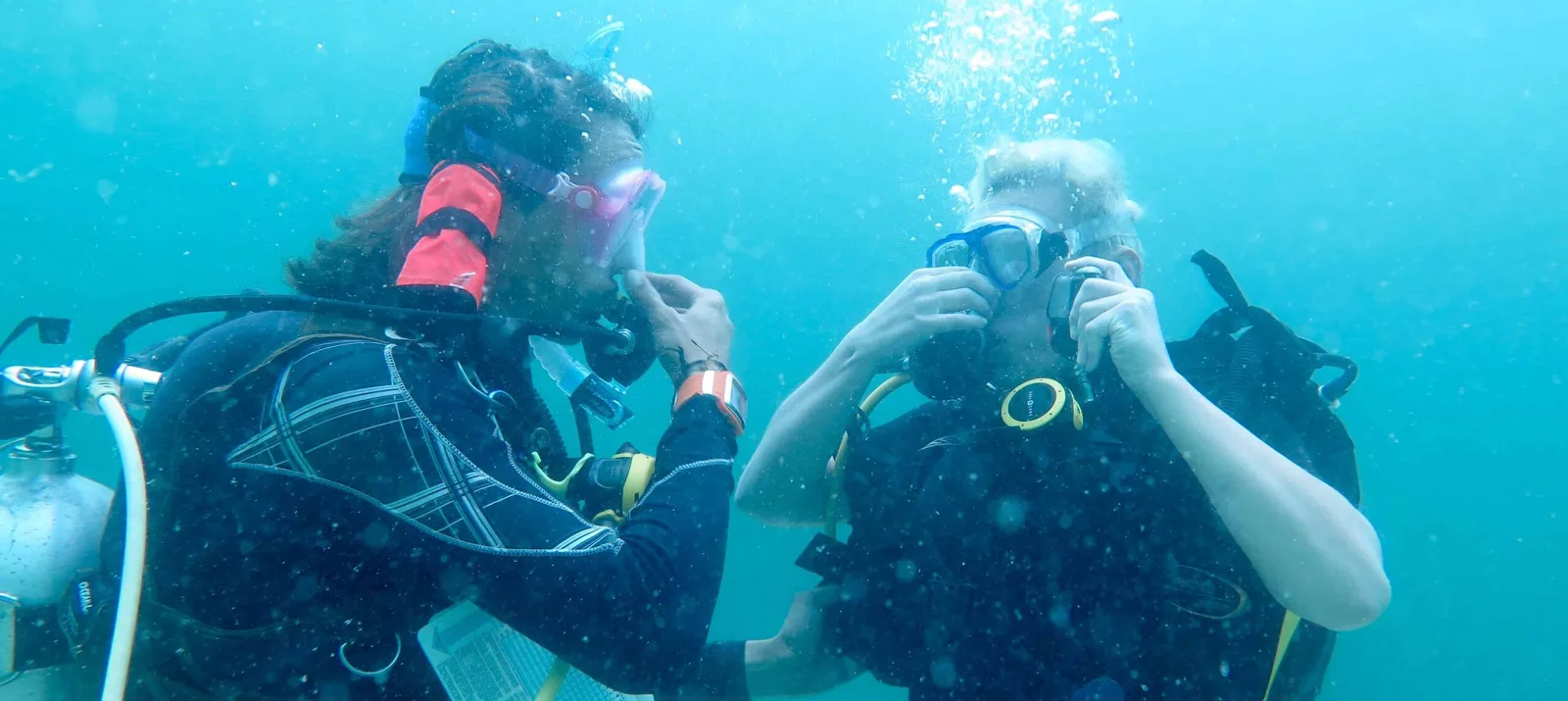
Bocas del Toro suits beginners on shallow, sheltered reef dives as well as experienced divers looking for caves, macro life and more exposed scenery. PADI, SSI and BSAC divers can find appropriate outings, provided their recent experience matches the conditions on the day. A drift-diving qualification is useful for trips affected by local current. Caves should be treated as enclosed-environment dives, requiring the relevant cave training, equipment and qualified supervision. No advanced certification is needed for the majority of ordinary reef dives.
From London Heathrow, London Gatwick or Manchester, reach Panama City first, then continue by domestic flight for roughly an hour to Isla Colón. The alternative is a road journey to Almirante, usually around 10 to 12 hours by bus, followed by a compulsory water-taxi or ferry crossing of about 30 minutes to Isla Colón. Do not treat the land journey and the crossing as one seamless transfer: traffic, boat conditions and waiting time make tight onward connections unwise. In the archipelago, dive boats take you to the sites. In central Isla Colón, many accommodation and dive arrangements are walkable; elsewhere, allow for a water taxi or a land taxi before boarding the dive boat.
Keep the exposed sites for a calm spell, not for the day they happen to appear on a booking screen. Put northern trips and caves early in the stay when possible, leaving a reserve day for a change of sea state. September and October are particularly useful for that flexibility. Ask which sector is clearest that day rather than assuming the whole archipelago shares one visibility. Rain and mainland run-off can affect nearby sites while sheltered alternatives remain usable. Early departures help with the popular sites close to Isla Colón, but do not confuse an early start with permission to ignore swell at Tiger Rock or elsewhere in the north. If arriving overland, separate the bus leg, the Almirante crossing and the final transfer in your planning. Keep caves within proper enclosed-environment training and equipment, and do not enter simply because the entrance looks calm. A day without diving is well spent in the mangroves or on the islands, and avoids trying to fit a boat excursion immediately before a flight.
Plan on a land-based stay of about seven to ten days, using Isla Colón or a nearby island as the base for daily boat trips. Staying in central Isla Colón makes reaching dive arrangements on foot easier, while an outlying island may add a water-taxi journey each morning. Build in non-diving days for Bastimentos, beaches, mangroves, kayaking, snorkelling and wildlife excursions. The spread of habitats rewards varying the sector rather than repeating the nearest reef.
Hello, I'm Marina, DivingDeal.com's AI assistant. I guide you through destinations, areas and countries.
Thinking about the whole trip and the flights? Talk it over with Edith →
Marina is an AI. Some links are affiliate links: DivingDeal may earn a commission, at no extra cost to you. Bookings are made with the partner.
In each one, the dive centre is inside the hotel: step out of your room and go diving.
Dive centre in the hotelGoogle 4.7/5 (331 reviews)
The dive centre
Bocas Dive Center
PADI
Google 4.7/5 (333 reviews)
Dives: Mayday, Tiger Rock, Dolphin Rock
You can dive in Bocas Del Toro throughout the year, but September and October are useful when you want access to caves and exposed northern sites. February to May can bring favourable visibility. Rain, mainland run-off, tides and swell may change conditions quickly, so choose your diving sector day by day.
Bocas Del Toro suits beginners on shallow, sheltered reef dives with generally light currents. Experienced divers can choose caves, macro-focused sites and exposed northern locations. Drift-diving training is useful where local current affects a trip. Caves require enclosed-environment training, suitable equipment and qualified supervision rather than casual exploration.
Diving in Bocas Del Toro brings varied habitats, including coral reefs, rocky walls, wrecks, mangroves, seagrass beds and caves. Look closely for nudibranchs, seahorses, octopuses, lobsters and morays, while turtles, barracuda, rays and nurse sharks may provide larger encounters. Visibility commonly varies from eight to twenty metres.
Plan a land-based stay in Bocas Del Toro around Isla Colón or a nearby island, using dive boats for daily trips. Central Isla Colón makes arrangements easier to reach on foot, while outlying islands may require water taxis. Vary your diving sectors, reserve time for changing sea conditions and include non-diving days.