
Pacific Divers
Google 4.8/5 (162 reviews)
Peru · Americas
Kelp forests, South American sea lions, nudibranchs and rocky walls shape cold-water diving from Pucusana, south of Lima, all year round.
For subtitles in English: start the video firstthen click the gearat the top right of the video, select “Subtitles/CC”, then “Auto-translate” and choose “English”.
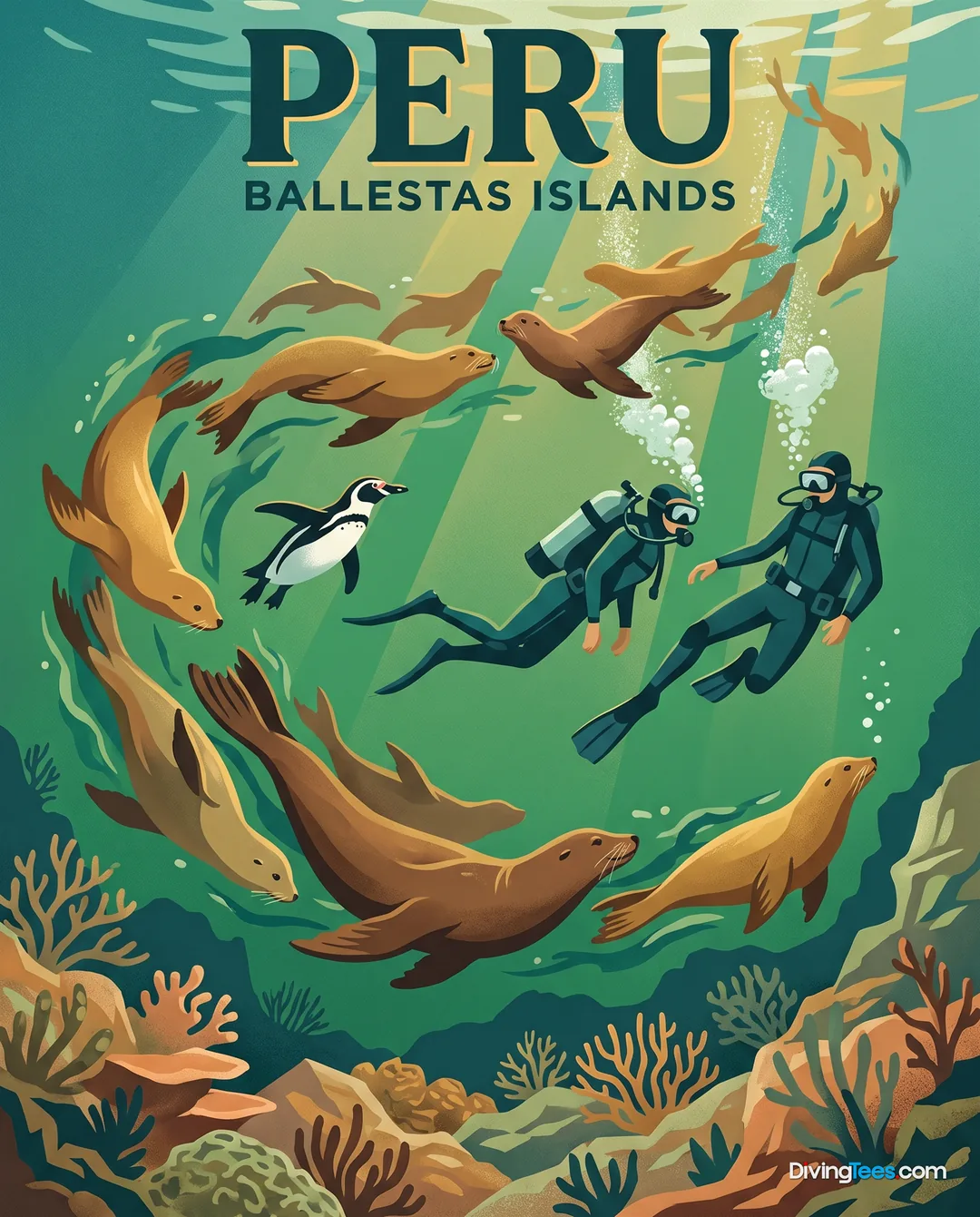
Pucusana, south of Lima, is where this coastal diving actually happens. From its sheltered bay, boats reach kelp forests, rocky walls and cavities holding nudibranchs, octopuses and coastal fish. The South American sea lion is another reason to get in, although it remains a wildlife encounter rather than a fixture of every dive. This suits divers who would rather explore temperate Pacific rock and kelp than arrive expecting coral gardens, warm water and tropical visibility.
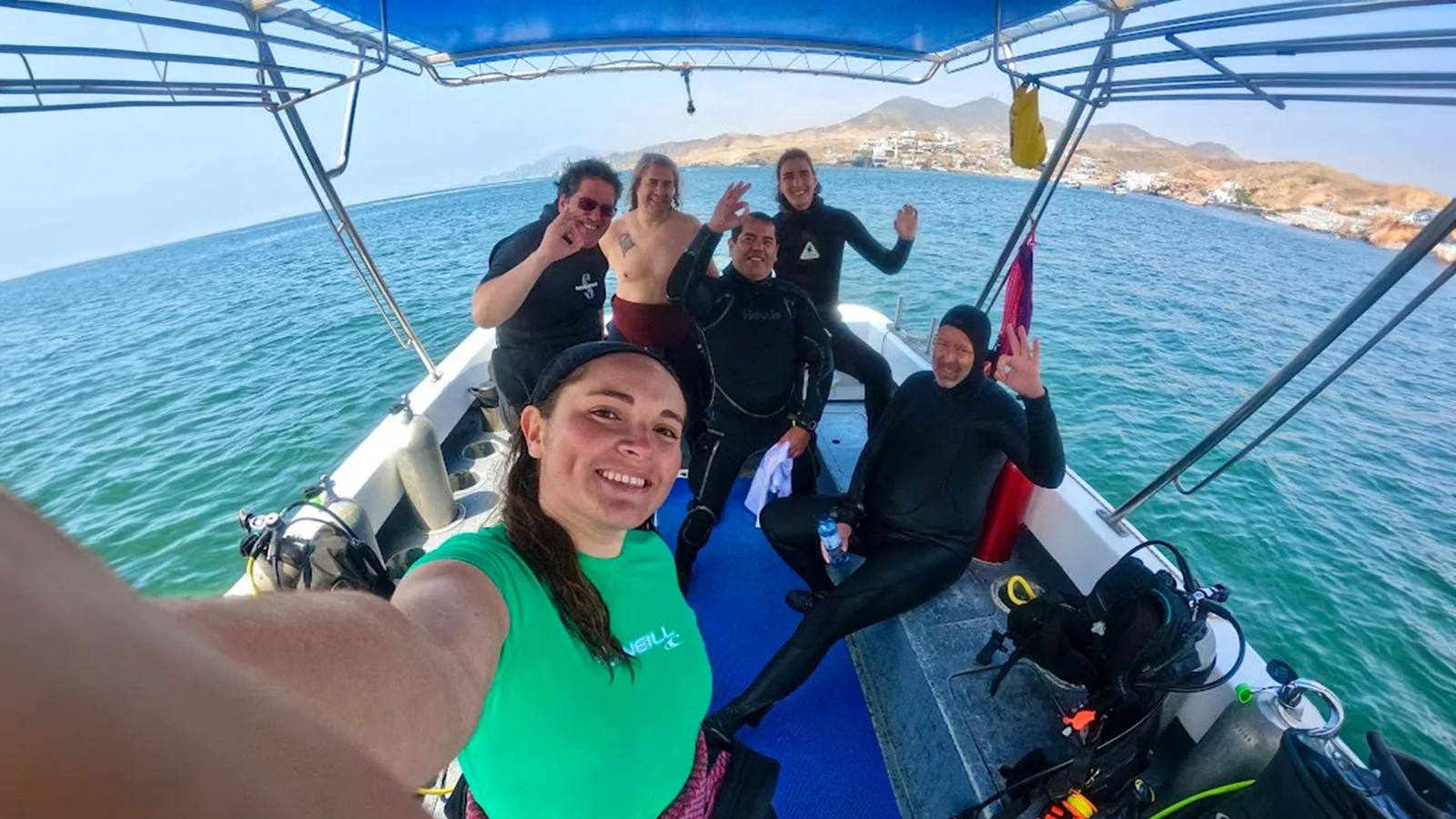
The underwater landscape is built from kelp, rock relief, walls and cavities rather than coral reef. Some sites are shallow and sheltered at around six metres, while others reach approximately 40 metres, so the shape of the dive changes with the site and the group. Boat trips leave Pucusana harbour and conditions determine where the day is spent. Currents are variable, making a downcurrent or drift dive a matter for the local plan rather than an automatic feature. Visibility is commonly 5 to 15 metres, with roughly 18 metres possible on a calm day, but it can be less helpful for photography. Plan for a proper coastal boat outing, not a quick shore dip, and expect the cold-water upwelling to be part of the destination's character from the moment you descend.
Kelp gives the dive its structure, with rocky faces and openings providing cover for a distinctly temperate collection of life. Look closely for nudibranchs, then check the cavities for octopuses. Red sea urchins and starfish are part of the regular scenery, while catalufa and other Peruvian coastal fish occupy the rock and kelp. South American sea lions are associated with the rocky sectors and colonies around Pucusana, but their appearance is never guaranteed on an individual dive. These encounters are available throughout the year, as are the nudibranchs, octopuses, urchins and coastal fish. The appeal lies in searching the habitat, not ticking off a tropical species list.
Diving is practised throughout the year, and the kelp is present in both winter and summer. There is therefore no narrow season that needs chasing, and no established period that can confidently be labelled the one to avoid. Your practical choice is more about the day's sea conditions and your reason for travelling. If photography matters, leave room for a buffer day because visibility can shift from the usual 5 to 15 metres and improve on calm days. The cold-water upwelling remains a permanent feature, so the calendar does not turn this into a warm-water escape. Ask for the site to match the conditions rather than booking around a supposed seasonal guarantee.
Pucusana can suit beginners on shallow, sheltered sites, provided the site is matched to their experience and the day's conditions. It also gives qualified divers scope for deeper rocky terrain, with published depths reaching about 40 metres. No special certification is singled out for the area, so standard PADI, SSI or BSAC training should be considered alongside recent experience in cold water, boat diving and variable visibility. A diver comfortable in a thick suit will get more from the kelp than someone arriving with tropical habits.
From London Heathrow, London Gatwick or Manchester, the journey continues overland to Pucusana rather than ending in Lima's central districts. The diving base is south of the city, reached by road along the Pan-American route, with local operators allowing about an hour to their base. From Pucusana, the sites are reached by boat from the bay. Arrange that road transfer as a separate part of the trip, especially if staying in Lima, and leave enough margin for city traffic and the boat departure. There is no structural need for a ferry or domestic flight. Once in Pucusana, the practical pattern is accommodation near the bay followed by short boat outings.
Treat the trip to Pucusana as a transport exercise as well as a dive booking. If you sleep in Lima, arrange the road transfer with enough slack to protect the boat departure; staying in Pucusana removes that daily connection. Ask for the site to reflect your certification, depth experience and the visibility on the day, because the area runs from shallow sheltered water to sites near 40 metres. Bring a hood and plan on a genuinely thick suit, with local operators mentioning 7 mm protection. A tropical wetsuit is the wrong assumption here, and repeated dives will make that mistake obvious. If sea lions are high on your list, ask for rocky sectors associated with the colonies rather than a trip limited to shallow kelp formations. Keep a spare day for photography, since visibility is variable. Do not read a calm bay as a tropical reef destination: the cold water, kelp and rock are the point.
A three to five-day stay works well as a land-based diving break, allowing several boat outings from Pucusana while leaving time for Lima. Staying near the bay reduces the road dependency, while staying in Lima makes the diving one element of a wider city trip. Non-divers have Pucusana's coastal and boat activities, as well as Lima's museums, historic centre, food and markets. Keep the final day on land if flying, and observe the safety stop and surface interval requirements set by your training organisation.
Hello, I'm Marina, DivingDeal.com's AI assistant. I guide you through destinations, areas and countries.
Thinking about the whole trip and the flights? Talk it over with Edith →
Marina is an AI. Some links are affiliate links: DivingDeal may earn a commission, at no extra cost to you. Bookings are made with the partner.
You can dive around Lima throughout the year, with kelp present in winter and summer. There is no narrow season to chase or established period to avoid. Choose dates according to sea conditions and your travel purpose, and allow a spare day if photography matters because visibility varies.
Lima can suit beginners on shallow, sheltered sites when conditions and site selection are appropriate. Qualified divers can explore deeper rocky terrain. You should consider your cold-water, boat-diving and variable-visibility experience, and arrive prepared for genuinely cold water with a thick suit, hood and suitable training.
Diving around Lima focuses on kelp forests, rocky walls, cavities and temperate Pacific marine life rather than coral gardens. You may find nudibranchs, octopuses, red sea urchins, starfish, catalufa and other coastal fish. South American sea lions occur around rocky sectors and colonies, but sightings are not guaranteed on every dive.
Plan the diving from Pucusana, south of Lima, where boats leave the bay for coastal sites. Arrange road transport separately if staying in Lima, allowing margin for traffic and departure times, or stay near the bay. A three to five-day land-based break allows several boat outings and time for Lima, with the final day on land if flying.