
Bubble Tank
Google 5/5 (166 reviews)
South Korea · Asia
Lava walls, dark caverns, soft corals and subtropical reef fish shape Seogwipo’s diving around Jeju’s southern islets.
For subtitles in English: start the video firstthen click the gearat the top right of the video, select “Subtitles/CC”, then “Auto-translate” and choose “English”.
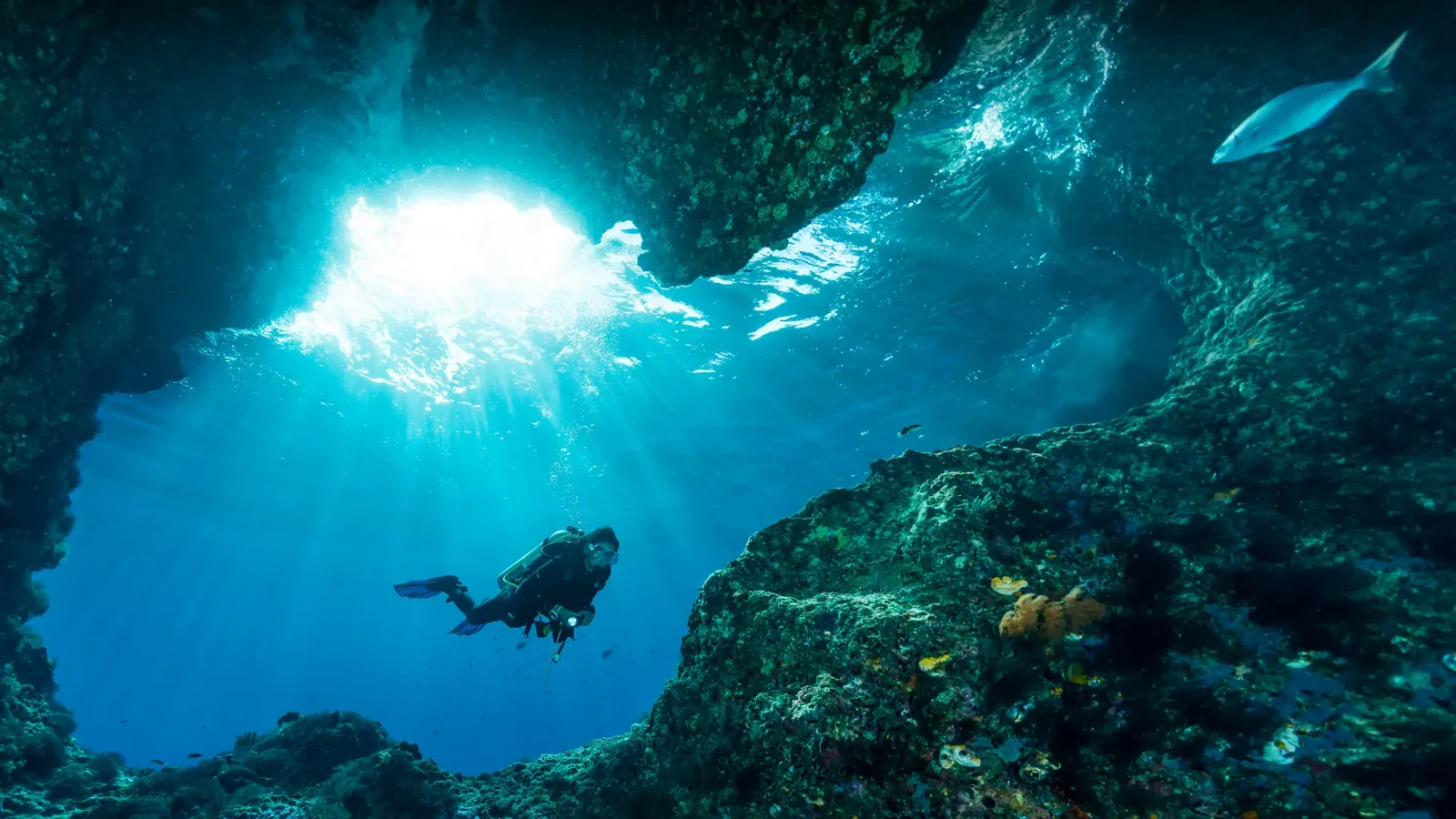
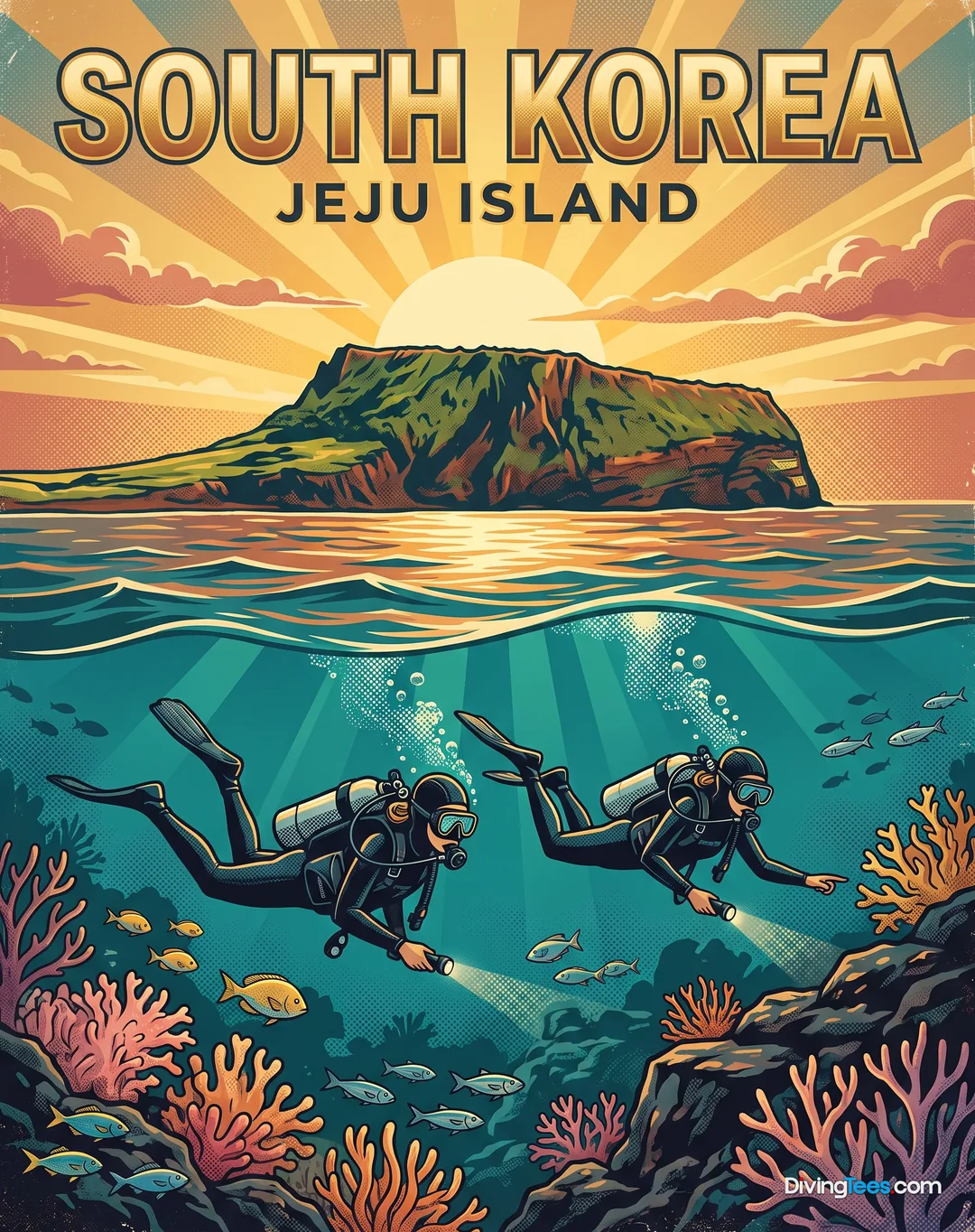
Munseom, Beomseom and Seopseom put Seogwipo’s volcanic southern coast within easy reach of a local boat. Underwater, lava walls fall away into drop-offs and cavities, with soft corals adding colour to otherwise dark rock. Coastal dives broaden the choice when a boat trip is unsuitable. This is a shore-based holiday rather than a liveaboard proposition, with enough above-water interest in southern Jeju to make a sensible five- to seven-day trip for divers and non-divers alike.
The diving alternates between boat trips to the islets and shore entries around Seogwipo. Munseom and Beomseom are the places to expect lava walls, drop-offs and cavities, while the coastal sites offer a different scale of volcanic underwater scenery. Currents are variable and can change with the tide, so a planned route may become a guided drift dive or require a more sheltered alternative. Visibility is also seasonal rather than guaranteed: rainy-season run-off, swell and plankton can soften the view, even when the coast looks diveable. Autumn commonly brings clearer conditions after the rains. Ask exactly whether the boat is heading for Munseom, Beomseom, Seopseom or a coastal site, because the terrain, current and character of the outing are not interchangeable.
Soft corals are Seogwipo’s defining underwater colour, carpeting parts of the volcanic habitat around the protected Munseom and Beomseom area. They are present throughout the year and are often at their most rewarding when autumn visibility improves. Subtropical reef fish, notably damselfish and parrotfish, are resident attractions rather than brief seasonal visitors. Octopuses can also be encountered year-round, rewarding a slower look into the rock and cavities. Manta rays are a rare possibility, not a reason to build an itinerary around them. The emphasis here is on fixed life, volcanic scenery and patient observation, rather than a dependable list of large passing animals.
September to November is the practical window for Seogwipo, particularly if visibility matters more than summer warmth. The monsoon and rainy season bring heavier run-off, more plankton and a rougher sea through June, July and August, all of which can reduce underwater clarity. By autumn, the coast has had time to settle after the rains, while winter conditions have not yet become the main constraint. Keep the programme flexible even in the preferred months, because boat departures still depend on the sea and a change in conditions can affect an islet dive.
Seogwipo suits experienced beginners as well as certified divers, provided the site is matched to the day’s conditions. Guided discovery dives are available, while BSAC, PADI and SSI divers should explain their experience with boat diving and currents rather than assume that every outing is a straightforward shore dive. Current can vary with the tide, and visibility may change quickly after rain, so comfort in changing conditions matters more than collecting a particular speciality.
From London Heathrow, London Gatwick or Manchester, travel to Jeju requires an air journey with a connection. Once on Jeju, continue by road to Seogwipo, allowing roughly an hour for the transfer from the island’s international airport, with traffic affecting the journey. No ferry is needed to reach Seogwipo from the mainland or from the airport. Ferries do become relevant in one important sense: Munseom, Beomseom and Seopseom are reached by local dive boat from the Seogwipo coastline. Accommodation and dive centres are spread between Seogwipo and the harbour areas, so plan on a taxi or transport arranged by the centre unless staying within walking distance of the departure point.
Build in several possible diving days rather than placing every boat trip on one date. Sea conditions can postpone an islet departure, and keeping a spare day protects the rest of the holiday. Before boarding, ask whether the plan is Munseom, Beomseom, Seopseom or a coastal site, and whether the route involves current, a drift dive or a more sheltered profile. Do not judge visibility from the shore after summer rain: run-off and plankton may still be affecting the dive. A thermal solution suited to the season is worth bringing because conditions vary across the year. In the Munseom–Beomseom Natural Reserve, treat soft corals as look-but-do-not-touch habitat: fishing and collecting are prohibited, and landing on the islets may be restricted. Do not assume that a reserve designation means free exploration ashore. Keep the last day flexible rather than risking a rushed boat return before travelling on.
Stay in Seogwipo and let local centres organise the boat departures and coastal dives, rather than trying to base the holiday around a liveaboard. Harbour-side accommodation simplifies early starts; elsewhere, a taxi or arranged transport may be needed. Allow five to seven days for several possible boat outings, a weather buffer and time ashore. Non-divers have volcanic viewpoints, waterfalls, coastal paths, markets and cultural sights, while Hallasan is best planned well away from the final dive because of its altitude.
Hello, I'm Marina, DivingDeal.com's AI assistant. I guide you through destinations, areas and countries.
Thinking about the whole trip and the flights? Talk it over with Edith →
Marina is an AI. Some links are affiliate links: DivingDeal may earn a commission, at no extra cost to you. Bookings are made with the partner.
Choose Seogwipo from September to November if visibility matters more than summer warmth. The rainy season can bring run-off, plankton and rougher seas, reducing clarity around the coast. Autumn often offers clearer conditions after the rains, but keep your plans flexible because sea conditions can still change boat departures and islet dive options.
Seogwipo suits experienced beginners and certified divers when the site matches the day’s conditions. Guided discovery dives are available, while certified divers should explain their experience with boat diving and currents. Tidal currents can vary, and visibility may change after rain, so comfort in changing conditions is important for choosing an outing.
Seogwipo combines volcanic scenery with colourful marine life. Around Munseom and Beomseom, lava walls, drop-offs and underwater cavities are joined by protected soft coral colonies. Subtropical damselfish and parrotfish live among the volcanic relief, while octopuses may appear throughout the year. Manta rays are possible but rare, so fixed life and patient observation define the experience.
Stay in Seogwipo and use local dive centres to arrange boat trips and coastal dives. Build in several possible diving days because sea conditions may postpone an islet departure, and ask which site and current profile is planned. Harbour accommodation helps with early starts, while other locations may require a taxi or arranged transport. Keep your final day flexible.