
Kingfish Dive & Travel
Google 4.5/5 (310 reviews)
Denmark · Atlantic
Metal arches, shallow eelgrass, crabs and Øresund wrecks frame Copenhagen’s practical Baltic diving, from beach entries to occasional boat days.
For subtitles in English: start the video firstthen click the gearat the top right of the video, select “Subtitles/CC”, then “Auto-translate” and choose “English”.
Metal arches rise from the shallow water at Amager Strandpark, where beach or jetty entries lead across rocks, eelgrass and artificial training structures. This is Copenhagen’s useful starting point: a place to settle into local conditions, practise skills or make a night dive without leaving the city. From there, local operators extend the experience towards Øresund wrecks and boat diving. The result suits a short urban break more than a dedicated liveaboard holiday.
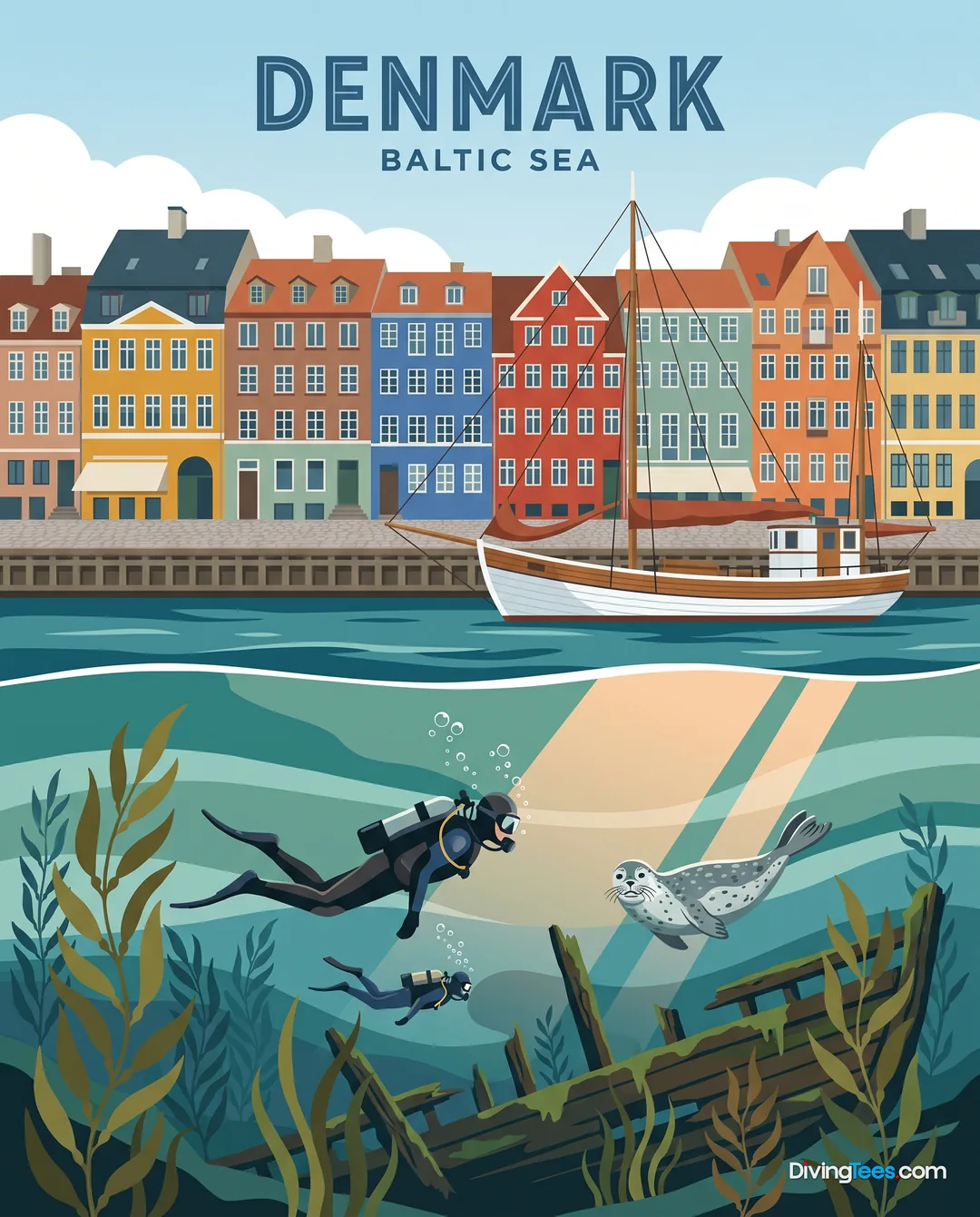
The local diving is mainly shallow shore diving, with Amager Strandpark offering rocks, eelgrass, tubes, sculptures and the arches marking the underwater route. It is the sort of terrain where navigation and observation matter more than depth, and where a night dive changes familiar structures into a proper search. Currents are variable, so conditions can feel quite different when moving from the beach sites to open-water sectors and wrecks. Visibility should be treated as part of the day’s conditions rather than a fixed promise. Boat outings add deeper and more exposed diving in the Øresund and nearby Baltic waters, with the possibility of wreck profiles and stronger logistical constraints. The contrast is useful: a flexible shore dive close to town, followed by a planned boat day that depends on the port, the vessel and the conditions.
Amager Strandpark rewards slow looking rather than a hunt for large animals. Crabs and shrimps are regular finds around the rocks, structures and bottom features. Syngnaths, eels, flounders, gobies and sculpins may also appear among the eelgrass and shallows, though they are occasional rather than guaranteed encounters. The artificial arches, tubes and sculptures give the eye something to work around, while the grassy and rocky patches provide the more natural detail. There is no useful wildlife calendar to build a trip around, so treat these species as part of the character of a coastal Baltic dive, not as a seasonal promise. Night diving is particularly well suited to careful searching in this terrain.
Copenhagen works best when the diving dates remain flexible. The shallow Amager sites are practical for a local dive, an exercise session or a night immersion, while wreck days depend more directly on the conditions in the Øresund and the boat schedule. Rather than travelling for a narrowly defined wildlife season, plan around the type of diving wanted and leave room to move the boat outing if conditions change. A short stay of two to four days gives enough space for a local dive, a possible wreck trip and time in the city. Keep a non-diving day before flying home, particularly after a full boat programme.
The shallow Amager Strandpark route suits beginners, refresher dives and divers who want uncomplicated practice close to the city. It is also useful for experienced divers wanting a night dive or a relaxed orientation to local conditions. The level changes once a boat heads for a wreck or a more exposed sector. A Wreck certification is useful, and may be expected for the site offered. Nitrox can be worthwhile on repetitive diving days if the centre provides it and the planned profile allows it.
From London Heathrow, London Gatwick or Manchester, arrange the available connection to Copenhagen, then continue to the dive site by urban transport, bicycle, car or taxi. No ferry or internal flight is needed to reach Amager Strandpark or the shore sites around the Øresund. That simplicity applies to the city dives, not automatically to wreck days. Boat outings leave from regional harbours, so check the stated departure point before fixing your accommodation and allow time to reach it. A central base is convenient for the city and local shore diving, but it does not put you beside every boat departure. For a wreck trip, treat the harbour journey as part of the dive plan.
Make Amager Strandpark the first dive, especially if you are arriving for a short break or returning to diving after a gap. Enter from the beach or jetty and follow the simple ninety-degree heading towards the metal arches, which mark the start of the described route. Use the site for practice, orientation or a night dive, not as a deep or wreck experience. Keep the shore day and the wreck day separate in your planning: one is flexible and urban, the other depends on a boat, a regional harbour and the Øresund’s conditions. Work out the transport to that harbour yourself rather than assuming a city-centre departure. Check the wreck’s demands against your experience and Wreck qualification. Do not confuse Copenhagen’s harbour baths and diving platforms with marked scuba sites. Finally, arrive expecting Baltic coastal life, artificial structures and shallow terrain, not tropical reef visibility or spectacle.
A two-to-four-day land-based stay fits Copenhagen well. Base yourself where urban transport, cycling or a short taxi ride can reach the shore site, then reserve a separate day for any boat departure. The city supplies a worthwhile surface programme between dives: museums, historic districts, canals, harbour walks, architecture and Amager Strandpark itself. Non-divers have plenty to do, and a day without immersion can be used for the city before the journey home.
Hello, I'm Marina, DivingDeal.com's AI assistant. I guide you through destinations, areas and countries.
Thinking about the whole trip and the flights? Talk it over with Edith →
Marina is an AI. Some links are affiliate links: DivingDeal may earn a commission, at no extra cost to you. Bookings are made with the partner.
Choose dates flexibly rather than planning around a specific wildlife season. Amager Strandpark can support a local shore dive, practice session or night dive, while wreck outings depend on Øresund conditions and boat schedules. Leave room to move a boat trip if conditions change, and treat visibility as part of the day’s conditions.
Amager Strandpark suits beginners, refresher dives and divers seeking straightforward practice close to the city. Experienced divers can use the site for orientation or night diving. Boat trips to wrecks and exposed sectors require more preparation, and a Wreck certification is useful and may be expected for the site offered.
Around Amager Strandpark, you can explore rocks, eelgrass, tubes, sculptures, metal arches and artificial training structures. Crabs and shrimps are regular finds, while syngnaths, eels, flounders, gobies and sculpins may appear. Night diving suits careful searching, but these coastal encounters remain occasional rather than guaranteed.
Plan a short land-based stay with Amager Strandpark as your flexible local dive and a separate day for any boat outing. Check the regional harbour departure before choosing accommodation, and allow time for transport. Keep a non-diving day before flying home, with Copenhagen’s museums, canals and historic districts filling surface time.