
Flensburger Tauchcenter
Google 4.5/5 (22 reviews)
Germany · Atlantic
Seagrass beds, stone slopes, sheltered shore entries and boat-laid wrecks shape cold-water diving around the Flensburger Förde on both German and Danish shores.
For subtitles in English: start the video firstthen click the gearat the top right of the video, select “Subtitles/CC”, then “Auto-translate” and choose “English”.
Flensburg is a base for exploring the Flensburger Förde, where German and Danish shores bring together shallow coastal terrain, seagrass, stone, drop-offs and wrecks. This is Baltic diving rather than a warm-water reef holiday, with shore entries around places such as Fahrensodde and Norgaardholz, deeper relief at Quellental and Holnis, and boat trips to wrecks farther from land. It suits a diver who enjoys changing sites and sensible planning more than a fixed daily routine.
The underwater landscape shifts between sand, stones, seagrass and submerged structures. Norgaardholz is shallow and forgiving, while Quellental and Holnis bring more pronounced drop-offs and a greater need to manage depth and changing conditions. Fahrensodde and other coastal sites work from the shore, whereas several wrecks around the Förde are reached by day boat rather than by swimming out from land. Currents are variable, so a sheltered alternative matters when an exposed entry is uncomfortable. Visibility can also change with wind, movement on the bottom and runoff, which makes local judgement more useful than planning every dive around a fixed expectation. The result is a sequence of cold-water dives with different shapes, from easy shallows and planted slopes to deeper walls, artificial structures and wrecks.
Seagrass is part of the scenery in the shallower areas, lying across sandy and stony bottoms rather than forming a tropical reef. Around the rocks, drop-offs, artificial structures and wreck remains, you meet the local cold-water flora and fauna of the Förde, with the setting changing noticeably between open coastal ground and sheltered sites. The appeal is in examining the bottom closely: grass, stones, sand and man-made surfaces create different habitats within the same outing. Wrecks add darker structural cover, while the shallow entries make it possible to spend time observing rather than rushing through a deep profile. May to October is when local diving activity is most concentrated, although the underwater environment remains a cold-water proposition outside that window.
May to October is the practical season for arranging dives around Flensburg. Local activity is concentrated then, making it easier to combine shore entries, boat outings and sites on both sides of the Förde. Summer access points and beach launches are more likely to be busy, while wind and changing water conditions can still alter the best choice of site. Diving outside these months remains possible, but it calls for a more deliberate cold-water set-up and fewer assumptions about straightforward access. Plan with alternatives rather than treating the season as a guarantee of calm water or constant visibility.
Flensburg can suit all levels, provided the site matches the diver. Norgaardholz is described as suitable for beginners, children and adaptive diving, making it a sensible first immersion in the area. Quellental and Holnis are a different proposition because their drop-offs can be deeper, and wreck trips require sound cold-water discipline, navigation and gas planning. A Wreck qualification is useful for the boat sites. BSAC, PADI and SSI divers should judge the outing by their actual experience, not simply by the certification card.
From London Heathrow or Gatwick, or from Manchester, Flensburg is reached overland through northern Germany or Denmark. There is no structural need for a ferry, and the town is connected to both German and Danish rail networks, so rail is a workable alternative to driving. A car is particularly useful once you arrive: the diving is spread between Flensburg, Glücksburg, Holnis and more distant Förde shores, with beach launches and coastal sites not grouped around the centre. Allow for road travel when combining German and Danish locations, and do not assume a standard local shuttle between accommodation, bases and entries. Walking or a taxi may cover a single local move, but a car gives the trip its flexibility.
Treat the Förde as a cold-water destination with changeable visibility, not as an easy add-on to a summer beach break. Build the schedule around several possible entries, because wind, bottom movement or runoff can make an exposed site less attractive than a sheltered one. Put a shallow shore dive at Norgaardholz, or a similar site, before committing the group to a deeper drop-off or a wreck boat. Do not assume that a wreck mentioned for the area is reachable from land. For artificial structures and wrecks, obtain the position, a recognisable entry reference and the navigation plan in the local briefing. Check beach and harbour access before setting out, especially when moving between German sites. Keep the car available for Glücksburg, Holnis, Quellental and the more distant entries, and allow time for the Danish shore rather than trying to squeeze it into a rushed transfer.
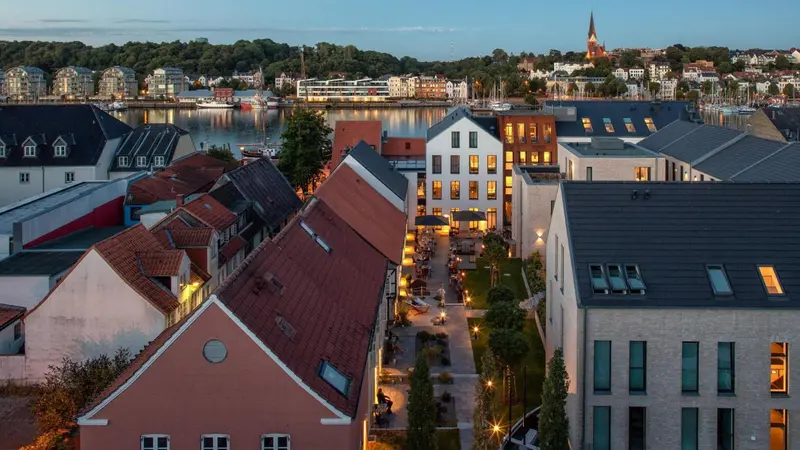
A three to five-day stay works well as a land-based diving trip. Use Flensburg as a base, then travel by car to the scattered entries around Glücksburg, Holnis, Quellental, Steinberghaff and Norgaardholz. Leave room for one boat day to reach wrecks, alongside shore dives chosen for the conditions. The town and Förde also work for non-divers, with harbour and historic-centre walks, beaches, coastal paths and surface-water activities. A longer stay gives more flexibility for weather and the Danish shore.
Hello, I'm Marina, DivingDeal.com's AI assistant. I guide you through destinations, areas and countries.
Thinking about the whole trip and the flights? Talk it over with Edith →
Marina is an AI. Some links are affiliate links: DivingDeal may earn a commission, at no extra cost to you. Bookings are made with the partner.
May to October is the practical season for arranging dives around Flensburg, when local activity is most concentrated and shore entries, boat outings and sites on both sides of the Förde are easier to combine. Wind can still change the best site, so plan alternatives rather than expecting calm water or constant visibility.
Flensburg can suit different experience levels when you match the site to your abilities. Norgaardholz offers a shallow, forgiving entry suitable for beginners, children and adaptive diving. Quellental and Holnis involve deeper drop-offs, while wreck trips call for cold-water discipline, navigation and gas planning. A Wreck qualification is useful for boat sites.
Diving around Flensburg takes you across sand, stones, seagrass, submerged structures and wreck remains. Shallow areas provide habitats to examine closely, while rocks and drop-offs create deeper relief. Artificial structures and wrecks offer darker cover, and the scenery changes between sheltered sites, open coastal ground and boat-accessed locations across the Förde.
Use Flensburg as a base and keep a car available for scattered entries around Glücksburg, Holnis, Quellental, Steinberghaff and Norgaardholz. Combine shore dives with a boat day for wrecks, leaving alternatives for wind, runoff and visibility changes. Check access and local navigation details, and allow time for German and Danish shores.