Dive Around Madeira
★ 5/5 (187 reviews)
4.2 km away as the crow flies
Madeira · Portugal · Atlantic
Max. depth · 40 mAn exposed rocky platform rising from the sand, offering steep walls and the rare chance of a Mediterranean monk seal encounter.
For subtitles in English: start the video firstthen click the gearat the top right of the video, select “Subtitles/CC”, then “Auto-translate” and choose “English”.
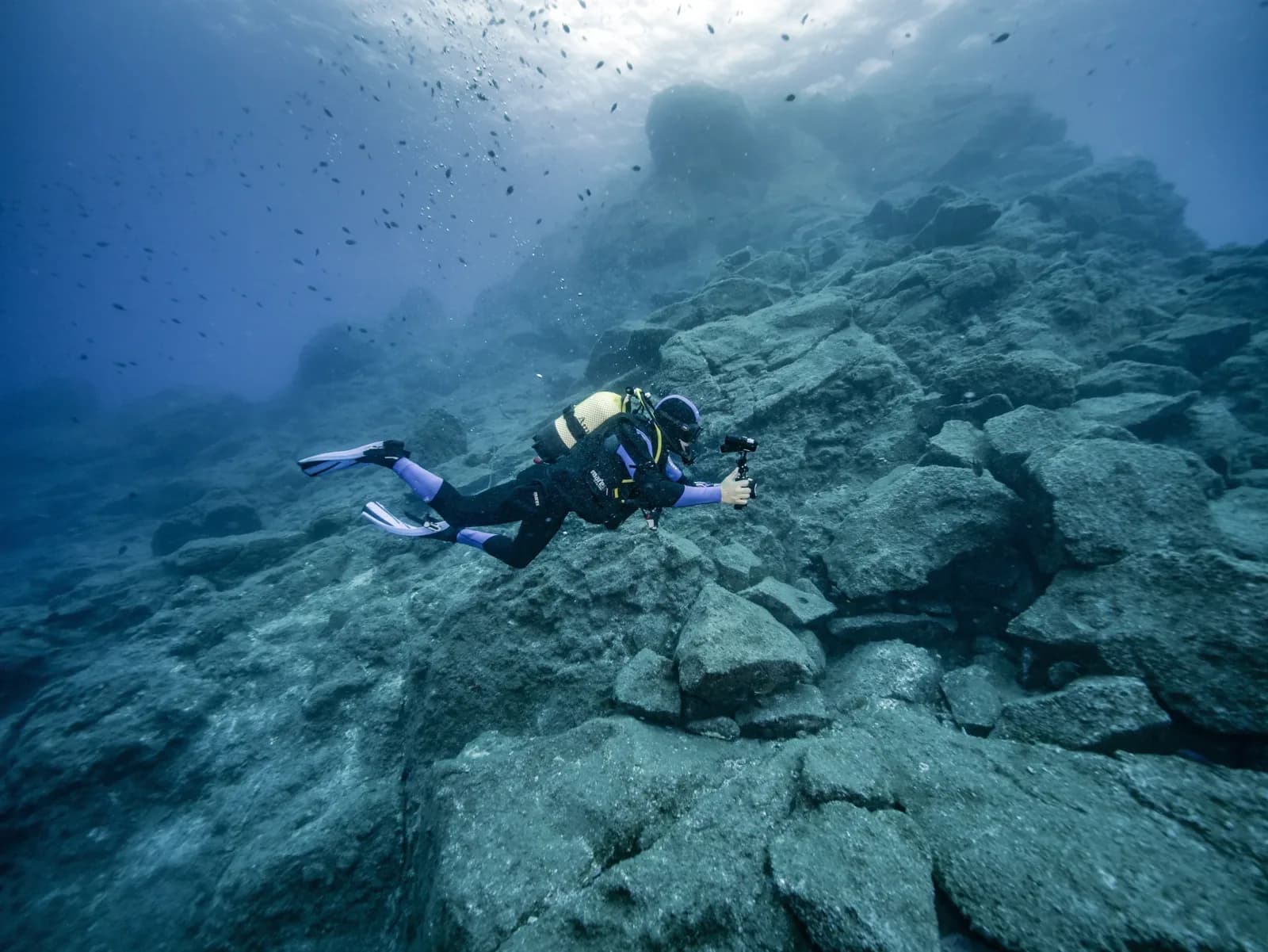
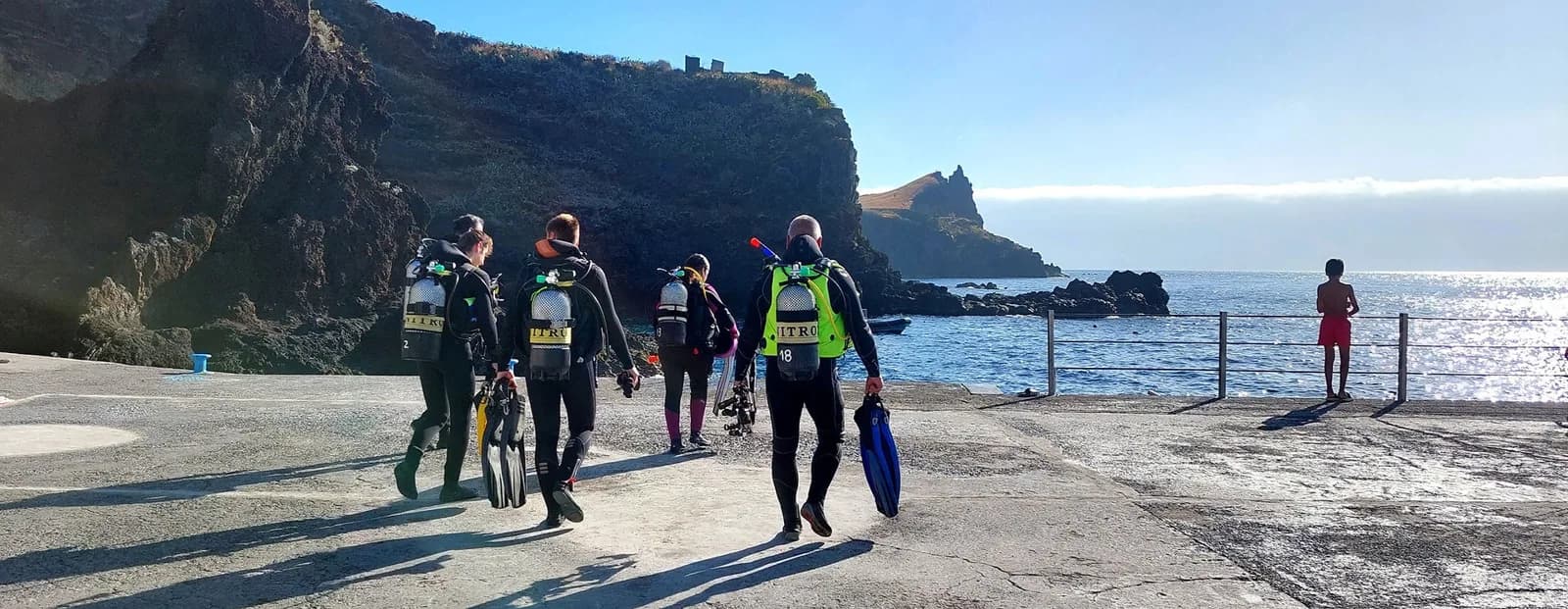
Baixa Do Lobo is a significant submerged rocky platform situated off the eastern tip of Madeira, near Ponta de São Lourenço. As an offshore seamount, it rises abruptly from the sandy seabed to create a distinct topographic feature in the open Atlantic. The site is accessed by boat from the Caniçal area, typically involving a short transit from Quinta do Lorde Marina. Once on site, the descent is usually managed via a mooring or a shot line to ensure a controlled entry onto the plateau. The geography is defined by a central platform that transitions into dramatic, steep-sloping rock walls.
The dive profile begins on the shallower sections of the submerged platform, where the topography starts to tilt and descend. As you follow the slope, the terrain becomes increasingly steep, forming sharp-angled walls that drop toward the surrounding sandy bottom. These walls are a primary feature of the site, providing vertical structure that attracts a variety of resident marine life. The depth transitions from a minimum of 14 metres down to a maximum of 40 metres along these slopes. Navigating this change in gradient requires careful buoyancy control, especially when moving between the flatter plateau and the vertical sections.
The walls themselves are heavily textured, largely due to the presence of black coral that colonizes the rock surfaces. This coral provides a complex habitat for smaller organisms and contributes to the rugged aesthetic of the seamount. Scattered rocks are also found along the lower slopes, creating additional crevices and hiding spots within the deeper zones. The combination of verticality and biological cover makes the descent from the plateau to the 40-metre mark an engaging experience. You will find that the structural complexity increases as the depth increases toward the base of the walls.
The resident fish population is characteristic of these rocky Atlantic structures. You can expect to see groups of white seabream and salema moving along the contours of the reef. Pomadasys grunt are also frequently encountered, often hovering near the rocky edges or within the protection of the coral. These species inhabit the various depth zones, from the sunlit upper plateau to the darker, more sheltered areas of the lower wall. Observing their movement patterns against the backdrop of the black coral provides a clear sense of the site's ecological health.
One of the most distinctive aspects of Baixa Do Lobo is its potential for rare megafauna encounters. The site is specifically noted for the occasional presence of the Mediterranean monk seal, a rare visitor to these waters. While sightings are not guaranteed, the presence of such a species is a documented characteristic that sets this seamount apart from more common reef sites. Encountering a monk seal in its natural habitat adds a significant layer of interest to the dive. Such occurrences are a testament to the importance of these offshore rocky structures in the local marine ecosystem.
The environmental conditions at Baixa Do Lobo are heavily influenced by its exposed location near the tip of Ponta de São Lourenço. Because it is an offshore seamount, it is subject to the direct influence of Atlantic swells and wind patterns. The current can be highly variable, shifting in strength and direction based on the sea state and tidal movements. This variability means that while some dives may be relatively calm, others can require significant effort to maintain position. The interaction between the incoming swell and the seamount's topography is a key factor in how the site feels during a descent.
Visibility at the site is generally good, typically ranging between 15 and 30 metres, which allows for clear sightlines along the descending walls. This clarity is essential for navigating the transition from the shallow plateau to the deeper sections of the seamount. The light penetration remains effective even as you approach the 40-metre limit, highlighting the textures of the black coral. However, the combination of deep water and open ocean exposure means that visibility can be affected by offshore weather conditions. Maintaining a clear understanding of your depth and orientation is vital as the terrain drops away into the blue.
The site has a depth range of 14 to 40 metres. It is classified as an Advanced level dive, requiring divers to be comfortable with the depths and the exposed nature of an offshore seamount. Current is variable; it is influenced by the wind, swell at Ponta de São Lourenço, and tides, so expect conditions to change based on the sea state. Expected visibility is between 15 and 30 metres. The site is accessible year-round, though boat access depends on weather and swell conditions.
★★★★★
★ 9.7/10 (534 reviews)
9.5 km away as the crow flies
★★★★
★ 9/10 (1,206 reviews)
17 km away as the crow flies
★★★★★
★ 8.3/10 (682 reviews)
1.3 km away as the crow flies
★★★★
★ 8.5/10 (2,236 reviews)
11 km away as the crow flies