Atlantic
Portugal: Atlantic coasts and volcanic islands
Portugal links the Atlantic cliffs of the Algarve with Madeira’s volcanic shores, while Lisbon, Silves and Funchal give the journey a distinctly regional character.
What makes this country unique
- Algarve diving from May through September
- Ocean Revival's planned naval wreck park
- Garajau Marine Reserve beside Caniço de Baixo
- Cataplana de marisco along the Algarve coast
- Funchal's Mercado dos Lavradores and poncha
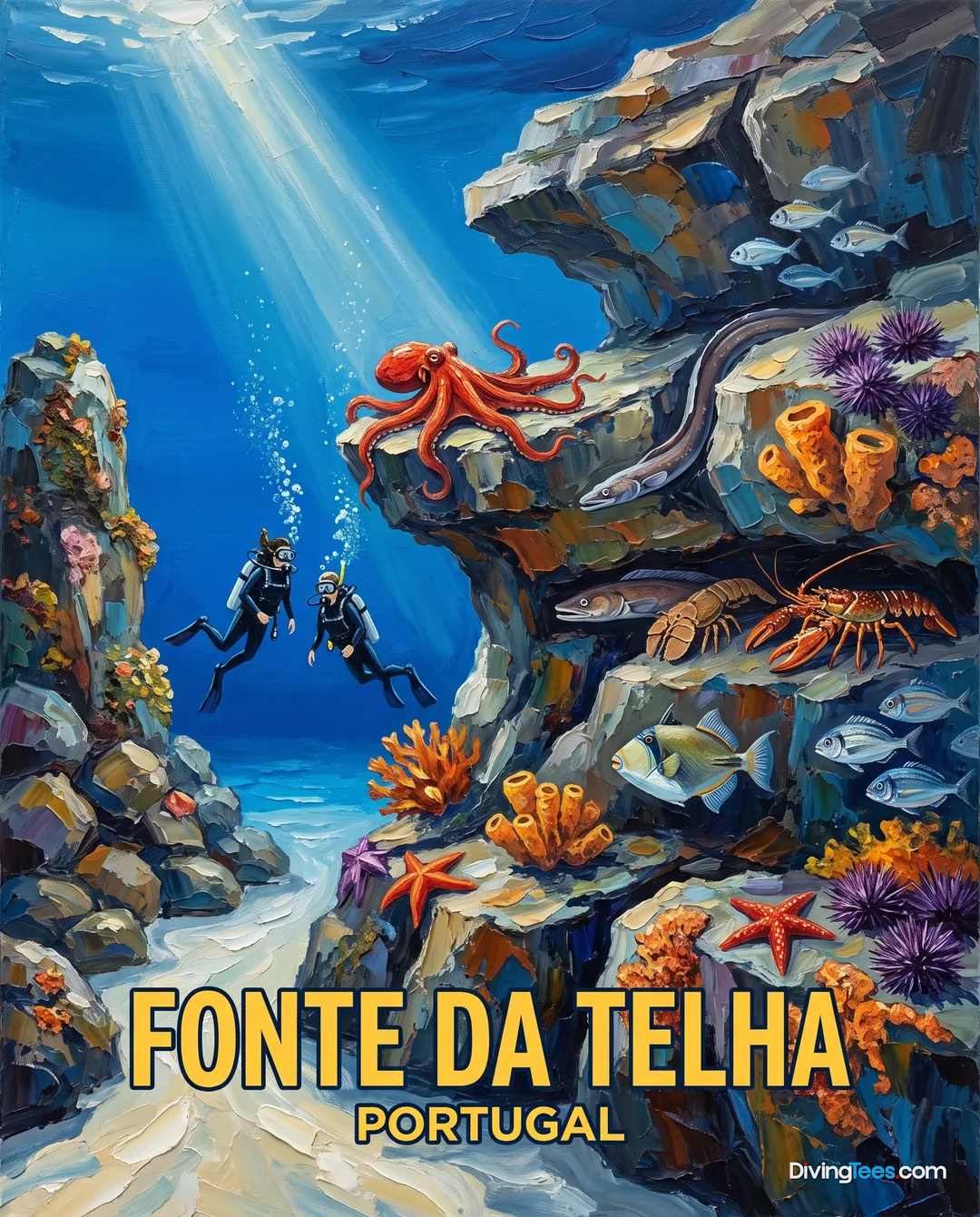
- Fonte da Telha's fishing beach near Lisbon
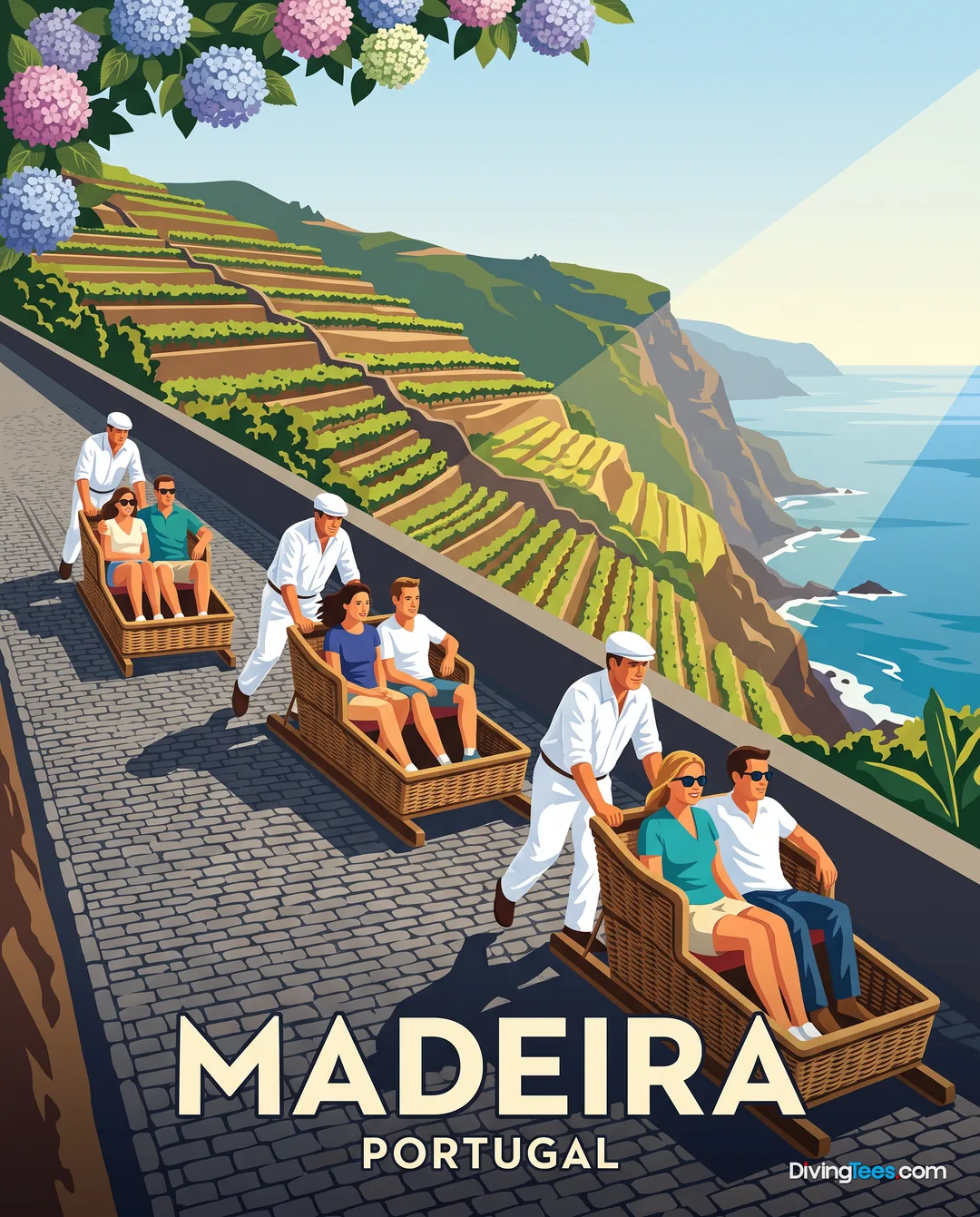
- Cabo Girão above Madeira's Atlantic terraces
For subtitles in English: start the video firstthen click the gearat the top right of the video, select “Subtitles/CC”, then “Auto-translate” and choose “English”.
This country for a diver
Portugal is a useful choice for divers who want an Atlantic trip with genuine changes of setting rather than one uniform coast. The Algarve brings mainland ports, historic towns and the organised wrecks of Ocean Revival, while Madeira shifts the journey towards volcanic relief, island roads and the Garajau Marine Reserve. Fonte Da Telha belongs to the Lisbon coast and feels more like a fishing beach than a conventional dive base. Unlike neighbouring Spain, Madeira and Porto Santo sit within the same country as the mainland, making an Algarve–island combination workable. Across Portugal, sea state and current matter as much as the calendar, and a mixed level of diving is possible.
How the country divides
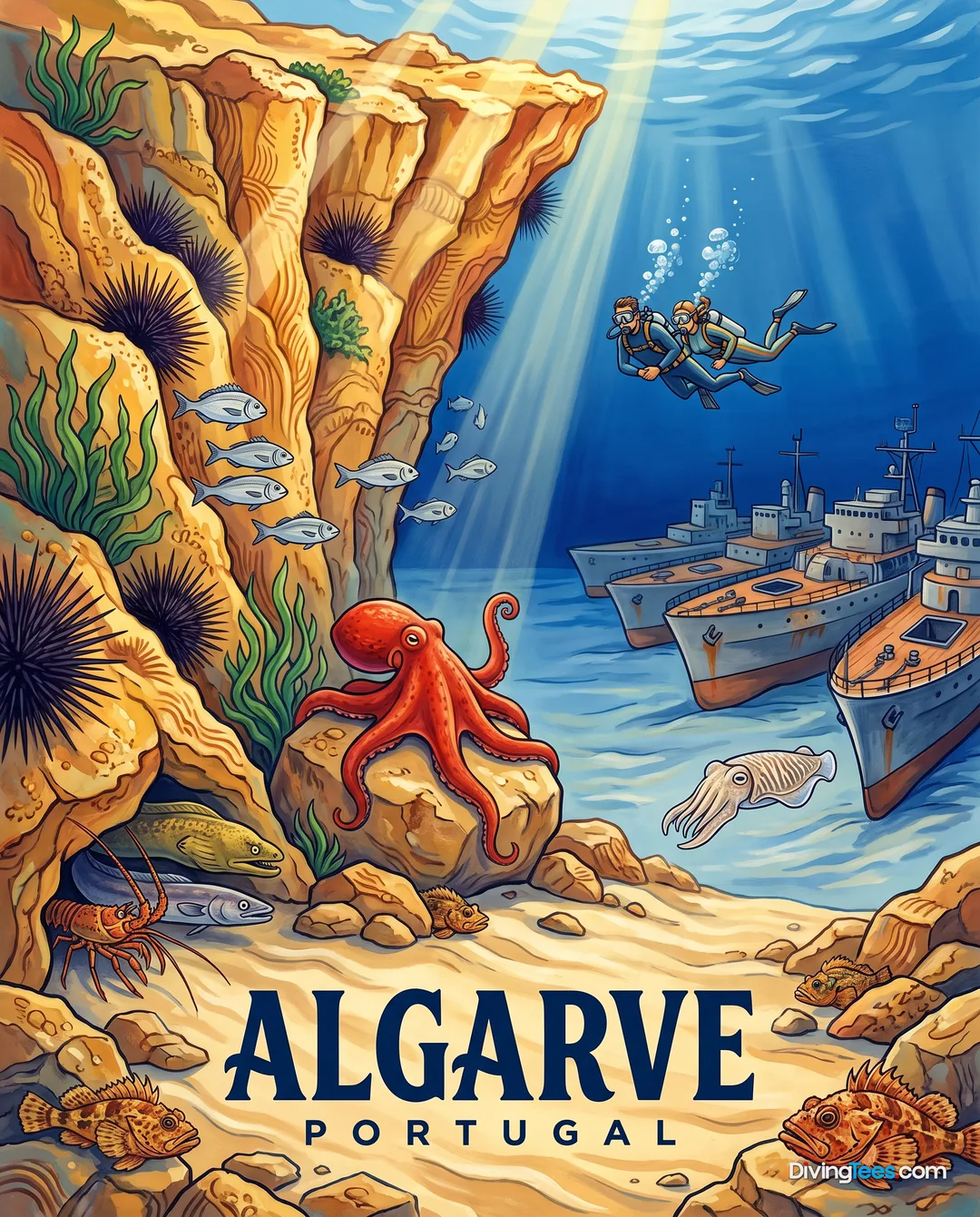
Portugal divides naturally into a southern mainland coast, a Lisbon beach community and an Atlantic island setting. The Algarve is the clearest choice for a dedicated mainland diving holiday: Faro, Lagos and Portimão spread the shore-based and boat departures across a region where old ports, beaches and inland towns can share the itinerary. Ocean Revival belongs here, as does the wider wreck and cliff coast around Lagos. Fonte Da Telha is different in scale and purpose. South of Lisbon on the Costa da Caparica, it suits a shorter coastal stay or a capital-based trip, with Pedra Da Lagoa attached to a working beach community rather than a resort circuit. Madeira is the strongest contrast: Funchal and Caniço de Baixo provide an island base, while volcanic cliffs and steep roads shape every excursion. Choose Algarve for concentrated mainland variety, Fonte Da Telha for Lisbon access, and Madeira for an island journey with diving woven into a broader Atlantic landscape.
Diving destinations
Dive centres
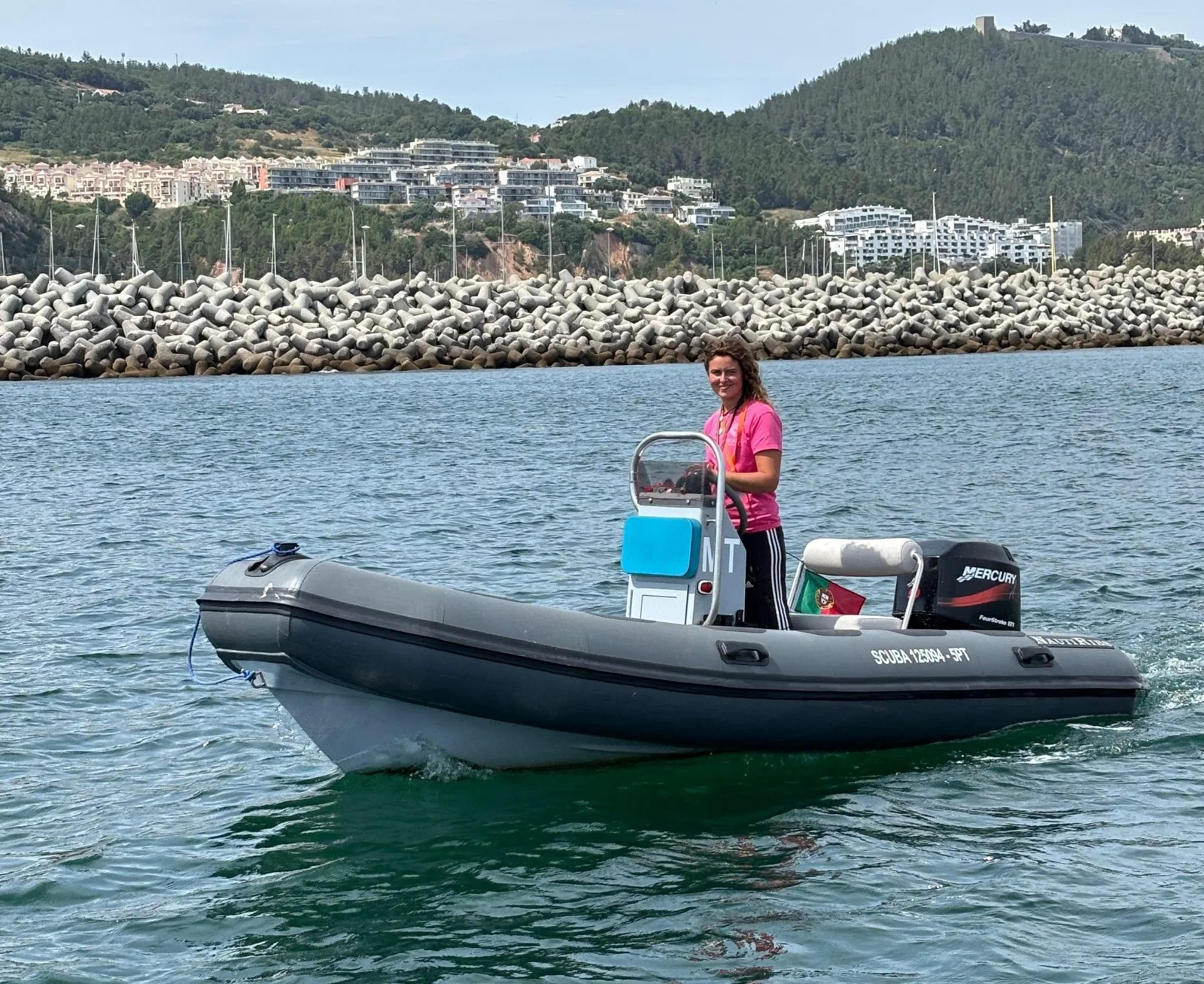

Arrábida Experiences
Sesimbra, Fonte Da Telha
Google 5/5 (833 reviews)
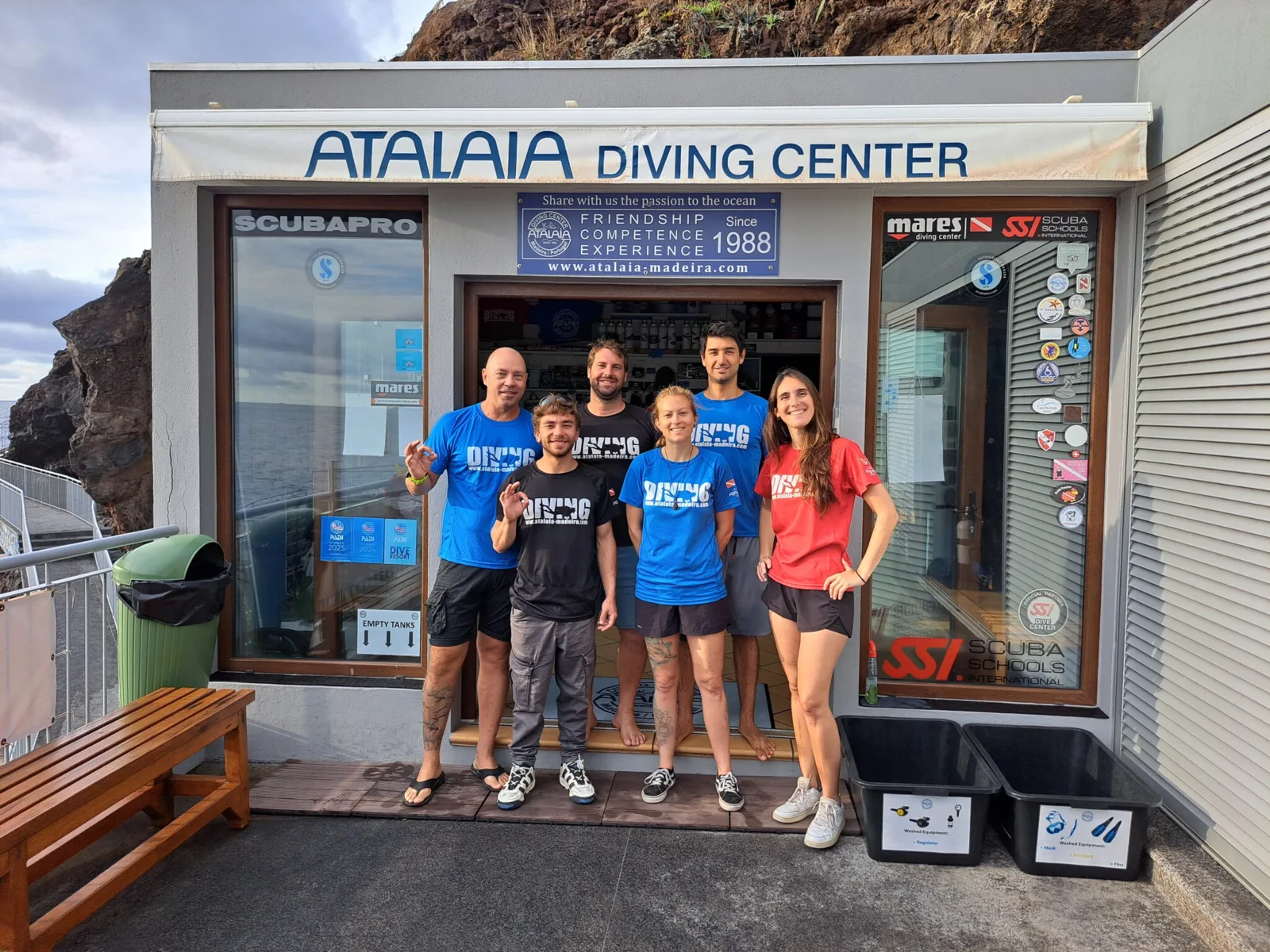
Atalaia Diving Center
Caniço, Madeira
Google 5/5 (522 reviews)
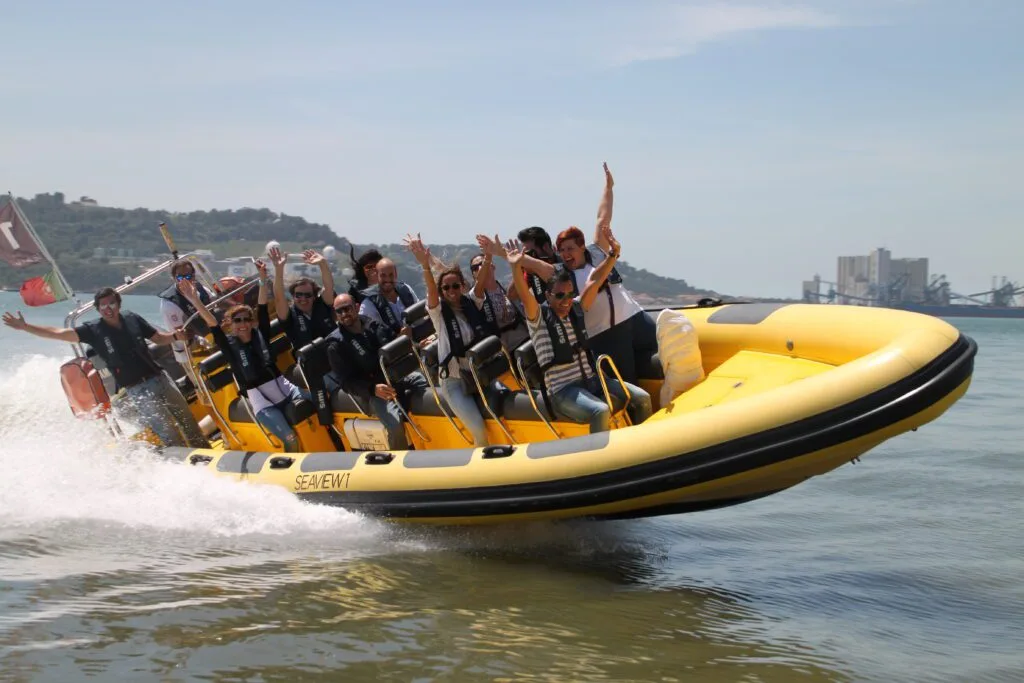
Anthia Diving Center, The most charismatic Diving in Portugal! The best
Sesimbra, Fonte Da Telha
Google 5/5 (505 reviews)


Azul Diving Center Madeira
Funchal, Madeira
Google 4.9/5 (1,446 reviews)
Hotels
Liveaboards
When to go, and where by month
The firm seasonal rhythm is in the Algarve, where diving is placed from May through September. In January, February, March and April, the Algarve is outside that defined window; the same applies in October, November and December. May opens the run, followed by June, July and August, with September closing it. This is not a neat north–south alternation like a monsoon calendar. Portugal faces the Atlantic, so swell, exposure and daily sea state can decide whether a boat programme runs, even inside the useful months. Madeira and Fonte Da Telha need to be judged locally rather than folded into the Algarve timetable: their island and Lisbon-coast settings respond to different shelter, harbour and weather patterns. For a two-week holiday, the most straightforward seasonal plan is therefore an Algarve stay during that May-to-September stretch, with an island or Lisbon extension treated as a separate travel decision. Leave buffer days wherever the itinerary depends on exposed Atlantic departures.
Marine life, coast by coast
Portugal does not present one country-wide animal theme that neatly joins the Algarve, Madeira and Fonte Da Telha. The more useful distinction for an itinerary is habitat and setting: mainland cliff coast, Lisbon’s sandy fishing shore and Madeira’s volcanic marine reserve each frame the underwater experience differently. Around Algarve sites such as Ocean Revival and Cela Wall Reef, the interest is tied to wreck and rocky-coast environments; Madeira’s Garajau Marine Reserve and Garajau Wall belong to a protected volcanic island setting. That difference matters more than building a trip around a promised creature. Wildlife expectations should remain secondary to the coastline chosen, the exposure on the day and the character of the site. For a diver who values varied surroundings, the change from Portimão to Caniço de Baixo is itself the country’s strongest natural contrast.
Getting between the areas
The Algarve works best as one mainland base or as a gradual move between its ports, because the diving sites are spread along the coast and daily road transfers can otherwise eat into the trip. Fonte Da Telha is tied to Lisbon rather than the Algarve: reaching it by public transport involves crossing to Cacilhas and continuing by a Carris Metropolitana bus, with relatively infrequent services. The practical long link is Algarve to Madeira. Faro or Lisbon can connect by air to Funchal, but the flight day, airport transfers and change of base make this a genuine itinerary split rather than a casual side trip. A sensible two-week shape is several days in the Algarve, a short Lisbon pause and a longer Madeira stay. On Madeira, a hire car opens access to Garajau and Cabo Girão, though steep, narrow roads make short map distances deceptive.
Take off your mask
Portugal’s identity changes sharply between its regions. In the Algarve, Silves brings a red-brick Moorish castle and Tavira offers a riverfront old town of tiled houses, churches and access towards the island. Cabo de São Vicente gives the far south-west a wilder edge, while Benagil Cave and Praia da Marinha show the sculpted coastline from the sea. Faro adds the Cidade Velha and the striking Capela dos Ossos. Around Lisbon, Fonte da Telha retains its fishing-beach character, and Feira da Ladra with Mercado de Santa Clara provide a more local market atmosphere than the grand boulevards. Madeira centres on Funchal’s historic streets and Mercado dos Lavradores, with Cabo Girão and Vereda da Lagoa do Vento extending the island inland and upwards. Food follows the map: cataplana de marisco, conquilhas à Algarvia and arroz de lingueirão in the Algarve; espada com banana, espetada and bolo do caco in Madeira; bacalhau à bras in Lisbon. Poncha belongs to Madeira, while ginjinha suits Lisbon.
What holds true everywhere here
Portugal’s practical constant is the Atlantic, not a rainy season or monsoon timetable. Cold-water upwelling, swell and a variable current can alter a day’s plan, so exposed boat diving deserves buffer days rather than a tightly packed sequence. A downcurrent or drift dive should be treated as a briefing point, not assumed from the map. Staying near the departure harbour is especially valuable in the Algarve, where road transfers between Faro, Portimão, Lagos and Sagres can become tiring. On Madeira, tunnels shorten some journeys but steep roads still make the island slower than it looks. For repetitive profiles, Nitrox can make a long diving day more comfortable, while a properly planned safety stop remains part of the routine. The country’s mixed level of diving makes buddy matching and honest current briefings more useful than chasing a uniform itinerary.
Frequently asked questions about Portugal
When should you plan a Portugal diving trip?
For Algarve diving, plan your visit from May through September. Portugal also connects mainland coastal settings with Madeira’s volcanic shores, but the destination information gives no comparable seasonal timing for those areas. Your choice of travel period should therefore reflect whether Algarve diving is central to your itinerary.
What diving level and conditions should you consider in Portugal?
Portugal’s sites differ in exposure and character, so you should choose locations that match your experience and comfort rather than follow one country-wide pattern. Algarve options include wreck and rocky-coast environments, while Madeira’s Garajau Marine Reserve and Garajau Wall are in a protected volcanic island setting.
What can you see while diving in Portugal?
Portugal offers varied underwater settings rather than one shared animal theme. In the Algarve, Ocean Revival and Cela Wall Reef focus on wreck and rocky-coast environments. Around Madeira, Garajau Marine Reserve and Garajau Wall provide protected volcanic surroundings. Wildlife expectations should remain secondary to the coastline and site character.
How should you plan a Portugal diving stay?
Build your Portugal itinerary around the coastline you want to experience. You can combine Algarve diving and cataplana de marisco with Lisbon’s Fonte da Telha fishing beach, then continue to Madeira for Garajau, Funchal’s market and poncha, or Cabo Girão above the Atlantic terraces.