
WeDive
Google 4.9/5 (513 reviews)
Portugal · Atlantic
Four naval wrecks form Ocean Revival’s artificial reef, while Cela Wall Reef drops from 15 to 22 metres among octopus, eels and Atlantic rock.
For subtitles in English: start the video firstthen click the gearat the top right of the video, select “Subtitles/CC”, then “Auto-translate” and choose “English”.
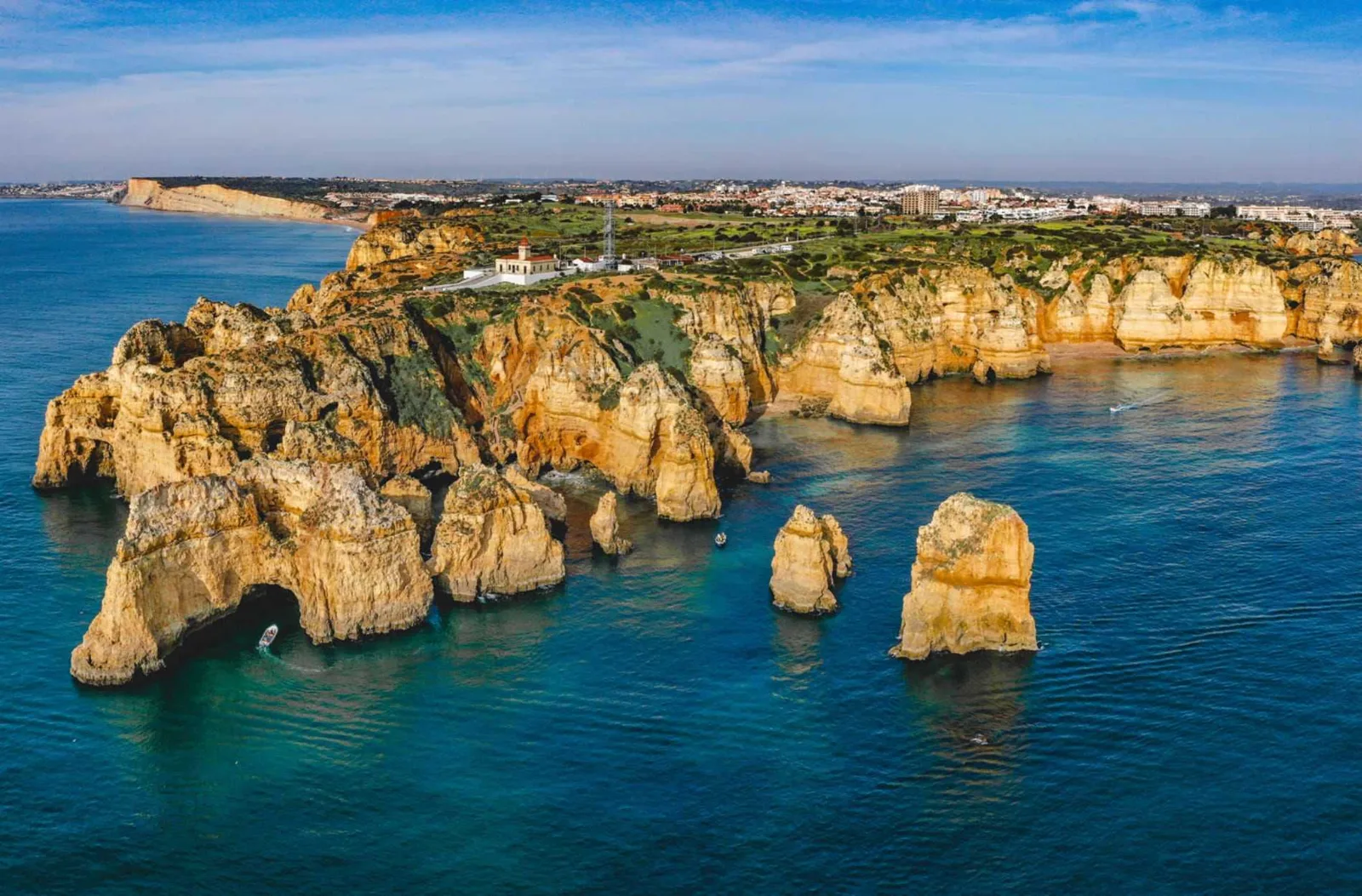
The Algarve is a land-based Atlantic diving destination built around daily boat trips from coastal ports and marinas. Underwater, the scenery is rocky rather than tropical: walls, crevices, sandy bottoms, artificial reef structures and local wrecks. Ocean Revival gives wreck divers a substantial site to explore, while Pedra Nova and Cela Wall Reef offer shallower rocky profiles. It suits a proper week-long holiday, with enough on land to make weather delays less frustrating for divers and non-divers alike.
Most diving is done from a boat, although Cabeco do Levante provides shore access to a rocky reef for suitably experienced divers. The underwater terrain ranges from Pedra Nova’s rocky shoal on sand at 15 metres to Cela Wall Reef, where the wall begins at 15 metres and falls to a sandy bottom at 22 metres. Ocean Revival is the deeper wreck option, with four deliberately sunk Portuguese Navy ships lying between 16 and 32 metres. Expect crevices, holes, walls and open sandy patches rather than coral gardens. Currents are generally light at individual sites but remain variable, and wind, swell and tides can alter both the ride out and the dive. Visibility is similarly changeable: swell and stirred sand can reduce it, so the Algarve rewards divers who can adapt rather than those expecting fixed conditions.
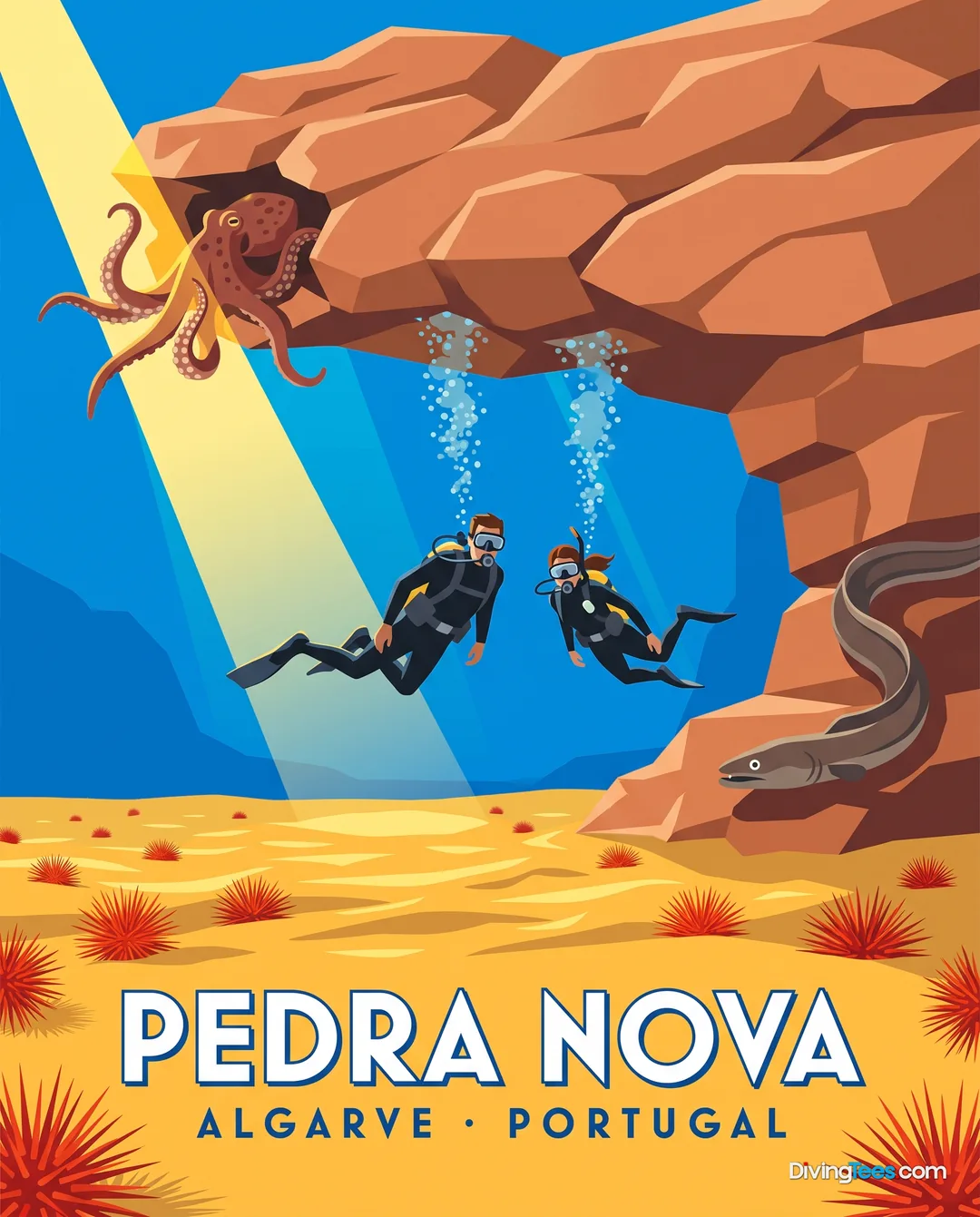
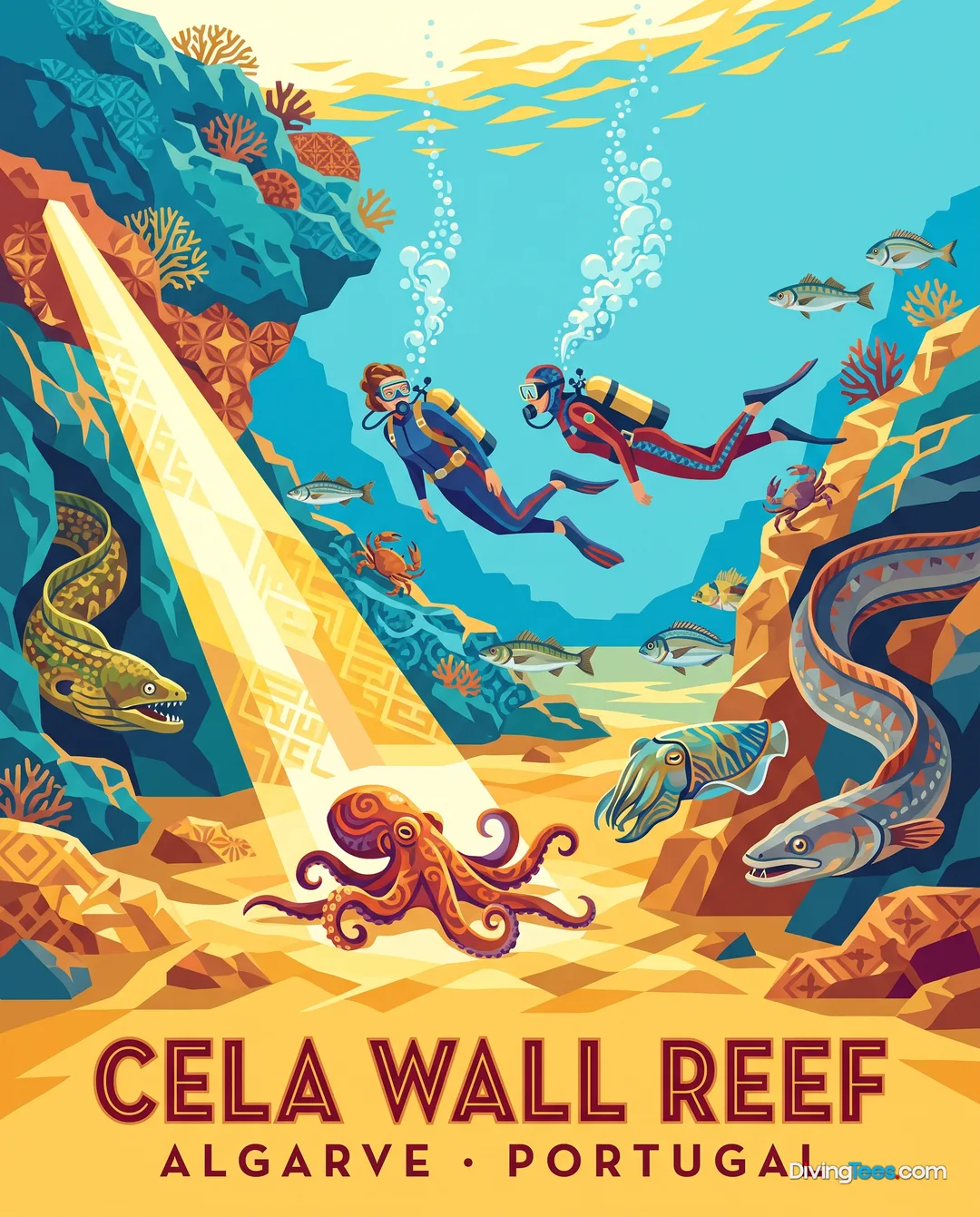
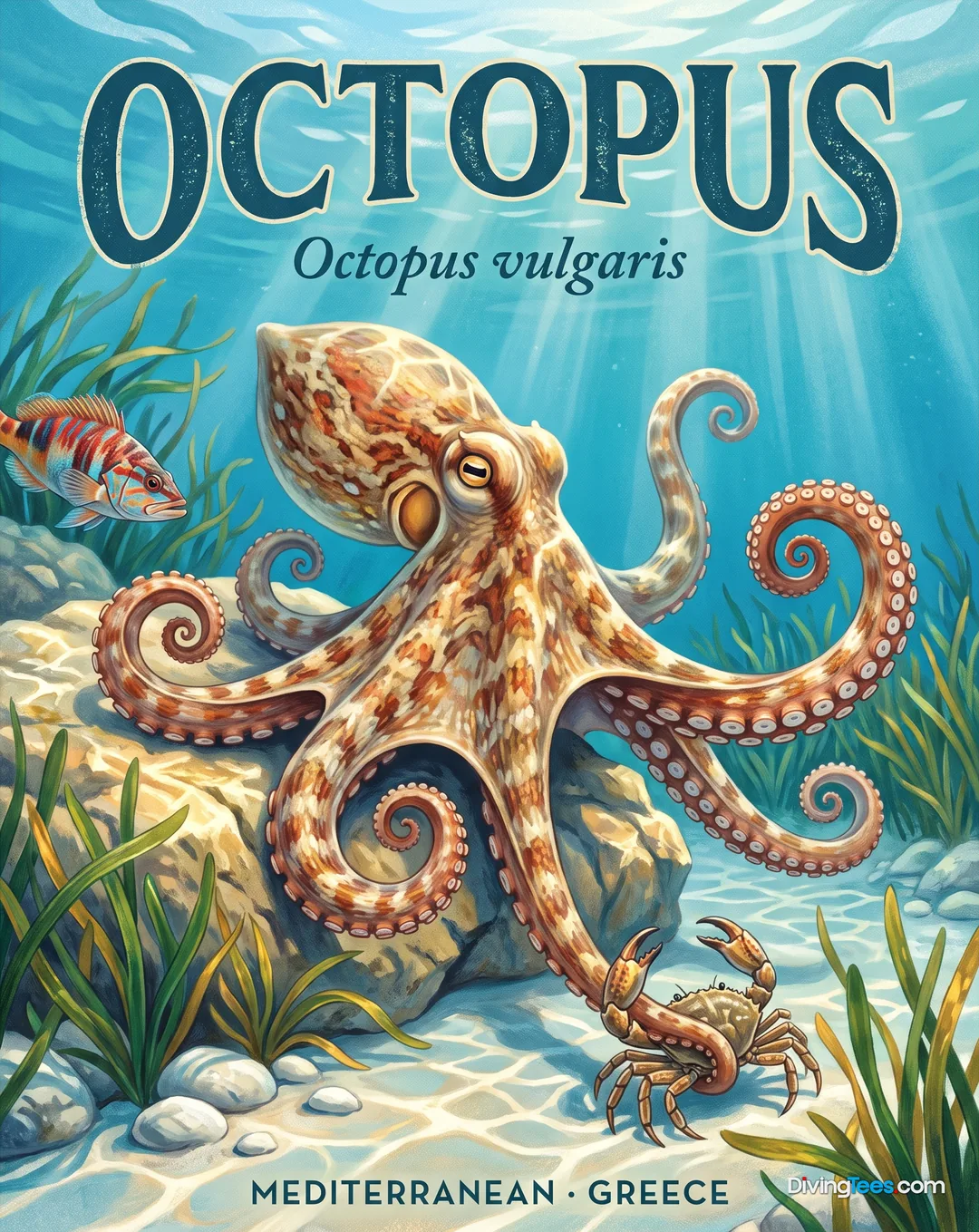
The rocky relief provides the sort of cover that makes slow searching worthwhile. Moray eel and conger eel can be found in holes and crevices, while octopus use the reef and sandy edges as both shelter and hunting ground. Cuttlefish and sea bass add movement over the rock, and sea urchins are a familiar part of the seabed. Pedra Nova is particularly suited to looking for resident octopus and conger eel on a shallow profile. Cela Wall Reef is another good place to work along the wall, checking openings rather than simply swimming past them. No strong seasonal wildlife pattern is established here, but the calmer period from May to September generally makes observation easier.
May to September is the measured period for the calmest sea, while rainfall is lowest from April to September. May, June, September and October offer the most sensible balance between workable conditions and summer crowds. The reason to keep the calendar flexible is Atlantic weather: wind and swell, rather than a tropical monsoon cycle, decide whether a boat leaves and which site is practical. Summer brings more visitors, so easy coastal sites may be busier when conditions settle. Spring and autumn are quieter, but a four-to-seven-day stay gives more room for changes caused by the sea.
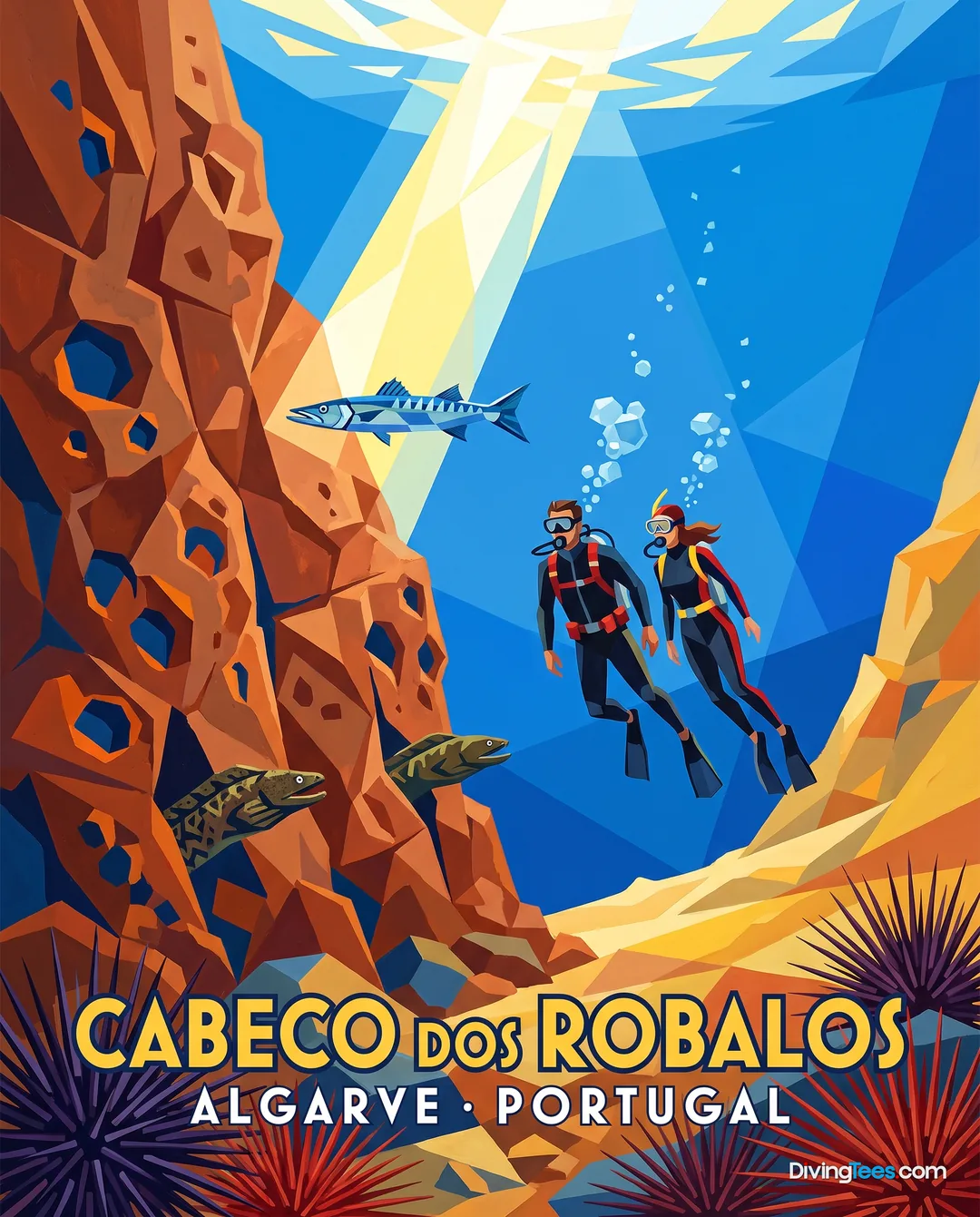
Open Water divers can enjoy straightforward profiles such as Pedra Nova, and Cela Wall Reef is suitable for divers comfortable with buoyancy and a wall drop. Cabeco Dos Robalos also begins at 16 metres and requires readiness for variable current. Advanced certification is useful for the deeper wreck profiles at Ocean Revival, while Wreck training becomes relevant if penetration is planned. Nitrox is worthwhile on repeated boat-diving days, particularly for divers making several moderate-depth dives.
From London Heathrow, Gatwick or Manchester, the journey is by air to Faro, followed by a road transfer to the coastal town or port where the diving is based. There is no compulsory sea crossing to reach the Algarve. The overall trip is usually a half-day door to door, depending on the departure point and connections, so the practical choice is where to sleep rather than how to reach a remote island. Once there, divers staying in town or near the marina can normally reach the dive centre on foot, by taxi or with a short transfer. Staying close to the departure port reduces daily travel and makes early boat starts less awkward.
Treat the sea state as part of the itinerary. The centres may change plans around wind and swell, so the first day is best kept for a less committed profile rather than a must-do wreck. A short, tightly packed trip is a poor fit: one Atlantic blow can remove several planned boat dives, whereas a few spare days allow the programme to recover. Divers coming specifically for Ocean Revival or deeper relief should bring the appropriate Advanced qualification, while Nitrox makes repeated moderate-depth boat days more comfortable. Staying near the port is more useful than choosing accommodation inland, because it cuts transfers and wasted time. The Algarve is not a coral-reef destination; its appeal lies in naval wrecks, rocky walls, artificial structures and Atlantic conditions. Expecting Mediterranean predictability or tropical scenery is the quickest way to misread the place.
Allow four to seven days and build the diving around the sea rather than fixing every day in advance. A typical stay combines boat dives on wrecks and reefs with a quieter day when conditions or logistics dictate. Coastal walks, beaches, port towns and marinas give a non-diving companion plenty to do, while a boat trip along the coast can replace a cancelled dive or fill the day before flying.
Hello, I'm Marina, DivingDeal.com's AI assistant. I guide you through destinations, areas and countries.
Thinking about the whole trip and the flights? Talk it over with Edith →
Marina is an AI. Some links are affiliate links: DivingDeal may earn a commission, at no extra cost to you. Bookings are made with the partner.
Your last day stays dry: no diving in the 18-24 hours before a flight, the perfect window to see the destination from another angle.
 Culture
⏱ 7 h · ★ 5.0 (162 reviews)
from £151$201€180
see on Viator ↗
 Culture
⏱ 3 h · ★ 5.0 (102 reviews)
from £92$123€110
see on Viator ↗
 Adventure
⏱ 5 h · ★ 5.0 (23 reviews)
from £67$90€80
see on Viator ↗

⏱ 6 h · ★ 5.0 (15 reviews)
from £145$194€173
see on Viator ↗
Ratings and reviews collected by Viator and Tripadvisor.
Visit the Algarve from May to September for the calmest sea, while rainfall is lowest from spring through early autumn. May, June, September and October offer a useful balance between workable conditions and summer crowds. Keep your schedule flexible, because Atlantic wind and swell can change departures and site choices.
Open Water divers can enjoy straightforward profiles such as Pedra Nova. Cela Wall Reef suits divers comfortable with buoyancy and a wall drop, while variable current requires readiness at Cabeco Dos Robalos. Advanced certification is useful for Ocean Revival’s deeper wrecks, and wreck training matters if you plan penetration.
You can explore four deliberately sunk Portuguese Navy ships at Ocean Revival, rocky walls, crevices, sandy bottoms and artificial reef structures. Octopus, moray eel, conger eel, cuttlefish and sea bass inhabit the relief, with sea urchins on the seabed. Cabeco do Levante also offers shore-accessible rocky reef diving.
Plan a flexible stay of several days around daily boat departures from coastal ports and marinas. Stay near the departure port to reduce transfers and simplify early starts, and leave room for weather changes. Combine wreck and reef dives with quieter days, coastal walks, beaches, port towns or marinas.