
Barbados Blue Water Sports
Google 4.8/5 (378 reviews)
1.1 km away as the crow flies
Barbados · Caribbean
Carlisle Bay’s colonised wrecks, reef fish, rays and sea turtles sit alongside deeper wreck diving off Bridgetown’s south-west coast in Barbados
For subtitles in English: start the video firstthen click the gearat the top right of the video, select “Subtitles/CC”, then “Auto-translate” and choose “English”.
Bridgetown is a shore-based diving holiday built around the wrecks of Carlisle Bay, with reef sites and deeper boat dives extending along the south-west coast. The bay gives newer divers an easy introduction to wrecks in relatively sheltered water, while MV Trident and Brianna H provide a more demanding step down to around 80 feet. Between dives, the capital, nearby beaches and turtle-filled surface waters make this a straightforward choice for couples or families who do not plan to spend every day underwater.
Carlisle Bay is the natural starting point. Its wrecks lie close together in a sheltered bay, and a boat outing can combine more than one site without turning the day into a long passage. The structures are artificial reefs now occupied by reef life, so the dive is about moving slowly around recognisable wreckage rather than searching a featureless bottom. Beyond the bay, fringing reefs and deeper wrecks along the south-west coast add variety. Most reef and wreck diving is organised from boats, although there are also opportunities close to shore. Currents are variable, not a defining feature of every dive, and conditions determine which site is sensible on the day. The drier part of the year generally helps both sea conditions and visibility, but this is not a destination where a fixed visibility figure should dictate expectations.
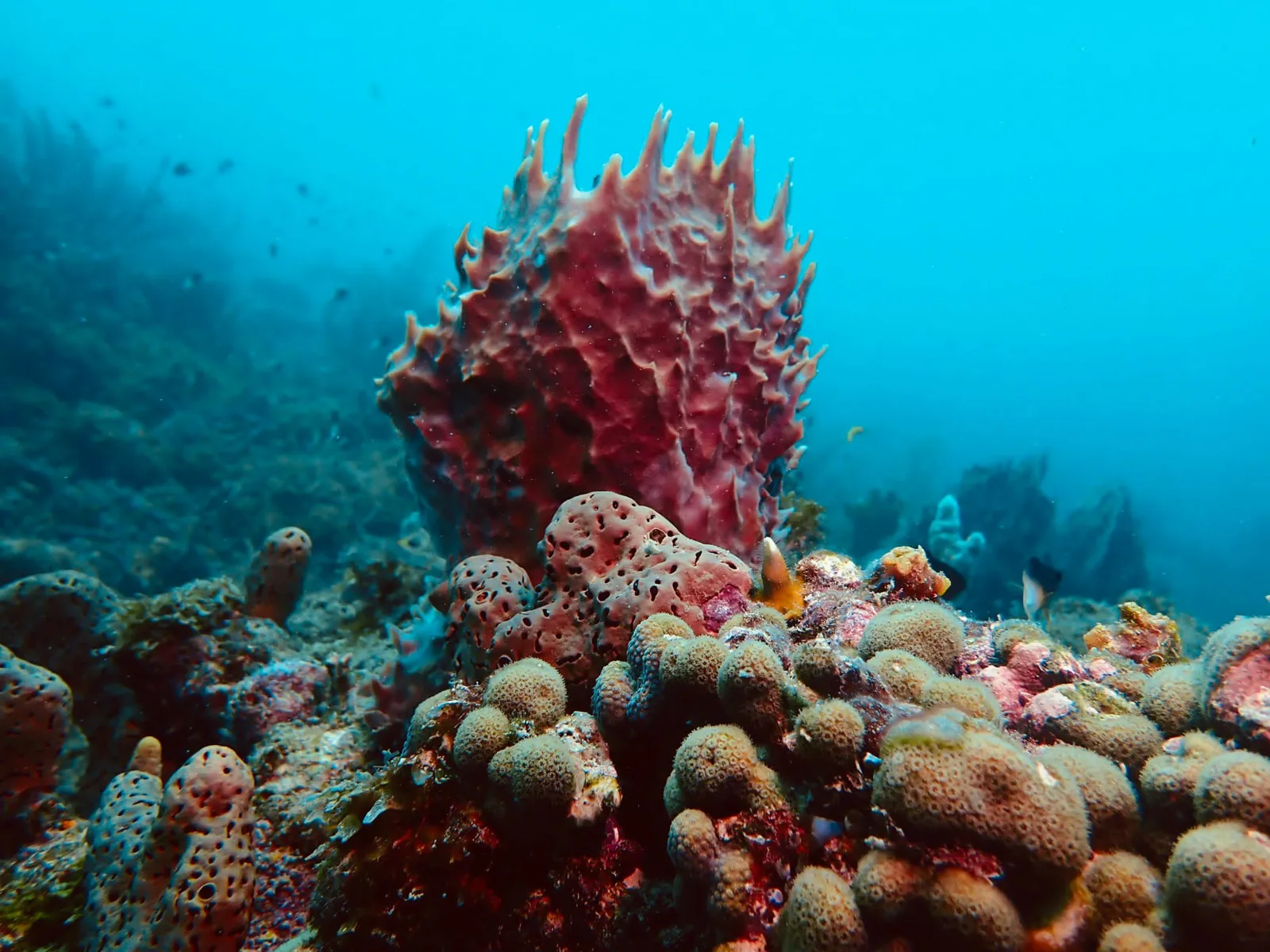
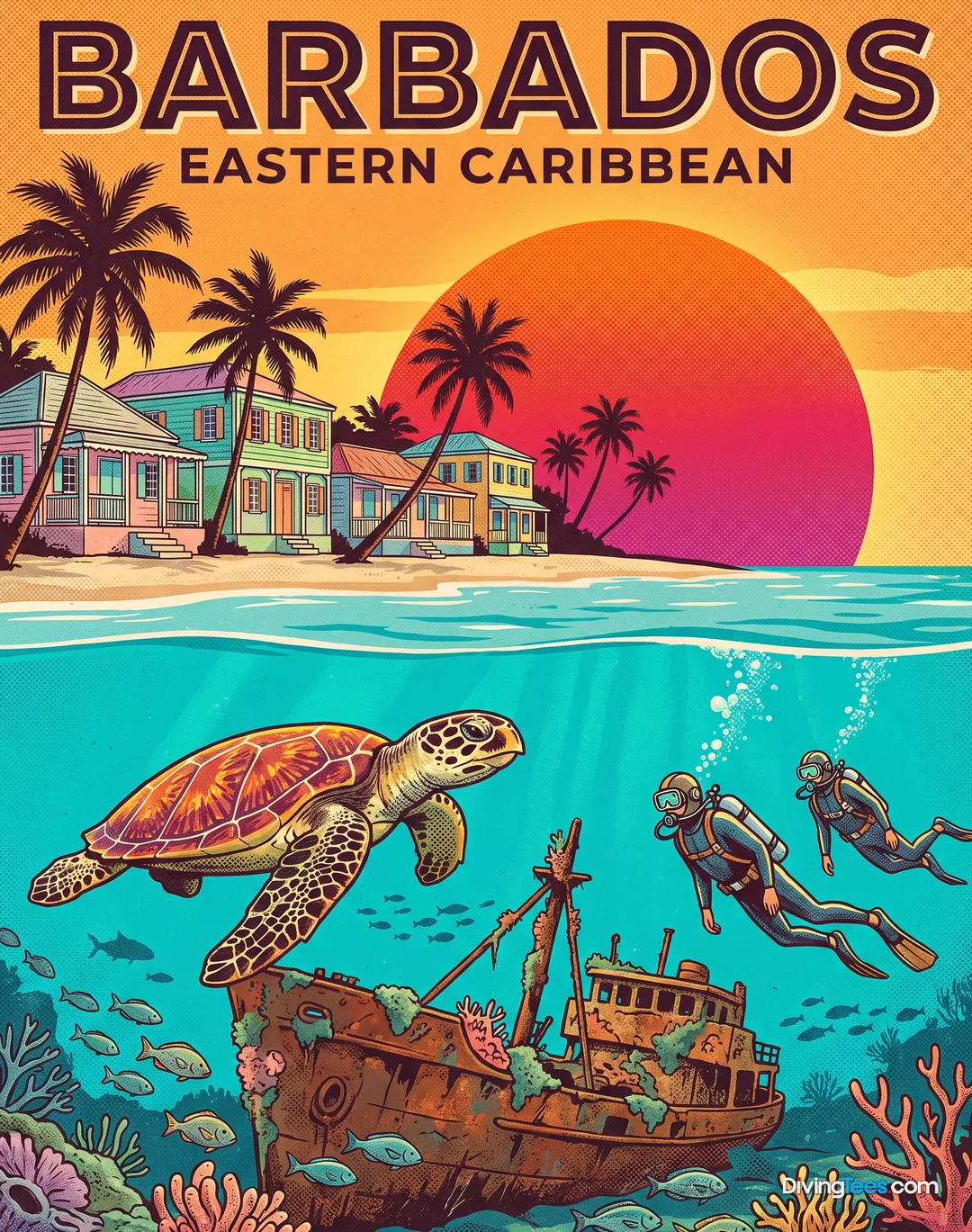
Sea turtles are the signature encounter around Carlisle Bay, appearing on dives and in the surface waters used by snorkellers. Rays and reef fish add movement around the wrecks and fringing reefs, while the steel structures themselves carry the life that makes an artificial reef worth exploring. The appeal is less about a seasonal migration than about the combination of turtles, rays and everyday Caribbean reef life in a small travelling area. Carlisle Bay’s calm, shallow setting also makes it possible for a non-diving companion to see something of the same underwater landscape with a mask, snorkel and fins, or from a glass-bottom boat. On the wrecks, buoyancy matters: touching the structure or coral turns a living habitat into a handrail.
Bridgetown is dived throughout the year, but January to June is the sensible window for a first visit. This is the generally drier period, when sea conditions are more often favourable and coastal visibility is less likely to be affected by heavy run-off. The rainy season does not close the diving, but it can bring more variable conditions and cloudier water near the coast. The practical answer is to keep some flexibility in the itinerary rather than treating every booked site as guaranteed. Carlisle Bay provides a useful fallback when conditions are unsettled, while the more exposed or deeper outings can be left for the calmer days.
This coast is exposed to sargassum strandings, whose intensity varies greatly from year to year. To find out more, see the “Sargassum alert” panel on this page.
Carlisle Bay suits beginners, with shallow wrecks and sites that work for initial training dives. Experienced divers can move on to MV Trident and Brianna H, around 80 feet, where depth and gas planning matter more. A Wreck Diver qualification is useful for wreck work and any properly supervised penetration. Advanced Open Water is the sensible benchmark for the deeper wrecks, whether the diver arrives through BSAC, PADI or SSI, with actual experience carrying as much weight as the card.
From London Heathrow or Gatwick, or from Manchester, allow roughly a day of travel to reach Bridgetown, with at least one connection likely depending on the departure used. The destination is reached by road from Grantley Adams International Airport, with no ferry or domestic flight needed for Bridgetown. Once on the island, local diving is concentrated around Bridgetown, Carlisle Bay and the south-west coast. Divers staying near Bridgetown or Carlisle Bay may be able to walk to a departure point. From hotels farther along the south or west coast, plan on a taxi or a shuttle arranged through the diving operation, rather than assuming that every morning departure will be within walking distance.
Make Carlisle Bay the first morning’s plan if this is your first Barbados dive. It lets you settle into the water around shallow wrecks before committing to deeper sites, and the bay’s boat traffic and snorkelling activity are easier to manage early in the day. Check the actual site before boarding: centres switch between wrecks, reefs, the marine park and more distant locations as the sea changes. Do not accept MV Trident or Brianna H simply because the names are on the schedule; confirm the depth, qualification and experience expected for the group. If quieter water matters, ask about sites beyond the immediate bay, where there is generally less boat activity. In Carlisle Bay, use the moorings and keep clear of marked boat zones. Leave a full non-diving day before flying, ideally for Bridgetown’s heritage, the beaches or a coastal outing, rather than trying to squeeze in one final dive.
A five- to seven-day land-based stay gives enough room to combine Carlisle Bay wrecks, south-west coast reefs and a deeper outing without making every day identical. Keep one or two days free for the sea to dictate the programme, and use a non-diving day for Bridgetown, the beaches or turtle snorkelling. Staying near Bridgetown or Carlisle Bay simplifies early departures and reduces reliance on taxis, while the wider south and west coast remains practical with planned shuttle or taxi transfers.
Hello, I'm Marina, DivingDeal.com's AI assistant. I guide you through destinations, areas and countries.
Thinking about the whole trip and the flights? Talk it over with Edith →
Marina is an AI. Some links are affiliate links: DivingDeal may earn a commission, at no extra cost to you. Bookings are made with the partner.
You can dive Bridgetown throughout the year, but January through June is the sensible window for a first visit. This generally drier period is more often favourable for sea conditions and coastal visibility. During the rainy season, conditions can become more variable, so keep your itinerary flexible and use Carlisle Bay as a fallback.
Bridgetown suits beginners in Carlisle Bay, where shallow wrecks provide an introduction to wreck diving and initial training dives. More experienced divers can progress to MV Trident and Brianna H at around 80 feet, where depth and gas planning matter more. Advanced Open Water is a sensible benchmark for these deeper wrecks.
In Bridgetown, Carlisle Bay’s wrecks hold reef fish, rays and sea turtles, while steel structures support life as artificial reefs. Fringing reefs and deeper wrecks along the south-west coast add variety. Turtles also appear in surface waters, giving non-diving companions opportunities to see them while snorkelling or from glass-bottom boats.
Plan a land-based stay near Bridgetown or Carlisle Bay to simplify early departures, with taxis or a diving-operation shuttle if you stay farther away. Start with Carlisle Bay, keep one or two days flexible for changing sea conditions, and reserve a non-diving day for Bridgetown, beaches or turtle snorkelling before flying.