
Lagun Divers, Lagun Blou Resort
Google 4.6/5 (207 reviews)
Curaçao · Caribbean
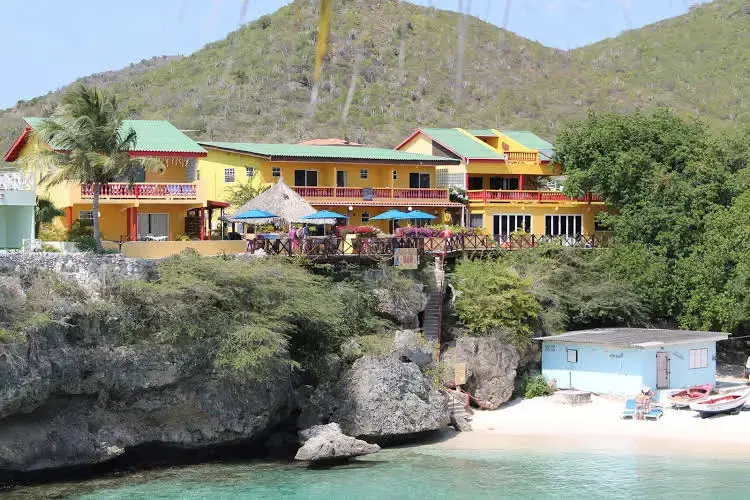
A sandy beach, limestone walls, turtles in the bay and a reef reached by swimming offshore define Lagun's unhurried west-coast diving.
For subtitles in English: start the video firstthen click the gearat the top right of the video, select “Subtitles/CC”, then “Auto-translate” and choose “English”.
Playa Lagun gives divers a sandy shore entry into a narrow, sheltered bay, with the house reef beginning close to the beach and the outer drop-off reached by swimming. It is a sensible base for a week on Curaçao's western coast rather than a destination to treat as a single-site stop. Spend some dives in the bay, use a hire car to reach neighbouring reefs, and add local boat trips when a change of scenery is wanted. Non-divers have a beach, clear water for snorkelling and quiet coastal scenery.
Lagun's signature is the transition from a sandy beach to a protected inner reef, then out through the bay towards the drop-off. The shape of the bay makes for a gradual, reassuring start, but the dive is not simply a descent from the beach: reaching the outer reef involves a swim, and the channel, rocks and walls become more noticeable as you leave the sand behind. Currents are generally light, although the outer section deserves more planning than the inner bay. Visibility is commonly around 20 to 30 metres, but swell, runoff and suspended material can reduce it. This is primarily shore diving, with guided beach dives, night dives and boat outings to western-coast reefs such as Mushroom Forest and Watamula. The same sheltered layout that helps a first dive also rewards careful navigation on the way back.
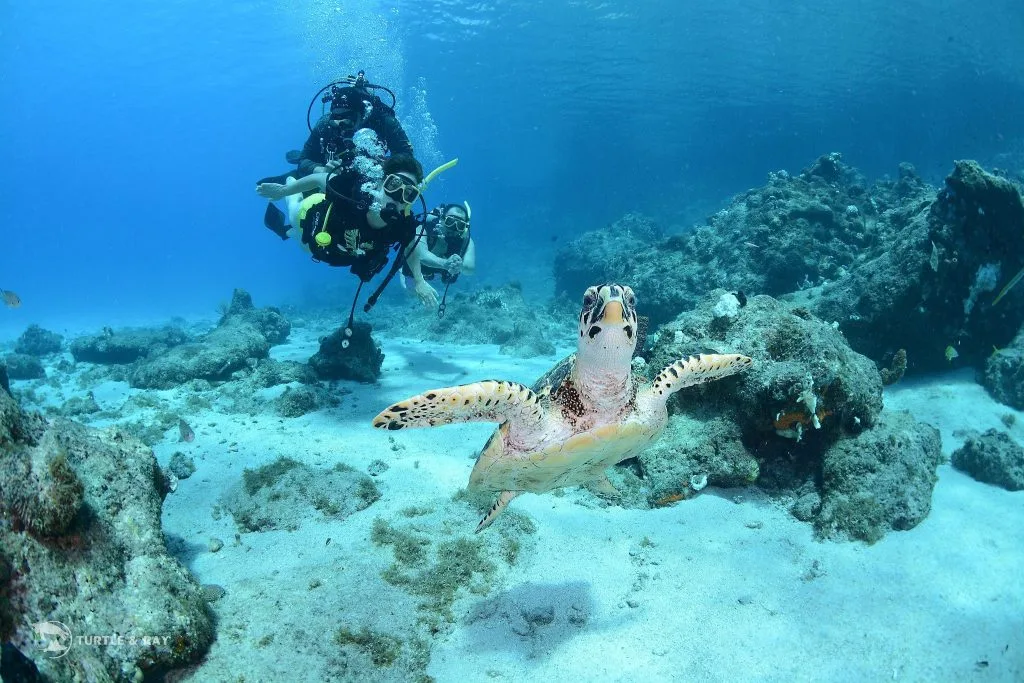
Turtles are the animals most strongly associated with Lagun, moving through the bay rather than appearing as a guaranteed appointment on every dive. Give them room, keep your fins clear of the reef and let them choose their direction. Around the coastal reef, expect tropical reef fish alongside rays, octopuses, squid and smaller macro life. The bay is useful for looking slowly, especially when the reef interior keeps you close to the rock and coral rather than sending you straight into open water. Wildlife is not tied to a published seasonal window here, so the practical approach is to make several dives and vary the timing. Early entries can also avoid the busiest period for swimmers and snorkellers.
Lagun is a year-round diving destination, with the sheltered bay usually remaining practical in different conditions. There is no strong reason to reserve one particular month for the diving itself. The useful qualification is visibility: swell, runoff and suspended material can affect what you see, so a spell of unsettled weather may make the outer reef less rewarding even when the beach entry remains manageable. Daytime use of the bay can also increase with swimmers and snorkellers. Starting early gives the water a quieter feel, while a night dive offers another way to use the protected channel. Keep flexible plans for boat trips rather than treating every day as interchangeable.
This coast is exposed to sargassum strandings, whose intensity varies greatly from year to year. To find out more, see the “Sargassum” panel on this page.
The sandy entry and sheltered water suit newly qualified divers when local conditions are calm, making Lagun appropriate for entry-level BSAC, PADI or SSI divers. The inner reef allows a measured start, while the swim to the outer drop-off asks for better buoyancy, navigation and comfort in open water. No specialist certification is central to the destination. Experienced divers may find the most interest in using the bay as a relaxed first or night dive, then putting their time into the wider western coast by car or boat.
From London Heathrow, London Gatwick or Manchester, fly to Curaçao and continue by road to Lagun. There is no ferry or domestic flight needed to reach the bay. From the airport road junction, follow the coastal route west towards Westpunt. Allow time for any flight connection in the overall itinerary, then arrange a hire car if more than the beach is on the plan. Lagun is away from the main urban area, and the western-coast dive sites are spread along the road, so a car is practically necessary for independent exploration. If your accommodation is on Playa Lagun, walk to the water. Otherwise, use a road transfer or drive to the beach.
Start with the house reef from the beach. That first dive shows you exactly where the sand gives way to rock, how the channel lies between the bay walls and how much swimming the outer reef will require. Do not assume that staying in the back of the bay gives you the full reef experience: the drop-off is farther out. Wear suitable foot protection for the entry and for the uneven rock around the reef, even though the first steps are on sand. Watch turtles without following them or moving in for photographs. Early morning avoids the busiest daytime beach period, and a night dive works well in the sheltered bay when arranged locally. Keep your route simple on the return, particularly after leaving the channel. A hire car is the practical answer if Mushroom Forest, Watamula or other western-coast sites are part of the plan.
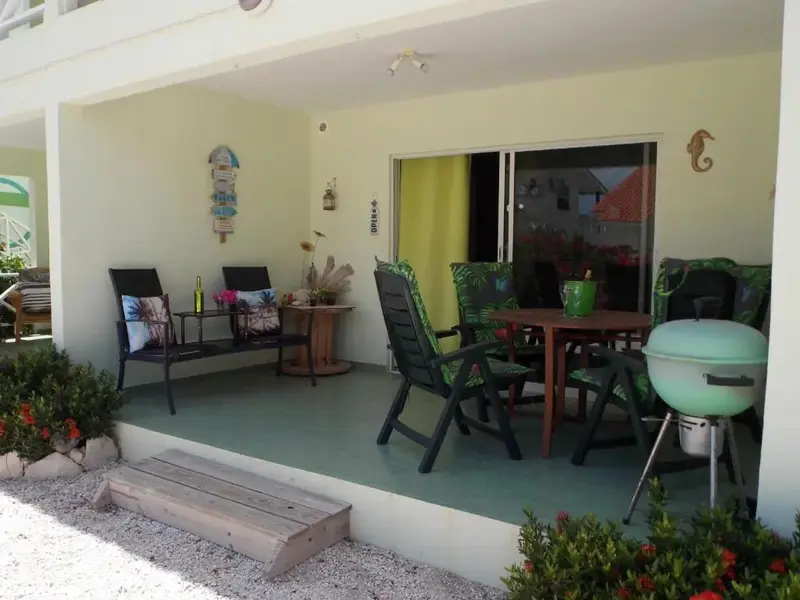
Allow roughly a week to combine repeated dives at Lagun with western-coast sites and a few non-diving days. Staying on the beach makes house-reef entries and exits straightforward; elsewhere, each visit needs a drive or road transfer. Use the bay for an easy first dive, a snorkelling day or a night dive, then reserve boat outings for a change from shore diving. A companion who does not dive has swimming, snorkelling, beaches, cliffs and coastal walks, with Willemstad available for a separate day.
Hello, I'm Marina, DivingDeal.com's AI assistant. I guide you through destinations, areas and countries.
Thinking about the whole trip and the flights? Talk it over with Edith →
Marina is an AI. Some links are affiliate links: DivingDeal may earn a commission, at no extra cost to you. Bookings are made with the partner.
Lagun is a year-round diving destination, and the sheltered bay usually remains practical in different conditions. Swell, runoff and suspended material can reduce visibility, especially on the outer reef, so keep plans flexible after unsettled weather. Early entries offer quieter water, while the protected channel also suits a locally arranged night dive.
Newly qualified divers can enjoy Lagun when local conditions are calm, thanks to the sandy entry and sheltered inner bay. Reaching the outer drop-off involves a swim and calls for stronger buoyancy, navigation and open-water comfort. Experienced divers can use the bay for a relaxed first or night dive before exploring farther.
Turtles move through Lagun's sheltered bay, although they are not present on every dive. You can also encounter tropical reef fish, rays, octopuses, squid and smaller macro life around the coastal reef. The dive leads from sand through rock and coral, between limestone walls, toward the outer drop-off, with visibility commonly around twenty to thirty metres.
Plan Lagun as a base for exploring Curaçao's western coast rather than as a single-site stop. Begin with the house reef, then use a hire car for neighbouring reefs and arrange boat outings to Mushroom Forest or Watamula. Staying on Playa Lagun simplifies entries, while a longer visit can include snorkelling, beaches, coastal walks and Willemstad.