
Aquatica Underwater Adventures
Google 4.7/5 (345 reviews)
Puerto Rico · Caribbean
Collapsed pier structures, volcanic cavities, seahorses and turtles meet in Aguadilla’s shore dives, with deeper walls and offshore sites adding a more demanding edge.
For subtitles in English: start the video firstthen click the gearat the top right of the video, select “Subtitles/CC”, then “Auto-translate” and choose “English”.
Aguadilla is a shore-diving base where a single day can move from an easy reef entry to the broken structures of Crash Boat, then on to walls and deeper offshore sites by boat. The volcanic coast brings rock, cavities and shallow reef, while sand, seagrass, tyres and metalwork create a surprisingly good hunting ground for macro subjects. Seahorses, frogfish, turtles and tropical reef fish give the place a clear appeal for patient photographers, without making every dive dependent on a long boat trip.
The diving is a mixture of shore entries, shallow volcanic reef, cavities, walls and boat-accessed sites. Crash Boat is the defining experience: descend from the beach and explore collapsed military pier remains where sand, seagrass, rocks, tyres and metal structures meet. It is a place for slow searching rather than simply swimming over a reef, especially when looking for small animals. Elsewhere, rocky formations and sheltered coastal areas suit less experienced divers, while walls and deeper wrecks require a more deliberate profile. Currents are variable, so conditions can change between sites and a local briefing matters. Visibility is generally more dependable from May to October, but swell and coastal conditions can reduce it. Some entries are uneven and difficult to identify, making a guided shore dive sensible at sites such as El Natural. Boat trips extend the range beyond the beach.
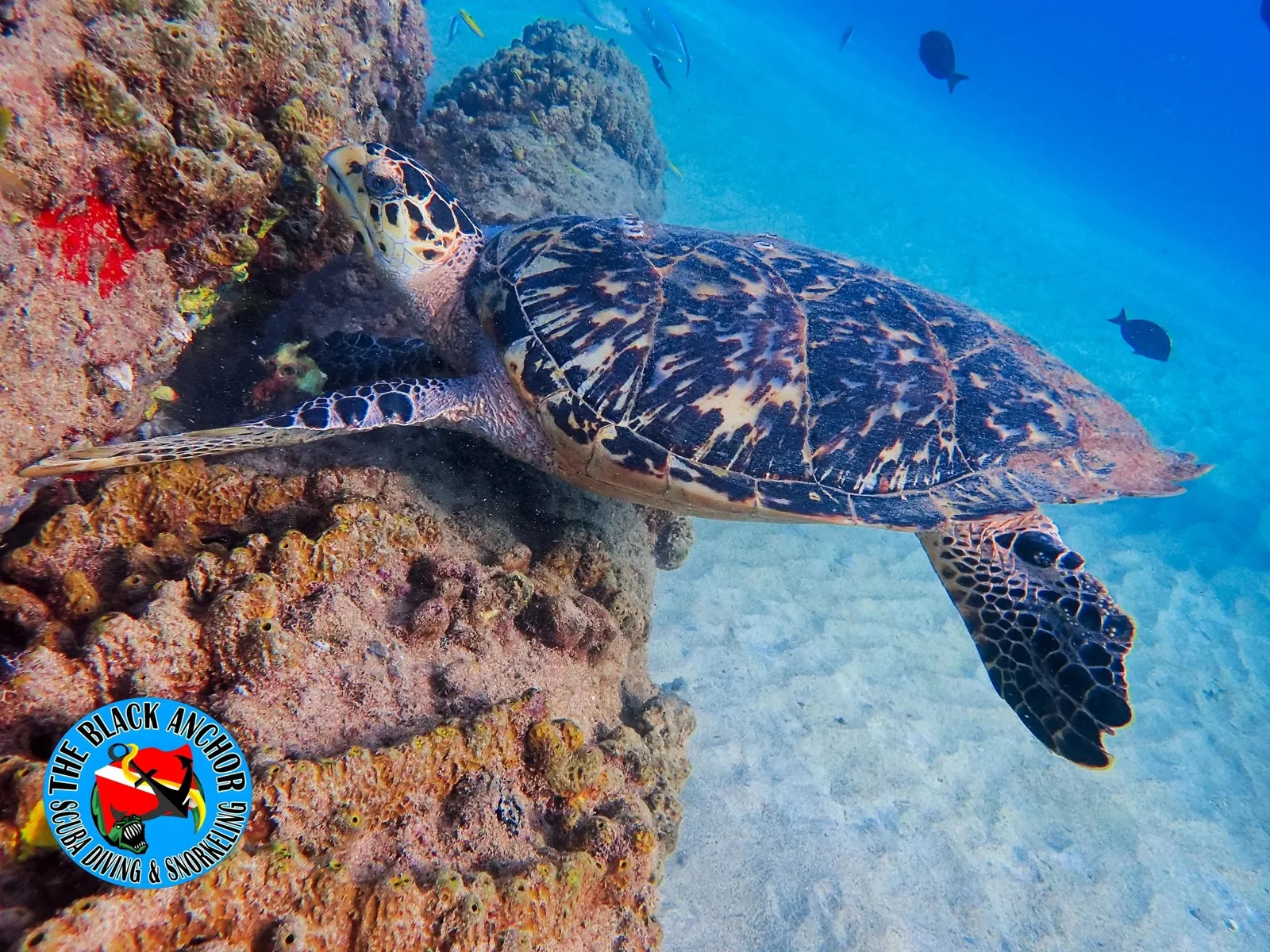
Aguadilla rewards divers who slow down and inspect the background rather than concentrating only on open water. Hawksbill turtles can be encountered throughout the year, alongside ordinary reef fish, tarpon and the occasional eagle ray or nurse shark. Crash Boat’s mixed seabed is particularly useful for macro photography. Seahorses, frogfish, pipefish, nudibranchs and small crustaceans may be tucked into seagrass, sand, rocks, tyres or the broken pierwork, so a wide-angle sweep can miss much of what makes the site distinctive. Frogfish, seahorses, eagle rays, nurse sharks and tarpon are occasional encounters rather than scheduled attractions. The best approach is to allow time for close observation and to revisit the same patch of structure instead of treating the dive as a straightforward reef circuit.
May through October is the most reliable period for Aguadilla, when the sea is generally calmer and visibility is usually better. That matters particularly for shore diving, because swell can make a rocky entry awkward even when a more sheltered reef remains usable. Crash Boat is busier at weekends and during holiday periods, so early starts bring a quieter beach and useful light for macro work. December through March is more exposed to winter swell and is the less dependable choice for building a shore-diving holiday around. It is not an automatic closure, but the conditions need checking locally before committing to an entry.
This coast is exposed to sargassum strandings, whose intensity varies greatly from year to year. To find out more, see the “Sargassum alert” panel on this page.
Beginners can enjoy the shallow coastal sites with proper supervision, particularly around Crash Boat, provided they are comfortable with the entry and local conditions. El Natural and similar sites are better approached with a guide who knows the access. Advanced Open Water training is useful for walls and deeper boat dives. Deep wreck or wall profiles are not extensions of an easy beach dive: they call for the appropriate qualification, equipment and experience. BSAC, PADI and SSI divers should match the planned profile to their actual training rather than the calm appearance of the shoreline.
From London Heathrow, London Gatwick or Manchester, plan the journey around air connections to Puerto Rico rather than assuming a direct European service into Aguadilla. Aguadilla has its own airport, but onward routing and connection choices need checking when the trip is booked. Once in Puerto Rico, Aguadilla is reached by road from other parts of the island, and no ferry is needed as part of the normal journey. A hire car is the most flexible way to reach dispersed shore entries and move between the coast and town. Taxis can cover shorter local movements, while accommodation near Crash Boat or the urban centre may leave some operator access within a short drive or, depending on the exact location, on foot.
Start Crash Boat early, not merely to avoid the beach crowd but to give yourself the best chance with macro subjects before a busy day develops around the shore. Take time over the collapsed structures, sand and seagrass, and carry a macro-friendly setup if seahorses, frogfish, pipefish, nudibranchs and small crustaceans are part of the plan. Do not enter El Natural by guesswork: have the access shown locally, and inspect any rocky entry before committing. Winter swell can turn a seemingly simple shore dive into an uncomfortable proposition, so check the actual site rather than relying on conditions elsewhere in Puerto Rico. Keep deep walls and wrecks separate in your planning, with the right qualification and equipment. Finally, do not build the whole stay around Crash Boat alone. Leave room for a boat dive, another shore site and a non-diving day, because Aguadilla’s appeal lies in the change from pierwork to reef, wall and coast.
A five- to seven-day stay gives enough time to combine early shore dives at Crash Boat with reef and wall trips by boat, while keeping a day for the western coast. Accommodation near Crash Boat or the town centre simplifies local movements, but scattered coastal lodging usually makes a car or taxi necessary. Non-divers have beaches, sheltered bays, watersports, coastal scenery and excursions towards Rincón and Isabela. Keep the final day free of diving before a flight and use it for landscape or wildlife outings.
Hello, I'm Marina, DivingDeal.com's AI assistant. I guide you through destinations, areas and countries.
Thinking about the whole trip and the flights? Talk it over with Edith →
Marina is an AI. Some links are affiliate links: DivingDeal may earn a commission, at no extra cost to you. Bookings are made with the partner.
Plan for May through October, when sea conditions are generally calmer and visibility is usually better. Winter swell from December through March can make rocky shore entries awkward, so check local conditions before diving. Crash Boat is busier at weekends and during holidays, making early starts useful for quieter beaches and macro photography.
Beginners can enjoy shallow coastal sites with proper supervision, especially around Crash Boat, if they are comfortable with the entry and conditions. A guide is sensible for El Natural and similar sites with uneven or difficult-to-identify access. Walls and deeper boat dives require appropriate training, equipment and experience, including Advanced Open Water preparation.
Aguadilla offers volcanic rock, cavities, shallow reefs, walls and the collapsed military pier structures at Crash Boat. Look slowly through sand, seagrass, tyres and metalwork for seahorses, frogfish, pipefish, nudibranchs and small crustaceans. Hawksbill turtles occur throughout the year, while tarpon, eagle rays and nurse sharks are occasional encounters.
A five- to seven-day stay can combine early shore dives at Crash Boat with another shore site, boat trips to walls or wrecks, a western-coast day and time for non-diving activities. A hire car is flexible for dispersed entries, while accommodation near Crash Boat or the town centre simplifies local movements.