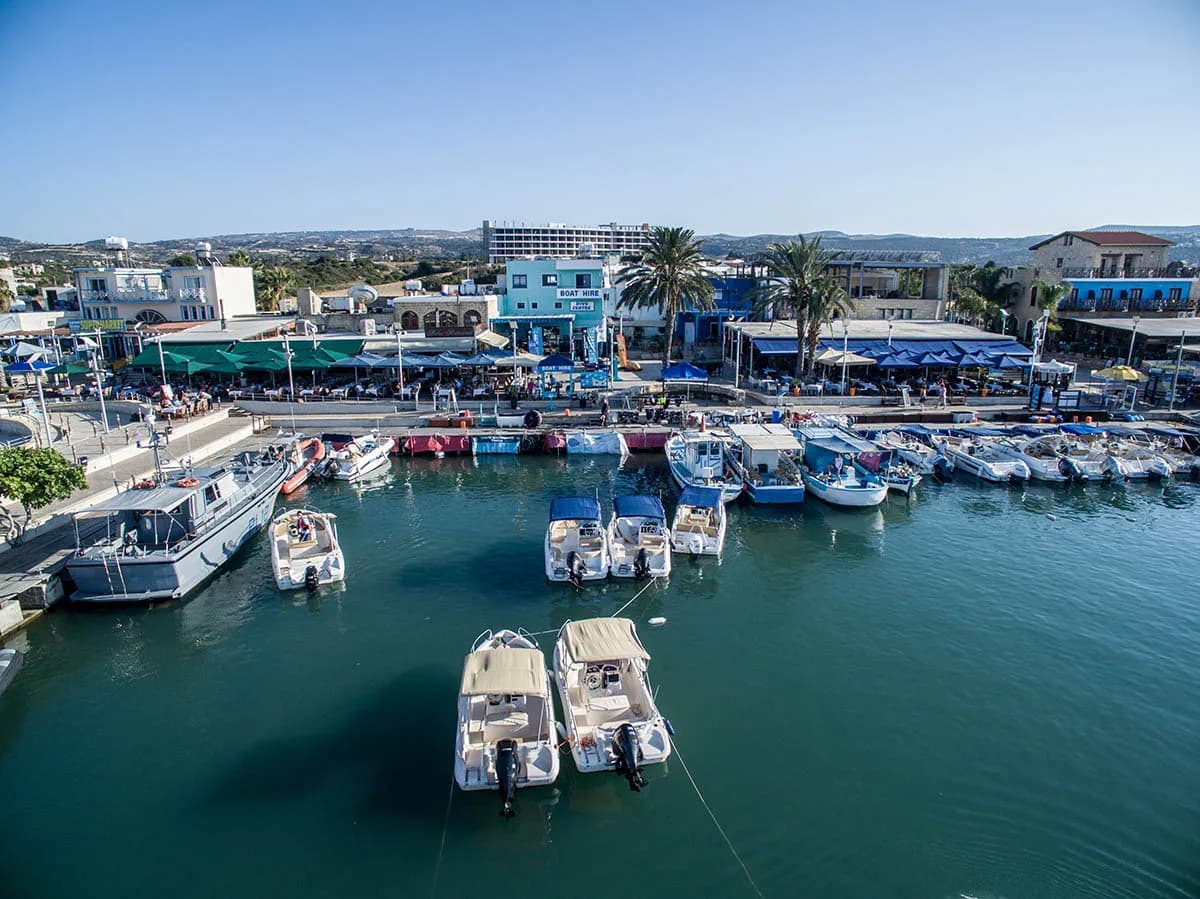

Latchi Watersports Centre
★ 4.9/5 (1,088 reviews)
Paphos · Cyprus · Mediterranean
Max. depth · 28 mThe Elpida offers a unique opportunity to explore Europe's largest purpose-sunk artificial reef, teeming with rapidly developing marine life and safe penetration options.
For subtitles in English: start the video firstthen click the gearat the top right of the video, select “Subtitles/CC”, then “Auto-translate” and choose “English”.
The Elpida, meaning 'Hope' in Greek, is a 70-meter former container ship, meticulously prepared and purpose-sunk to become an artificial reef on December 7th, 2019, off Voroklini, Larnaca. This purposeful sinking was carried out by the local fisheries authority as part of a wider Cypriot initiative to promote marine ecosystems and dive tourism. The Elpida stands as the largest purpose-sunk artificial wreck in Europe. It lies perfectly upright on the seabed between 27 and 30 meters, its highest points reaching 15 meters below the surface. This vertical orientation makes the Elpida immediately recognisable as you descend, appearing clearly through the water column as you leave the surface behind.
Knowing it was sunk deliberately means structural integrity was a design priority, making it a safer environment for internal exploration than many other wrecks. The main deck of the Elpida sits between 20 and 22 meters. From here, you can survey the substantial length of the vessel before deciding where to explore. The sheer size of the wreck, at 70 meters long and 10 meters wide, means you will need multiple dives to cover everything fully, allowing you to focus on different sections with each visit and appreciate the scale of this artificial habitat.
One of the standout features of the Elpida is the ease of access for penetration. The cargo holds are fully open, inviting you inside for a controlled penetration dive. Further exploration can lead you through the living quarters, providing a glimpse into the ship's operational life. These internal spaces are well-prepared, offering clear lines of sight and multiple exit points, making it an excellent site to gain experience with wreck penetration under controlled conditions.
More experienced divers will find the engine room particularly rewarding. This complex area offers a more involved penetration dive, requiring careful buoyancy and navigation. Exploring the machinery and structure within these deeper sections provides a different perspective on the vessel's internal workings. The depth of the engine room and the full extent of the stern, including the propeller, reach the maximum depth of 28 meters.
Despite its relatively recent sinking, the Elpida has already attracted a healthy marine ecosystem. Large schools of seabream (Sparidae) and damselfish (Pomacentridae) move through the structure, while rainbow wrasse (Coris julis) are commonly seen along the decks. These smaller species form the foundation of the growing reef community, offering constant activity as you explore the wreck's exterior. Beyond the resident reef fish, you will frequently encounter larger pelagic species using the Elpida as a gathering point. Schools of amberjack (Seriola dumerili) are often observed circling the wreck, particularly around the bow and stern sections.
Triggerfish (Balistidae) are also regularly present, especially around the stern, adding another layer of interest to the site's vibrant marine life. You may also encounter wrasses (Labridae), blennies (Blenniidae), pipefishes (Syngnathidae) and trumpet fish (Aulostomidae) finding refuge or foraging around the superstructure.
The Elpida's design and placement were strategic, ensuring it quickly becomes a thriving habitat. For divers, this means a clean, stable structure to explore, where the focus is on discovering both the vessel itself and the marine life it now supports, without the usual hazards associated with older, unprepared wrecks. The ongoing colonisation process allows you to observe the marine ecosystem as it evolves, adding a dynamic element to repeated dives on this site.
This is an Advanced level dive, with an Advanced Open Water Diver certification recommended due to the depth and potential for wreck penetration. While an Open Water Diver can explore the shallower sections, full appreciation of the wreck requires training beyond basic recreational limits. The Elpida Wreck reaches a maximum depth of 28 meters at the propeller, with the main deck at 20-22 meters and the highest points at 15 meters. The seabed is between 27 and 30 meters. Plan your bottom time accordingly to respect no-decompression limits or appropriate decompression procedures. Visibility in the region generally ranges from 25 to 40 meters. The best time to dive here is typically from April to October.