

Viking Divers
Google 4.9/5 (192 reviews)
Cyprus · Mediterranean
Zenobia's 172-metre hull drops from 16 to 42 metres, while Canyon's gorge and Tunnels and Caves bring walls, passages and moray eels closer to shore.
For subtitles in English: start the video firstthen click the gearat the top right of the video, select “Subtitles/CC”, then “Auto-translate” and choose “English”.
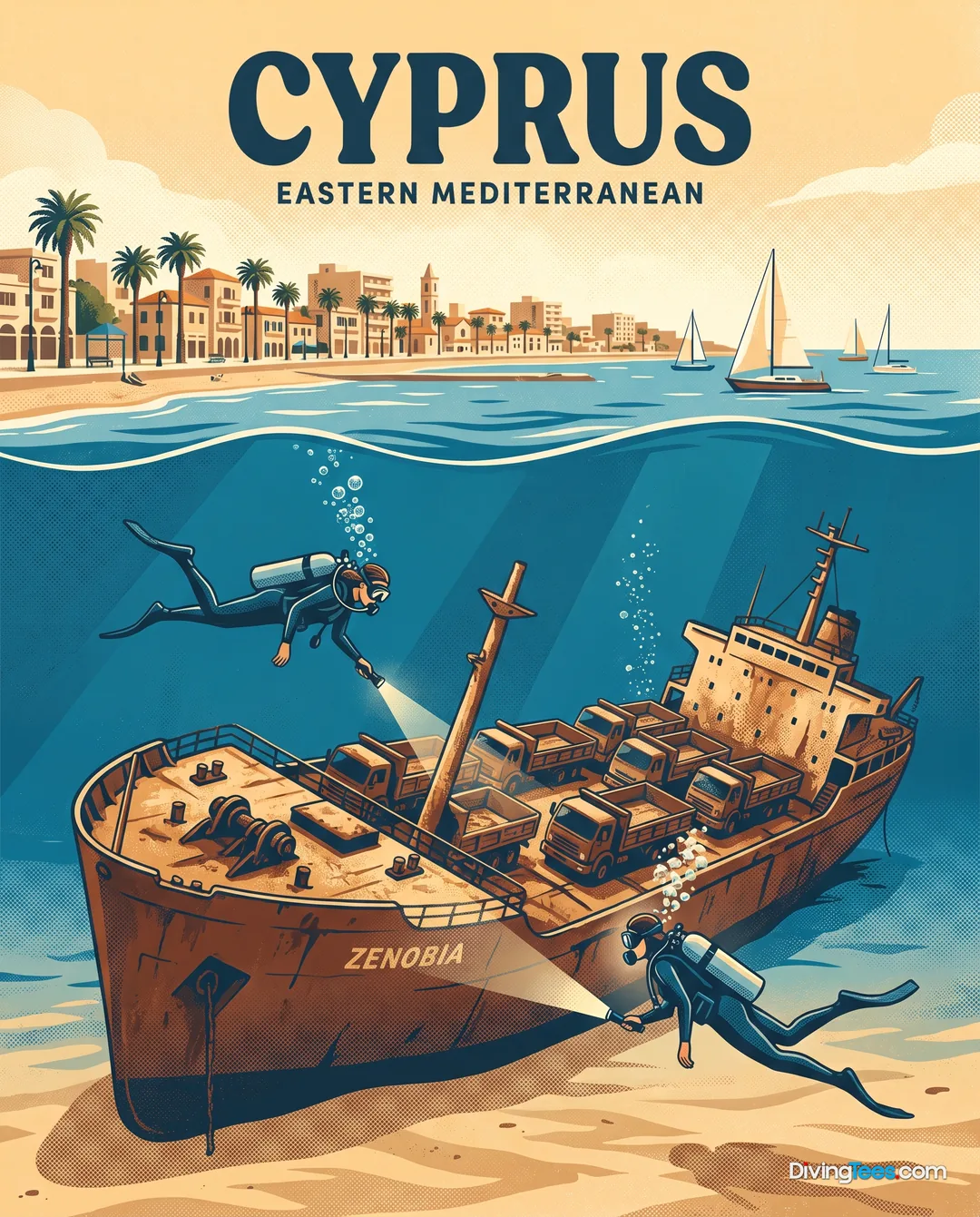
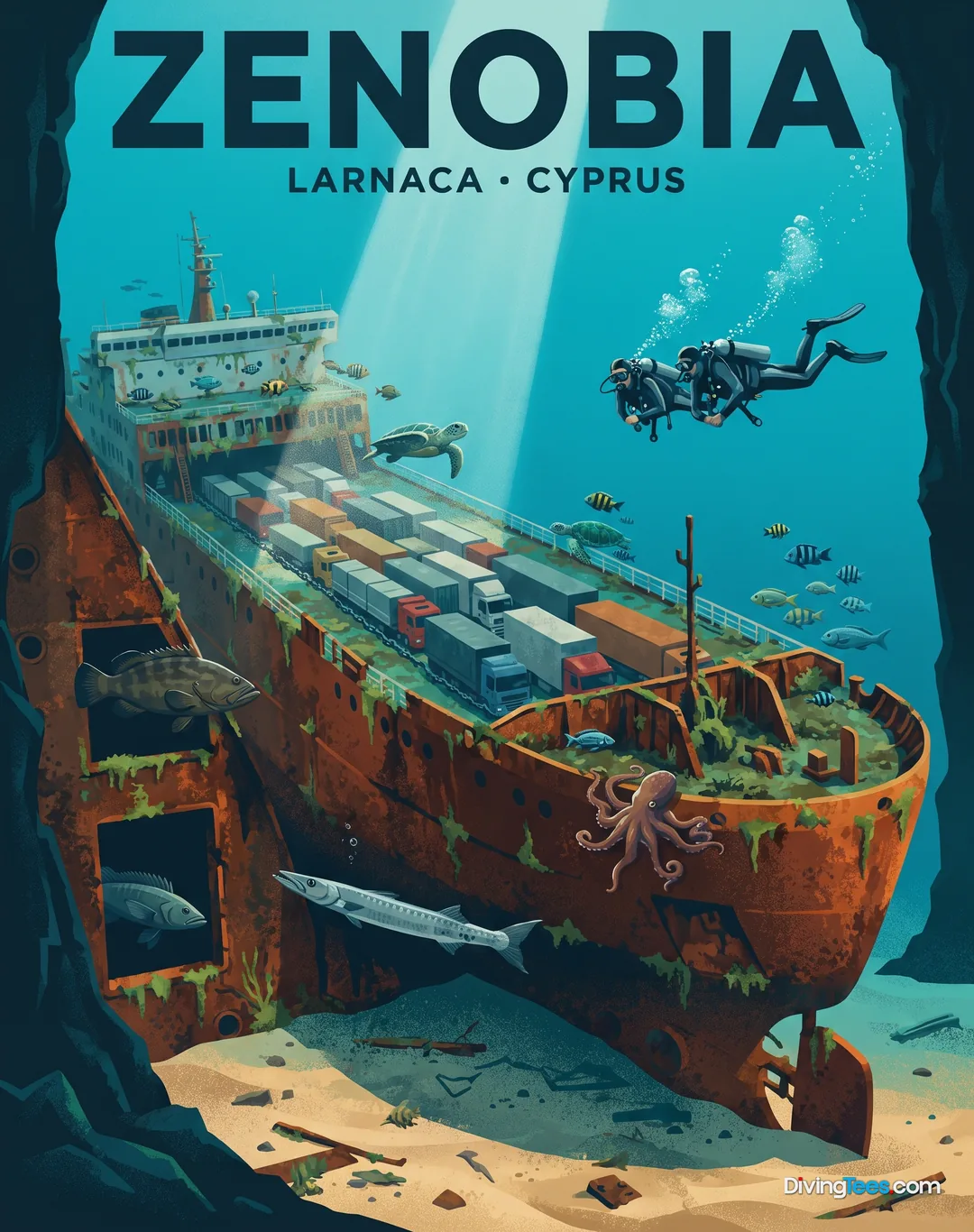
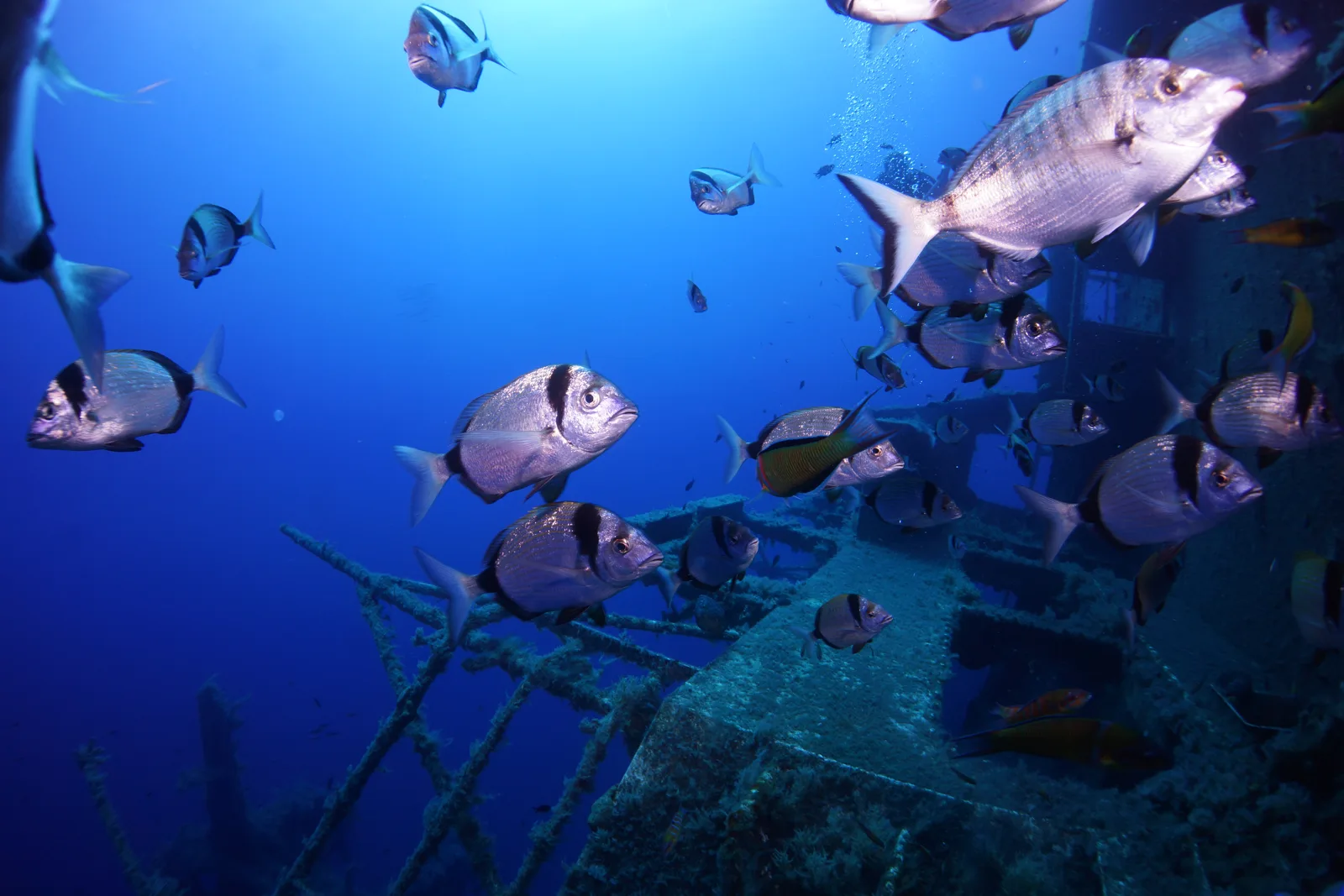
The 172-metre Zenobia gives Larnaca its clearest underwater identity, with the ferry lying on her port side between 16 and 42 metres. Away from the wreck, the diving becomes more intimate: Canyon cuts through an underwater gorge, while Tunnels and Caves leads Open Water divers through shallow, naturally lit passages. This is a stay-based destination rather than a liveaboard port, suited to divers who want recognisable wreck diving without giving up easy coastal outings and a town-based holiday.
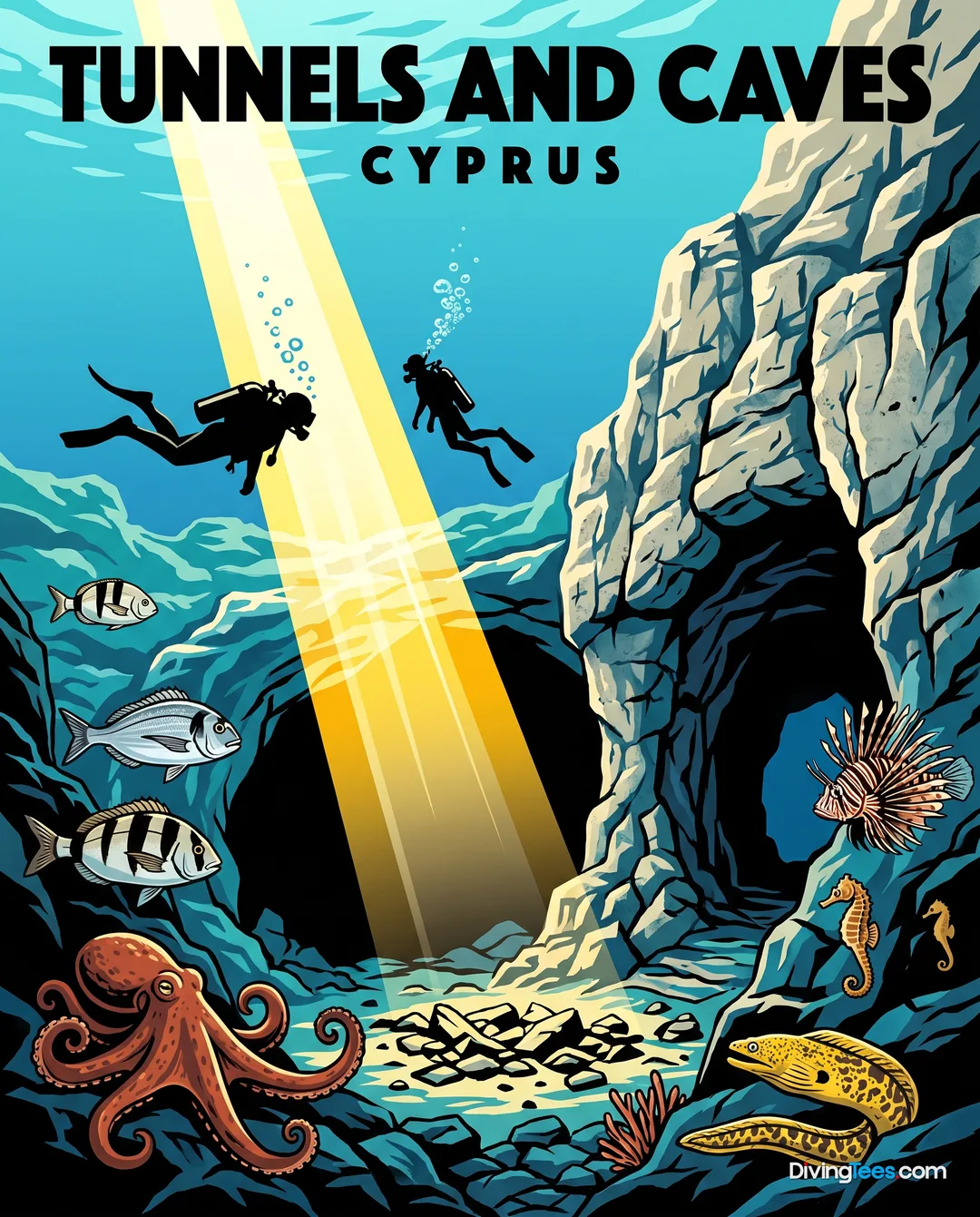
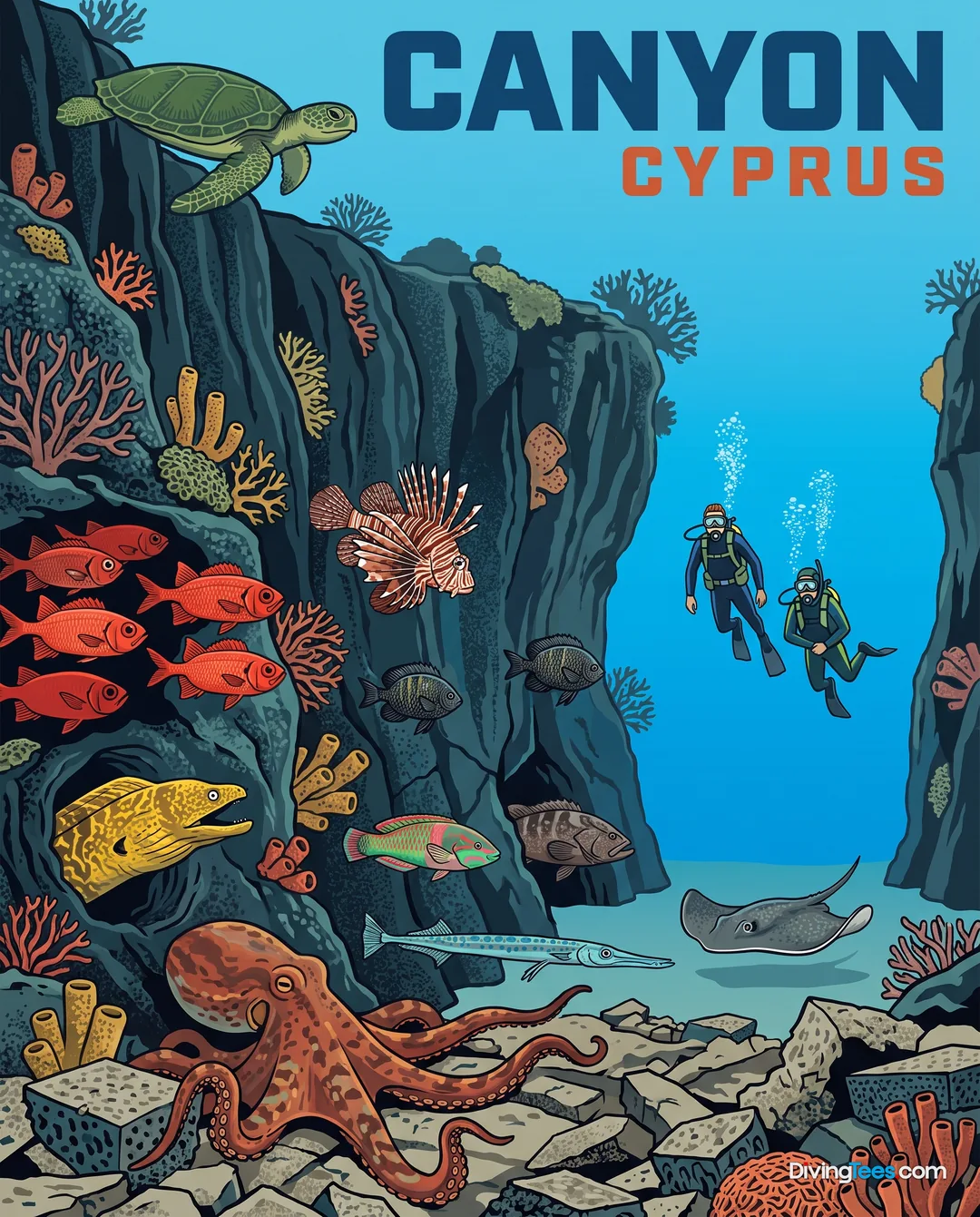
Larnaca combines wreck diving with rocky coastal topography and short boat trips. Zenobia Wreck is the serious end of the local range: the outer structure starts at 16 metres and reaches 42 metres on the seabed, with large areas to navigate and penetration possibilities that demand proper training. Canyon is a different proposition, following an underwater gorge and walls to 18 metres; a gentle current can occasionally turn it into a relaxed drift. Tunnels and Caves stays between 10 and 15 metres, using natural light through shallow passages, including one tunnel more than 40 metres long. Currents are generally light, and the diving is usually calm rather than athletic. Visibility around Zenobia is often excellent, sometimes exceeding 25 to 30 metres, although that should not be assumed for every local site. Expect organised boat and shore-based diving close to town, not long-range expedition days.
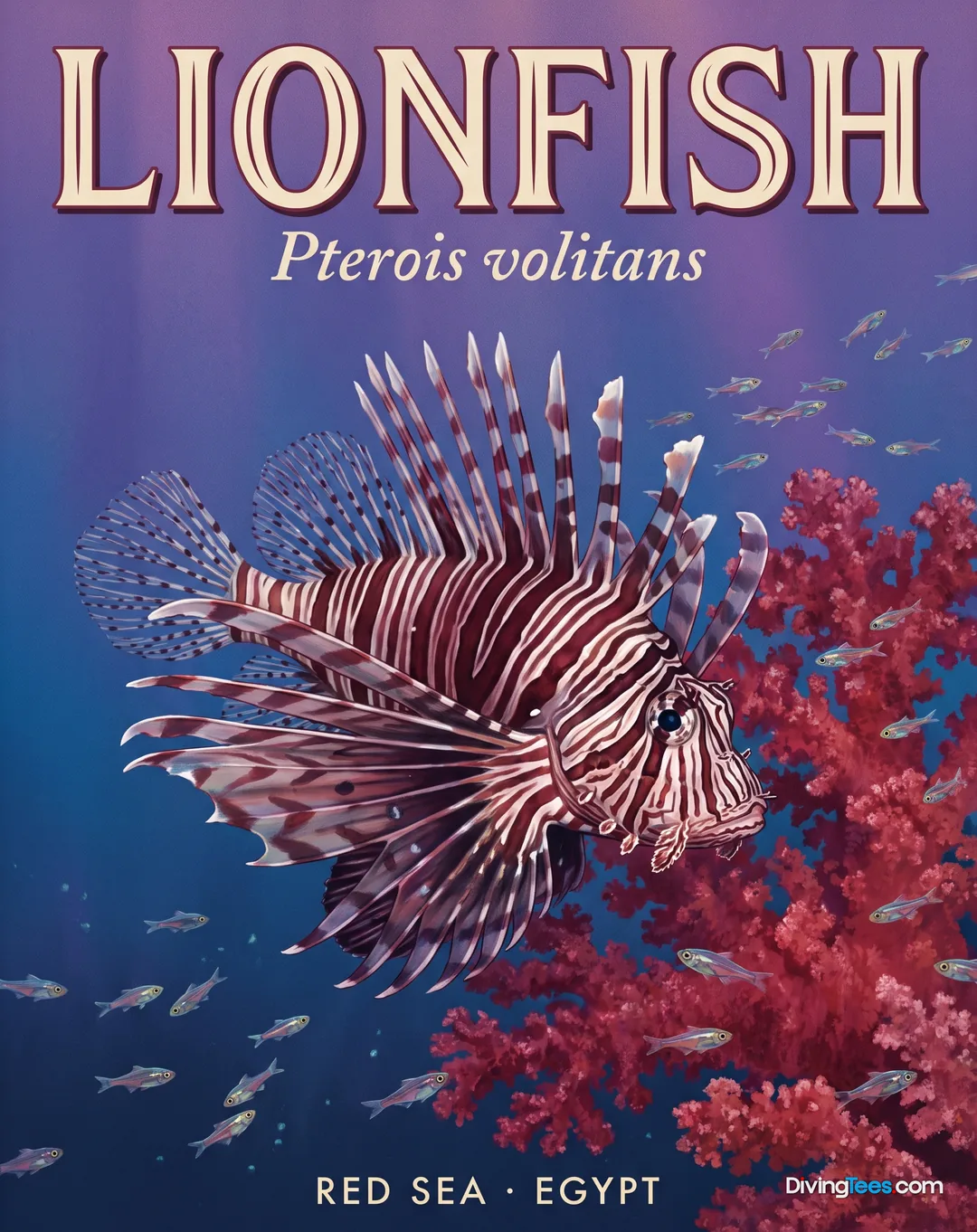
Moray eels and lionfish are the most clearly identified animal encounters around Larnaca. Canyon adds the chance of seeing rays, morays and reef fish while following its gorge and walls, so the interest is not confined to the large wreck. On Zenobia, marine life occupies the ship's structure, giving wreck divers something to look for between holds, lines and exposed sections of hull. Tunnels and Caves offers a more sheltered-looking setting, with resident marine life in the illuminated rock passages. June to October is the most practical period for combining these encounters with calmer boat conditions. The emphasis is on close observation rather than a specialised seasonal wildlife spectacle: Larnaca works best when the underwater architecture remains the main subject and the animals provide the detail.
June to October is the most useful window for a Larnaca diving holiday because the sea is measured as calmest during these months, making boat plans and repeated local dives easier to organise. Rainfall is lowest from June into November, so the wider stay is also more dependable through early November. The calmer summer-to-autumn period suits Zenobia particularly well: reaching a large wreck by boat is more enjoyable when sea conditions are settled, and good visibility helps with orientation around the hull. Tunnels and Caves is specifically associated with June to September, when its shallow, naturally lit profile is at its most appealing. Outside these windows, the destination may still work, but the case for a deliberately planned wreck-and-coastal programme is less straightforward.
Larnaca suits a broad range of certified divers. Open Water divers can use Tunnels and Caves, and Canyon is currently regarded as suitable for all certified levels, although its ladder entry calls for reasonable mobility and fitness. Zenobia is more demanding: Advanced Open Water is the stated minimum for its external sections, while penetration belongs to divers with technical preparation. A wreck qualification is useful, and Nitrox makes sense for repeated wreck diving. The same practical distinction applies whether the diver arrives with PADI, SSI or BSAC training: the qualification must match the planned depth and penetration, not merely the destination name.
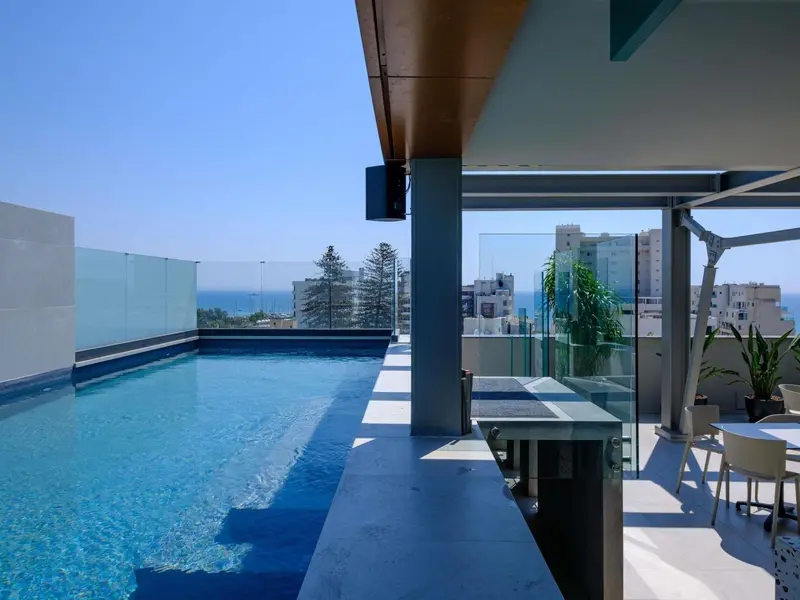
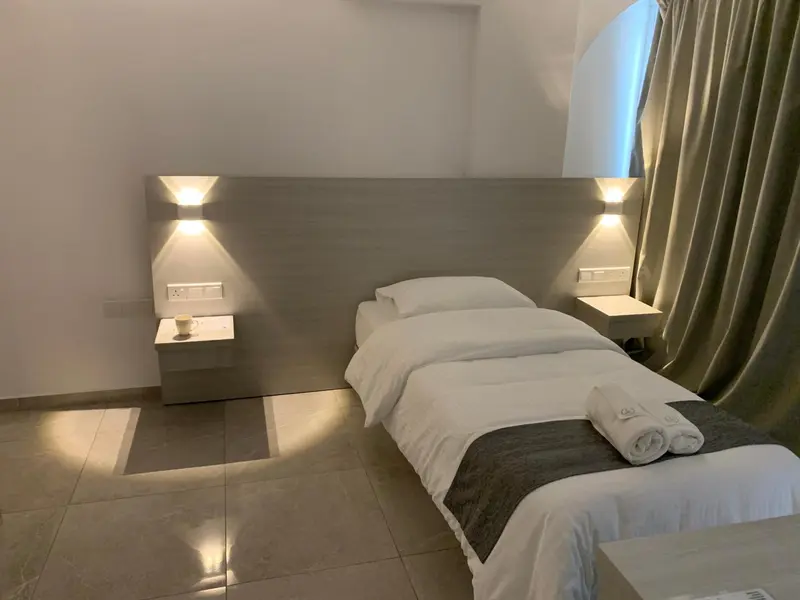
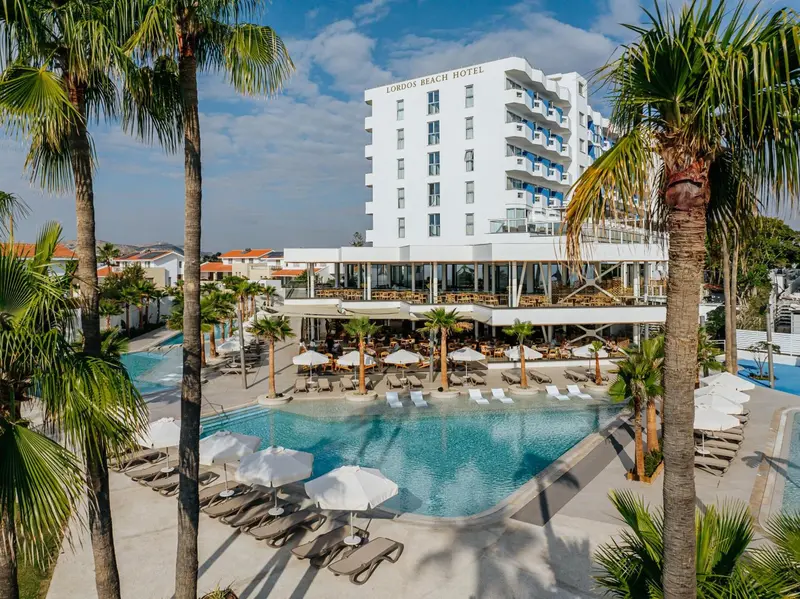
From London Heathrow, London Gatwick or Manchester, Larnaca is reached by air through Larnaca International Airport, followed by a road transfer to the town and its diving departures. Depending on the chosen flight, the journey may be direct or involve a short connection; there is no compulsory ferry leg to reach Larnaca itself. Once in the area, the simple arrangement is part of the appeal. Accommodation in Larnaca keeps the transfer to the diving operation short, with walking, a local taxi or a shuttle suitable depending on the neighbourhood and the booking arrangement. Staying in or close to town avoids building a daily cross-island journey into a programme centred on nearby boat and coastal dives.
Build the trip around Zenobia rather than treating it as an optional add-on. A single hurried wreck dive gives little time to understand a 172-metre ship running from 16 to 42 metres; a full day, or more, makes better use of the journey and allows the rest of the local diving to sit around it. Book the wreck programme with the required qualification in mind: Advanced Open Water covers the stated external minimum, while any interior route needs specific wreck and technical training. Nitrox is worth considering for repeated dives on the ship. Keep Canyon and Tunnels and Caves in the plan for variety, but remember that Canyon's ladder entry is a physical detail easily overlooked when choosing a relaxing itinerary. Larnaca is not a liveaboard destination, so leave room for shore-based days and accept that the attraction is concentrated local diving, not distant boat travel. Follow the site's mooring and responsible-diving arrangements, and do not touch, collect or feed anything.
Four to seven days gives Larnaca enough breathing space for the Zenobia programme, a return to the wreck if conditions and training make that worthwhile, and several shorter coastal outings. The town works well for a land-based holiday: diving departures are close to accommodation, while a non-diving companion has the seafront, beaches and urban walks to fill surface intervals. A rest day can be used for Larnaca itself rather than treated as dead time, which makes the destination more balanced than a trip built around diving alone.
Hello, I'm Marina, DivingDeal.com's AI assistant. I guide you through destinations, areas and countries.
Thinking about the whole trip and the flights? Talk it over with Edith →
Marina is an AI. Some links are affiliate links: DivingDeal may earn a commission, at no extra cost to you. Bookings are made with the partner.
Your last day stays dry: no diving in the 18-24 hours before a flight, the perfect window to see the destination from another angle.
 Culture
⏱ 3 h · ★ 5.0 (10 reviews)
from £49$65€58
see on Viator ↗
 Nature
⏱ 5 h · ★ 5.0 (89 reviews)
from £83$111€99
see on Viator ↗
 Culture
⏱ 8 h · ★ 5.0 (101 reviews)
from £96$129€115
see on Viator ↗
 City
City⏱ 2 h · ★ 4.7 (77 reviews)
from £17$22€20
see on Viator ↗
Ratings and reviews collected by Viator and Tripadvisor.
June to October offers the calmest sea conditions for boat plans and repeated local dives. Rainfall remains low from June into November, supporting a dependable wider stay into early November. Tunnels and Caves is particularly associated with June to September, when its shallow passages benefit from natural light and settled conditions.
Larnaca suits several certification levels. Open Water divers can visit Tunnels and Caves, while Canyon is suitable for all certified levels, provided you have reasonable mobility and fitness for its ladder entry. Zenobia requires Advanced Open Water for external sections, and penetration requires specific wreck and technical preparation.
Larnaca combines the Zenobia wreck with rocky coastal sites. You can explore the ferry’s structure, Canyon’s gorge and walls, and the naturally lit passages of Tunnels and Caves. Moray eels and lionfish are named encounters, while Canyon may also bring rays and reef fish among its underwater features.
Base yourself in or near town, where accommodation keeps transfers to nearby boat and shore departures short. Build the trip around Zenobia, allowing time for its large hull and suitable training requirements, then add Canyon and Tunnels and Caves for variety. A four-to-seven-day land-based stay leaves room for rest and town time.