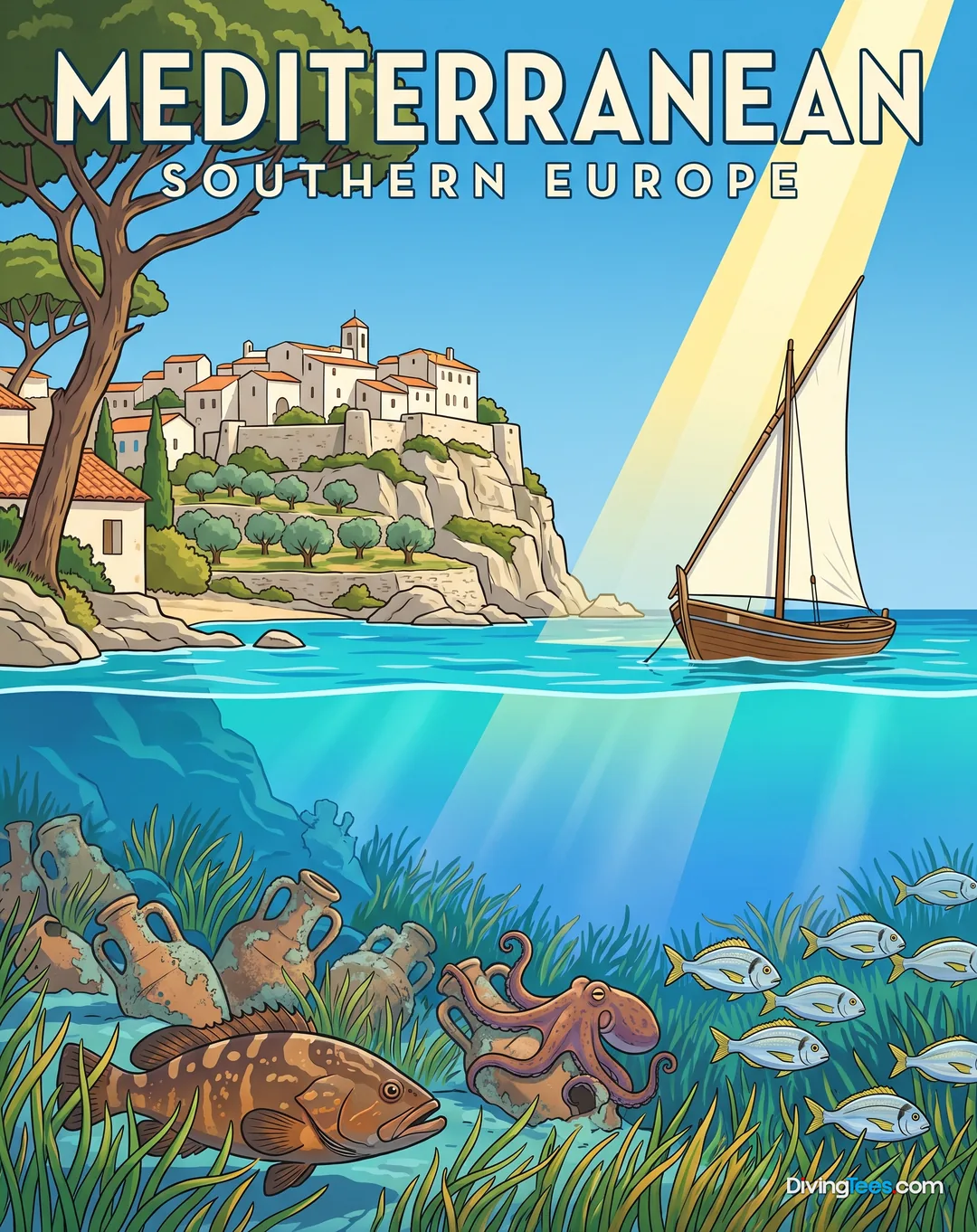
Mediterranean
Cyprus: Mediterranean wrecks, archaeology and village life
Cyprus pairs the Zenobia wreck off Larnaca with Paphos mosaics, Troodos frescoes and meze tables, making the island as compelling above water as below it.
What makes this country unique
- June to October along Larnaca, Paphos and Protaras
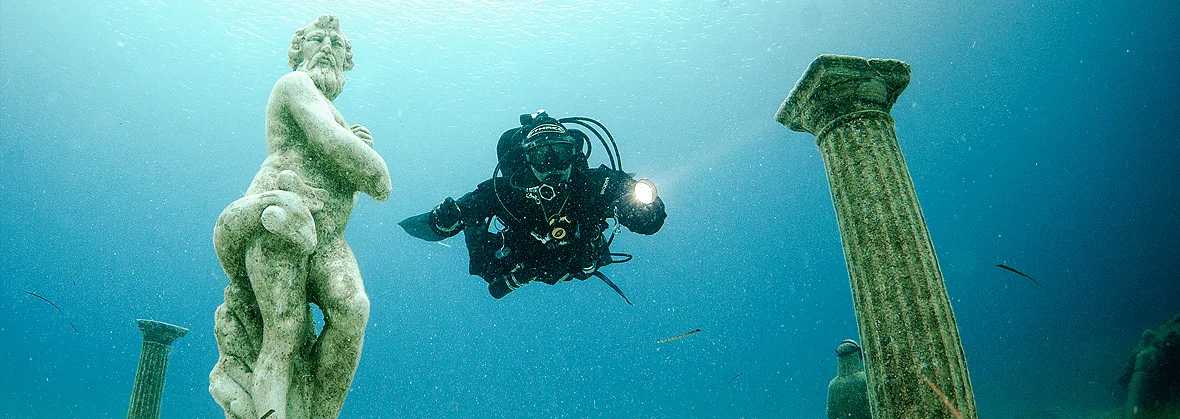
- Zenobia wreck off Larnaca for experienced divers
- Paphos mosaics and Kato Paphos Archaeological Park
- Kataklysmos on the Larnaca and Protaras waterfronts
- Halloumi, kleftiko and mezedes in village tavernas
- Neolithic Choirokoitia between Larnaca and Limassol
- Akamas Peninsula beyond Paphos by boat or 4x4
- Groupers, barracudas and morays around Paphos
For subtitles in English: start the video firstthen click the gearat the top right of the video, select “Subtitles/CC”, then “Auto-translate” and choose “English”.
This country for a diver
Cyprus is a compact Mediterranean island where wreck diving, rocky coastlines and an unusually dense historical landscape sit within one southern seaboard. Its diving areas share a moderate price level, light currents and a mixture of site types suited to different experience levels. What sets the country apart is the contrast between Larnaca’s major wreck, Paphos’s archaeological and natural hinterland, and Protaras’s modern resort coast. A trip here can move from the Zenobia wreck to Byzantine mountain churches without leaving the island.
How the country divides
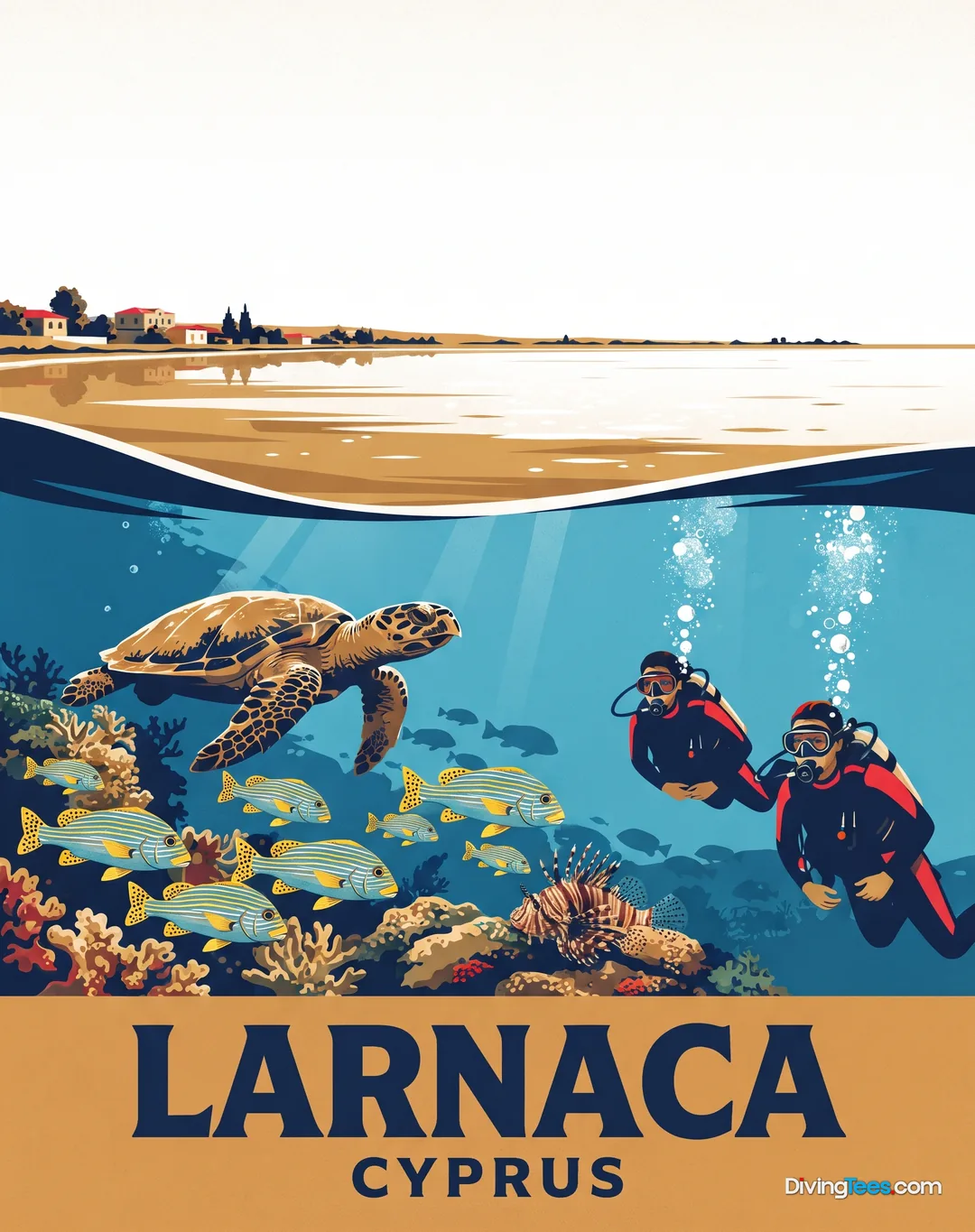
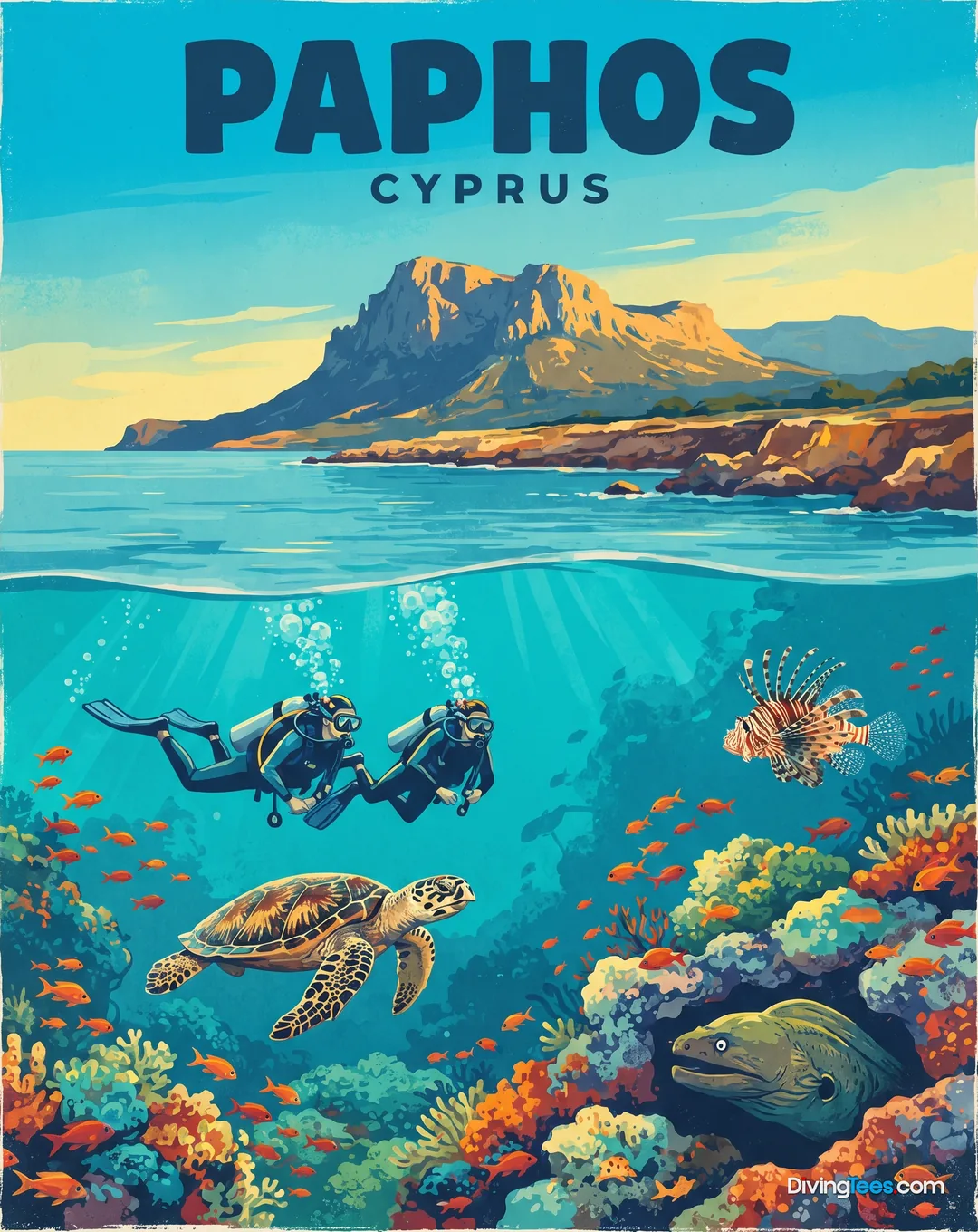
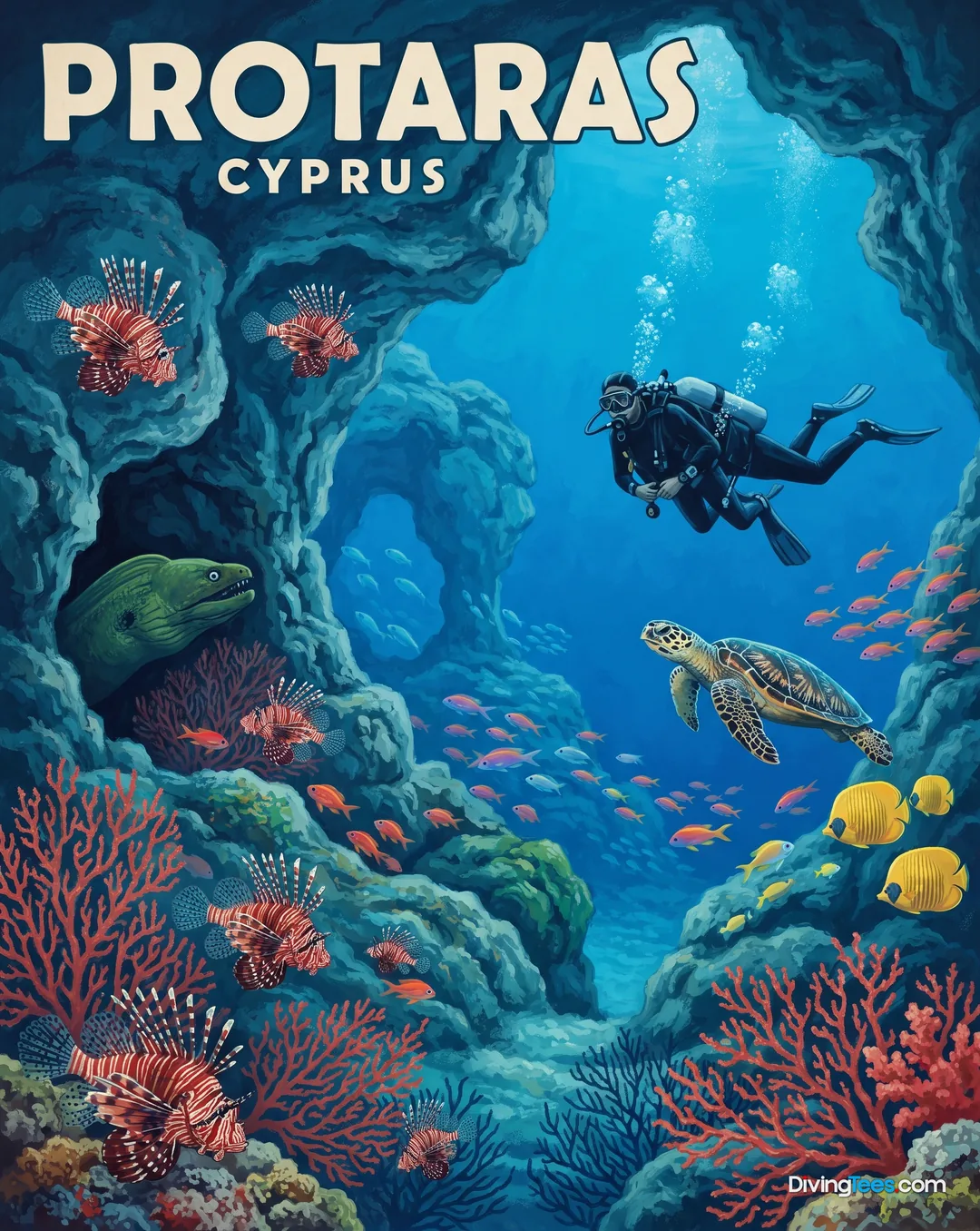
The country’s diving divides naturally between Larnaca, Paphos and Protaras, all on the southern coast and all working in the same part of the year. Larnaca is the choice for a wreck-led stay, with the Zenobia wreck as its defining reference and Choirokoitia close enough to shape the wider itinerary. Paphos suits divers who want to combine coastal diving with the Kato Paphos Archaeological Park, Akamas Peninsula or the villages of the western hinterland. Protaras is the more resort-based eastern option, useful for a holiday that combines diving with beaches, Ayia Napa and excursions towards Famagusta. The areas are therefore not interchangeable in character: Larnaca is anchored by maritime history, Paphos by archaeology and nature, and Protaras by the livelier east-coast setting. Choose the area according to the balance wanted between diving, heritage and resort life.
Diving destinations
Dive centres



Hotels
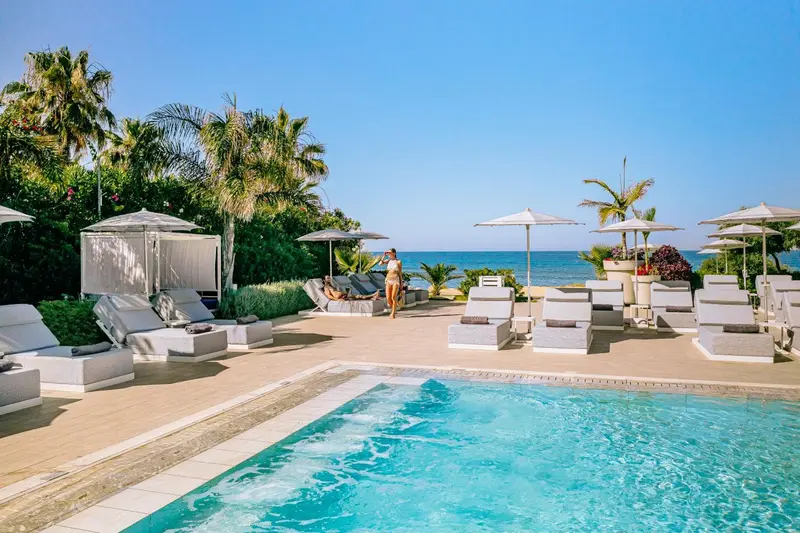
Ivi Mare - Designed for Adults by Louis Hotels
Nicosia
★★★★★
Google 4.8/5 (1,235 reviews)
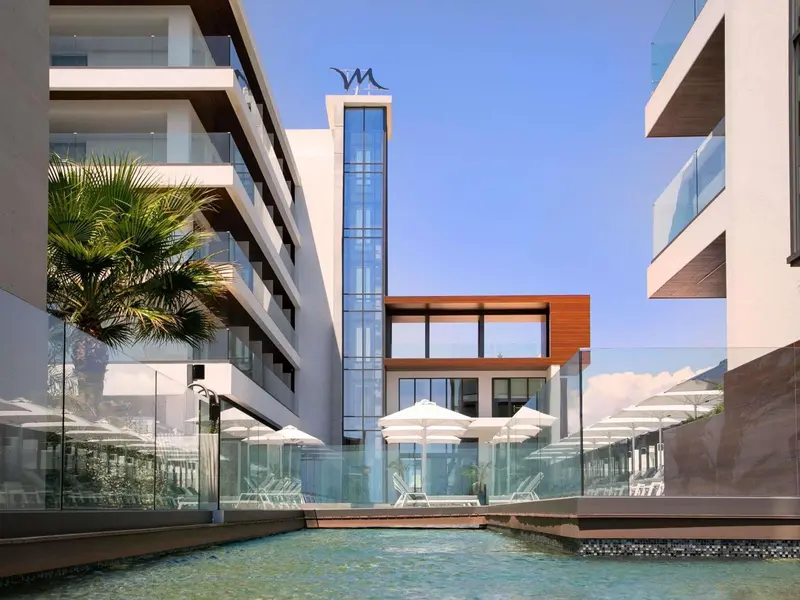
Mercure Larnaca Beach Resort
Larnaca
★★★★
Google 4.8/5 (942 reviews)
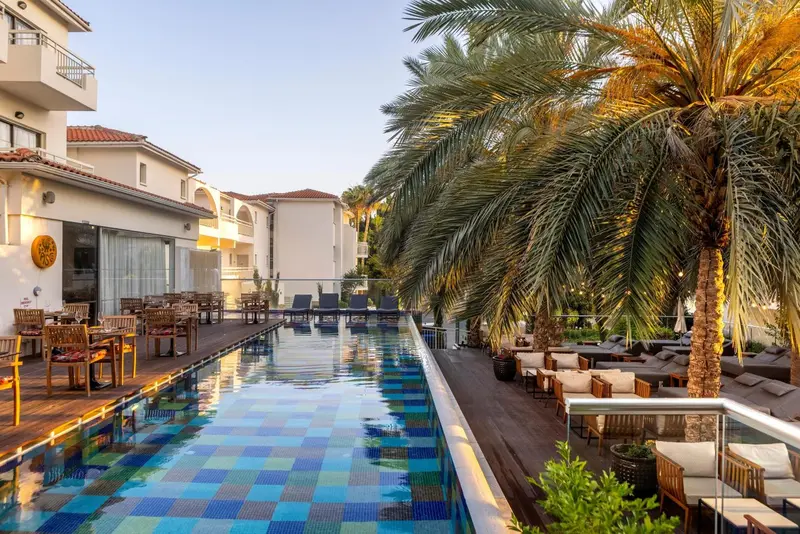
King Jason Paphos - Designed for Adults by Louis Hotels
Paphos
★★★★
Google 4.8/5 (899 reviews)
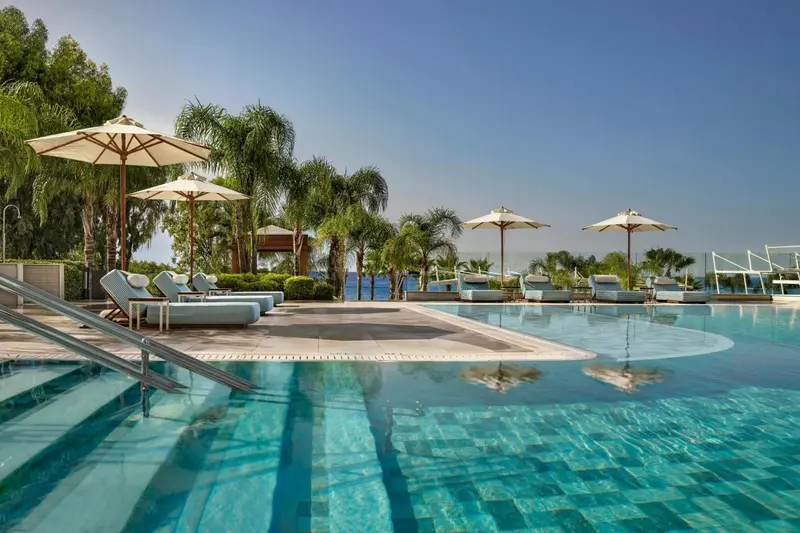
Parklane, a Luxury Collection Resort & Spa, Limassol
Limassol
★★★★★
Google 4.7/5 (1,640 reviews)
When to go, and where by month
The diving season is synchronised across Cyprus rather than alternating between coasts. Larnaca, Paphos and Protaras are in season from June through October, so the calendar does not require a move to a different shoreline when one area closes. June marks the beginning of the common window, while July and August sit in its established summer middle. September and October keep the same three areas available before the season ends. From November through May, the country’s listed diving areas are outside their season. This makes Cyprus straightforward to plan for a single-base trip, or for a coastal itinerary that changes scenery without changing the operating season. The practical choice is consequently less about finding a warmer coast and more about deciding whether the trip should be centred on Larnaca’s wreck heritage, Paphos’s cultural landscape or Protaras’s eastern resort coast.
Marine life, coast by coast
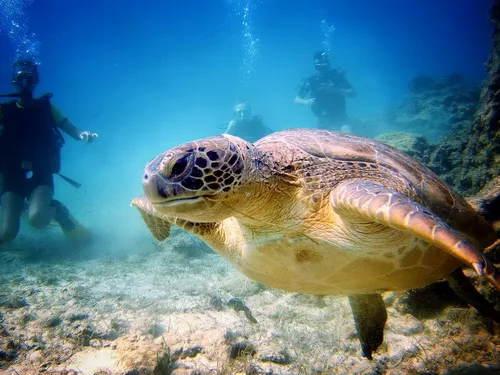
Cyprus offers the familiar Mediterranean cast of groupers, barracudas, morays, sars and damselfish, with congers and groupers also associated with the Zenobia wreck off Larnaca. Around Paphos, St George Island is known for larger fish such as groupers and morays, while the rocky sites around the coast provide the setting for regular fish encounters. The wildlife picture does not create a sharp east-versus-west itinerary in the way the island’s archaeology and resort character do. It is better treated as a thread running through a coastal journey, with Paphos offering named rocky sites and Larnaca adding the particular atmosphere of a major wreck. Encounters remain Mediterranean in character rather than built around a single signature animal.
Getting between the areas
Larnaca and Protaras are the most practical combination, with only 38 km between them. That pairing allows a change from the eastern side of the island’s main airport and port setting to the resort coast without sacrificing much of the holiday. Paphos lies 114 km from Larnaca, making the journey a substantial transfer but a realistic half-day by road. From Paphos to Protaras is 152 km, so linking the western and eastern bases takes more planning and leaves less room for casual sightseeing on the transfer day. A hire car is the efficient answer for combining coastal bases with Troodos, Nicosia or village excursions. Buses connect the main towns, but services generally finish early, while mountain roads and small coastal detours are much easier to manage independently.
Take off your mask
Cyprus rewards time away from the coast with a historical landscape unusually concentrated for an island. At Paphos, the Kato Paphos Archaeological Park brings Roman mosaics and the ancient harbour together, while the Tombs of the Kings and the Sanctuary of Aphrodite at Palaipafos add a different scale of antiquity. Choirokoitia, reached from Larnaca, shows a fortified Neolithic settlement of reconstructed circular houses. In the Troodos, villages such as Kakopetria and Kalopanayiotis frame painted Byzantine churches, while Kourion places a restored Greco-Roman theatre above the sea. Lefkosia (Nicosia) offers Venetian bastions, museums and a visible dividing line through the old city; Famagusta adds medieval walls, Gothic churches converted into mosques and nearby Salamis. Eating is communal and unhurried. Mezedes bring halloumi, loukanika, lountza, dips, stews, fish and meat in successive servings. In mountain tavernas, look for tavas and oftó kleftiko; around Paphos, loukoumia Geroskipou and pastellaki make familiar gifts. Zivania, Commandaria and Cypriot coffee complete the local table.
What holds true everywhere here
Responsible diving in Cyprus means taking particular care around rocky formations, caves and wreck structures where a misplaced fin can damage a confined site. Keep buoyancy controlled, avoid contact with the bottom and use a safety stop without treating the seabed as a handhold. Green Bay and the Zenobia wreck represent very different underwater settings, but the same restraint applies to both. Do not collect souvenirs or feed fish; the Mediterranean character of the sites is part of their value. On land, Cyprus has its own practical code too: swimwear belongs on the beach or by the pool, and churches require shoulders and thighs to be covered.
Frequently asked questions about Cyprus
When should you visit Cyprus for diving?
Plan your Cyprus diving trip between June and October, when diving is highlighted along the Larnaca, Paphos and Protaras coastlines. This period also suits combining underwater time with visits to archaeological sites, waterfront celebrations, village tavernas and other island experiences.
What diving experience do you need for Cyprus?
Cyprus offers coastal rocky sites with regular Mediterranean fish encounters, while the Zenobia wreck off Larnaca is specifically associated with experienced divers. If you are considering the wreck, your diving experience should match that requirement, while the destination also includes other coastal diving around Larnaca, Paphos and Protaras.
What marine life and underwater features can you see in Cyprus?
In Cyprus, you can encounter groupers, barracudas, morays, sars, damselfish and congers. Paphos includes named rocky sites such as St George Island, associated with larger groupers and morays, while Larnaca adds the Zenobia wreck and its particular atmosphere to a Mediterranean coastal diving journey.
How should you plan your stay in Cyprus?
Plan a Cyprus stay around a coastal base or journey linking Larnaca, Paphos and Protaras. Add the Zenobia wreck from Larnaca, Paphos mosaics and Kato Paphos Archaeological Park, Troodos frescoes, village mezedes, Choirokoitia, and the Akamas Peninsula by boat or four-by-four.