Diving in the Middle East: wrecks, current and a seasonal choice
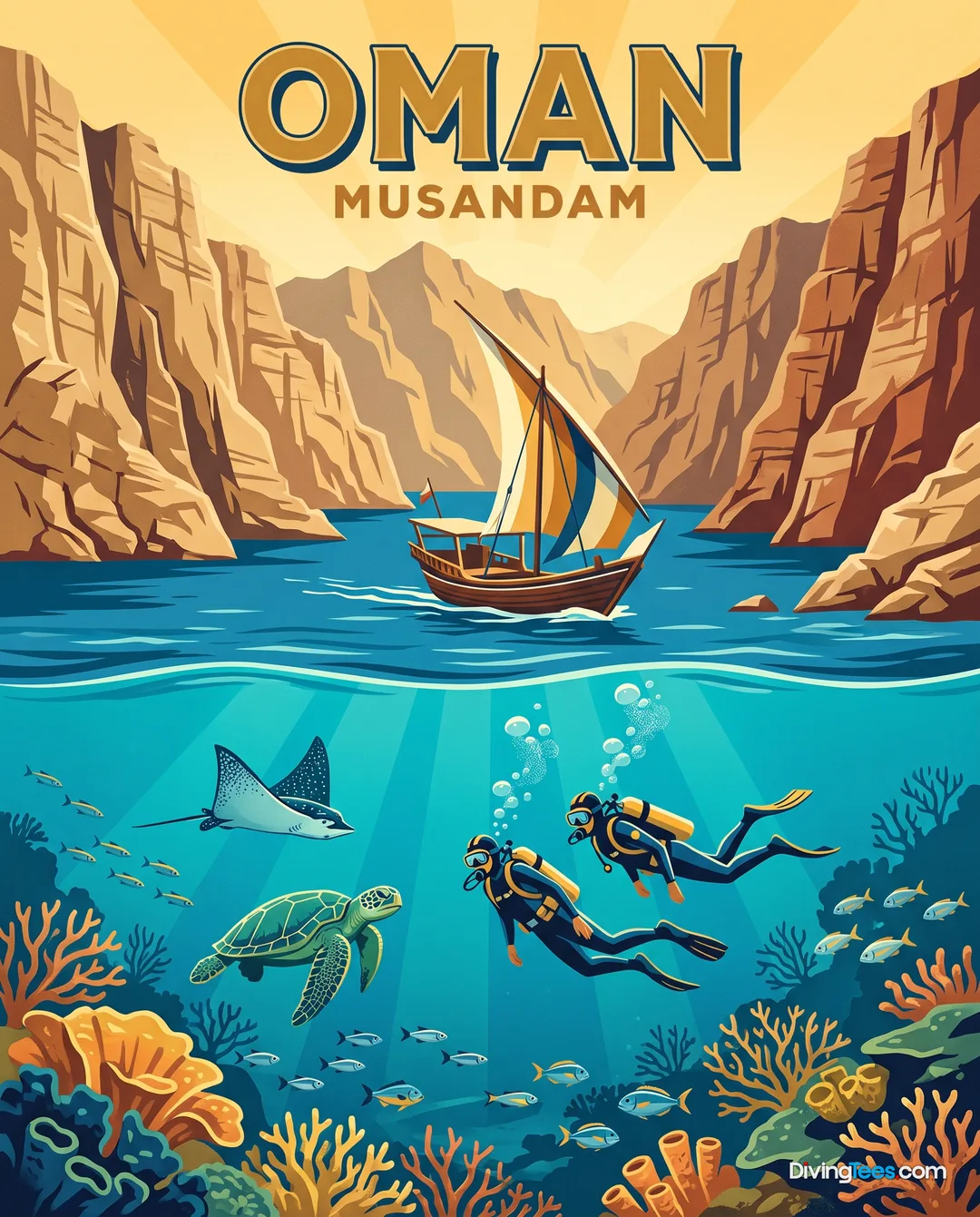
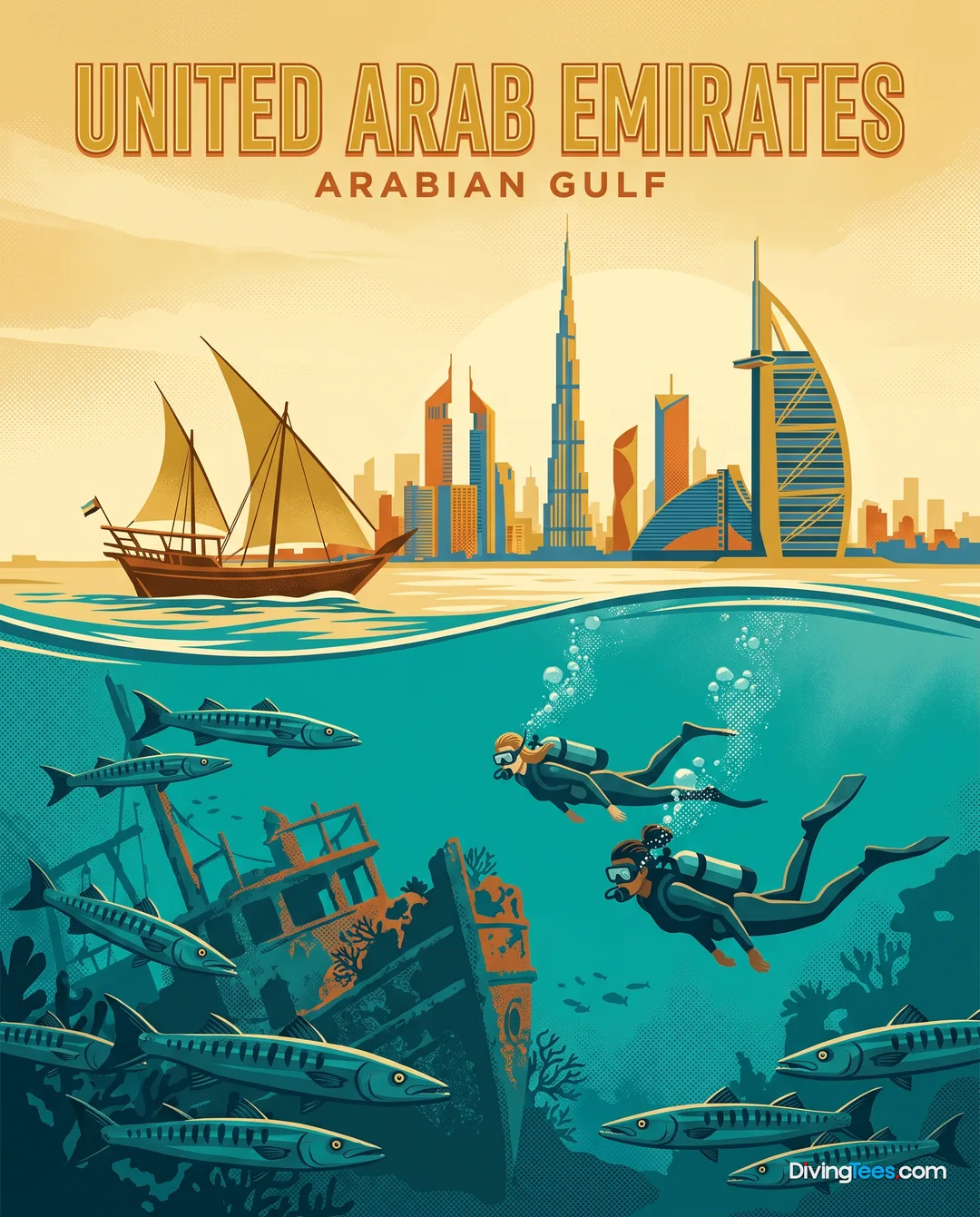
Oman’s zones run through Mascate, Musandam and Salalah, while United Arab Emirates centres its choice on Dubai and Fujairah for divers.
What makes this area unique
- Whale sharks make Oman the region’s signature wildlife choice
- Boat diving links reefs, islands, wrecks and variable current
- Munassir Wreck anchors Oman’s wreck-diving appeal
- No liveaboard option; every itinerary returns to shore
- Moderately visited, the region avoids heavily crowded diving
- Variable current demands comfort with drift diving and safety stops
- High prices make value-for-money planning particularly important
This region for a diver
Middle-East diving is a shore-based, boat-led proposition rather than a liveaboard circuit. Oman and United Arab Emirates share a price point that makes a carefully chosen trip more deliberate than casual add-on diving. The region moves between named areas such as Musandam, Mascate, Salalah, Dubai and Fujairah, with the boat doing the connecting. Current is part of the identity, not an occasional nuisance, so a diver comfortable with drift dive procedures and a proper safety stop will get more from it. Compared with destinations built around liveaboards or heavy visitor volume, the Middle-East feels moderately visited and deliberately selective.
What you come to see
Wildlife is the most useful way to decide where the Middle-East fits your priorities. Across Oman and United Arab Emirates, Scorpionfish, Nudibranch, Sea turtle, Angelfish, Moray eel and Ray form the shared thread. They are encountered within a boat-diving programme that can include islands, wrecks and named coastal areas, rather than from a liveaboard moving between several sites each day. Oman carries the region’s distinctive large-animal marker: the Whale shark. That gives Oman a reason to remain the first thought when this is the creature you are travelling to find. United Arab Emirates has its own signature in the Fusilier, making it the more relevant choice when schooling fish are the deciding detail. The difference is not a matter of one country lacking the common species. It is the extra emphasis each country brings to the same regional framework. Oman’s Munassir Wreck and United Arab Emirates’ Zainab Wreck provide two named wreck anchors, but the supplied information does not attach particular wildlife to either one.
Which one to choose
Choose between Oman and United Arab Emirates by deciding what must justify the trip. Neither gives you a liveaboard option, and both sit in a high-price, moderately visited bracket, so cost and crowd avoidance do not provide a clean winner. Variable current belongs to the region as a whole; your comfort with a drift dive, controlled buoyancy and a safety stop matters more than choosing one country as the supposedly easier option. Pick Oman when the Whale shark is the draw, or when its spread through Mascate, Musandam and Salalah suits the shape of the trip. Pick United Arab Emirates when the Fusilier carries more weight, or when Dubai and Fujairah make the intended choice more coherent. Season is the practical tie-breaker: January to March leaves both out of season, April to May favours Oman, and from June to December United Arab Emirates is in season while Oman remains open on one side.
What the whole region shares
The common character is unusually clear: this is high-price diving, moderately visited, reached by boat, affected by variable current and not built around liveaboards. That combination changes the rhythm of a trip. You are choosing a focused sequence of dives rather than buying into a moving ship’s itinerary, and you should expect the diving style to matter as much as the animal list. Scorpionfish, Nudibranch, Sea turtle, Angelfish, Moray eel and Ray remain relevant across the regional choice, while the Whale shark marks Oman and the Fusilier marks United Arab Emirates. Wrecks add another shared point of interest without turning the region into a wreck-only destination. For divers used to BSAC, PADI or SSI training, the useful dividing line is comfort with current and boat procedures, not a label attached to one country. High prices and no liveaboard option remain regional facts.