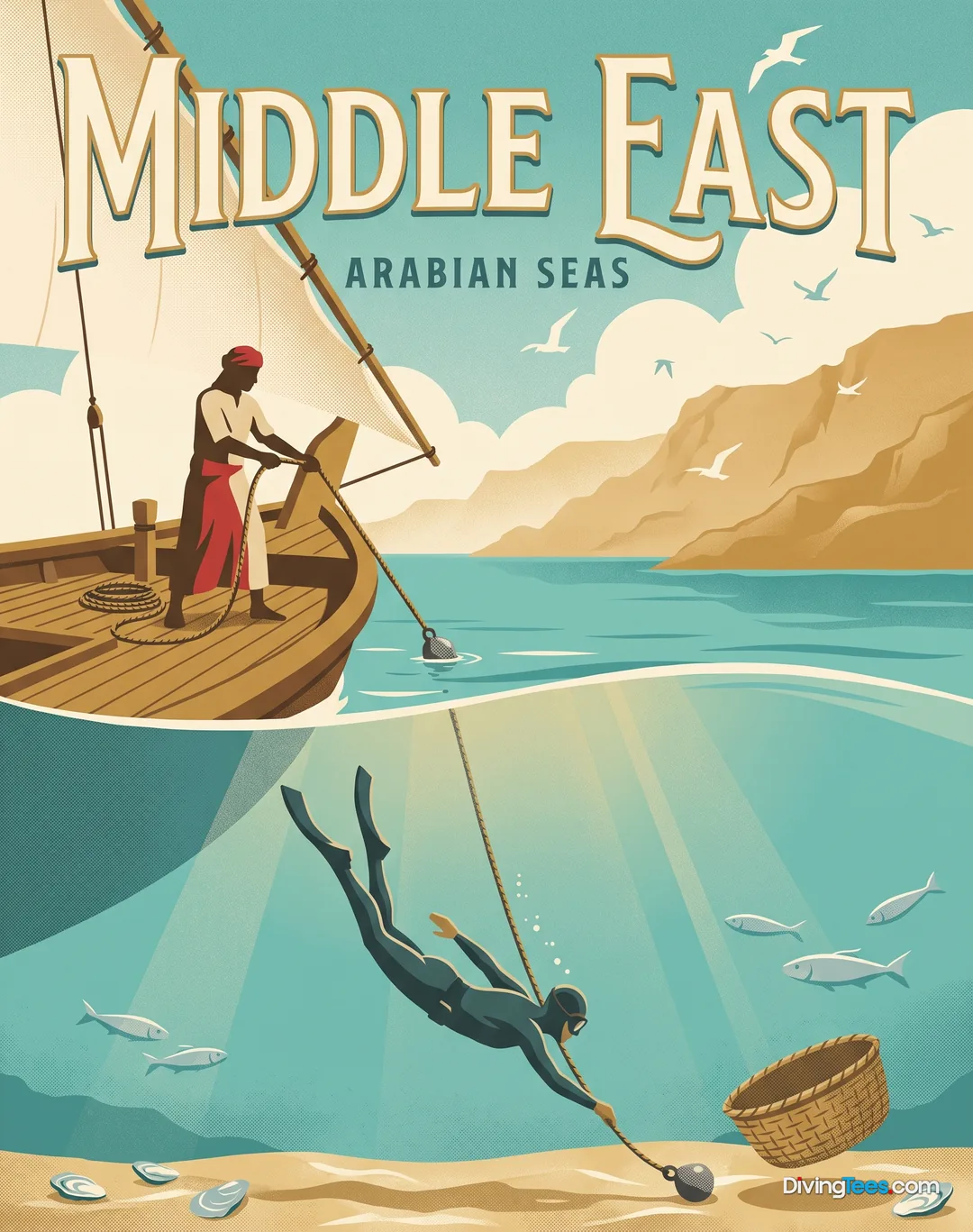
Middle East
United Arab Emirates: Gulf wrecks and east-coast reefs
The United Arab Emirates sets Dubai’s Gulf wreck diving against Fujairah’s east-coast sites, from Martini Rock to Snoopy Island, on one compact national map.
What makes this country unique
- Dubai’s June-to-December window for boat diving
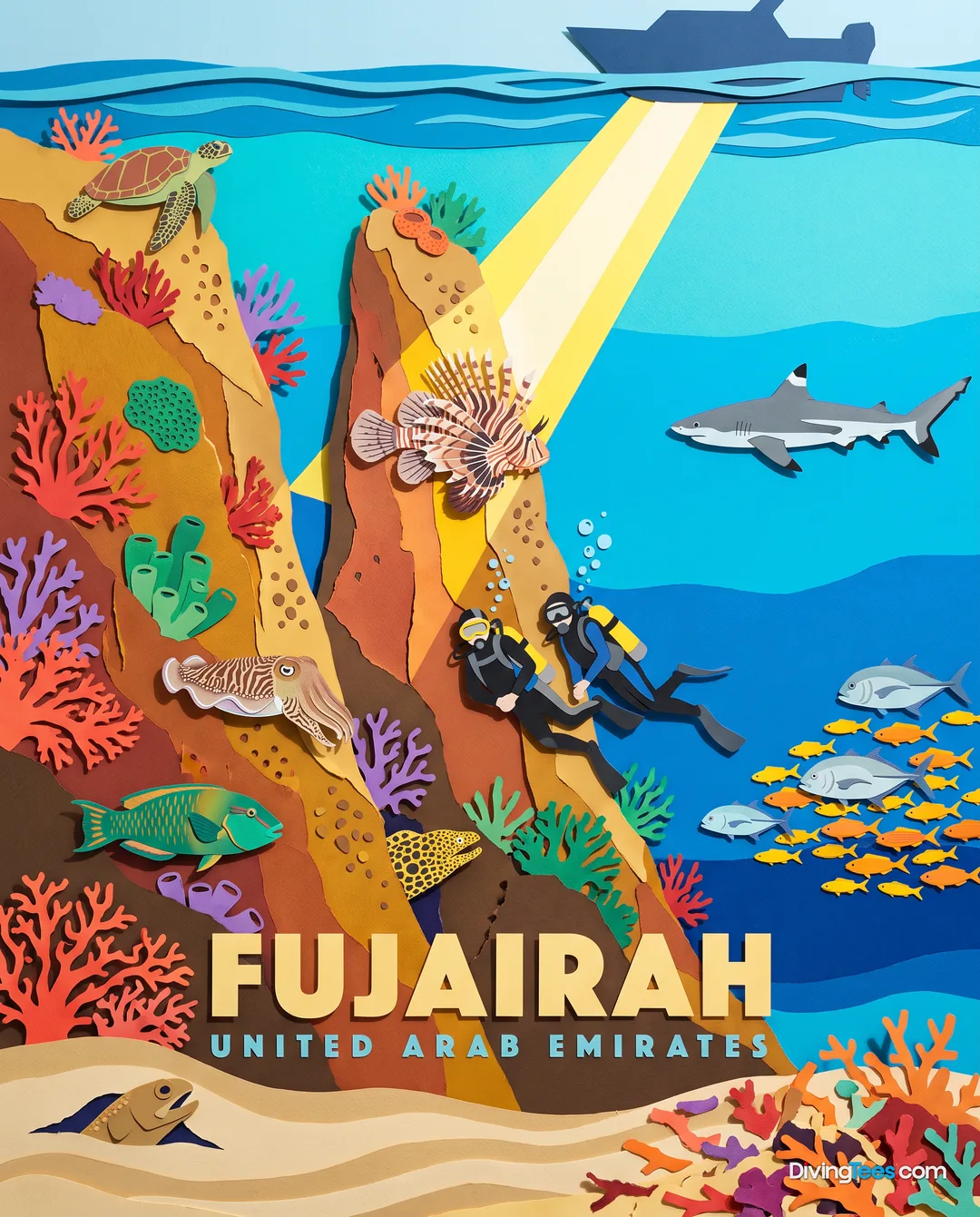
- Fujairah’s east-coast pairing of reef and wreck sites
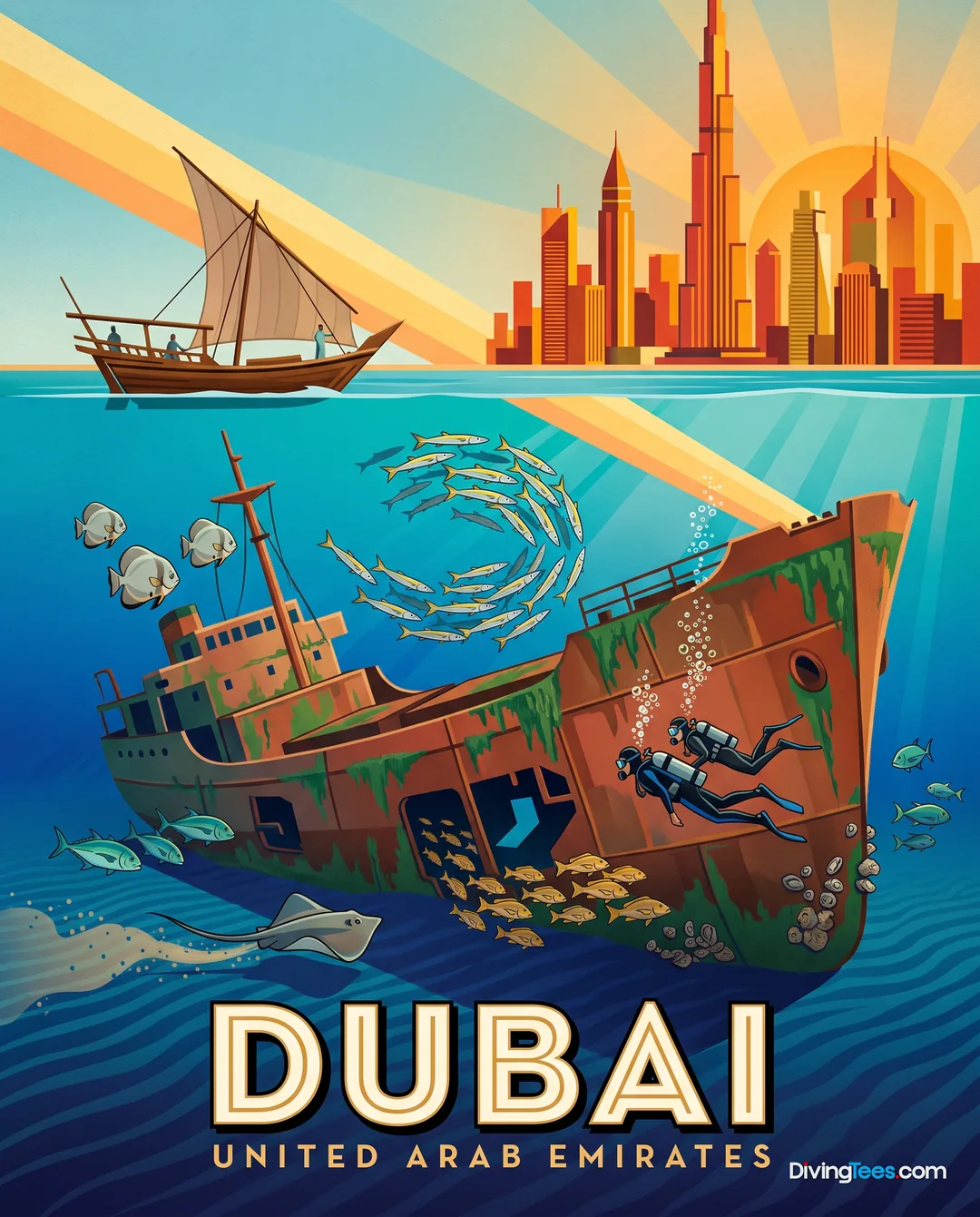
- Zainab Wreck on the Dubai side
- Ras Al Khaimah Wreck in Uae Persian Gulf
- Morning departures from Dubai and Abu Dhabi
- Advanced Open Water for offshore Gulf wrecks
- Variable currents around Dubai and Fujairah
For subtitles in English: start the video firstthen click the gearat the top right of the video, select “Subtitles/CC”, then “Auto-translate” and choose “English”.
This country for a diver
The United Arab Emirates is a split-personality diving destination: Gulf wrecks and artificial reefs on one side, more coral-oriented diving around Fujairah on the east coast. That contrast matters more than any single national style. Conditions can include variable current around Dubai and Fujairah, while the Gulf side around Uae Persian Gulf is described as lighter-current. Diving is broadly mixed and suitable for all levels, but offshore wrecks call for Advanced Open Water and recent experience. There is no liveaboard pattern here; this is a base-and-boat holiday.
How the country divides
Think of the country as two practical diving belts rather than one continuous circuit. Fujairah is the east-coast choice, with a moderate price level and a more coral-oriented emphasis. It suits divers who want a straightforward local base, reef structure and the named sites around Martini Rock, Dibba Rock and Snoopy Island without building the holiday around long-range travel. Dubai belongs to the Gulf-facing side and is the expensive, busier option. Its diving leans towards structure, wrecks and artificial reefs, with Zainab Wreck giving the area a clear offshore-wreck anchor. Uae Persian Gulf sits in the same broad Gulf conversation, also at the expensive end but with lighter current and moderate tourist pressure; Ras Al Khaimah Wreck is its named reference point. Choose Fujairah for the simpler east-coast identity, or Dubai when the city base and Gulf wreck format are the point.
Diving destinations
Dive centres

Hotels

When to go, and where by month
The calendar is unusually simple. Dubai’s stated diving season runs from June through December, so June, July, August, September, October, November and December all point towards the Dubai side. January through May sit outside that named window rather than forming an opposite season on another coast. This is not a case where one seaboard opens as another closes. There is no opposing seasonal pattern directing divers from Dubai to Fujairah or the reverse. The practical choice is therefore to match the trip to the Dubai window if Gulf-side diving is central, then treat the east coast as a separate geographic decision rather than assuming a seamless seasonal handover. Within the Dubai period, morning boat departures from Dubai and Abu Dhabi are the sensible rhythm: calmer seas and less wind-stirred sediment can improve visibility before afternoon conditions develop. That matters particularly on repetitive boat days and mid-depth wreck profiles.
Marine life, coast by coast
Wildlife is not the organising distinction between the United Arab Emirates’ diving areas. The country’s useful divide is structural: Gulf wrecks and artificial reefs around Dubai and Uae Persian Gulf, versus the more coral-oriented character of Fujairah. That changes how an itinerary feels, even when the diver is not travelling for a particular animal encounter. A wildlife-led plan should therefore be built around the chosen coast rather than an assumed national signature. Fujairah belongs in the plan when reef character is the priority; Dubai and Uae Persian Gulf suit a diver more interested in man-made structure and wreck surroundings. The named sites provide the geographic anchors, but no single creature is identified as a countrywide reason to cross between them. This keeps expectations practical: choose the coast for its diving format first, not for a promised species parade.
Getting between the areas
Treat the east coast and the Dubai side as separate bases. The guidance for the country is blunt: if the least complicated trip matters, stay on the east coast rather than commuting from Dubai every day. The destination is structurally local, not a long-range excursion. That makes Fujairah the cleaner base for nearby east-coast diving, while Dubai works for boat trips on its own side and for Zainab Wreck. Uae Persian Gulf belongs to the wider Gulf grouping, but it should not be treated as a casual add-on to every east-coast day. Linking the two sides costs holiday time because the journey is a land transfer between different operating areas, not a single boat route. If a mixed itinerary is worth that trade-off, use Persian Gulf wrecks and artificial reefs for the structure-focused portion, then reserve the east coast for the more coral-oriented dives.
Take off your mask
Away from the water, the United Arab Emirates is best handled as a choice of base rather than an attempt to make every part of the country serve the same holiday. Dubai gives the trip a dense Gulf-side setting, while Fujairah places the emphasis on the east coast. Uae Persian Gulf belongs to the same Gulf-facing logic as Dubai, but its lighter-current profile and moderate tourist pressure make it a different counterpoint to the busier Dubai side. That geographic contrast is also useful for non-diving days. Staying on one side keeps the trip coherent; switching between Dubai and Fujairah turns the holiday into a transfer-led itinerary. For a higher-cost trip from Britain, that distinction is more meaningful than trying to sample every named site. The practical rhythm is a settled base, early boat departures when diving, and enough uncommitted time to absorb the character of the chosen coast. Abu Dhabi appears in the departure pattern for morning boat dives, reinforcing the Gulf-side nature of the itinerary rather than creating a separate national circuit.
What holds true everywhere here
Two habits make particular sense across United Arab Emirates diving. Buoyancy and no-contact discipline matter around reefs, artificial structures and wreck sites alike; choose a briefing that treats anchoring and diver behaviour as part of site protection, not as a closing formality. Nitrox is useful when several days are built around easy reef or wreck diving. The country’s base-and-boat format naturally lends itself to repetitive profiles, so the extra margin can be worthwhile when the dives remain within the diver’s training and operating limits. That is especially relevant for a programme mixing Fujairah’s east-coast sites with Gulf-side structure, where a measured safety stop and conservative surface interval keep the holiday comfortable rather than rushed. Offshore wreck plans still deserve the appropriate qualification and recent experience, particularly around Zainab Wreck.
Frequently asked questions about United Arab Emirates
When should you choose the United Arab Emirates for diving?
Choose the United Arab Emirates from June to December if boat diving around Dubai is part of your plan. Fujairah offers an east-coast alternative with reef and wreck sites, while Dubai and the United Arab Emirates Persian Gulf focus more on Gulf wrecks and artificial reefs.
What experience do you need for the United Arab Emirates?
Advanced Open Water is appropriate for offshore Gulf wrecks in the United Arab Emirates. You should also be prepared for variable currents around Dubai and Fujairah. The diving format matters when choosing sites, particularly if you plan to visit wrecks away from the coast.
What can you see while diving in the United Arab Emirates?
The United Arab Emirates offers Gulf wrecks and artificial reefs around Dubai and the United Arab Emirates Persian Gulf, including Zainab Wreck and Ras Al Khaimah Wreck. Fujairah has a more coral-oriented character, with sites such as Martini Rock and Snoopy Island. No countrywide wildlife signature is identified.
How should you plan a diving stay in the United Arab Emirates?
Plan your United Arab Emirates stay around the coast that matches your interests. Choose Fujairah when reef character is the priority, or Dubai and the United Arab Emirates Persian Gulf for man-made structure and wreck surroundings. Morning departures are available from Dubai and Abu Dhabi, supporting a compact itinerary.