Abt Divers
Google 4.5/5 (142 reviews)
Oman · Middle East
Boat dives from Salalah reach Mirbat’s reefs, kelp forests and wrecks, with shallow rocky scenery, light currents and a clear break during the khareef.
For subtitles in English: start the video firstthen click the gearat the top right of the video, select “Subtitles/CC”, then “Auto-translate” and choose “English”.
Mirbat’s shallow reefs, kelp forests and shipwrecks give Salalah its clearest underwater identity. This is southern Oman’s Dhofar coast rather than a classic tropical reef island, with boat trips reaching rocky points, offshore features and local sites around the bay. The diving is generally calm enough for all levels, but the destination is governed by the khareef: summer conditions can make the sea a poor place to plan a run of dives.
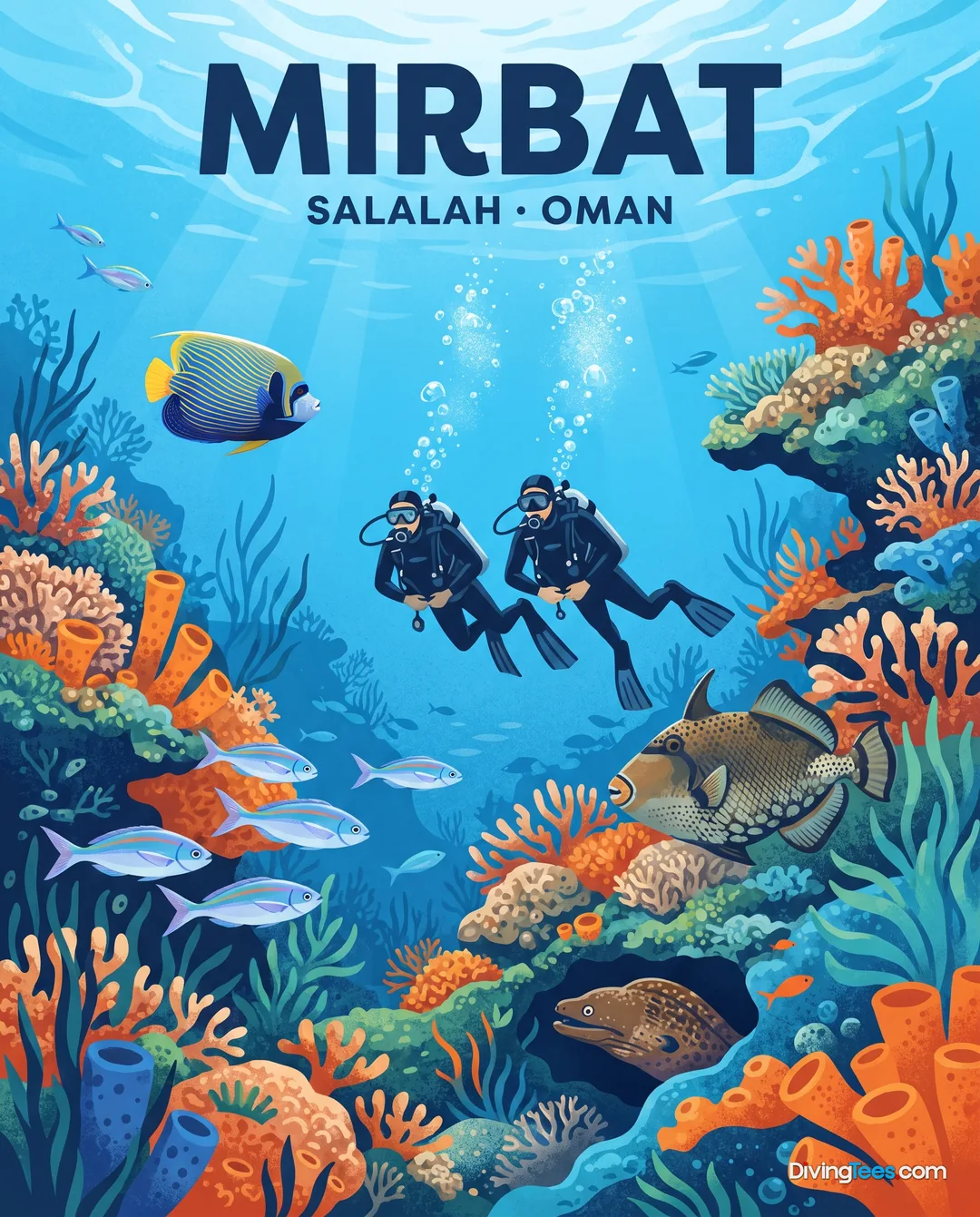
Salalah’s diving is mainly boat-based, using the coastline, rocky points and offshore features around the Dhofar coast rather than a liveaboard itinerary. Mirbat is the most clearly defined example: the site combines colourful reef areas, kelp forests and two substantial wrecks, with depths from four to seventeen metres. Light currents keep the diving straightforward, and the shallow profile suits relaxed exploration, photography and training dives. Visibility at Mirbat is typically described as ten to twenty metres, although the wider seasonal conditions are more important than any single figure. This is a place for looking closely at coastal life, moving through kelp and around wreck structure, not for planning deep, technical drifts or a succession of headline coral sites. Boat operations remain dependent on the state of the sea, particularly around the summer monsoon.
Mirbat’s reef and wreck structure support lively fish life, giving divers plenty to examine in the shallower water and around the metalwork. Kelp forests add a different texture from the coral-and-sand scenery familiar from the Red Sea, while rocky coastal habitats define much of the local character. Sea turtles are occasional visitors. Manta rays and whale sharks are possible but rare, so neither should be treated as a reliable reason to choose a particular week. The dependable attraction is the combination of fish, reef, kelp and wreck scenery at modest depth. Encounters are best regarded as additions to the dive rather than a timetable around which to build the trip.
The practical diving season runs from October through April, with conditions generally becoming more workable after the summer khareef. June to September brings coastal fog, a heavier swell and more disturbed sea conditions, which can interrupt or prevent boat diving rather than merely reduce visibility. The period immediately after the monsoon is a useful compromise for a short visit, as maritime conditions begin to settle and local operations return. The more stable autumn and winter window is also when demand naturally concentrates, so flexibility remains useful even in the preferred season.
Salalah suits divers of all levels, including those using BSAC, PADI or SSI qualifications, provided they are comfortable with ordinary boat-diving routines and changing sea conditions. Mirbat’s shallow four-to-seventeen-metre profile and light currents make it appropriate for gentle exploration, photography and training. No advanced or technical qualification is required by the character of the diving. Nitrox may be useful for repeated recreational dives, but the destination does not depend on deep profiles or decompression planning.
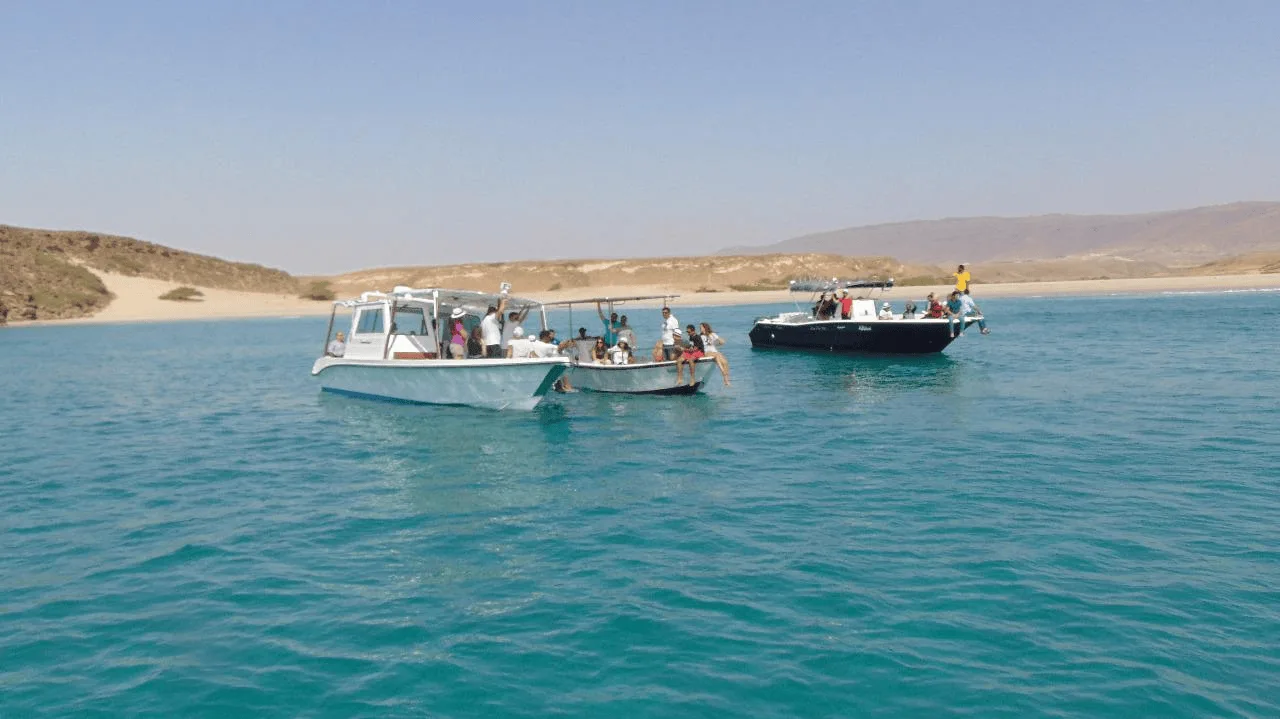
From London Heathrow, Gatwick or Manchester, the journey is organised around reaching Salalah by air. The alternative is to travel overland from elsewhere in Oman, although that makes the approach a road journey rather than a simple local transfer. If the itinerary uses another Omani city as its entry point, allow for the onward domestic flight or the longer road connection before fixing dive days. Once in Salalah, diving is arranged locally from the city and nearby coast, with boat departures made from the local waterfront rather than after a compulsory sea crossing. Keep the diving schedule adaptable: the khareef can affect both maritime operations and coastal movement, so a rigid chain of connections leaves little room for a weather-related change.
Treat Salalah as a seasonal coastal trip, not as a year-round reef holiday. Fix the travel dates first, then fit the diving around the post-khareef window; arriving in June, July, August or September risks turning the planned dive programme into a land-based itinerary. Keep at least one flexible day for the sea state, especially if several boat outings are important to the trip. Do not build the holiday around a single spectacular animal: turtles are occasional, while manta rays and whale sharks are rare. Mirbat is better approached for its shallow reefs, kelp forests, fish life and wreck structure. It is also worth keeping expectations realistic about the format. Salalah is a stay-based destination with local boat trips, not a liveaboard route or a catalogue of deep technical sites. If conditions change, the Dhofar coast and inland landscapes provide a sensible alternative to forcing a day on rough water.
A five- to seven-day stay gives enough room to combine several local boat outings with weather flexibility and days on land. Salalah works for mixed groups because non-divers can spend time on the beaches and explore the Dhofar coast, wadis and surrounding landscapes. The most comfortable rhythm is to dive during the settled season, leave room for a missed boat day, and use the final day for land-based activities rather than risking a rushed return from the water before flying.
Hello, I'm Marina, DivingDeal.com's AI assistant. I guide you through destinations, areas and countries.
Thinking about the whole trip and the flights? Talk it over with Edith →
Marina is an AI. Some links are affiliate links: DivingDeal may earn a commission, at no extra cost to you. Bookings are made with the partner.
Your last day stays dry: no diving in the 18-24 hours before a flight, the perfect window to see the destination from another angle.
 Culture
⏱ 7 h · ★ 5.0 (36 reviews)
from £84$112€100
see on Viator ↗
 Nature
⏱ 6 h · ★ 5.0 (27 reviews)
from £141$188€168
see on Viator ↗
 Nature
⏱ 6 h · ★ 5.0 (12 reviews)
from £72$97€86
see on Viator ↗
 Culture
⏱ 4 h · ★ 5.0 (8 reviews)
from £59$78€70
see on Viator ↗
Ratings and reviews collected by Viator and Tripadvisor.
Plan Salalah diving between October and April, when conditions generally become more workable after the summer khareef. June through September can bring coastal fog, heavier swell and disturbed seas, interrupting boat operations. The period after the monsoon can suit a short visit, while autumn and winter offer the preferred diving window.
Salalah suits divers of all levels who are comfortable with ordinary boat-diving routines and changing sea conditions. Mirbat offers shallow diving from four to seventeen metres, with light currents that suit relaxed exploration, photography and training. The destination does not depend on advanced qualifications, deep profiles or decompression planning.
Diving in Salalah focuses on Mirbat’s shallow reefs, kelp forests, rocky coastal formations and two shipwrecks. Fish life is found around the reef and wreck structure, while turtles appear occasionally along the Dhofar coast. Manta rays and whale sharks are rare, so the dependable appeal is the varied coastal scenery.
Plan Salalah as a seasonal, stay-based trip with local boat outings rather than a liveaboard itinerary. Fit diving around the settled season, keep a flexible day for changing sea conditions, and avoid a rigid schedule. A five- to seven-day stay allows boat trips, weather flexibility and time to explore the Dhofar coast.