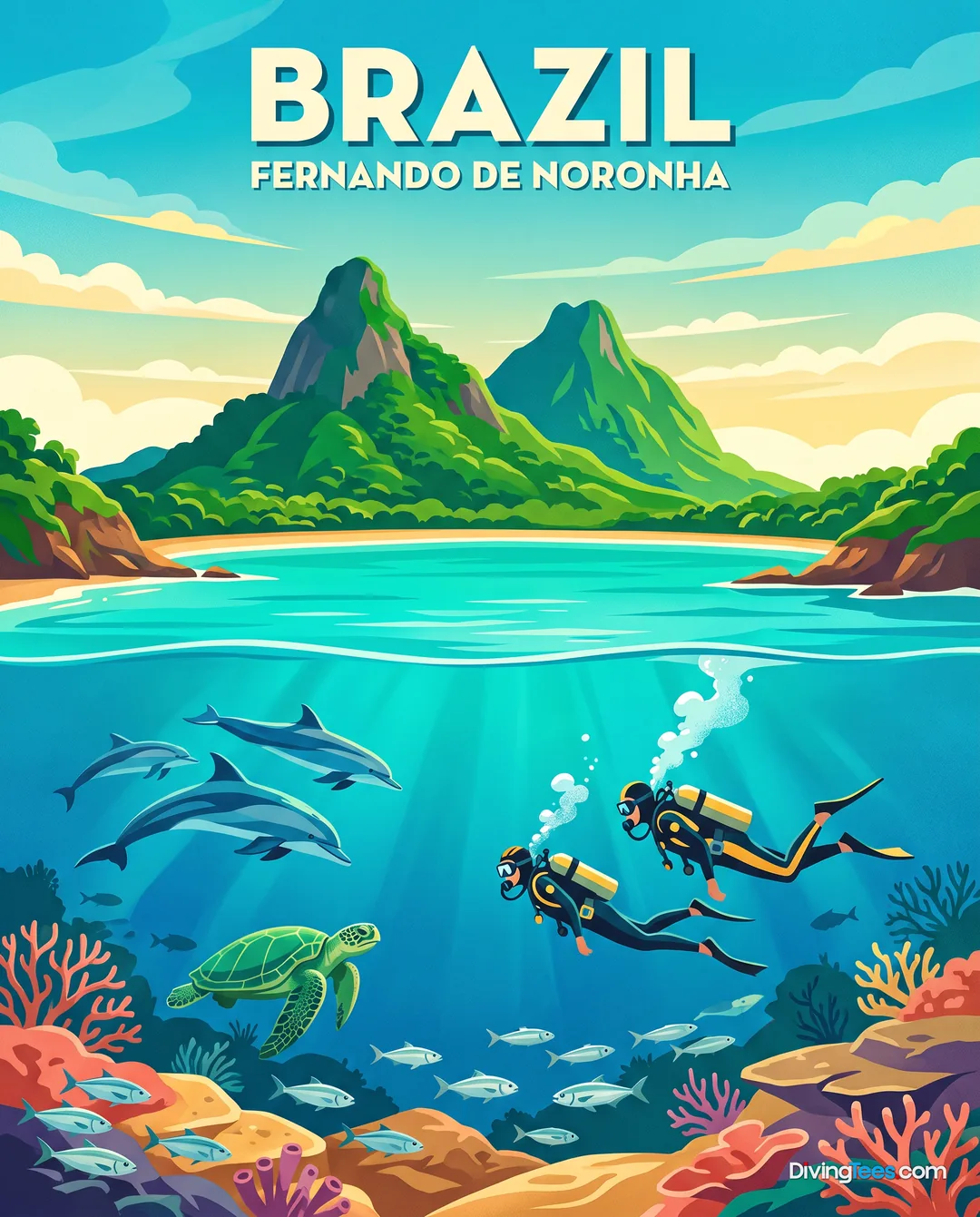
Brazil · Americas
Diving Abrolhos: coral pinnacles and offshore encounters
Mushroom-shaped Chapeirao Jean Pierre, cave-like Caldeiros and humpback whales in the austral winter define Abrolhos, reached by boat across a protected offshore park.
What makes this destination special
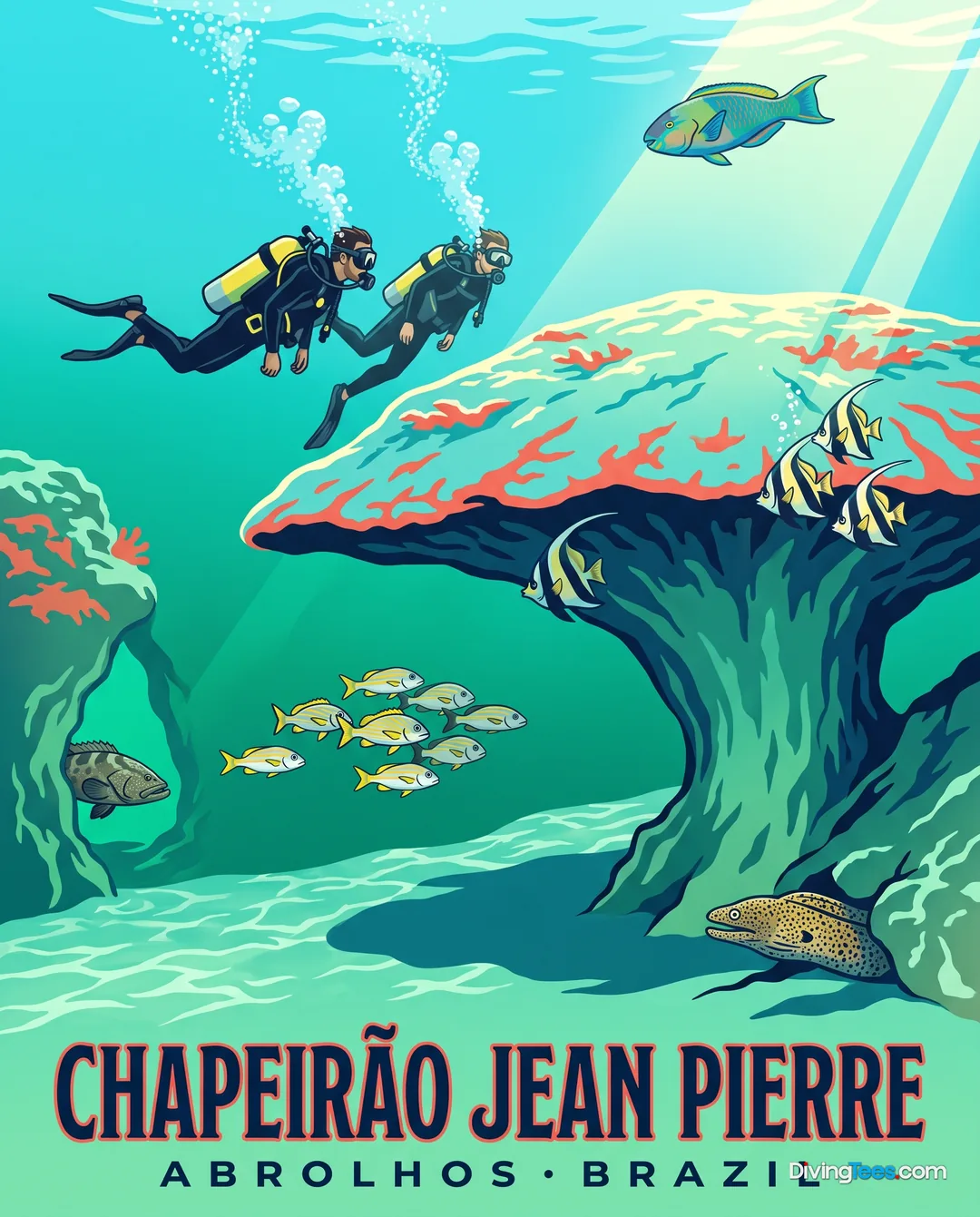
- Chapeirao Jean Pierre’s mushroom-shaped calcareous-algae pinnacle
- Reef edges, passages and cavities down to 19 metres
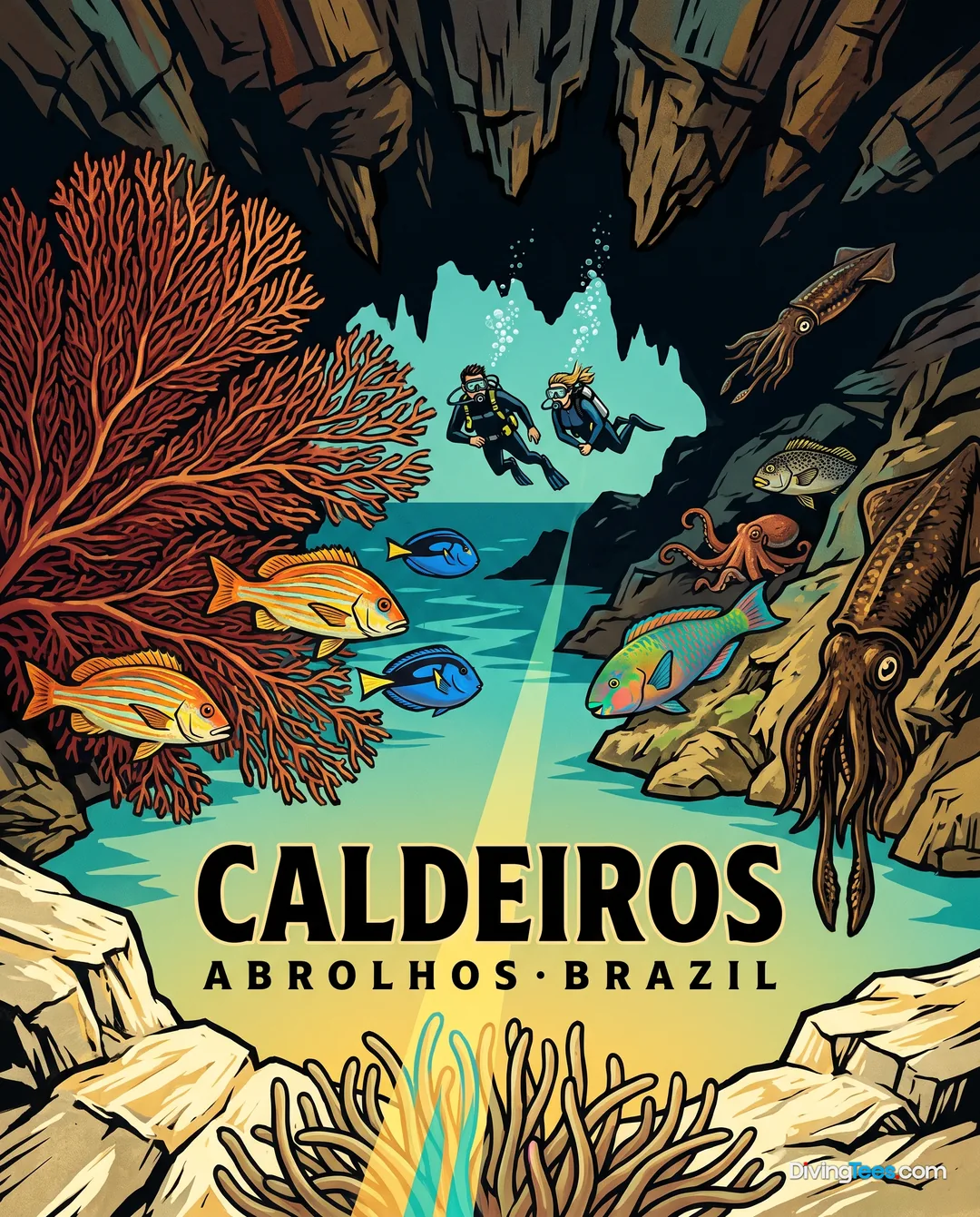
- Caldeiros’ shallow volcanic terrain and cave-like passages
- Spotted eagle rays around the Caldeiros reef
- Gorgonian corals in current-affected shallow water
- Humpback whales in the austral winter
- Protected diving inside Parque Nacional Marinho dos Abrolhos
For subtitles in English: start the video firstthen click the gearat the top right of the video, select “Subtitles/CC”, then “Auto-translate” and choose “English”.
Overview
Abrolhos is an offshore Brazilian diving destination built around the Parque Nacional Marinho dos Abrolhos and the wider Abrolhos Bank. The defining experience is a boat journey to protected reefs and islands rather than a hotel-based shore-diving routine. Underwater, the landscape ranges from the mushroom-shaped Chapeirao Jean Pierre to the shallow, cave-like volcanic passages of Caldeiros. Seasonal humpback whales add a regional wildlife interest, although the diving itself remains centred on reefs, pinnacles and managed access.
Diving here
Boat diving sets the rhythm here. At Chapeirao Jean Pierre, the shallow reef top is formed by calcareous algae and its mushroom profile becomes clearer as divers follow the deeper outer edges, moving around passages and cavities down to 19 metres. Caldeiros is a different proposition: a shallow volcanic site reaching only 6 metres, with rocky contours, cave-like sections and currents that can become noticeable or strong. Currents vary with tides and sea conditions, so the same site may feel straightforward on one dive and more demanding on another. Visibility at Caldeiros is typically between 12 and 25 metres, though it fluctuates. Repetitive boat days make Nitrox useful, while disciplined buoyancy matters more than specialist training for most of the park’s reef diving.
Two dives not to miss
The underwater wildlife
The most distinctive seasonal encounter is the humpback whale, present in the Abrolhos region during the austral winter. Whale watching may form part of a trip where offered, but it should not be treated as a guaranteed in-water encounter or as a substitute for the reef programme. Around the sites, the attraction is smaller and more closely observed: Caldeiros is noted for spotted eagle rays and gorgonian corals among its shallow rocky formations. Chapeirao Jean Pierre brings the eye towards the reef itself, where cavities, ledges and the calcareous-algae structure create the setting for close, careful observation. Wildlife encounters depend on conditions and timing, while the protected status makes non-contact viewing essential.
Possible underwater encounters
When to go
The most useful seasonal distinction is the austral winter, when humpback whales are a regular feature of the wider Abrolhos region. That makes this period the natural choice for travellers who want to combine reef diving with whale-related activities. For divers focused mainly on the sites, departure planning should allow for changing sea conditions and tidal currents rather than relying on a rigid calendar of guaranteed visibility. Conditions at Caldeiros can vary even though visibility may be good, and a calm-looking itinerary can still include current-affected dives. A boat-based trip therefore benefits from a flexible schedule, with wildlife expectations kept separate from the core reef programme.
Level required
Abrolhos suits all levels for its general boat-diving programme, including Open Water divers at Chapeirao Jean Pierre. That does not mean every dive is equally relaxed: variable current, tidal influence and boat procedures reward sound buoyancy and comfort in open water. Caldeiros is shallow but can involve stronger current and cave-like passages, making Advanced Open Water or equivalent experience more appropriate there. BSAC, PADI and SSI qualifications should be matched to the operator’s site assessment. Nitrox is useful for repetitive days, but it does not replace current awareness or careful gas planning.
On the ground
From London Heathrow, London Gatwick or Manchester, the journey begins with travel to Brazil’s Bahia coast by domestic-flight connections and/or road travel, followed by the essential sea transfer to the islands and reefs. There is no practical shore-diving base inside the park, so the final boat leg is not an optional extra or a short local shuttle. Depending on the itinerary, diving may be arranged from a day boat or a liveaboard-style trip. Travellers should therefore plan around boat departure times, luggage suited to a multi-day marine programme and the possibility that park access rules shape the schedule. Once offshore, movement is by boat rather than by taxi, shuttle or walking between dive sites.
Local tips
Treat Abrolhos as an offshore expedition from the outset. Packing for day-long or multi-day boat logistics is more sensible than bringing equipment for casual beach entries, because the park itself is not a shore-diving destination. Before committing to an itinerary, establish whether it concentrates on the marine park or the wider Abrolhos Bank; those are related but not identical boating experiences. Keep flexibility in the schedule for tidal current and sea conditions, particularly if Caldeiros is planned. Its 6-metre depth can look benign on paper, yet current and confined, cave-like passages change the character of the dive. If whale watching matters, leave room for a separate wildlife activity and do not count on an in-water encounter. Park access is regulated, fees apply, and moorings replace anchoring: no collecting, touching, wildlife harassment or reef contact belongs in this setting.
Planning your stay
A five- to seven-day dedicated trip fits Abrolhos better than a hurried add-on. The opening and closing days need to absorb the Bahia-coast transfer and the boat connection, while the diving days can be organised around reef sites, tidal conditions and the distinction between park and wider-bank itineraries. A day boat can work where available, but a liveaboard-style arrangement makes practical sense when offshore sites are the main purpose. Add coastal or island-orientation time before or after the diving if the schedule allows.
Hello, I'm Marina, DivingDeal.com's AI assistant. I guide you through destinations, areas and countries.

Thinking about the whole trip and the flights? Talk it over with Edith →
Marina is an AI. Some links are affiliate links: DivingDeal may earn a commission, at no extra cost to you. Bookings are made with the partner.