
Diving Coiba
Google 4.9/5 (281 reviews)
Panama · Americas
Coiba’s reefs, cold-water upwelling, white-tip reef sharks, turtles and great shoals unfold on long boat days from Santa Catalina in the protected park.
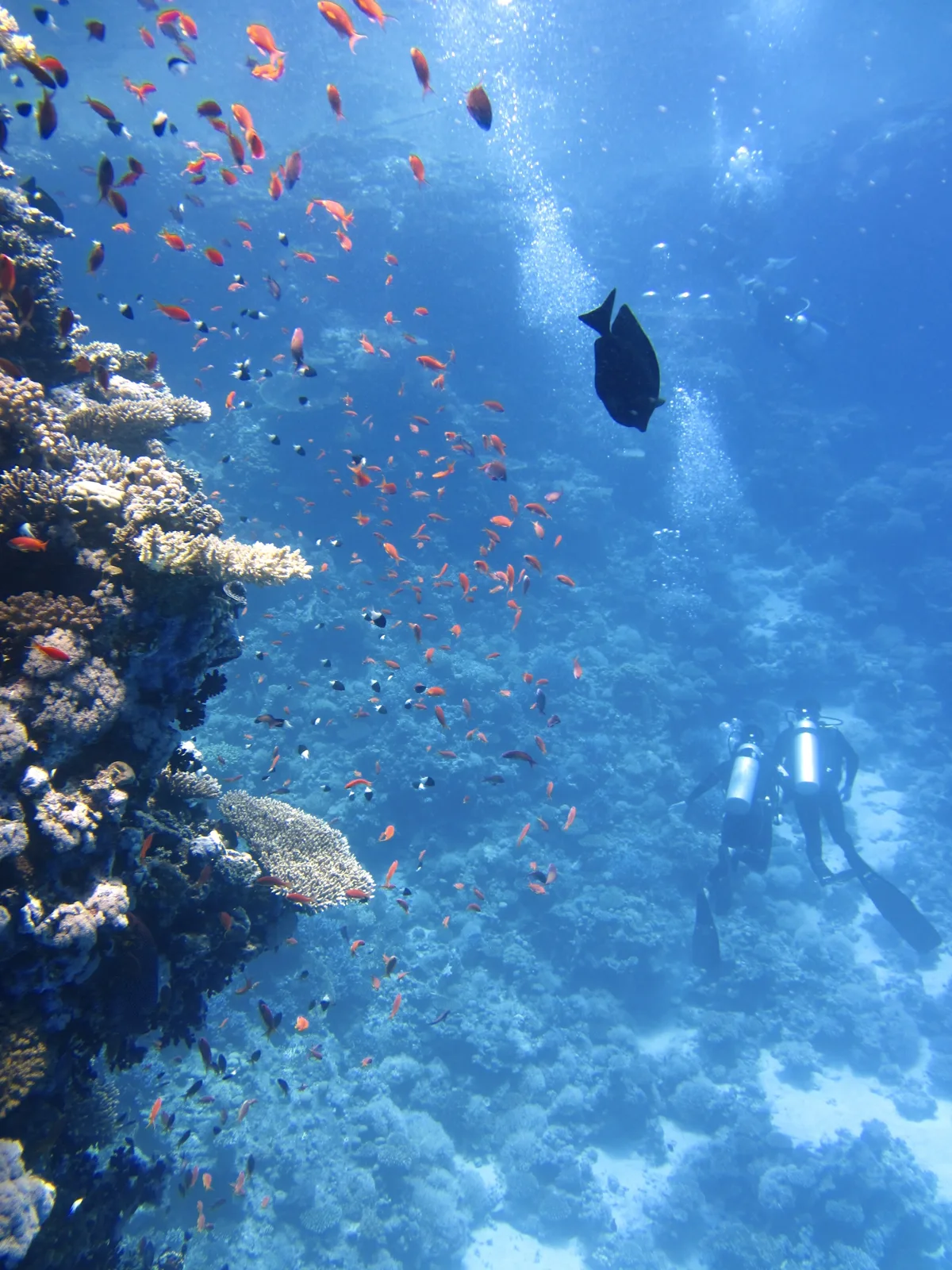
Coiba’s reef slopes and moving water are the reason to base yourself in Santa Catalina. This small Pacific village is a mainland launch point for full-day boat trips to Coiba and the Contreras Islands, where reefs, shoals and pelagic wildlife replace the uniform coral scenery of a conventional tropical resort. There are more accessible coastal dives as well, useful when sea conditions cancel the longer run. The appeal is the chance of sharks, rays, turtles and cetaceans, with no need to join a liveaboard.
Diving is predominantly from boats, with coastal reefs close to Santa Catalina and more exposed sites around Coiba and the Contreras Islands. Expect variable current rather than a predictable, hands-off reef tour. A downcurrent passage or a drift dive may be part of the plan on one site, while another offers calmer reef exploration. Cold-water upwelling and plankton can reduce visibility, but they are also part of the reason larger animals visit. Visibility is commonly around ten to thirty metres, generally clearer from December to April, although rain, river run-off and current can change it quickly. Thermoclines are particularly noticeable from February to April. Coiba is a full-day outing, with long boat travel, repetitive diving and a proper safety stop built into the rhythm of the day.
The draw is what may appear beyond the reef itself. White-tip reef sharks, hammerhead sharks, rays, giant manta rays, turtles, dolphins and large fish shoals are all part of the possibility, rather than a viewing schedule. Hammerheads are reported particularly from March to August, while whale sharks are rare but more likely during the dry season, especially from December to April. Giant manta rays can turn up throughout the year, with better prospects when plankton is abundant. Dolphins are possible year-round. Humpback whales are an occasional seasonal visitor from July to October, making the boat journey worthwhile even on days when the diving is quieter.
December to April is the straightforward choice for more settled conditions and generally better visibility. The rainy season brings greater variation: river run-off can cloud coastal water, while plankton and cold-water upwelling may improve the chances of larger animals. It is therefore not simply a matter of avoiding the monsoon period. From July to October, humpback whales add a seasonal reason to travel, although sightings remain occasional. The dry months are more sought after, so allow flexibility in either season. Sea conditions can still disrupt a Coiba departure, and a clear forecast does not guarantee clear water at every reef.
Santa Catalina can suit beginners on selected coastal dives, but the longer Coiba trips need an honest assessment of current, exposure and stamina. Advanced Open Water is useful for deeper or more exposed sites, rather than a formal requirement for the destination as a whole. PADI, SSI and BSAC divers should ask which dives match their recent experience, especially if they have little practice in a drift dive or downcurrent water. Nitrox is worth considering for long days and repetitive diving, provided the diver is appropriately trained.
From London Heathrow, Gatwick or Manchester, the journey runs through Panama City before continuing overland. Allow roughly eighteen to twenty-four hours or more for the flight connections and the transfer as a whole. From Panama City, the road goes via Santiago and then along the secondary road to Santa Catalina. By bus, the journey commonly takes six to seven hours and may take longer when the partly unpaved road is slow. By car, allow around five hours in good conditions. Once in Santa Catalina, some accommodation lies within walking distance of a dive centre, while other locations need a taxi or a shuttle arranged locally. Coiba itself is reached by boat from the village, not by a domestic flight.
Put the Coiba days at the beginning of the stay, not at the end. A full-day departure can be postponed by sea or weather, and using the only available day for it risks losing the main purpose of the trip. Keep spare days for a second attempt, with coastal diving as a useful alternative rather than an afterthought. Ask in advance which planned dives suit the group, since current and exposure change from site to site. Bring sun protection and protection from spray for the long crossing, and do not plan a tight run of flights after several boat days and repetitive dives. Leave a no-diving day before flying home. In the park, do not touch coral, pursue animals, settle on the bottom or leave waste behind.
A practical stay is seven to ten days, allowing several Coiba departures, a weather margin and at least one day without diving after the longer trips. Santa Catalina works as a land-based base, with boat diving arranged locally rather than a liveaboard routine. Choose accommodation for its relationship to the centre and the road, not just its position on a map. The village is spread over hilly ground, so confirm whether a taxi or shuttle is needed. Surfing, beaches, forest walks, kayaking and whale-watching fill the non-diving days.
Hello, I'm Marina, DivingDeal.com's AI assistant. I guide you through destinations, areas and countries.
Thinking about the whole trip and the flights? Talk it over with Edith →
Marina is an AI. Some links are affiliate links: DivingDeal may earn a commission, at no extra cost to you. Bookings are made with the partner.
Santa Catalina is generally clearer and more settled from December to April, although rain, river run-off and current can change conditions. Hammerheads are reported particularly from March to August, while humpback whales may pass from July to October. Keep flexibility, since sea conditions can still postpone Coiba departures.
Santa Catalina can suit beginners on selected coastal dives, but Coiba and Contreras trips require an honest assessment of current, exposure and stamina. Advanced Open Water is useful for deeper or more exposed sites. Ask which dives match your recent experience, especially if drift or downcurrent diving is unfamiliar.
Santa Catalina offers reefs, large fish shoals and the possibility of white-tip reef sharks, hammerheads, rays, giant manta rays and turtles. Dolphins may appear year-round, while humpback whales visit occasionally from July to October. Cold-water upwelling and plankton can reduce visibility while attracting larger animals.
Use Santa Catalina as a land-based base for boat diving to Coiba and the Contreras Islands, and place Coiba trips at the beginning of your stay. Allow spare days for weather delays, with coastal diving as an alternative. Arrange transfers locally, allow recovery after repetitive boat days, and leave a no-diving day before flying home.