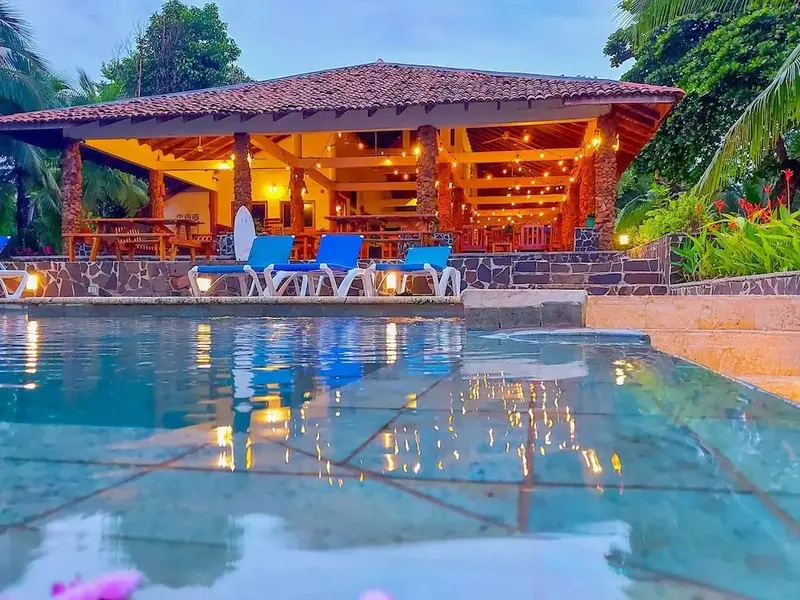
Hotel Santa Catalina Panama
★★★
Google 4.5/5 (425 reviews)
less than 1 km away as the crow flies
Dive centre · Santa Catalina · Panama
4.6159 Google reviewsExperience the raw power of the Pacific with long-duration dives and Nitrox availability at Panama's original Coiba dive centre.
For subtitles in English: start the video firstthen click the gearat the top right of the video, select “Subtitles/CC”, then “Auto-translate” and choose “English”.
Scuba Coiba is the original dive centre in the region, having operated out of Santa Catalina since 2003. While many destinations in the East Pacific Tropical Marine Corridor require a liveaboard to reach the best sites, Scuba Coiba offers the unique advantage of land-based diving. This provides much greater flexibility and comfort for those who prefer to return to shore between excursions.
The centre is located at the gateway to Coiba National Park, a protected area within the 'Shark Triangle'. This means you are diving in one of the most productive marine environments in the world, where nutrient-rich upwellings support massive schools of fish and a high density of apex predators. It is a destination designed for serious divers who value expertise and marine conservation.
The team is composed of local professionals and long-term residents, many of whom are PADI Master Scuba Diver Trainers. This depth of experience is vital when navigating the dynamic conditions of the Pacific. The staff is multilingual, providing instruction and guidance in English, Spanish, German, and French.
As a PADI 5 Star Resort, the centre maintains high standards for both training and safety. They focus on small groups and responsible diving practices, ensuring that interactions with the marine life remain respectful. Their commitment to the environment is evident in their specialised conservation courses and their refusal to engage in shark feeding.
The training programme covers the entire PADI spectrum, starting from Discover Scuba Diving for those new to the water through to Divemaster certifications. For those looking to advance their technical skills, the centre offers PADI Deep Diver and Nitrox courses, with e-learning options available to prepare before arriving on site.
Beyond standard progression, there is a strong emphasis on specialty training and marine science. You can enrol in PADI Drift Diver, Peak Performance Buoyancy, and various conservation-focused specialties such as AWARE Shark Conservation, Sea Turtle Awareness, Whaleshark Awareness, and Dive Against Debris. For those interested in the biology of the region, Fish Identification and Underwater Naturalist courses are also available.
The centre has recently modernised its shore-based facilities, moving to a new location directly on the beach. They have invested in larger compressors to support their growing operations and have reinstalled a Nitrox station to facilitate longer, safer bottom times for recreational divers.
Full kit hire is available for those not travelling with their own equipment, including regulators, wetsuits, fins, and masks. The centre is well-equipped to handle the needs of both beginners and advanced divers, providing all the necessary components for a successful day on the water.
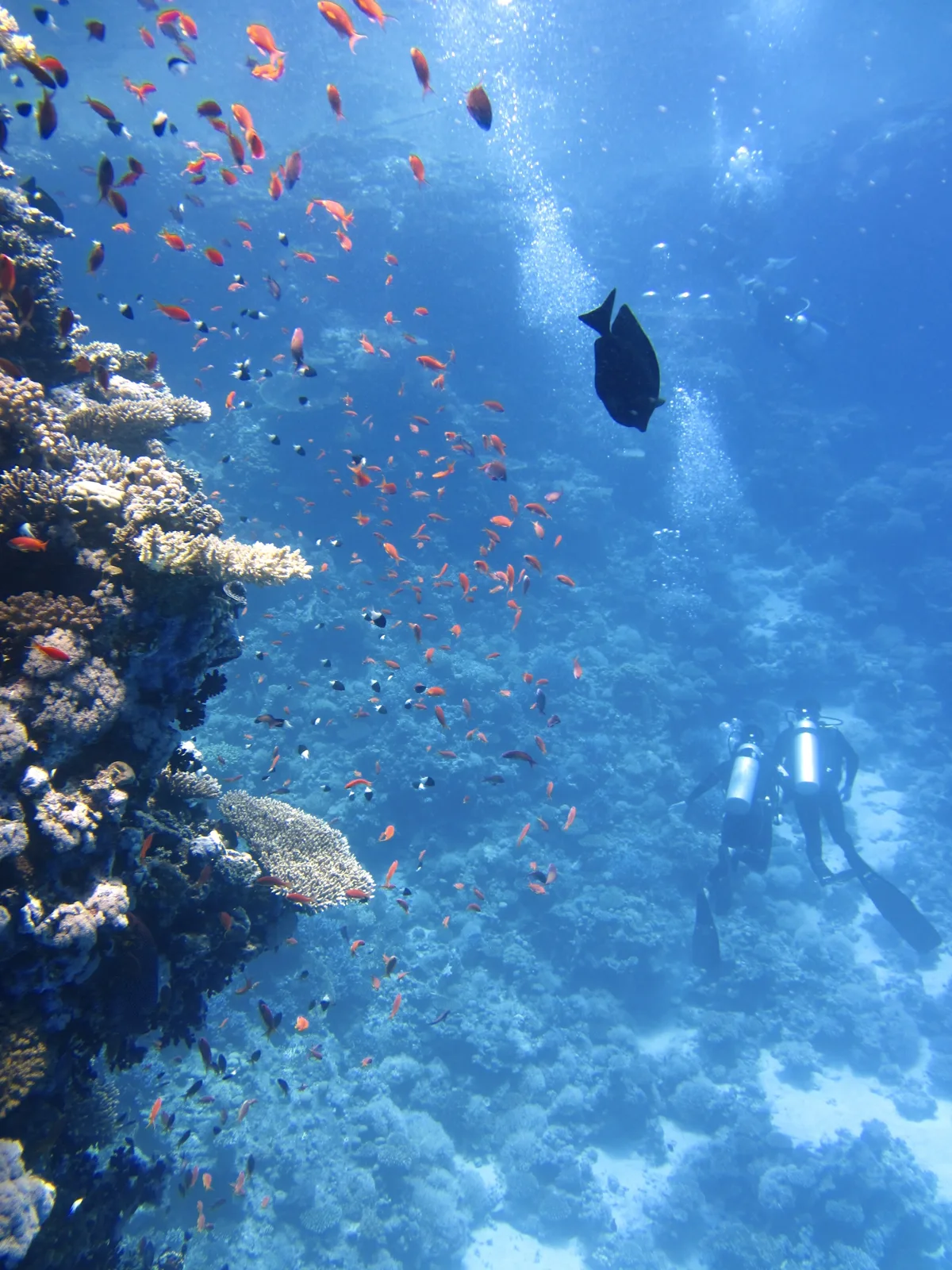
The area is world-renowned for its pelagics. During the upwelling season from February to April, you can encounter large rays, including Manta rays and Eagle rays. If you visit between December and April, there is a significant chance of seeing Whale sharks, particularly around the new and full moons.
Sharks are a constant presence in these waters. You will regularly see Whitetip reef sharks, Bull sharks, and Pacific nurse sharks. For those visiting between April and July, the peak season for Hammerhead sharks offers a high probability of sightings, though they can occasionally be seen in March and between August and September.
Humpback whales are a seasonal highlight, appearing in the area for breeding between July and October, with the best observations typically occurring from mid-July to late September. Large schools of fish, including jacks, pompanos, snapper, and barracuda, are a standard feature of the reef and wall dives.
In the smaller corners of the reef, you will find a variety of reef fish and sea turtles. The macro life and smaller residents include dolphins and various species of rays, adding complexity to the high-energy environment of the national park.
Diving in Coiba is a true Pacific experience; you should expect dynamic conditions and strong currents, particularly on exposed sites. This is not a calm Caribbean reef cruise, and divers should be comfortable with moving water.
The year is split into two distinct seasons. From December to April, the dry season brings strong upwellings and nutrient-rich waters, which attracts more large pelagics, though visibility can vary. From May to November, the green season offers calmer oceanic conditions and fewer divers, which is also the primary window for observing Humpback whales.
Hello, I'm Marina, DivingDeal.com's AI assistant. I answer in detail about hotels, dive centres and liveaboards.
Thinking about the whole trip and the flights? Talk it over with Edith →
Marina is an AI. Some links are affiliate links: DivingDeal may earn a commission, at no extra cost to you. Bookings are made with the partner.