
Medusa Divers Dive Center
★ 5/5 (605 reviews)
1.6 km away as the crow flies
Perhentian Islands · Malaysia · Asia
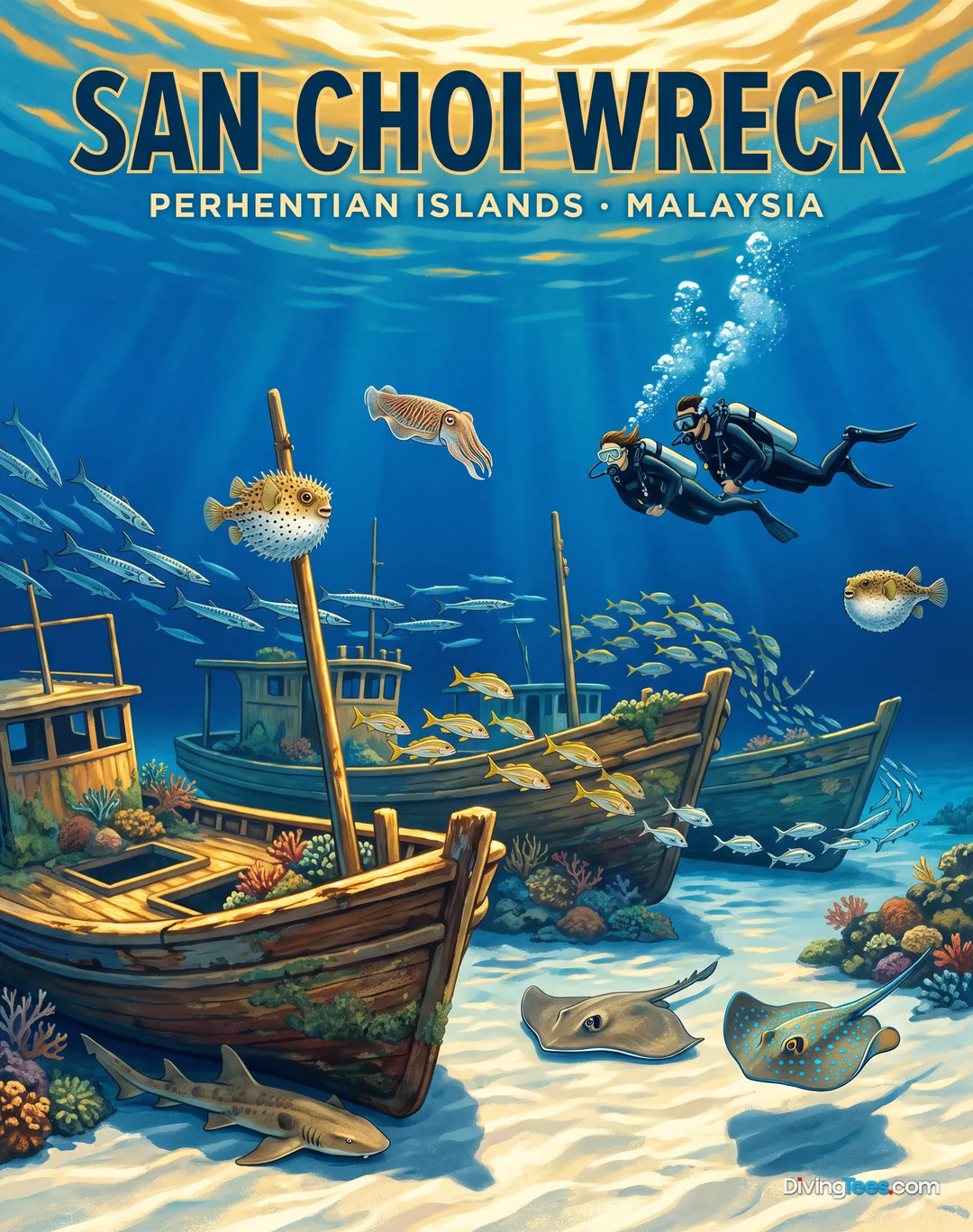
Max. depth · 24 mAt 24 meters, the Vietnamese Wreck in the Perhentian Islands presents a vibrant artificial reef, drawing schools of barracuda and snapper into its often strong currents.
For subtitles in English: start the video firstthen click the gearat the top right of the video, select “Subtitles/CC”, then “Auto-translate” and choose “English”.
Descend to the Vietnamese Wreck and you'll find an ex-US twin-screw landing craft, not a Vietnamese fishing boat, that now lies upside down at approximately 24 meters. This vessel sank in 1976 and has since become a focal point for marine life in the Perhentian Islands. Your dive begins with a clear profile down to the wreck, where the structure offers ample exploration opportunities, even with its inverted resting position. The main body of the wreck is largely intact, providing cover and substrate for various species.
As you approach the wreck, you'll often encounter schools of barracuda and snapper using the structure as a natural aggregation point. These tend to be active, moving with the prevailing current, which can often be strong here. While navigating around the superstructure, keep an eye out for juvenile barracudas, which frequently patrol just above the wreck. The interaction between the wreck's shadow and the circulating currents creates a dynamic environment for these pelagic species.
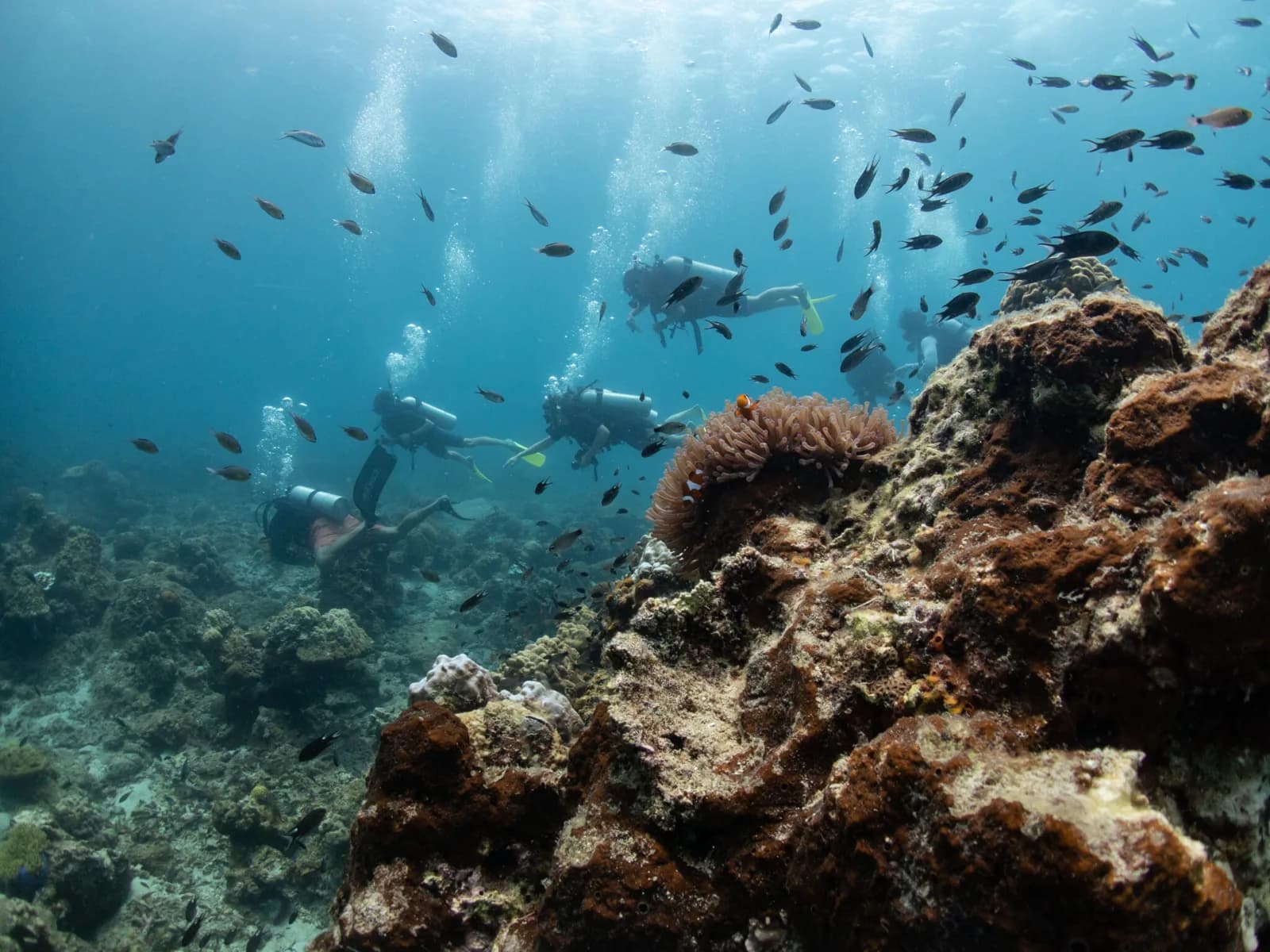
The external surfaces of the wreck are encrusted with growth, forming a diverse habitat for smaller, more cryptic organisms. Look closely, and you might spot flat-bodied batfish (Platax) blending in, or observe fusiliers moving in formation near the edges of the structure. The macro-life here is also rich, with scorpionfish taking advantage of the camouflage provided by the wreck's texture, and cleaner shrimp actively working on various surfaces. This concentration of life makes for a rewarding exploration beyond the larger schools.
Currents at the Vietnamese Wreck are frequently strong, often necessitating careful planning and experience to manage them effectively. They often dictate your approach and the way you can navigate the site, sweeping along the wreck itself. This persistent water movement is a key factor in attracting the larger fish schools and delivering nutrients to the invertebrate communities encrusting the wreck. You'll feel the push of the water as you work your way around the site, confirming its reputation for dynamic conditions.
Beyond the barracuda and snapper, the wreck also hosts other pelagic and reef fish. Groupers and various species of vivaneaux are common residents, utilizing the wreck's crevices for shelter and hunting grounds. Occasionally, you may observe sea turtles gracefully moving over the wreck, or even catch a glimpse of blacktip reef sharks (Carcharhinus melanopterus) patrolling the perimeter. These encounters add another dimension to the dive, showcasing the role of this artificial reef in the wider ecosystem.
This site reaches a maximum depth of 24 meters. Given the often strong and unpredictable currents, the Vietnamese Wreck is best suited for advanced divers with a solid number of logged dives and experience managing challenging conditions. You should be comfortable with currents that may require sustained finning and careful buoyancy control. While visibility can vary, the key consideration here is current management. There is no specific best season mentioned for this site, suggesting it is diveable throughout the year, but always check local conditions for current strength.