
Duikschool de Grevelingen
Google 4.8/5 (11 reviews)
Netherlands · Atlantic
Colonised blocks, artificial reefs and small metal wrecks turn Scharendijke into a practical Grevelingenmeer base for repeated shore dives.
Scharendijke is a land-based diving base on the Grevelingenmeer, where a day can be built around repeated shore entries rather than boat departures. The underwater scenery is made by artificial reefs, colonised blocks, sandy habitat and small wrecks, with Het Koepeltje, the harbour and Nieuwe Kerkweg providing the main local focus. It suits divers who enjoy working a site carefully over several visits, while the nearby Brouwersdam gives non-divers beaches and watersports between dives.
Expect shore diving over a mixture of artificial reef structures, colonised blocks, sandy ground and wreckage. Het Koepeltje offers an established Grevelingenmeer entry, while the harbour area brings small metal wrecks into the picture and Nieuwe Kerkweg provides another practical launch point. Le Serpent adds a more recognisable wreck objective, with De Zeehond and De Rat associated with Kabbelaarsrif. Currents are variable, so a calm-looking entry does not remove the need for a local briefing. Some wrecks are suitable for beginners when accompanied, but they should still be approached as wreck dives rather than ordinary reef swims. This is not principally a boat-diving destination: the normal outing involves gearing up at the shore, entering from land and returning to the same access point, with a vehicle useful when changing sector.
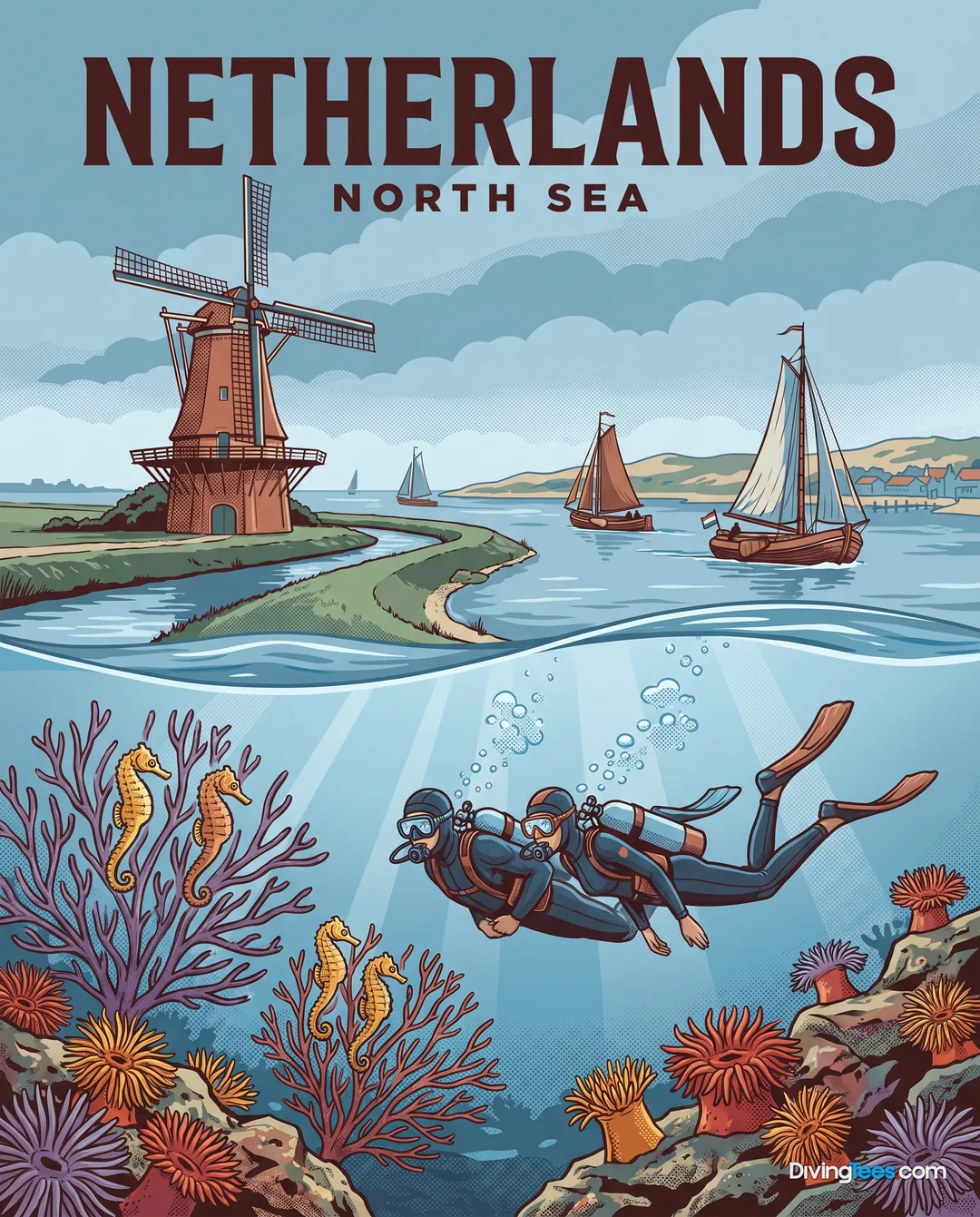
The attraction here is less a named species list than the way life occupies the underwater structures. Artificial reefs and blocks are described as colonised, so expect the visual contrast of living cover against metal and concrete, with sandy habitats opening between the harder features. Around Scharendijke harbour, small metal wrecks add edges, cavities and surfaces to examine, while Le Serpent provides a distinct wreck setting. Kabbelaarsrif brings De Zeehond and De Rat into the wider local picture. A careful diver can make these places rewarding through close observation of the structure and its occupants, rather than by expecting a large-animal encounter. There is no fixed wildlife calendar to organise the trip around, so the appeal remains the changing detail found during each repeat visit.
Scharendijke works particularly well when the aim is to make several shore dives and adjust the plan locally, rather than chase a narrowly defined seasonal event. The Grevelingenmeer sites remain useful for training, skills work and repeated exploration, with the harbour, Het Koepeltje and Nieuwe Kerkweg offering different starts to the day. Choose the timing around the conditions and local advice for the intended entry, because visibility and current can change the character of a shore dive. There is no rainy season or monsoon pattern shaping the itinerary here, and no stated seasonal wildlife window to prioritise. The practical reason to come is the flexibility of a land-based base.
The area suits all levels, including divers building confidence from shore and experienced divers looking for wreck and artificial-reef detail. Beginners can use the local training and accompanied-dive arrangements, and the small harbour wrecks are described as approachable with guidance. A wreck qualification is useful for Le Serpent and the other wreck objectives, whether held through BSAC, PADI or SSI. Even on an easy site, expect a proper wreck briefing before entering or closely inspecting metal structures.
From London or Manchester, Scharendijke is reached by road on Schouwen-Duiveland. The island is connected to the mainland by the Brouwersdam and the Zeeland road network, so the final approach does not require a ferry, domestic flight or scheduled sea crossing. Allow for the road connections needed to reach the island and for the onward drive between your arrival route and the accommodation area. Once there, some sites near the harbour may be walkable depending on where you stay, but the wider Grevelingenmeer plan is easier with a car or organised transport. That matters when moving between Het Koepeltje, the harbour and Nieuwe Kerkweg.
Bring a vehicle into your planning if you want to use Scharendijke properly. The harbour, Het Koepeltje and Nieuwe Kerkweg are not interchangeable entries, and relying on one access point removes much of the value of the base. Check the route and facilities before the first dive, particularly when a site change means moving equipment by road. Ask for a specific briefing before visiting Le Serpent or another local wreck, and book an accompanied dive where the site calls for it. The small metal wrecks near the harbour may suit beginners, but they are still wreck dives, not anonymous pieces of reef. Check where filling is available and whether 300-bar air or nitrox fits your cylinders and plan. Finally, do not arrive expecting a daily boat programme. Scharendijke is organised around shore entries, with local help used to make the wrecks manageable.
The simplest stay is based around Scharendijke, with diving arranged from land and the day divided between nearby entries and short drives across the Grevelingenmeer. Accommodation and dive services are spread around the town, so walking access depends on where you stay. Keep a vehicle available for site changes and for reaching launches beyond the harbour. Between dives, the Brouwersdam and the Grevelingenmeer offer beaches, sailing, surfing and stand-up paddleboarding, giving non-divers a straightforward way to fill the day.
Hello, I'm Marina, DivingDeal.com's AI assistant. I guide you through destinations, areas and countries.
Thinking about the whole trip and the flights? Talk it over with Edith →
Marina is an AI. Some links are affiliate links: DivingDeal may earn a commission, at no extra cost to you. Bookings are made with the partner.
Scharendijke suits trips planned around local conditions rather than a fixed seasonal event or wildlife window. Visibility and current can change the character of a shore dive, so choose your timing with local advice for the intended entry. The Grevelingenmeer remains useful for repeated exploration, training and skills work throughout your stay.
Scharendijke accommodates divers building confidence from shore as well as experienced divers interested in wrecks and artificial reefs. Beginners can use training and accompanied-dive arrangements, and the small harbour wrecks may be approachable with guidance. A wreck qualification is useful for Le Serpent and other wreck objectives, with a proper briefing before close inspection.
Expect artificial reefs, colonised blocks, sandy habitats and wreckage across the Grevelingenmeer sites. Het Koepeltje has underwater structures, the harbour has small metal wrecks, and Le Serpent offers a distinct wreck setting. De Zeehond and De Rat are associated with Kabbelaarsrif, while living cover and cavities reward careful observation.
Base yourself around Scharendijke and plan repeated shore entries from the harbour, Het Koepeltje and Nieuwe Kerkweg, using a vehicle for wider site changes. Arrange local guidance for Le Serpent and other wrecks, check filling options including 300-bar air and nitrox, and choose accommodation with access that suits your diving plan.