Atlantic
United Kingdom: cold water, wrecks and changing coasts
From Newcastle upon Tyne in summer to Scapa Flow’s First World War wrecks, the United Kingdom combines seasonal diving with a powerful maritime history
What makes this country unique
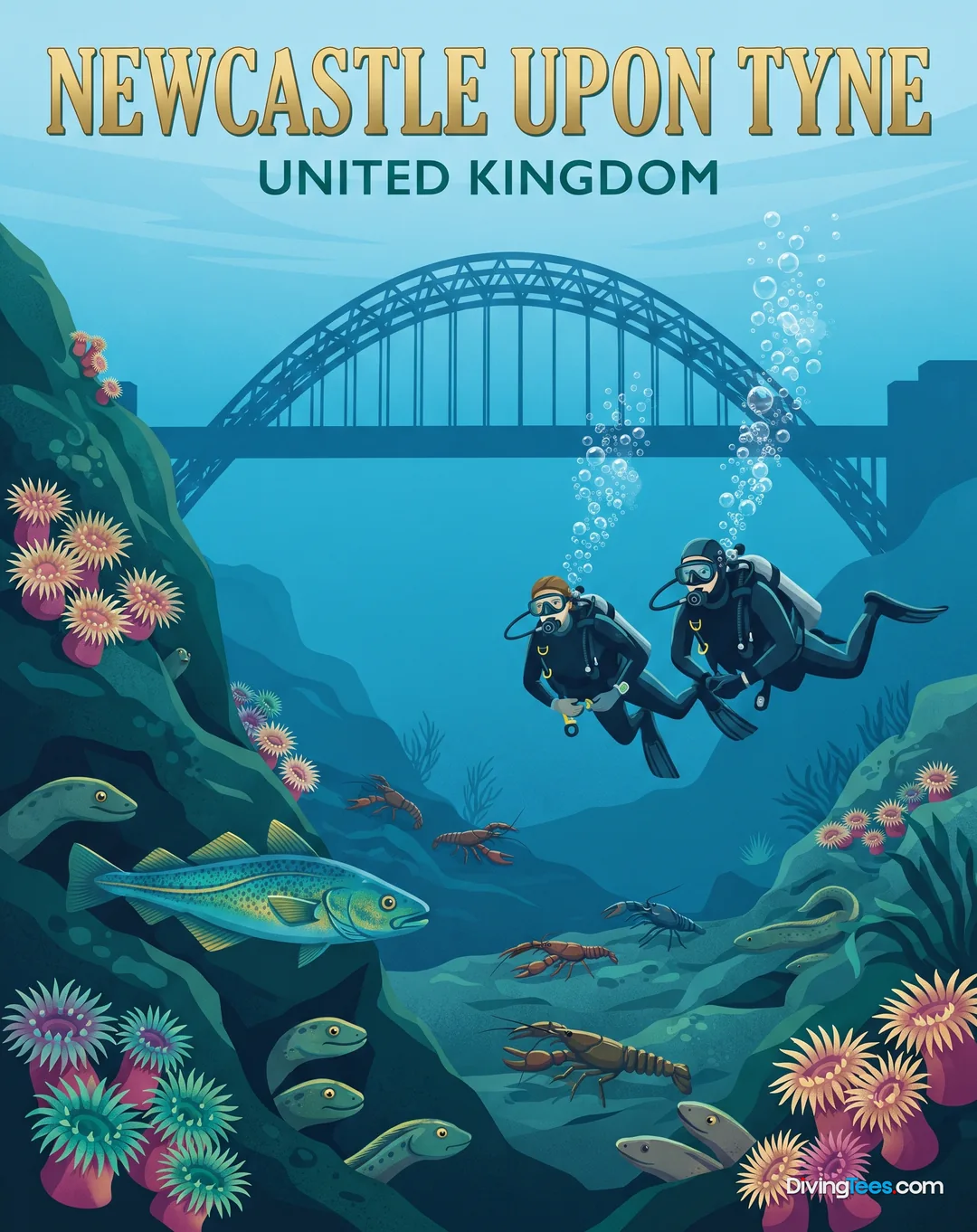
- April to September around Newcastle upon Tyne
- Grey seals around the Farne Islands
- Scapa Flow’s First World War wreck heritage
- Newcastle upon Tyne for a summer coastal window
- Urmston without a stated seasonal restriction
- Variable currents across the United Kingdom
For subtitles in English: start the video firstthen click the gearat the top right of the video, select “Subtitles/CC”, then “Auto-translate” and choose “English”.
This country for a diver
For a diver, the United Kingdom is defined less by tropical spectacle than by cold water, maritime history and conditions that can change the shape of a day. Scapa Flow stands apart for its First World War wrecks and experienced-diver profile, while Newcastle upon Tyne belongs to a mixed, all-levels pattern. Urmston has no stated seasonal restriction. Across the country, currents are variable, and the quality of a dive depends heavily on choosing the right window, carrying suitable exposure protection and listening to a skipper who knows local conditions.
How the country divides
The country breaks into two very different planning units. Newcastle upon Tyne has a defined diving window from April to September, making it the seasonal coastal choice. That six-month span is the part of the United Kingdom itinerary that needs to be built around the calendar rather than treated as an anytime option. Urmston is different: no season is stated for it, so it remains available throughout the year in planning terms. These are not interchangeable versions of the same trip. Newcastle upon Tyne calls for attention to when the coast is open; Urmston offers greater flexibility when dates are fixed elsewhere. Scapa Flow belongs to another level of ambition altogether, with wreck diving, higher prices, experienced-diver requirements and the possibility of a cruise. The Isle of Man sits in the mixed, all-levels category, but it should not be treated as a quick extension of Newcastle upon Tyne or Urmston.
Diving destinations

Dive centres




Hotels



When to go, and where by month
The clear seasonal window is Newcastle upon Tyne from April through September. In January, February and March, the calendar does not place Newcastle upon Tyne in season; the same is true in October, November and December. Urmston has no stated seasonal restriction, so it remains the flexible option across all twelve months. This is not a story of two coasts taking turns: no opposed seasons are identified. Instead, one named area has a defined April-to-September opening, while the other does not carry a fixed seasonal limit. That distinction matters when a costly annual trip has to fit around work, family or a narrow travel window. A Newcastle upon Tyne itinerary should include room to move within the April-to-September period, because the practical value of the trip depends on the usable weather window and not simply on the calendar month. Scapa Flow requires separate planning again, particularly where a cruise is involved.
Marine life, coast by coast
The strongest wildlife marker is not spread evenly across the country. The Farne Islands are associated with grey seals, and the United Kingdom is described as holding half of the world’s grey seal population. That makes the Farne Islands a specific wildlife-led addition to a northern itinerary rather than a general expectation attached to every named area. No fauna is identified as common across Newcastle upon Tyne and Urmston, so wildlife should not be used as the assumed link between them. In practical terms, a diver choosing the Farne Islands is choosing a different reason to travel from someone building a route around Scapa Flow’s wreck history or Newcastle upon Tyne’s seasonal window.
Getting between the areas
Newcastle upon Tyne and Urmston are 178 kilometres apart, so they do not form a compact, same-base combination. The distance is manageable as a deliberate transfer, but it is not the sort of gap to treat as a casual excursion between dive days. There are no identified combinations between the named areas, which points towards choosing one main base rather than forcing a multi-stop itinerary. Urmston’s year-round planning flexibility can help when dates are constrained, while Newcastle upon Tyne belongs inside its April-to-September window. Scapa Flow is a separate proposition again: its higher price, experienced-diver requirement and possible cruise format make it a trip structure in its own right. The Isle of Man is also listed as non-cruise and moderate in price, but it should not be folded into Newcastle upon Tyne or Urmston as though the journey involved no extra logistics.
Take off your mask
Above water, the United Kingdom’s strongest named threads are maritime history and wildlife. Scapa Flow is famous for dive sites rich in history, including wrecks from the First World War. Its identity is therefore tied to the remains of a major naval past, not simply to what lies beneath the surface. The Farne Islands offer a different encounter: grey seals and an archipelago described as a sanctuary for them. Newcastle upon Tyne and Urmston provide named urban anchors for planning, while the Isle of Man gives the wider journey an island dimension. The material available here does not attach a named dish, restaurant or local celebration to any of these places, so a food itinerary cannot be described responsibly. What can be said plainly is that the United Kingdom’s above-water appeal follows the same contrast as its diving: Scapa Flow brings history, the Farne Islands bring wildlife, and the named mainland areas shape the practical geography of the trip.
What holds true everywhere here
Across the United Kingdom, a weather buffer is sensible: choose outings with room to move when a window closes, especially where an island setting is involved. Cold and turbulent water also make exposure protection and buoyancy control practical concerns, not minor refinements; discomfort can quickly affect autonomy and contact with the reef. Currents are variable, so the briefing deserves attention before entering the water. Ask how the operator handles local currents and the wrecks being visited. In this country, the skipper’s knowledge carries more weight than polished marketing, particularly when conditions demand a change of plan.
Frequently asked questions about United Kingdom
When is the United Kingdom best for a diving trip?
For a seasonal coastal window, plan around Newcastle upon Tyne from April to September, with summer specifically highlighted there. Urmston has no stated seasonal restriction. Conditions vary across the United Kingdom because currents are variable, so your timing may depend on whether you are choosing Newcastle upon Tyne, Urmston, the Farne Islands, or Scapa Flow.
What diving conditions should you expect in the United Kingdom?
The United Kingdom has variable currents, so conditions are not presented as uniform across the country. Newcastle upon Tyne has a summer coastal window, while Urmston is listed without a stated seasonal restriction. Consider the specific area you want to visit, because a Newcastle upon Tyne trip differs from a Scapa Flow wreck itinerary.
What can you see while diving in the United Kingdom?
The Farne Islands are associated with grey seals and are identified as a specific wildlife-focused destination. Scapa Flow offers First World War wreck heritage, while Newcastle upon Tyne provides a seasonal coastal diving window. Wildlife should not be assumed across every area, since no common fauna is identified for Newcastle upon Tyne and Urmston.
How should you plan a diving stay in the United Kingdom?
Choose your itinerary around the experience you want. Visit the Farne Islands for grey seals, build a trip around Scapa Flow’s First World War wreck heritage, or use Newcastle upon Tyne for its summer coastal window. Urmston is another option without a stated seasonal restriction, while variable currents apply across the United Kingdom.