
The Craft House
★★★★
★ 9.7/10 (204 reviews)
85 km away as the crow flies
Cornwall · United Kingdom · Atlantic
Max. depth · 18 mThis 1931 coaster lies at the base of a kelp-covered slope, offering a clear look at a well-broken hull resting on a rocky seabed.
For subtitles in English: start the video firstthen click the gearat the top right of the video, select “Subtitles/CC”, then “Auto-translate” and choose “English”.
The Citrine sits at the foot of a kelp-covered rocky slope just off the coast of Port Erin, near the Calf of Man. This positioning makes it a distinct site compared to more exposed or deeper wrecks in the region, as it occupies a transition zone where the seabed begins to level out. You will find the wreckage resting on a rocky seabed, surrounded by low rocky reefs that provide a varied topography. This setting creates a blend of wreck-specific exploration and traditional reef diving in a single descent.
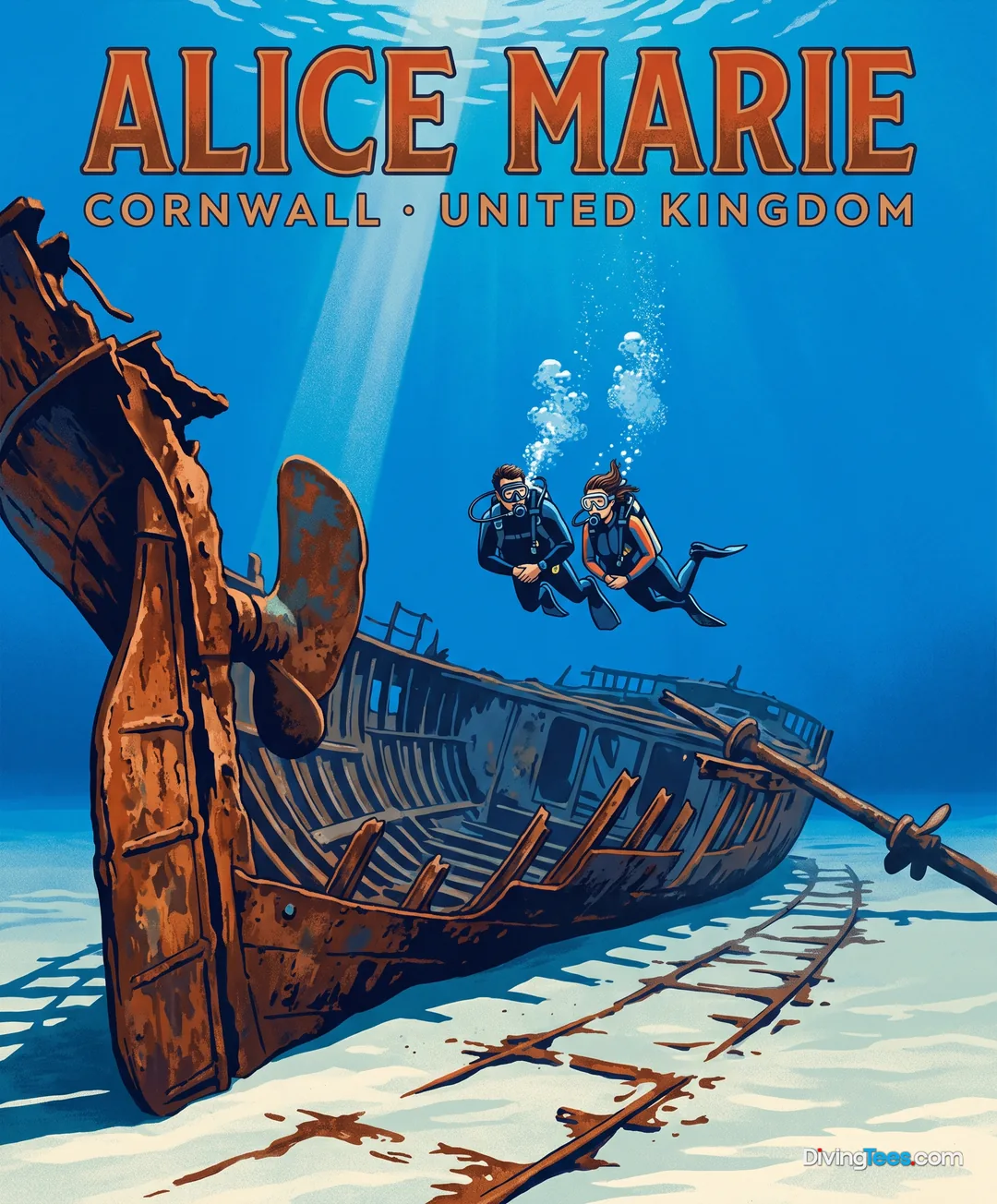
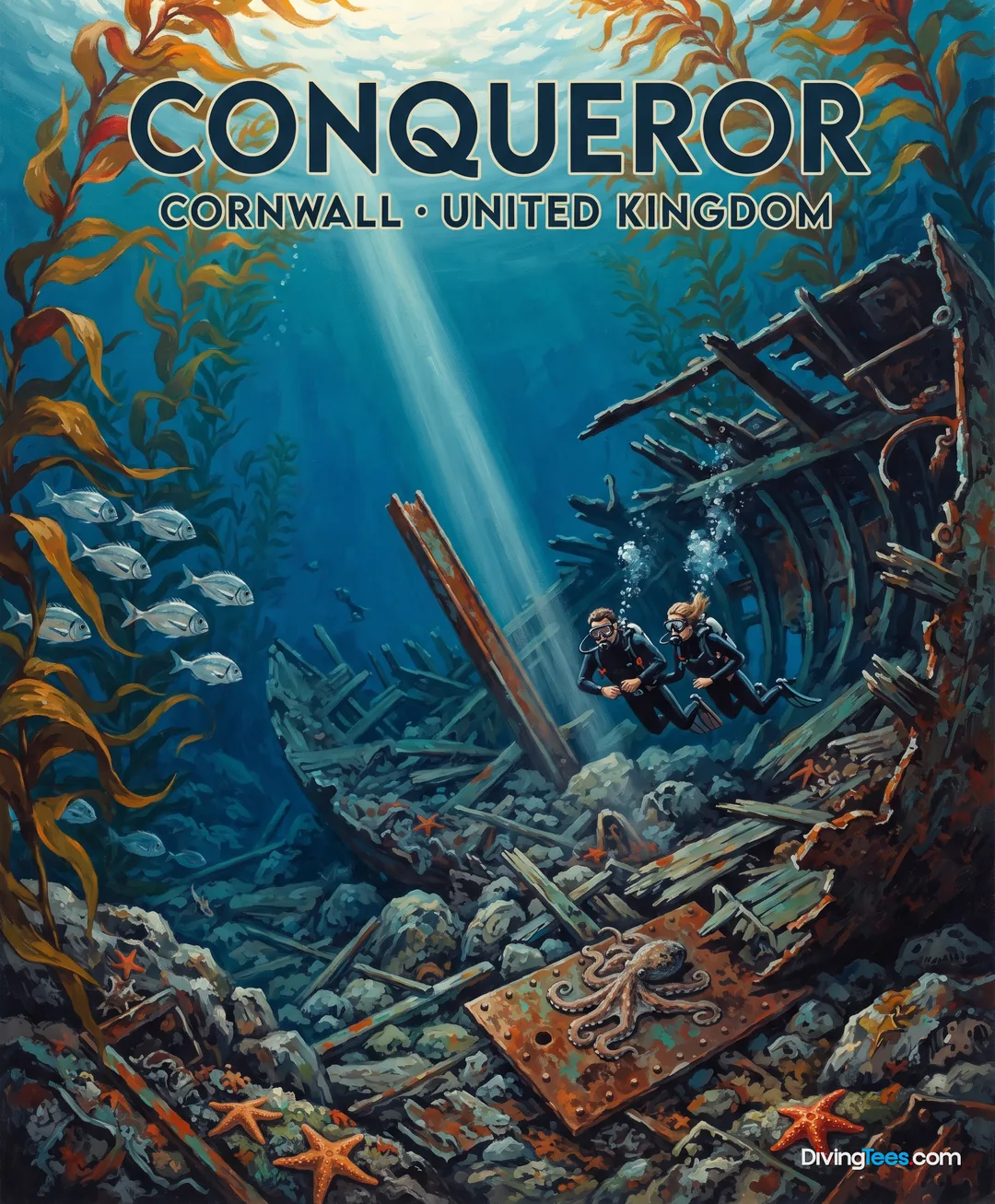
The wreck itself consists of a small coaster that ran aground during a thick fog in 1931. Although the vessel is significantly broken up, many of its original components remain clearly identifiable. You can see the stern and the engine and boiler area standing proud among a collection of scattered plates and winches. A propeller and other hull sections are distributed across the seabed, offering plenty of structure to investigate as you navigate the site.
Approaching the site is typically done by boat from Port Erin, involving a short trip to the wreck location. Depending on the conditions, you might descend via a shot line or choose to follow the kelp-covered rocky slope down from the shoreward side. Once you reach the base of the slope, you will find yourself directly above the wreckage. This method allows you to transition smoothly from the natural reef features to the man-made structures of the vessel.
The site is characterized by a mix of wreck and reef elements that draw in local marine life. You will frequently encounter various species of wrasse, including the ballan wrasse, patrolling around the structure. Pollock are also a common sight in these waters. The rocky crevices and the wreckage itself provide ideal habitats for these fish as they move through the surrounding reef systems.
The biodiversity of the area is further enhanced by the presence of jewel anemone and dead man's fingers clinging to the substrate. These organisms thrive in the varied light and current conditions found along the rocky slope and the wreck sections. The combination of the ship's structure and the natural reef topography provides numerous nooks and crannies for smaller marine life to inhabit, making the site visually interesting even at shallow depths.
Environmental conditions at the Citrine are heavily influenced by the tides and swell of the southern Irish Sea. While the wreck is generally considered a relatively sheltered and easy dive when conditions are moderate, it is susceptible to increased current and surge during spring tides. Heavy onshore winds can also impact the surge felt around the wreckage. It is important to monitor these factors to ensure a controlled and safe experience around the metal plates and rocky outcrops.
Visibility at the site typically ranges between 5 and 10 metres. This level of clarity is sufficient to clearly identify the major components of the wreck, such as the boiler and the propeller, even when the light is diffused. The combination of the wreck's structure and the local reef features provides a detailed environment for both novice and experienced divers. It remains one of the more accessible and scenic wreck options in the Isle of Man area.
The dive depth ranges from 10 to 18 metres. This site is accessible for Open Water divers who are comfortable in cold-water UK conditions and are experienced on wreck dives. Be aware that currents can increase during spring tides or in heavier weather due to the site's position near the shore and at the base of a slope. Visibility typically reaches 5-10 metres. The best time to dive is from late spring to early autumn when the weather and seas are most stable.