United Kingdom · Atlantic
Diving Isle of Man: Cold-water wrecks, kelp and tidal reefs
Kelp-covered boulders, grey seals, tidal gullies and wrecks shape demanding British cold-water diving around the Isle of Man throughout the diving season.
What makes this destination special
- Booroo’s kelp shallows, cliffs and boulder fields down to 40 metres
- Chickens Rock gullies and encrusted walls in strong tidal water
- Grey seals appearing around the Calf of Man
- Ballan wrasse, lobster, crab and nudibranchs among the rocks
- Summer chances of passing basking sharks
- Spring-to-autumn ray sightings along temperate coastal sites
- Boat diving governed by wind, swell and the tide
- A genuine island stay without liveaboard logistics
For subtitles in English: start the video firstthen click the gearat the top right of the video, select “Subtitles/CC”, then “Auto-translate” and choose “English”.
Overview
Booroo’s kelp-covered shallows, short cliffs and boulder fields show what the Isle of Man offers underwater: cold, changeable British diving with plenty of texture. The island suits divers who would rather work a rocky coastline, an exposed reef or a wreck than spend a week on a tropical reef. Grey seals may appear around the Calf of Man, while the island’s towns, ports and coastal paths give non-divers a worthwhile day ashore when the boats cannot run.
Diving here
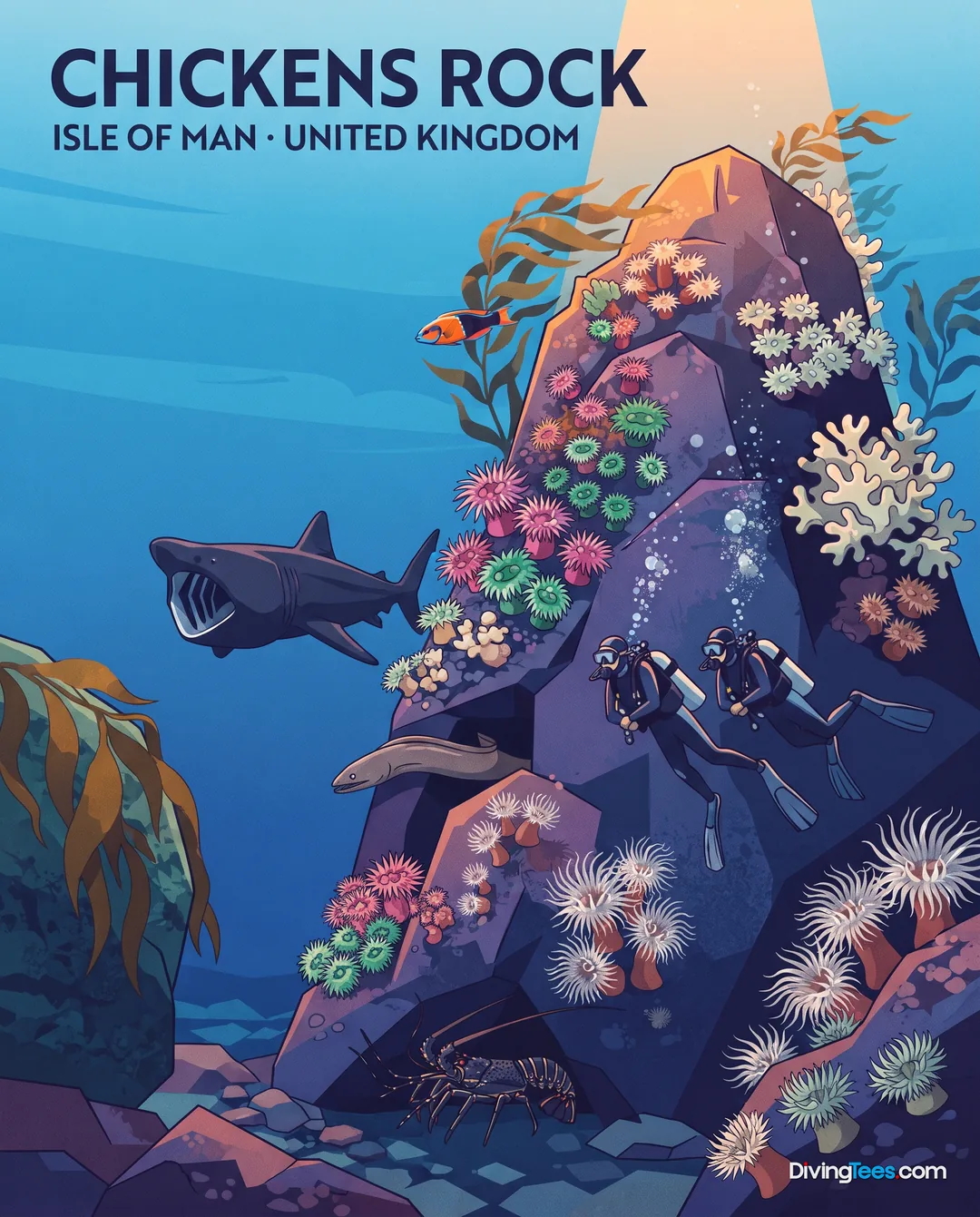
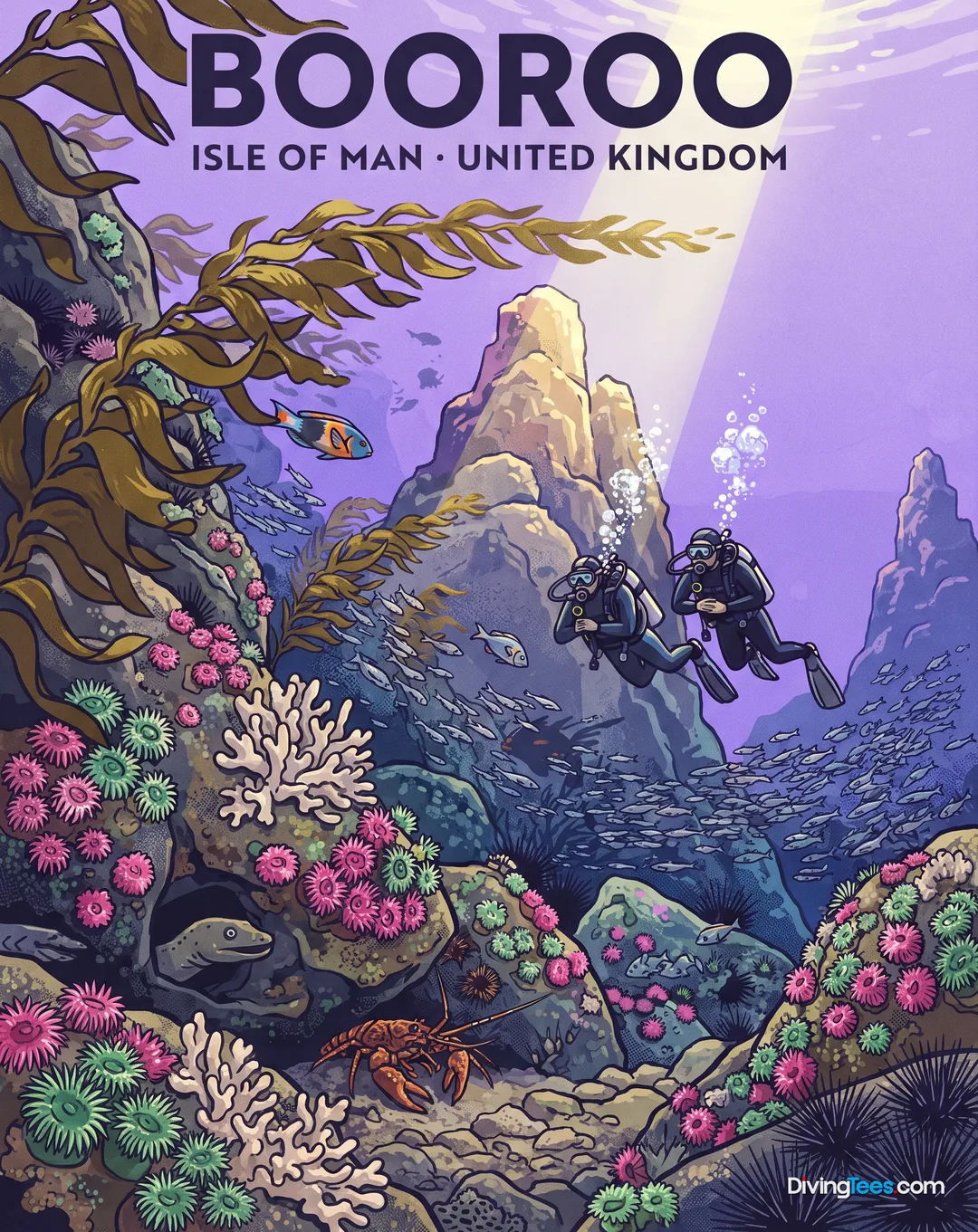
The diving is built around coastal rock, kelp, wrecks and tidal sites rather than coral scenery. Booroo runs from shallow kelp to deeper boulder fields at 40 metres, with short cliffs and encrusting life that reward careful observation rather than a fast circuit. At Chickens Rock, gullies and encrusted walls drop through the working range to 35 metres, while strong tidal currents make the tide table part of the dive plan. Conditions ease somewhat on neap tides but still require deliberate positioning and gas management. Visibility can be good, with Chickens Rock typically offering 10 to 25 metres, but wind, swell and water movement can change the character of a site quickly. Most diving is from local boats, so the day depends as much on a usable weather window as on the site itself.
Two dives not to miss
The underwater wildlife
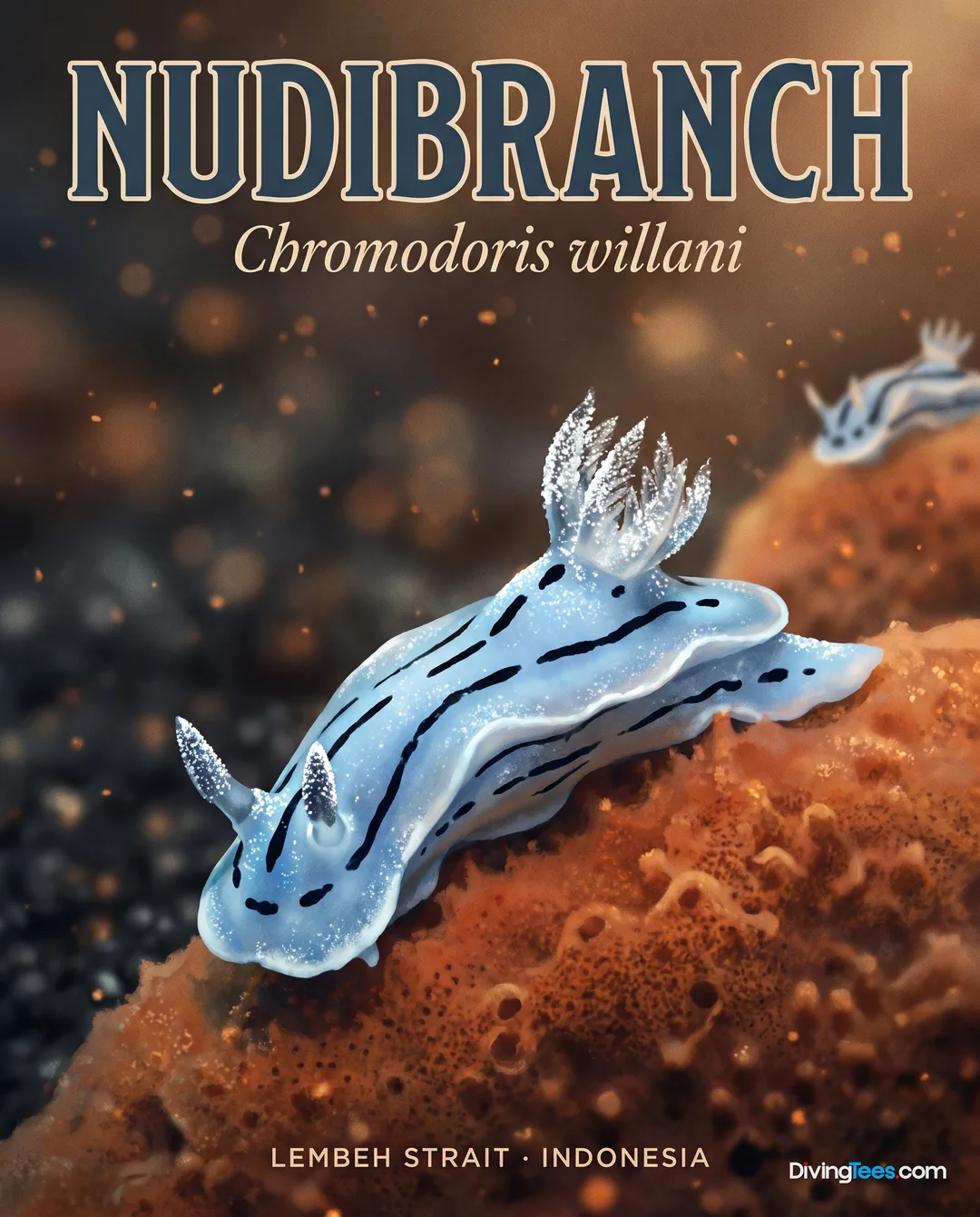
Rocky Manx waters support the familiar cast of temperate Atlantic diving: crab and lobster in cracks and under boulders, nudibranchs on encrusted surfaces, and ballan wrasse moving around the reef. Booroo’s boulder fields and kelp edge can bring shoals of pollack, while grey seals are a particular attraction around the Calf of Man and are most likely in spring and summer. Rays are regular visitors from spring into autumn. Basking sharks are an occasional summer sighting rather than a reason to expect every boat trip to become a wildlife encounter. The best approach is to slow down over the rock and let the small life reveal itself, while keeping a little attention on open water for larger visitors.
Possible underwater encounters
When to go
May to September is the practical window for a diving holiday, when boat departures are generally more regular and surface conditions are more comfortable. This is also the useful period for spring-and-summer grey seals and the occasional summer basking shark, with rays possible through much of the warmer part of the year. November to February is a poor choice for a tightly planned trip because wind, swell and sea state can remove boat days with little warning. The island can be dived outside summer in theory, but a longer stay and flexible plans matter more than finding a particular calendar date.
Level required
The Isle of Man can suit all levels, provided the outing matches the diver rather than the other way round. Sheltered coastal work is a sensible starting point, while Booroo and Chickens Rock call for advanced experience with depth, exposure and tidal currents. A Wreck qualification is useful for making proper use of the island’s maritime history; Advanced Open Water or the equivalent BSAC experience helps with deeper and more committing dives. Nitrox may also be useful where the planned profile and training allow it.
On the ground
From London Heathrow or Gatwick, and from Manchester, the island requires either a flight via the United Kingdom or Ireland or a ferry journey from the UK or Northern Ireland. There is no direct road connection from mainland Europe, so the ferry adds a fixed maritime leg and makes connection planning important. Flights are available with carriers including Loganair, easyJet, British Airways and Aer Lingus, but frequency varies by season. Ferry timetables and sea conditions deserve particular attention before committing to tightly linked onward travel. Once on the island, accommodation near a coastal town usually keeps the journey to the dive base manageable by foot, taxi or hire car.
Local tips
Build the trip around several consecutive diving days, not a single boat booking. That gives the skipper room to move a tidal outing or a more exposed reef when wind and swell close the original plan. Keep one day uncommitted at the end if the return journey is important; a cancelled boat is a normal possibility here, and ferry disruption can compound a tight itinerary. Bring a genuinely cold-water setup: a thick full suit with hood and gloves is not optional comfort on these dives, and poor thermal protection quickly affects gas use, buoyancy and concentration. Divers coming mainly for wrecks should arrive with the relevant qualification rather than discover that their preferred profiles are unavailable. Before booking a tidal trip, ask what local current and wreck experience is built into the planned outing. On the boat, treat the tide as a working part of the dive, especially at Chickens Rock and Booroo, rather than as background information.
Planning your stay
Four to seven days works well for a land-based stay, allowing several boat attempts and enough slack for a lost sea day. Coastal towns make practical bases, particularly for mixed groups: the diver can reach the boat while a non-diver has villages, ports, walks and coastal viewpoints nearby. Keep a land-based day before flying home, using it for Manx heritage or shore activities rather than adding pressure after the final dive.
Hello, I'm Marina, DivingDeal.com's AI assistant. I guide you through destinations, areas and countries.

Thinking about the whole trip and the flights? Talk it over with Edith →
Marina is an AI. Some links are affiliate links: DivingDeal may earn a commission, at no extra cost to you. Bookings are made with the partner.
Map of dive sites in Isle of Man
Things to do in Isle of Man beyond diving
Your last day stays dry: no diving in the 18-24 hours before a flight the perfect window to see the destination from another angle.
 Culture
Isle of Man Discovery Tour with experienced Driver Guide
⏱ 8 h · ★ 5.0 (29 reviews)
from €494
see on Viator ↗
 Culture
Full day tour of the Isle of Man with a qualified Isle of Man Tour Guide
⏱ 8 h · ★ 5.0 (21 reviews)
from €476
see on Viator ↗
 Desert
Isle of Man Wildlife & Scenic Adventure with Wildlife enthusiast
⏱ 8 h · ★ 5.0 (9 reviews)
from €494
see on Viator ↗
 Nature
Private Isle of Man E-Bike Tour
⏱ 1 h · ★ 5.0 (8 reviews)
from €36
see on Viator ↗
Ratings and reviews collected by Viator and Tripadvisor.