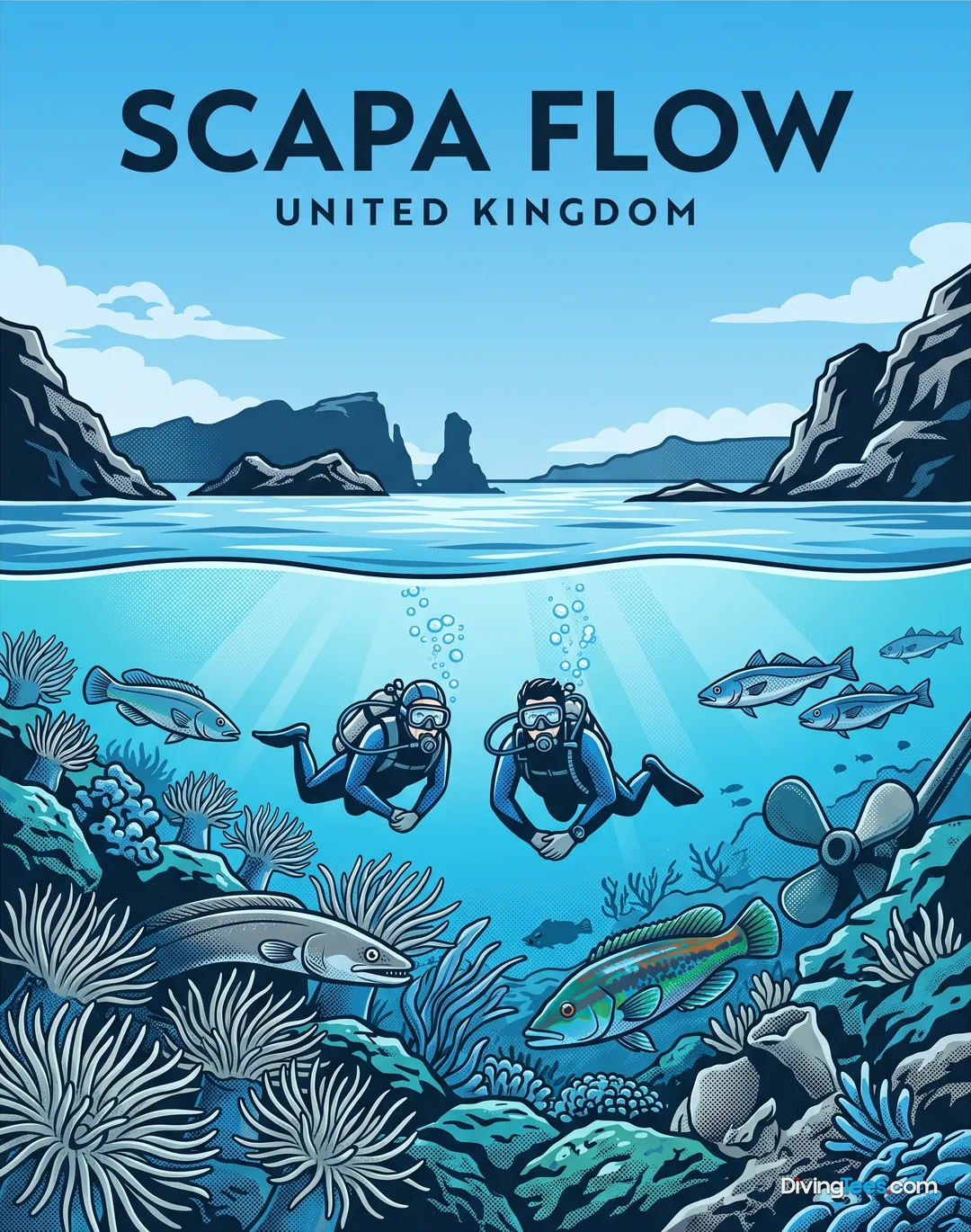
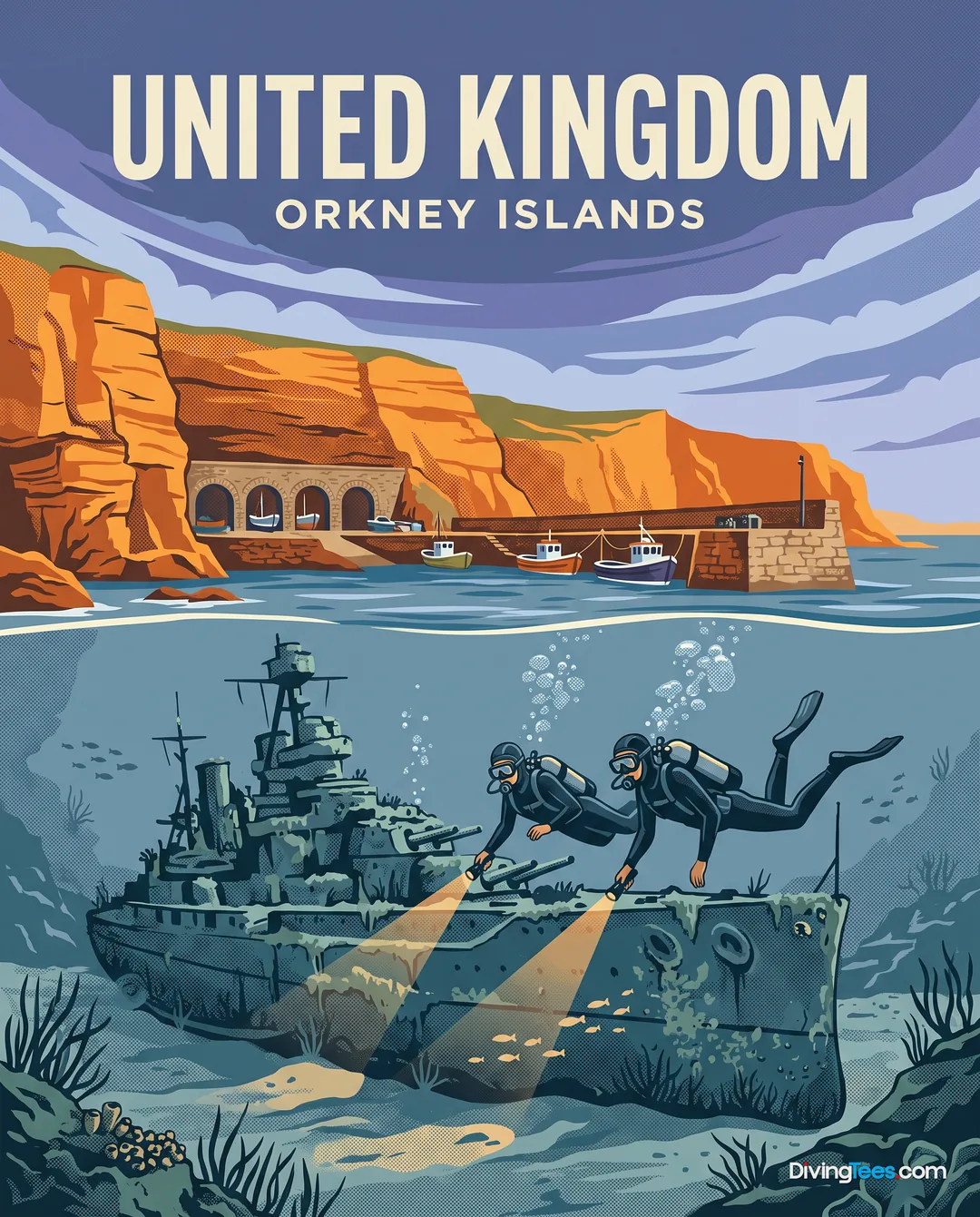
Scapa Flow · United Kingdom · Atlantic
Max. depth · 43 mJames Barrie Wreck: Trawler Dive in Scapa Flow
The James Barrie offers a dive into an intact trawler wreck, tilted on its starboard side, presenting a clear outline against the seabed at 43 metres.
What makes this site special
- Intact trawler wreck, tilted on its starboard side
- Port railing at 33 metres, seabed at 43 metres
- Clearly recognisable hull and superstructure
- Introduction to deeper Scapa Flow diving
- Presence of dead man's fingers and plumose anemones
- Shelter for saithe, pollock, cod, and wrasse
- Potential encounters with grey seals
- Slack-water dive with variable current outside the window
James Barrie about the site
The James Barrie lies off Hoxa Head, making it a distinctive wreck within Scapa Flow. You descend onto an intact trawler, resting on its starboard side, with the bow oriented towards the open sea. The wreck maintains a clear form, its hull and superstructure providing a very recognisable outline, rather than a broken debris field.
As you approach, the port railing of the James Barrie becomes visible at around 33 metres, marking the shallowest point of the wreck. From there, the structure slopes down to the seabed at approximately 43 metres, allowing for a substantial deep dive profile. This tilt creates varying perspectives as you explore, moving from the higher, more exposed sections to the deeper, more sheltered areas.
The wreck offers a good introduction to the deeper diving characteristic of Scapa Flow. Its relative intactness allows for a clear understanding of the vessel's original layout. Navigation is straightforward, following the contours of the hull from the bow towards the stern, and back.
Conditions around the James Barrie are defined by the tidal movements within Scapa Flow. This site is specifically a slack-water dive, meaning careful timing is required to avoid the strong currents that can develop outside of this window. Dive operators typically use a fixed buoy or shot line, facilitating a controlled descent directly onto the wreck during the brief slack period.
Life on the wreck includes a range of encrusting organisms and larger marine species. You will find dead man's fingers and plumose anemones covering parts of the superstructure, alongside various hydroids. These filter feeders thrive in the nutrient-rich waters.
Resident fish populations include saithe, pollock, cod, and wrasse, often seen moving through the wreck's interior or along its exterior. Crabs and lobsters shelter in crevices and under plates, particularly towards the deeper sections of the wreck. Keep an eye out for grey seals, which occasionally make curious passes.
The James Barrie is notable for being one of the shallower Scapa Flow wrecks that still reaches significant depth, making it accessible as a progression dive for those looking to expand their experience beyond the shallower sites. Its clean, recognisable form and often decent visibility provide a compelling and manageable deep wreck experience, setting it apart from more dispersed or broken structures in the area.
Diving conditions
This is an Advanced level dive, suitable for experienced sport divers with decompression diving experience. The minimum depth on the wreck is 33 metres, reaching the seabed at 43 metres. Visibility ranges between 10 and 20 metres. Diving the James Barrie requires precise timing around the tide; strong currents are present outside of the brief slack water window, making it essential to dive with an experienced operator and shot line.