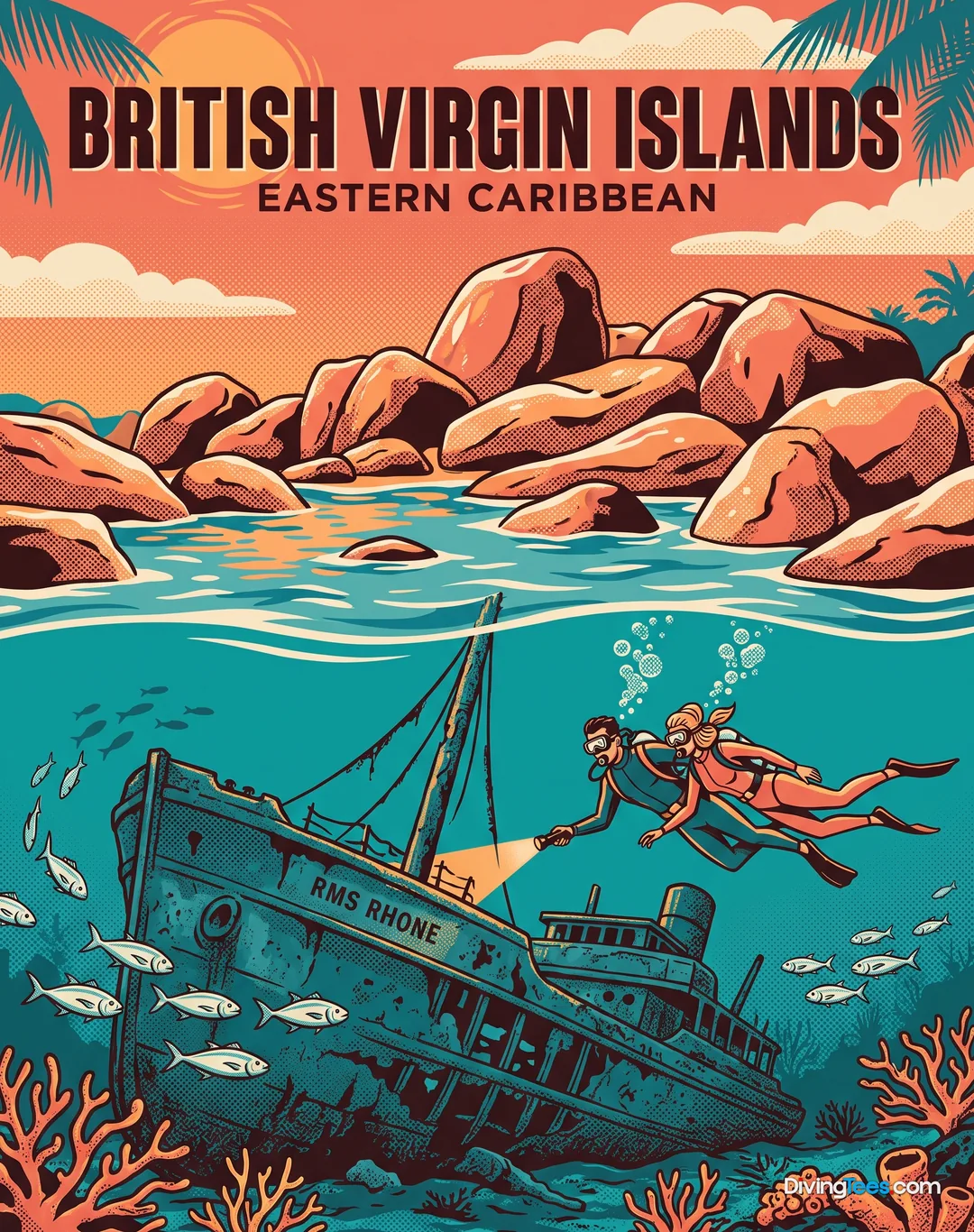
British Virgin Islands · Caribbean
Diving Cooper Island: Easy walls and sheltered BVI reefs
A compact island base for boat dives over coastal reefs, with Markoe Point’s V-shaped gorge opening onto a 24-metre vertical wall.
What makes this destination special
- Markoe Point’s V-shaped gorge dropping into a vertical wall
- Markoe Point wall profiles between 12 and 24 metres
- Boat diving from a compact Cooper Island base
- Sheltered coastal reefs suited to straightforward underwater exploration
- Rocky relief around Peter Island’s southeastern corner
- Variable currents requiring a same-day conditions check
For subtitles in English: start the video firstthen click the gearat the top right of the video, select “Subtitles/CC”, then “Auto-translate” and choose “English”.
Overview
Cooper Island is a small, self-contained base for exploring nearby BVI dive sites by boat. The setting suits divers who prefer a quiet island stay, short local routines and underwater terrain rather than a liveaboard schedule. Markoe Point provides the clearest sense of the area’s character: a V-shaped gorge leads into a vertical wall, taking the dive from 12 metres down to about 24 metres. Above water, the emphasis is on calm, compact island living.
Diving here
Diving around Cooper Island is mainly boat-based, with coastal reefs, rocky formations and relatively shallow walls forming the underwater setting. Markoe Point is the standout described site: the dive begins around 12 metres, follows a distinctive V-shaped gorge, then opens onto a vertical wall descending to approximately 24 metres. That profile gives the site a more serious edge than a simple shallow reef, but it remains manageable for divers comfortable with wall diving. Currents are variable across the wider area and can be strong at some sites, so the day’s briefing matters more than a fixed assumption about conditions. The diving is better understood as local boat exploration, with straightforward navigation between island bases and nearby sites, rather than as a destination built around wrecks, caves or long drift dives.
One dive not to miss
The underwater wildlife
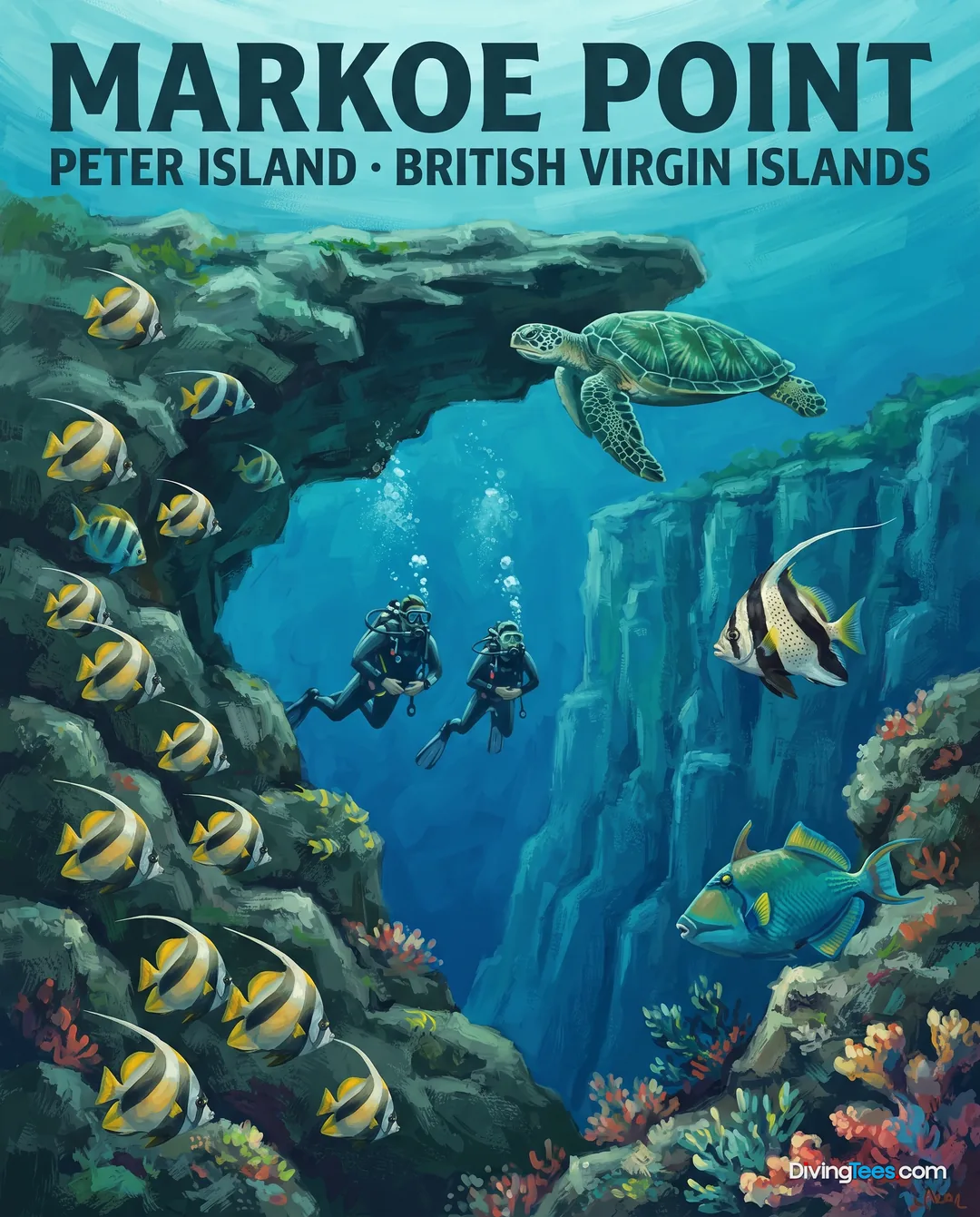
The most dependable underwater feature around Cooper Island is the shape of the terrain itself. At Markoe Point, divers can work along the mouth of a V-shaped gorge before moving onto the exposed face of a vertical wall. The change from enclosed rock relief to open wall gives the dive its visual rhythm: look into the gorge, follow the wall, then manage depth as the bottom reaches roughly 24 metres. The site is suited to divers who enjoy making the underwater landscape the focus of the dive, rather than planning a trip around a particular animal or seasonal encounter. There is no need to build the stay around a wildlife calendar; the practical appeal lies in the rock, depth and changing local conditions.
When to go
Cooper Island does not offer a firm month-by-month diving window that should dictate the whole trip. The sensible approach is to choose a travel period that leaves room for local sea conditions and to keep the itinerary flexible once on the island. This matters because boat access shapes the diving day, while variable currents can affect which nearby site is comfortable at the time. A four-to-seven-day stay gives useful room to absorb a weather-related change without turning every dive into a logistical gamble. The island is therefore better suited to a calm, adaptable holiday than to a tightly packed seasonal expedition.
Level required
The area is suitable for all levels when the chosen site matches the diver’s experience, although Markoe Point is more naturally aimed at an intermediate diver comfortable with wall profiles between 12 and 24 metres. PADI, SSI and BSAC qualifications should fit the general recreational setting, with experience and confidence more important than a particular agency card. Newer divers can use the shallower coastal reefs, while those with more wall-diving practice can make better sense of Markoe Point’s gorge and drop-off. Current strength should be assessed locally rather than assumed from the site name.
On the ground
From London Heathrow, London Gatwick or Manchester, the journey first requires international travel to Tortola, followed by a maritime connection to Cooper Island. There is no road access to the island and no flight directly to it, so the final boat leg is the structural point to plan carefully. Allow a sensible margin between the international arrival, any island transfer and the local boat departure; arriving on the same day as the first planned dive leaves little room for a missed connection. Once on Cooper Island, the compact layout means that moving between the island base and the diving departure point should involve walking or a very short boat transfer, depending on where the day begins.
Local tips
Treat Cooper Island as a boat-based island stay, not as a shore-diving base. The day’s diving depends on boat rotations, local conditions and the available maritime connection, so plan the first dives with some slack rather than trying to use every hour after arrival. Keep a buffer before the return flight: a delayed inter-island transfer is more disruptive here than a late taxi on a main island. Do not assume that staying on a small island means having a dense choice of land-based alternatives; the attraction is the compact rhythm of sleeping, eating and heading out by boat. If travelling with a non-diver, the same compactness is useful because daily life does not require repeated transfers, provided a quiet programme suits them. On site, ask specifically about the current before committing to a deeper wall profile, particularly at Markoe Point, where the gorge leads into a drop to about 24 metres.
Planning your stay
A four-to-seven-day stay gives enough time to settle into the boat routine, explore the nearby coastal sites and retain a weather or transfer buffer. The natural pattern is a small number of planned diving days, unhurried island time and a low-effort final day before the journey home. Markoe Point can add a deeper wall profile to the programme, while shallower reefs keep the overall schedule accessible. The destination suits a mixed diving and island break more than a tightly programmed liveaboard holiday.
Hello, I'm Marina, DivingDeal.com's AI assistant. I guide you through destinations, areas and countries.
Thinking about the whole trip and the flights? Talk it over with Edith →
Marina is an AI. Some links are affiliate links: DivingDeal may earn a commission, at no extra cost to you. Bookings are made with the partner.
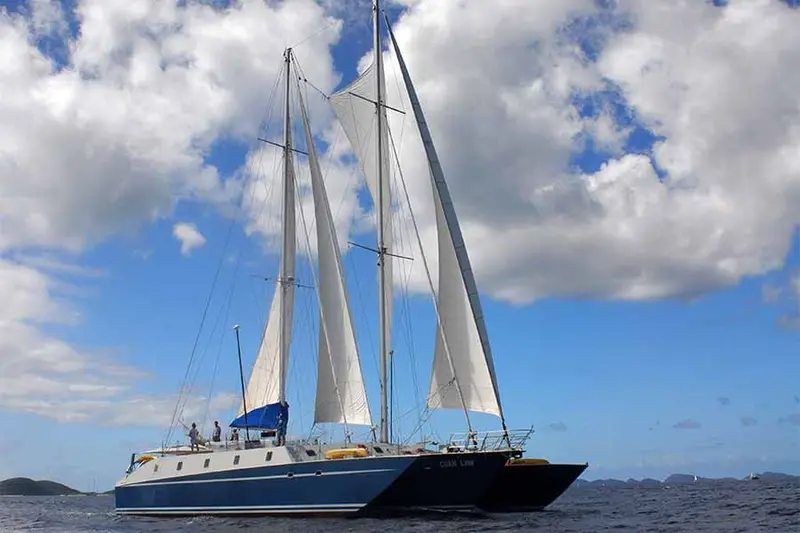
Dive liveaboards Cooper Island
One liveaboard runs trips to Cooper Island.
Frequently asked questions about Cooper Island
When should you go to Cooper Island for diving?
Cooper Island has no firm month-by-month diving window that should dictate your trip. Choose a period that allows flexibility for local sea conditions, boat access and variable currents. Keeping the itinerary adaptable helps you change nearby sites when conditions shift, rather than relying on a fixed seasonal plan.
What diving experience do you need for Cooper Island?
Cooper Island suits divers of different levels when the site matches your experience. Newer divers can choose sheltered coastal reefs, while Markoe Point is better for intermediate divers comfortable with wall profiles between 12 and 24 metres. Local briefings matter, especially when currents may be strong.
What can you see while diving around Cooper Island?
Cooper Island offers coastal reefs, rocky formations and shallow walls, with underwater terrain as the main attraction. At Markoe Point, a V-shaped gorge leads to a vertical wall descending from about 12 to 24 metres. The dive moves from enclosed rock relief to an open wall, rather than focusing on wildlife encounters.
How should you plan a diving stay on Cooper Island?
Plan Cooper Island as a boat-based island stay, allowing flexibility for boat rotations, sea conditions and transfers. Travel to Tortola first, then continue by boat, leaving a margin before your first dive. A four-to-seven-day stay allows time for nearby sites, weather or transfer changes, and a relaxed final day.