Dive centre · Saba
4.7134 Google reviewsSea Saba
Explore the volcanic pinnacles of the Saba Marine Park from a spacious 38-foot catamaran with Nitrox 32% included for certified divers.
What sets this centre apart
- Established dive centre operating since 1985
- Small group sizes with maximum eight divers per guide
- Nitrox 32% provided for all certified divers
- Full technical diving support including doubles and sidemount
- DAN-certified hyperbaric chamber located on the island
- Free taxi shuttle service to and from local accommodation
- 38-foot catamaran with shaded decks and camera tables
- Wide range of SDI and TDI certification courses
For subtitles in English: start the video firstthen click the gearat the top right of the video, select “Subtitles/CC”, then “Auto-translate” and choose “English”.
Sea Saba about the centre
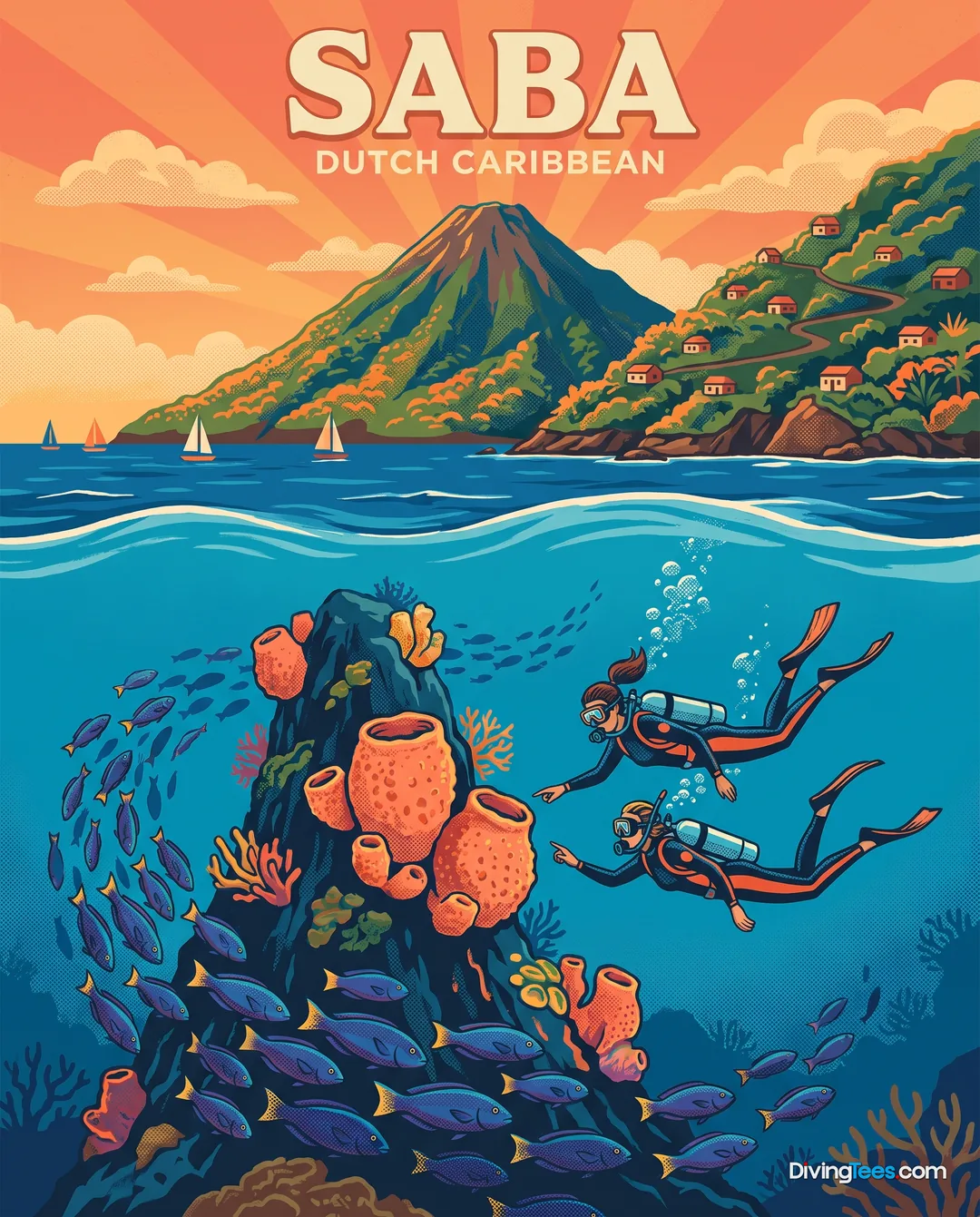
Sea Saba is located at Fort Bay Harbor on the volcanic island of Saba. As the only dive centre in continuous operation on the island since 1985, they provide the primary gateway to the Saba Marine Park, a protected area featuring over 30 distinct dive sites.
The island's topography is defined by its steep volcanic slopes, which drop rapidly into the Caribbean Sea. This creates a unique underwater landscape of massive pinnacles, sheer walls, and deep canyons that attract a wide variety of pelagic life and vibrant coral communities.
The club and its team
The centre is managed by owners Chad and Katy, who took over the family tradition in 2021. The team is composed of experienced local professionals, some of whom have been working on the island for decades, ensuring a deep understanding of the local currents and site-specific conditions.
Instruction is provided in English, Dutch, German, Spanish, French, Haitian, and Surinamese. To maintain a personalised service, the centre operates with a strict ratio of a maximum of eight divers per guide.
Sea Saba is committed to the conservation and management of the Saba Marine Park. They also provide essential safety infrastructure, including a DAN-certified hyperbaric chamber located on the island at Fort Bay.
The centre at a glance
- Affiliation
- SDI · TDI
- Operating since
- 1985
- Languages spoken
- English · Dutch · German · Spanish · French · Haitian Creole · Serbian
- Website available in
- English
- Management
- English
- Dive schedule
- 10:30 (Classic 2-Tank), 9:00 (Advanced 2-Tank), 13:00 (Afternoon 1-Tank)
- Boats
- 38-foot catamaran
- Divers per guide
- 8
- Equipment rental
- complete
- Nitrox
- Yes
- Rebreather
- Yes
- Night diving
- Yes
- Oxygen on board
- Yes
- On board
- filtered water, Gatorade, camera tables, freshwater rinse tanks, freshwater hoses, marine toilets, shaded decks, sunbathing areas at the front, upper observation deck
- Access and transfers
- Most visitors arrive via St. Maarten (SXM) and connect to Saba by Winair (12-minute flight) or Makana Ferry (90-minute crossing). Helicopter transfers (West Indies Helicopters) and flights with SXM Airways are also available. The centre is located at Fort Bay Harbor and offers a free taxi shuttle service to and from accommodation on Saba.
- Accommodation
- The centre does not offer accommodation directly, but recommends hotels, cottages and villas on the island (Juliana's Hotel, Saba Arawak Hotel, El Momo Cottages, Cottage Club, Scenery Hotel).
- Phone
- +599 416 2246
Courses on offer
Sea Saba offers a comprehensive range of SDI training, starting from Try Scuba and SDI Open Water Diver through to advanced levels such as SDI Advanced Adventure Diver, SDI Rescue Diver, and Divemaster.
For divers looking to extend their bottom time or move into technical territory, the centre provides SDI Computer Nitrox Diver and Advanced Nitrox courses. They also offer TDI technical courses, including Intro to Tech, Decompression Procedures, and an Advanced Nitrox & Deco Combo.
The boats
The centre operates a 38-foot catamaran designed specifically for diver comfort. The vessel features shaded decks to protect you from the sun and an upper observation deck for spotting marine life from the surface.
On board, you will find dedicated camera tables for underwater photographers, freshwater rinse buckets, and freshwater hoses for cleaning kit. The boat is also equipped with toilets and provides filtered water and Gatorade for divers during the trip. The catamaran is used for various dive profiles, including classic two-tank morning dives, advanced two-tank sessions, and afternoon single-tank dives, as well as night diving.
Equipment and gases
The shore-based facilities at Fort Bay Harbor include full equipment hire for those not travelling with their own kit. The centre is also fully equipped to support technical divers, offering support for doubles, sidemount configurations, and decompression cylinders.
Gases available on site include Nitrox 32%, which is provided for certified divers, and pure oxygen for decompression needs. For those pursuing technical training, the centre provides the necessary gas blending and cylinder support required for advanced profiles.
Dive sites with Sea Saba
The Pinnacles are iconic volcanic seamounts that rise from the depths, creating a high-energy environment. These sites are suited for advanced divers and are known for massive barrel sponges, black corals, and frequent pelagic encounters.
Tent Reef offers a diverse range of habitats, from shallow volcanic ledges to spectacular walls and deep sandy channels. It is accessible to all levels and is a prime location for both day dives and night dives.
Wells Bay features vibrant coral reefs and spectacular volcanic landscapes. The site offers long bottom times and exceptional visibility, making it a favourite for seeing green turtles and reef sharks.
And some of the dive sites the centre runs.
Marine life around The Bottom
The volcanic walls and pinnacles are home to a rich array of fixed life, including giant barrel sponges, black corals, and extensive colonies of hard corals and staghorn corals. You will often find large reef fish such as Grouper (Epinephelus), Jack (Carangidae), and various species of snapper and creole wrasse patrolling the ledges.
In the deeper waters and around the pinnacles, the area is known for pelagic encounters. Divers may see Caribbean reef sharks, reef sharks (Carcharhinus), nurse sharks (Ginglymostoma cirratum), and various species of rays (Batoidea). During the months of January to April, Humpback whales can also be spotted in the area.
Macro life enthusiasts will find plenty to explore among the rocks and coral gardens, including Octopus (Octopus vulgaris), various nudibranchs (Chromodoris willani), and sea turtles (Cheloniidae). You can also look for lobsters (Homaridae), crabs, and smaller creatures like seahorses (Hippocampus kuda) and flying gurnard (Dactylopterus volitans) in the more sheltered areas.
Diving conditions
The diving environment is shaped by the island's volcanic nature. While the sea is generally calm from July to November, the 'Christmas winds' from December to April can lead to more wind and occasionally rougher sea conditions.
Visibility is typically high, ranging between 24 and 30 metres. The sites vary from shallow reefs to deep-water pinnacles, with many of the most famous sites being subject to nutrient-rich currents that support the local marine life.
Hello, I'm Marina, DivingDeal.com's AI assistant. I answer in detail about hotels, dive centres and liveaboards.
Thinking about the whole trip and the flights? Talk it over with Edith →
Marina is an AI. Some links are affiliate links: DivingDeal may earn a commission, at no extra cost to you. Bookings are made with the partner.
Map of hotels, dive sites and dive centres in The Bottom
Things to do in The Bottom beyond diving
Your last day stays dry: no diving in the 18-24 hours before a flight, the perfect window to see the destination from another angle.
 Adventure
Volcano Hike in St. Kitts
⏱ 6 h · ★ 4.9 (42 reviews)
from £76$102€91
see on Viator ↗
 Culture
St. Maarten Sky Explorer Adventure: 360° Sentry Hill Experience
⏱ 3 h · ★ 4.2 (6 reviews)
from £75$100€89
see on Viator ↗
Ratings and reviews collected by Viator and Tripadvisor.