
Sea Saba
Google 4.7/5 (134 reviews)
Caribbean
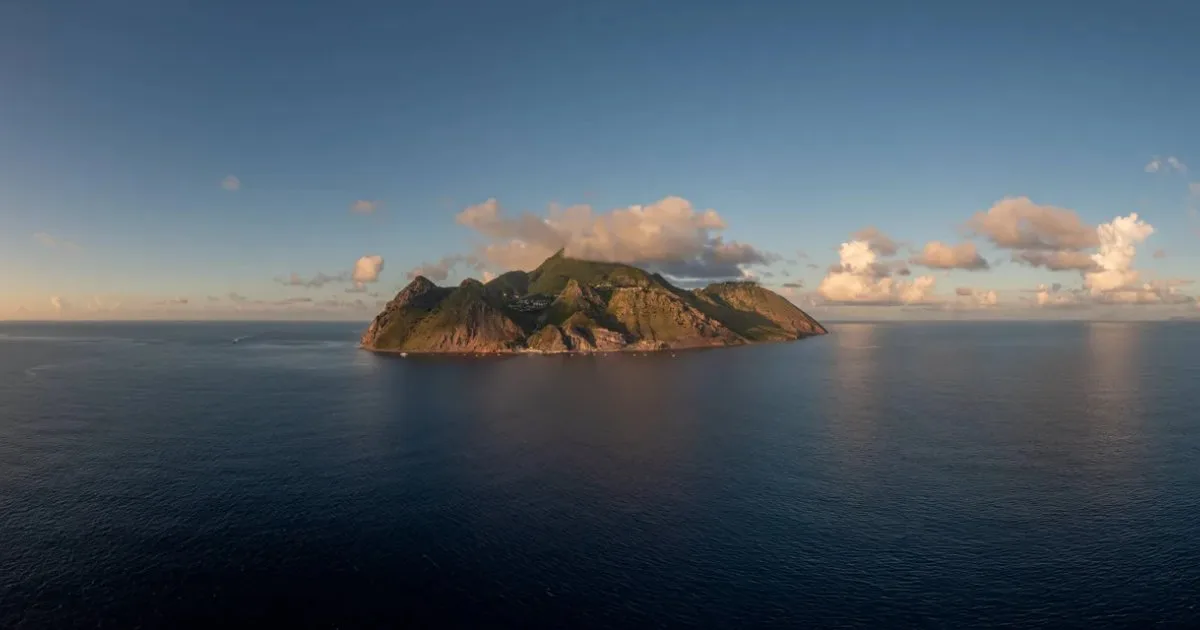
Saba brings together Mount Scenery, Fort Bay and The Pinnacles on a tiny volcanic island where diving, steep trails and quiet villages shape the stay.
For subtitles in English: start the video firstthen click the gearat the top right of the video, select “Subtitles/CC”, then “Auto-translate” and choose “English”.
Saba is for divers who prefer a volcanic island shaped by Mount Scenery rather than a beach resort. The diving centres on departures from Fort Bay, while life ashore is concentrated in villages such as Windwardside and The Bottom. That compact geography gives the country a distinct rhythm: boats leave from a working port, taxis climb the island’s only road, and steep trails begin close to accommodation. The named sites, including The Pinnacles, Third Encounter and Tent Reef, belong to the same Saba setting rather than to separate coastal resorts.
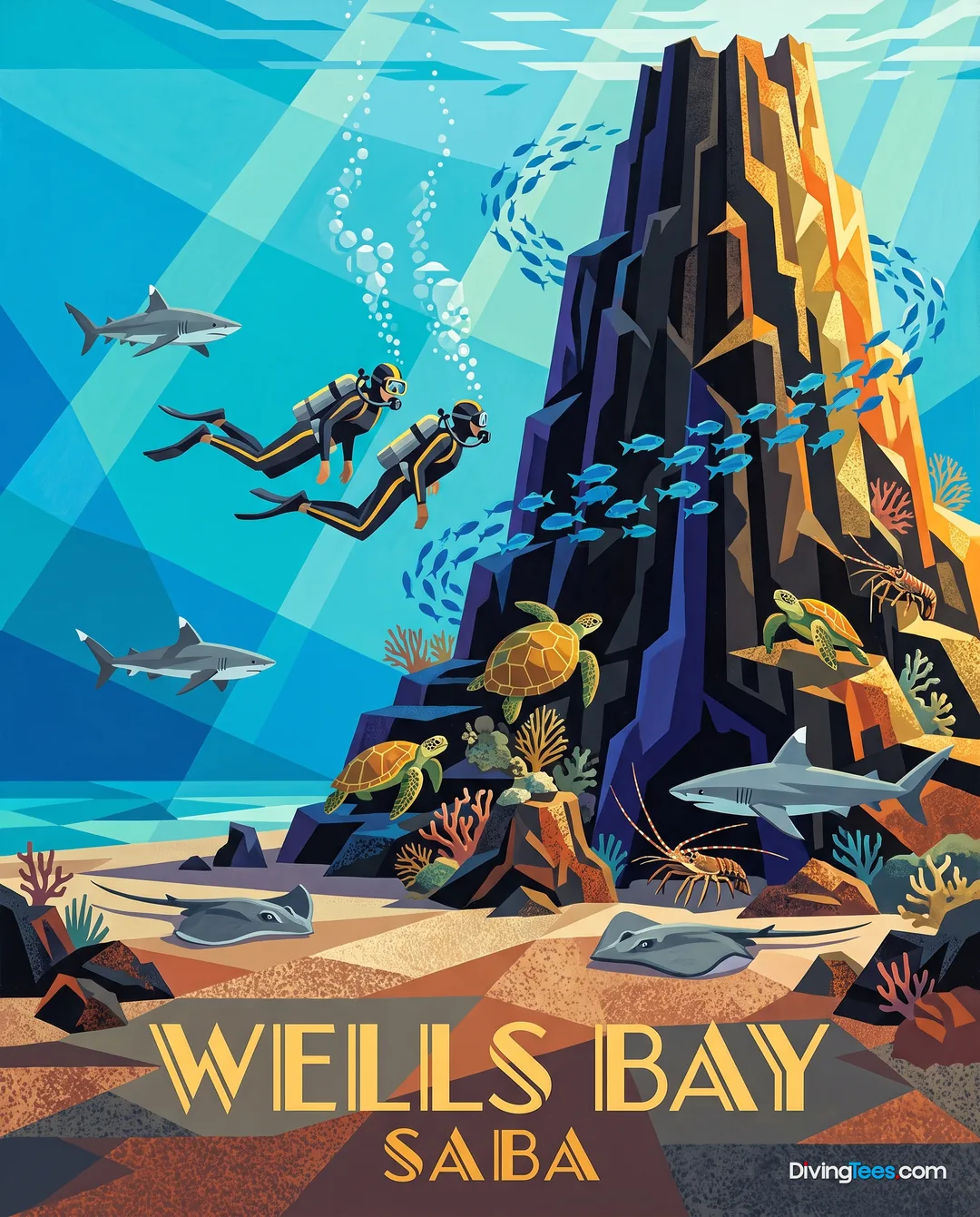
Saba is predominantly boat diving over volcanic relief. The range runs from the 4-metre ledge at Tent Reef to walls and pinnacles reaching 38 metres, so the same site can offer a straightforward shallow dive or a more demanding deep profile. The Pinnacles and Third Encounter are exposed seamount dives, where currents may be strong, unpredictable and quick to change; drift-diving experience and careful buoyancy control matter there. More sheltered options such as Wells Bay have generally lighter currents, while Ladder Bay combines lava ridges, volcanic sand and coral-covered rocks. Visibility varies by site and conditions, commonly falling between 15 and 30 metres, with the Pinnacles often offering the clearer end of that range. This is not a shore-diving itinerary: local boats make the underwater peaks and outer formations the focus of each day.
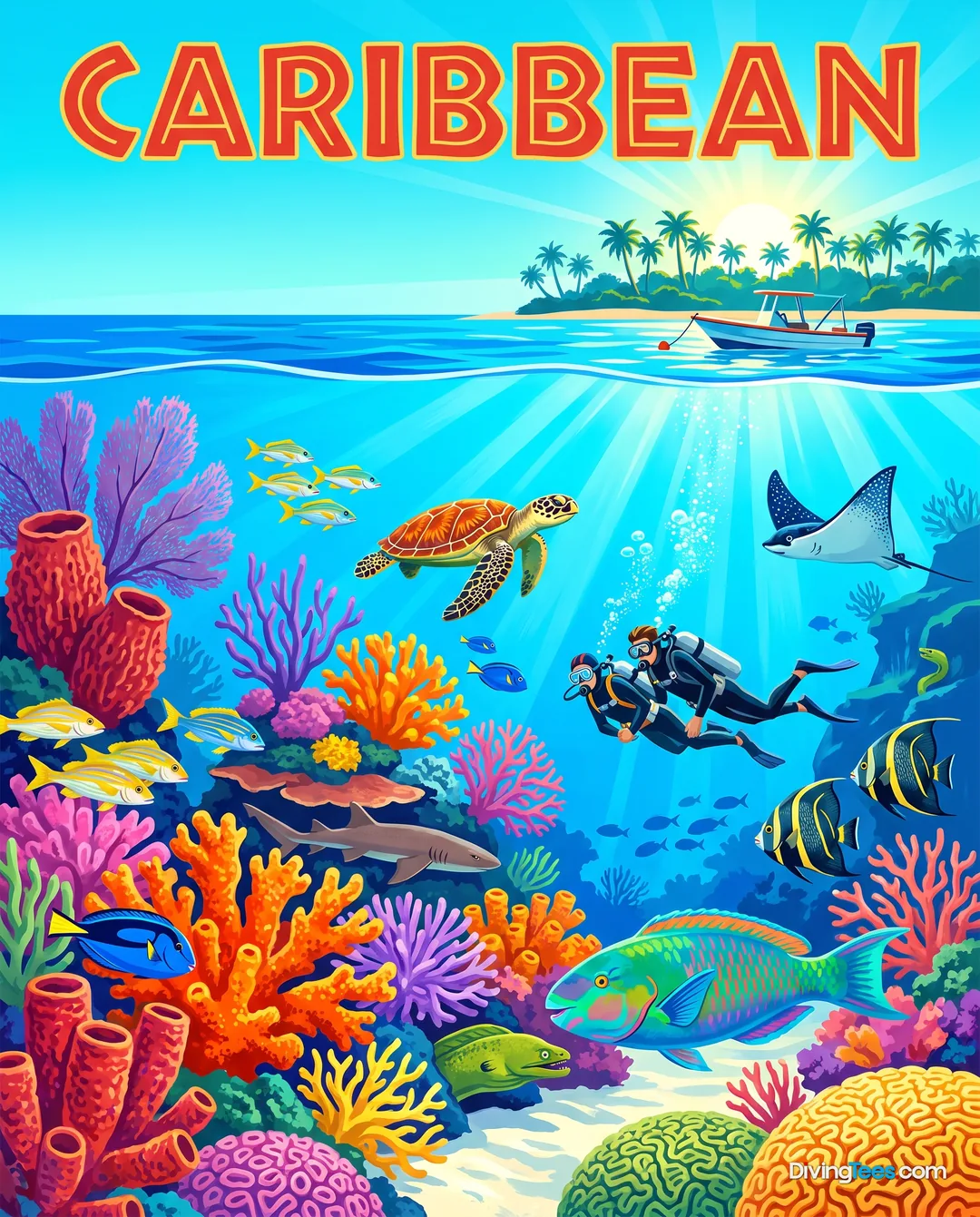
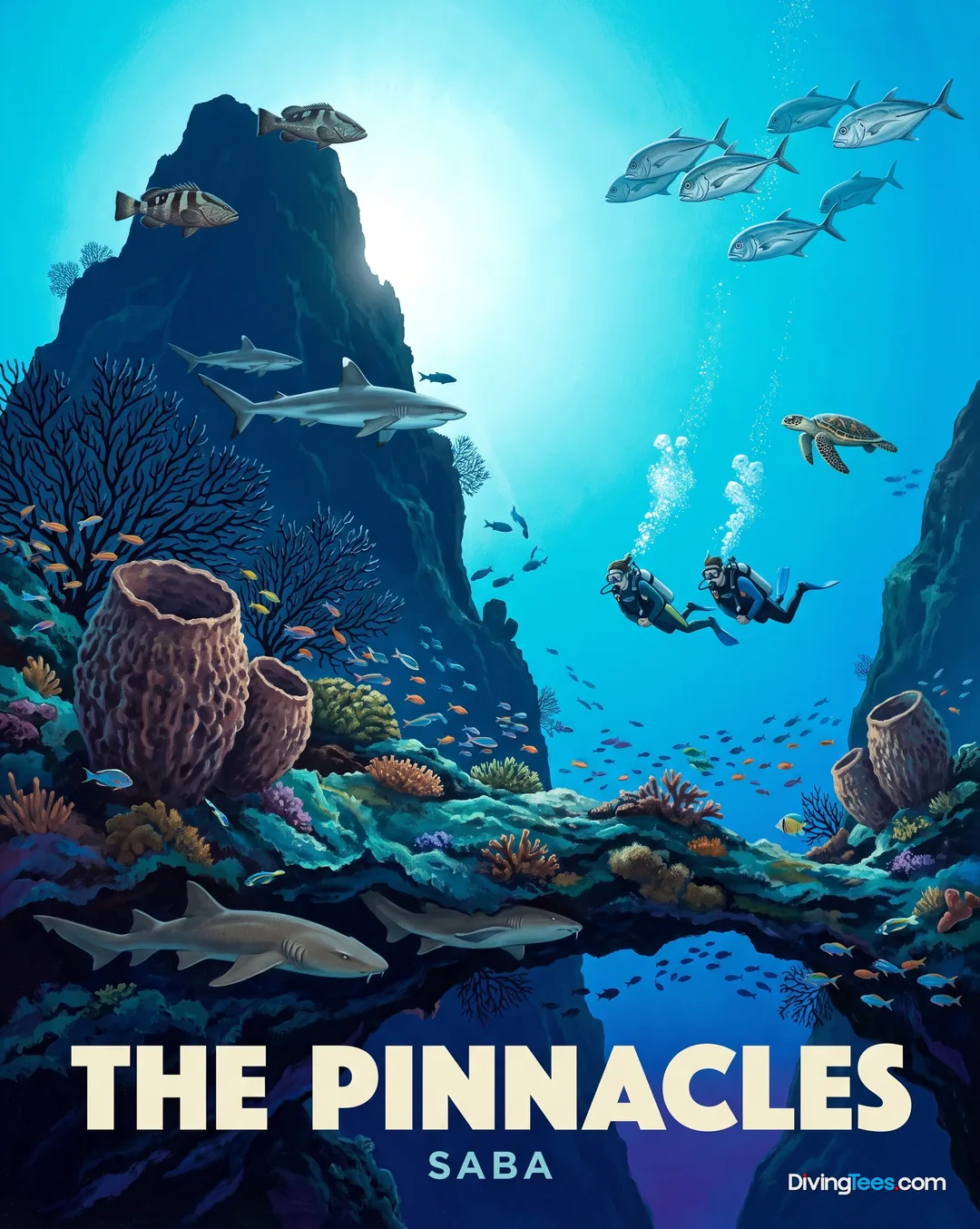
The larger encounters are part of Saba’s appeal. The Pinnacles can draw reef sharks, Caribbean reef sharks, schooling fish and great barracuda around giant barrel sponges and black coral gardens. Elsewhere, divers may find sea turtles and green sea turtles, nurse sharks, yellowtail snappers, creole wrasse, lobsters and spiny lobsters among the reef growth. Garden eels and yellowhead jawfish bring the eye down to the sand, while the volcanic formations provide plenty of structure for close observation and photography. Plankton blooms can reduce visibility, but they may also attract larger marine life to the exposed seamounts. These encounters are linked more to conditions on the day than to a dependable seasonal timetable, so a flexible boat plan is useful.
Saba can be approached as a year-round diving destination, but the sensible approach is to leave room for changes in wind and sea state rather than build the trip around a single promised window. Exposed sites such as The Pinnacles and Third Encounter are particularly dependent on workable conditions and may not suit every day. A flexible schedule allows local boats to use the most practical site for the weather, while sheltered areas such as Wells Bay or parts of Tent Reef can keep the diving varied when the outer seamounts are less comfortable.
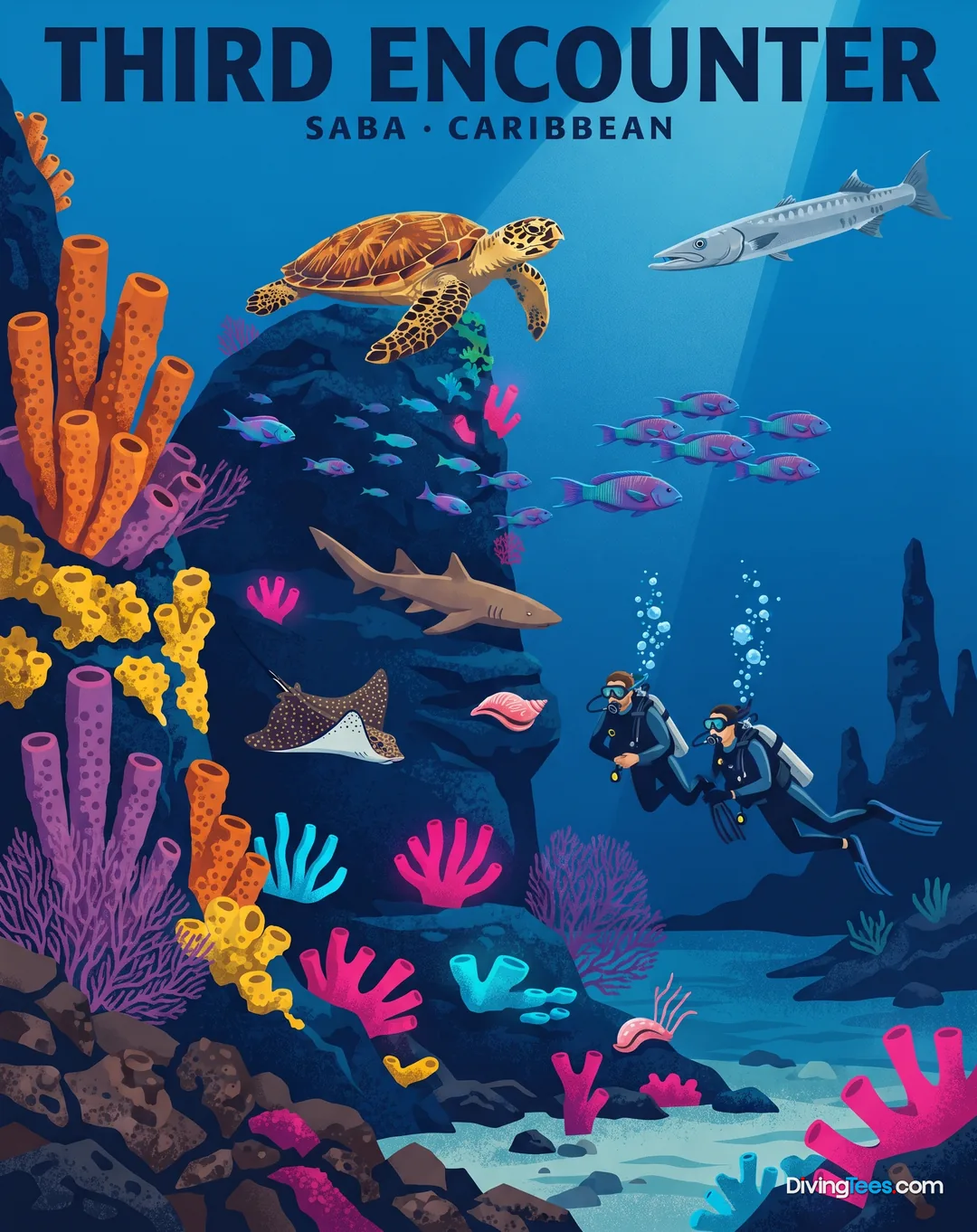
Some of Saba’s shallower diving works for beginners under supervision, particularly at Tent Reef and Wells Bay. The destination becomes more rewarding for divers who are already comfortable with boat procedures, deeper profiles and changing current. An Advanced qualification is useful for the deeper sites, including Third Encounter, which reaches 35 metres. BSAC, PADI and SSI divers should judge the site briefing against their recent experience, especially their confidence in drift diving, buoyancy and managing a deep pinnacle in open water.
From the UK, the journey starts with a flight from London Heathrow, London Gatwick or Manchester to Sint Maarten. Saba is then reached by ferry or fast boat; there is no road connection, and this maritime leg is the structural part of the journey rather than a minor transfer. Connections need breathing space, because departure times and the crossing depend on sea conditions as well as the timetable. Once on Saba, diving is arranged locally from boats around the island, so the practical rhythm is shaped by the day’s departure rather than by walking from a large coastal resort. Travellers carrying their own equipment should check what can genuinely be supplied on the island before relying on local rental stock.
Treat the crossing as part of the dive plan. A tight connection from Sint Maarten leaves little room if the sea disrupts the ferry or fast boat, so a flexible itinerary is more useful than trying to force every connection. Do not arrive expecting shore diving: the signature sites are reached by boat, and the daily programme may change with wind and sea state. Keep the first dive conservative if the group is new to Saba’s volcanic relief, then reserve deeper or more exposed sites for divers who are comfortable with current and open-water navigation. At The Pinnacles and Third Encounter, precise buoyancy is not a nicety; it is how divers stay clear of the seamount, black coral and sponges when the current shifts. Check equipment requirements before travelling, since a small island may offer less rental choice than a larger Caribbean base. The Saba National Marine Park requires a permit and fee, and its rules include controlled anchoring, no touching and no collecting. An accompanying non-diver should also expect hiking and quiet nature rather than a full resort programme.
This is a land-based diving holiday, with local boat trips organised around sites close to the island rather than a liveaboard schedule. Days can combine a morning or afternoon dive with mountain and ridge walking, volcanic viewpoints or time in the quiet harbour village. Accommodation and the dive base are not linked by a documented standard transfer pattern, so the island’s small scale should not be mistaken for a resort-style setup. Saba works best for a calm, nature-led stay built around the water.
Saba’s villages reward slow exploration. Windwardside is the natural place to browse painted wooden houses, churches, trail shops and the restaurants around Brigadoon, Tropics Café and Scout’s Place. The Bottom offers a more local atmosphere, with coffee at Saba Coffee House, home cooking at Queen’s Serving Spoon and practical shopping at Big Rock Market. Fort Bay is functional and maritime, but Pop’s Place and In Two Deep put meals directly beside the diving boats. Expect lobster at Brigadoon, grilled or fried fish at In Two Deep, and steak or other grill dishes at Scout’s Place. For breakfast or a packed lunch, Bizzy B Bakery provides breads, pastries and sandwiches in Windwardside. Saba Spice Cake is the island’s characteristic sweet, while Caribbean rum, Heineken and Amstel appear in the bars. Mount Scenery and its cloud forest supply the main inland outing, and the route between villages makes The Road an attraction in its own right. Saba Carnival brings summer music, costumes and food; Saba Day marks early December with public celebrations.
Saba demands clean buoyancy and careful distance from the reef, particularly where volcanic underwater relief leaves little room for a careless fin stroke. Treat the marine environment as a strict park: no contact with the bottom, and follow the operator’s instructions on mooring and marine life. The island’s logistics also need the same attention. Fort Bay is the gateway for boats, while the ferry connection depends on the sea rather than on The Road, so a weather margin and a spare day protect an expensive itinerary. Reserve taxis ahead through accommodation, especially for airport and diving transfers. On land, follow Saba Conservation Foundation signs, dress soberly in churches, and keep village manners quiet and courteous.
Your last day stays dry: no diving in the 18-24 hours before a flight, the perfect window to see the destination from another angle.
 Culture
⏱ 10 h · ★ 5.0 (7 reviews)
from £30$41€36
see on Viator ↗
 Culture
⏱ 8 h · ★ 5.0 (40 reviews)
from £419$559€500
see on Viator ↗
 Adventure
⏱ 6 h · ★ 4.9 (42 reviews)
from £76$102€91
see on Viator ↗
Ratings and reviews collected by Viator and Tripadvisor.
You can dive in Saba throughout the year, from January through December. Plan your time around the island’s combined attractions rather than a stated seasonal window: Fort Bay connects you with boats and the sea, while Mount Scenery trails and Windwardside restaurants add land-based options to your diving stay.
In Saba, The Pinnacles beneath Mount Scenery are a named diving highlight, while underwater encounters remain tied to the dive site and the day’s conditions. Above water, Mount Scenery Nature Park offers cloud forest, Mountain Mahogany, mosses and giant ferns, giving you both marine and terrestrial environments to explore.
Use Fort Bay as your connection with the sea and boats, and consider Windwardside as a practical starting point for Mount Scenery trails. You can also visit its restaurants and Saba Spice Cake, then spend time in The Bottom, where local cafés and student life add a different village setting.
A stay in Saba can combine diving at The Pinnacles, boat access from Fort Bay, and trails through Mount Scenery Nature Park. Add quiet village time in Windwardside or The Bottom, and note Juancho E. Yrausquin Airport for its cliff-edge runway. The island brings these sea, forest and community experiences together.