
Oasis Divers
Google 4.8/5 (40 reviews)
Turks & Caicos Islands · Caribbean
Grand Turk puts reef walls, a 40-metre drop-off and passing humpback whales within a straightforward island stay built around short boat trips.
For subtitles in English: start the video firstthen click the gearat the top right of the video, select “Subtitles/CC”, then “Auto-translate” and choose “English”.
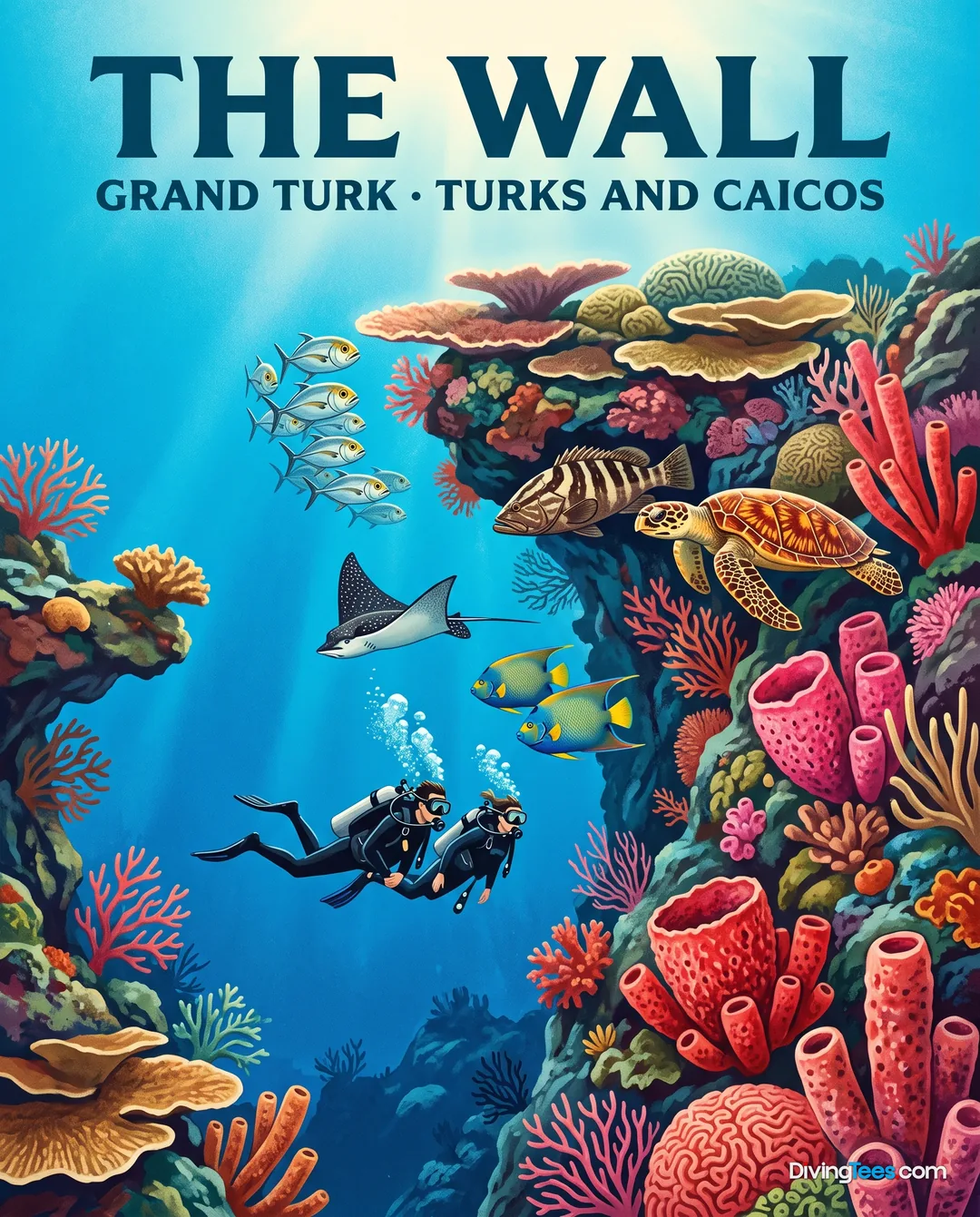
The Breathtaking Wall gives Grand Turk its clearest underwater identity: a reef edge that falls from 10 metres towards the deep, close to a compact island base. Most diving is done from boats, with short runs to western reef and wall sites rather than a daily transfer across the Turks and Caicos. It suits divers who want uncomplicated repetitive diving, seasonal humpback encounters and a quiet land-based stay, while companions have beaches, history and island sightseeing to fill a non-diving day.
Grand Turk is principally a reef-and-wall destination. The western reef edge provides boat dives with short run times, while The Breathtaking Wall supplies the more dramatic profile, beginning around 10 metres and continuing to a stated maximum of 40 metres. The drop-off is the point of the dive: divers follow the wall, manage their depth and look into the blue rather than expecting caves, wrecks or a muck-diving programme. Currents are generally light, but they can vary; at The Breathtaking Wall, shifting flow and exposure make the dive more demanding than the island's all-level reputation suggests. Visibility on that site is typically 10 to 40 metres, while no fixed destination-wide figure should be assumed. Nitrox makes practical sense for several boat dives across successive days, not for technical penetration. Reef condition is mixed, with protected areas helping while bleaching, storms and visitor pressure remain part of the wider picture.
Humpback whales are Grand Turk's signature seasonal encounter. They are regularly present around the island from January to April, which is why the winter-spring period attracts divers who want to combine reef diving with whale-related boat outings. Encounters remain wildlife encounters rather than a guaranteed part of every dive, but the possibility changes the character of the trip. Sea turtles, rays and reef sharks are regular year-round sightings, giving ordinary reef and wall dives their marine-life interest outside whale season. The sensible expectation is to watch the blue and the reef edge carefully, rather than arrive with a narrowly defined species list. The island works particularly well for divers who value large animals alongside straightforward Caribbean wall scenery.
The measured diving window runs from June to November, with the lowest rainfall recorded from June to July. That makes early summer a practical choice for divers whose priority is the island and its reef diving. The different reason to travel is whale season: January to April is the period for humpback sightings, with generally good visibility and the calmer winter conditions described for reef and wall diving. Later summer and autumn can therefore suit a diving-led stay, but they miss Grand Turk's most distinctive seasonal draw. Demand is also higher during whale season and when cruise traffic increases, so the island feels quieter outside those periods.
This coast is exposed to sargassum strandings, whose intensity varies greatly from year to year. To find out more, see the “Sargassum alert” panel on this page.
Grand Turk is suitable for all levels, particularly divers comfortable with normal boat procedures and reef-wall profiles. PADI and SSI qualifications fit the local pattern, as does BSAC training at an equivalent level. The Breathtaking Wall deserves more caution: its 40-metre maximum, exposure and variable current make Advanced Open Water or equivalent a sensible benchmark. Beginners can still find the destination approachable when dives are matched to their experience. Nitrox is the most useful additional qualification for repetitive multi-dive days; deep or technical specialities are not the reason to choose Grand Turk.
From London Heathrow or Gatwick, and from Manchester, the journey requires a connection through a major UK or US hub because Grand Turk has no intercontinental service from Europe. Travellers normally reach Providenciales first, then continue to Grand Turk by domestic flight or by an inter-island ferry or cargo-passenger link when that service is operating. The important practical point is that the final island connection is part of the journey, not an optional side trip, so a loose same-day plan leaves little room for disruption. Once on Grand Turk, diving is locally based: accommodation is generally close enough for a walk, hotel pickup or a short taxi transfer to the dive centre, with no daily inter-island commute.
Treat Grand Turk as a boat-diving and wall-diving trip from the outset. Expecting a Bonaire-style shore-diving programme is the quickest way to misjudge the island. If humpbacks are the reason for travelling, build the stay around January to April and keep a little flexibility for whale-related outings rather than filling every day with diving. Conversely, June to November, especially June and July, is the more useful measured window for a reef-focused visit. The Breathtaking Wall should not be treated as a routine beginner dive: its 40-metre drop, exposure and variable current reward conservative depth planning and an honest match between certification and experience. For several consecutive boat days, Nitrox is more relevant than a technical speciality. Bring spare masks, fins and computer batteries; a small island is not the place to assume a specialist replacement will be available. Do not let cruise-port sightseeing take over a short stay, and remember that no-take areas prohibit fishing, reef anchoring, taking marine life and disturbing coral or wildlife.
A five- to seven-day land-based stay gives enough room for repeated boat diving without turning every day into a schedule of cylinders and transfers. Whale season merits some flexibility, while a non-diving day suits the island's beaches, historic sights or whale-related activities. The compact layout keeps the logistics simple once arrived, and a companion who does not dive can enjoy the island without being tied to the boat programme. Grand Turk is better approached as a focused island stay than as a base for extensive touring across the archipelago.
Hello, I'm Marina, DivingDeal.com's AI assistant. I guide you through destinations, areas and countries.
Thinking about the whole trip and the flights? Talk it over with Edith →
Marina is an AI. Some links are affiliate links: DivingDeal may earn a commission, at no extra cost to you. Bookings are made with the partner.
Choose Grand Turk from January to April if humpback whales are central to your trip, with flexibility for whale-related outings. Choose June to November for the measured diving window, especially June and July when rainfall is lowest. Outside whale season, the island is quieter and better suited to a reef-focused stay.
Grand Turk suits beginners through experienced divers who are comfortable with normal boat procedures and reef-wall profiles. The Breathtaking Wall requires more care because of its depth, exposure and variable current, making Advanced Open Water or equivalent training sensible. Nitrox is useful for successive boat dives, while technical training is unnecessary.
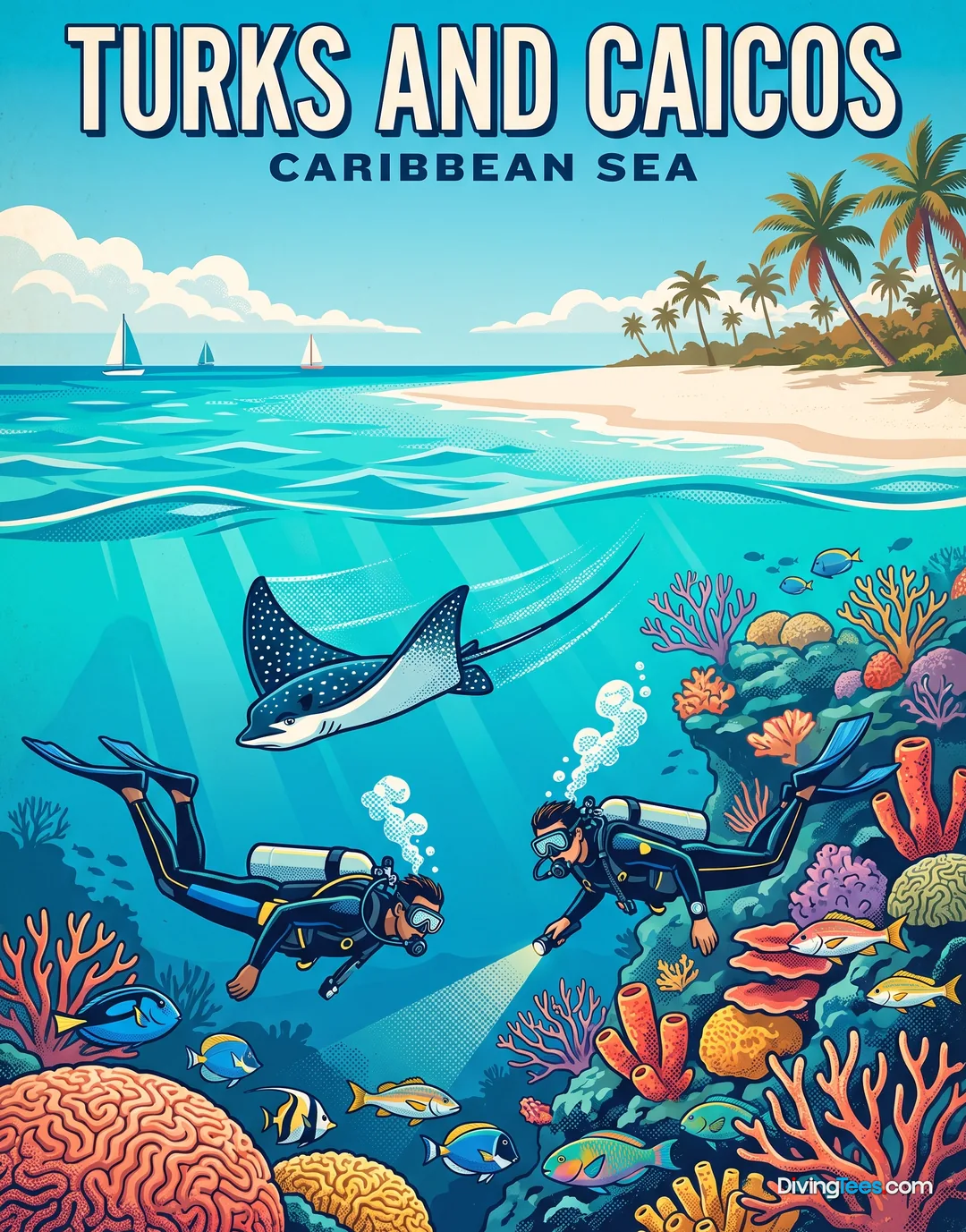
Grand Turk offers western reef and wall diving, with The Breathtaking Wall descending from the reef edge towards deep water. Sea turtles, rays and reef sharks may appear throughout the year. From January to April, humpback whales are regularly around the island, although whale encounters remain wildlife experiences rather than part of every dive.
Plan Grand Turk as a land-based boat-diving trip, not a shore-diving programme. Allow time for the final connection from Providenciales, then stay near a dive centre for short local transfers. A five- to seven-day visit supports repeated boat dives, with flexibility for whales, a non-diving day and the island’s beaches or historic sights.