
Oasis Divers
Google 4.8/5 (40 reviews)
Grand Turk · Turks & Caicos Islands · Caribbean
Max. depth · 40 mDescend along a sheer coral wall that plunges nearly 7,000 feet just a quarter-mile from Grand Turk's western shore.
The Grand Turk Wall, often simply called The Wall, presents a unique dive profile where the reef plateau abruptly gives way to an oceanic abyss. You begin your descent over shallow spur-and-groove formations, typically around 10 to 20 metres, before the true scale of the drop-off becomes apparent. This is not a gradual slope; it's a sheer coral face that plunges vertically, creating a profound sense of exposure to the open ocean.
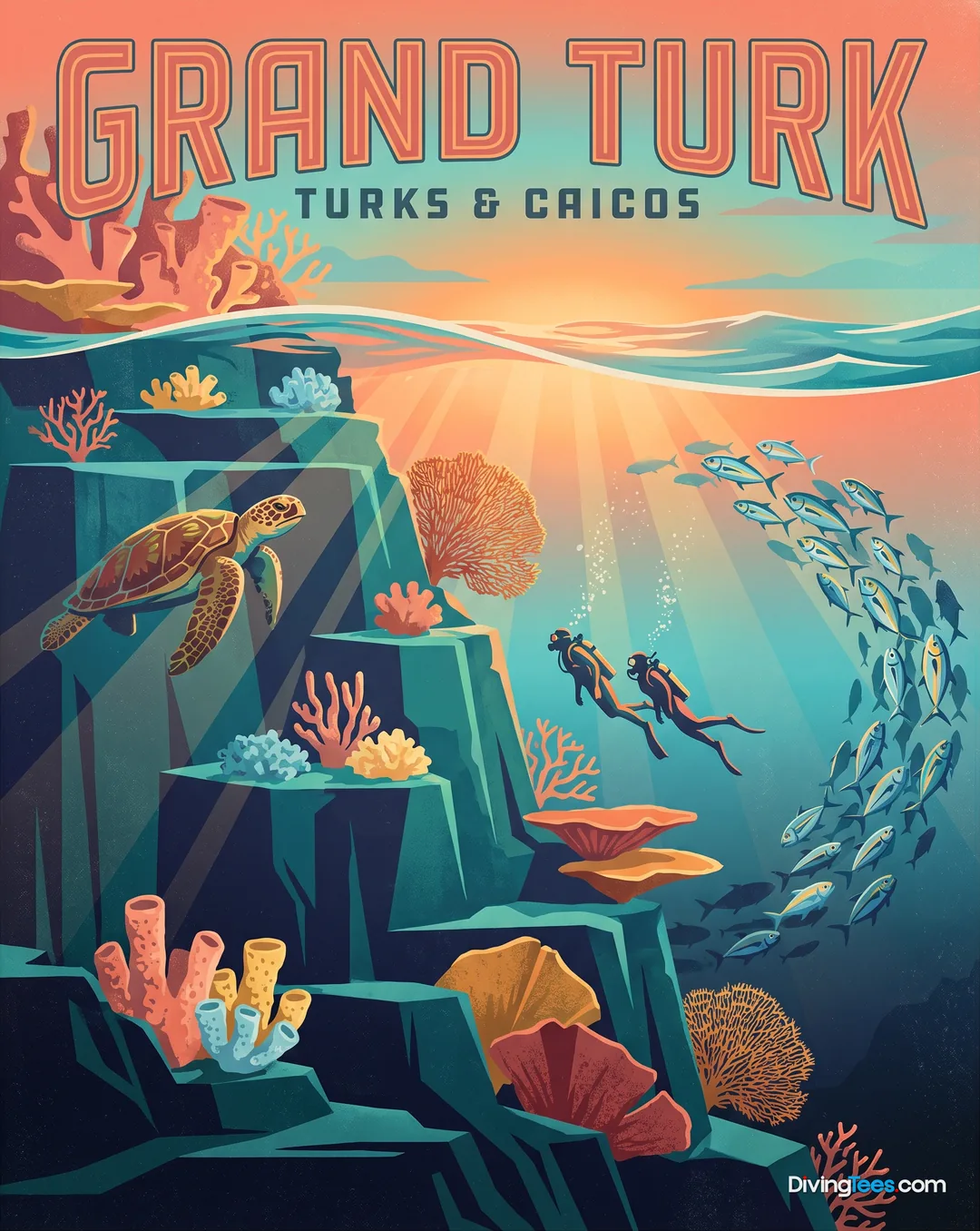
As you follow the wall down, the light shifts from the bright, sunlit blues of the upper reef to a deeper, more profound indigo. This transition highlights the distinct ecosystems clinging to the vertical face at various depths. Hard corals dominate the shallower sections, providing shelter for smaller reef fish, while the vastness of the water column around you hints at the larger life that cruises by in the blue.
The sheer scale of this underwater cliff is what defines the experience. Just a short boat ride from the island's west side, you find yourself hovering over an edge where the continental shelf falls away to depths exceeding 2,000 metres. While your dive remains within recreational limits, the visual impact of this immense drop creates a constant awareness of the deep ocean just beyond your reach.
Diving the Grand Turk Wall means being attuned to the open water. While you'll observe trumpetfish and groupers close to the coral, the real draw is the potential for pelagic encounters. Sea turtles are often seen gliding along the wall, and the sheer exposure of the site means that larger oceanic species can appear from the deep at any moment, making each dive unpredictable.
The topography of the wall itself is complex, featuring canyons, arches, sand chutes, and overhangs that break up the otherwise vertical face. These formations offer points of interest and shelter, allowing you to explore different sections of the wall's structure. The constant awareness of the deep blue below, combined with these intricate features, makes for a dynamic and engaging dive.
This site is part of the larger West Caicos/Grand Turk wall system, renowned as one of the world's significant barrier reef walls. The dramatic drop-off, often described as a 'Mount Everest' of vertical dives, is a geological phenomenon that shapes the entire dive experience. It's a place where you feel connected to the immense forces that formed this underwater landscape.
The proximity of the wall to shore, just a quarter to half-mile off Grand Turk's western side, means short boat rides and quick access to this deep-water environment. This ease of access allows for more time on site, maximizing your opportunity to explore the upper reaches of the wall and observe the marine life that thrives along its edge, from the reef fish to the occasional pelagic visitor.
Dive depth ranges from 10 metres to a maximum of 40 metres. Due to the depth, exposure, and the vertiginous drop-off, Advanced Open Water certification or equivalent is recommended. Currents are variable; while generally manageable, they can shift, making the site more demanding and better suited for experienced divers. Visibility typically ranges from 10 to 40 metres.
You should have Advanced Open Water certification or equivalent for the breathtaking wall. Its depth, exposure, and vertiginous drop-off can make the site demanding, while variable currents may add to the challenge. The site is better suited to experienced divers who are comfortable following a sheer coral face beside open ocean.
At the breathtaking wall, you begin over shallow spur-and-groove formations typically around 10 to 20 metres, then follow a sheer coral face down to a maximum depth of 40 metres. The reef edge falls toward an oceanic abyss exceeding 2,000 metres, although your dive remains within recreational limits.
Currents at the breathtaking wall are variable and generally manageable, but they can shift during the dive. The site’s open-water exposure and vertical drop-off make changing conditions more demanding, so you should stay attentive while exploring the wall, its canyons, arches, sand chutes, and overhangs.
You can see hard corals and smaller reef fish on the shallower sections of the breathtaking wall, including trumpetfish and groupers near the coral. Sea turtles often glide along the wall, while pelagic and larger oceanic species may appear from the deep. Canyons, arches, sand chutes, and overhangs add variety.