Indian Ocean
Réunion: volcanic coasts and marine reserve
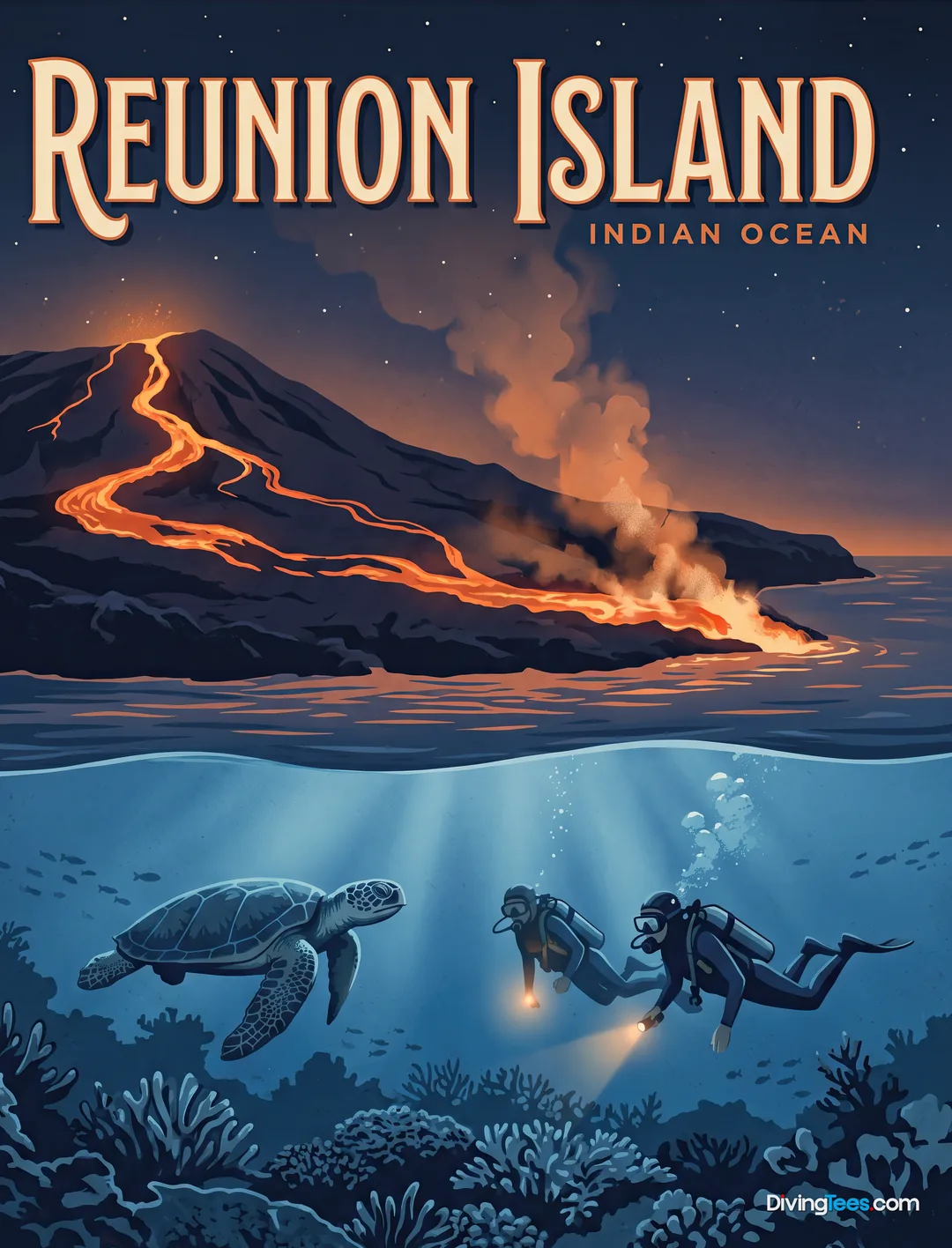
Réunion brings together the Piton de la Fournaise, vertiginous cirques, lava flows by the sea and a marine reserve along the west coast.
What makes this country unique
- La Pointe Au Sel on the volcanic coast
- Reunion Island - Le Sec Jaune
- The west coast marine natural reserve
- The Piton de la Fournaise and lava landscapes
- The lunar scenery of the Plaine des Sables
- Vertiginous cirques and cascades through tropical forest
For subtitles in English: start the video firstthen click the gearat the top right of the video, select “Subtitles/CC”, then “Auto-translate” and choose “English”.
This country for a diver
For a diver, Réunion is an island where volcanic geology and a coral-reef coast sit within the same journey. The west coast has a marine natural reserve, while lava flows and rocky reliefs give the shoreline a harder edge than a purely sandy destination. This is not a place to reduce the holiday to underwater hours: the land rises quickly into cirques, forest and the Piton de la Fournaise. Diving names such as La Pointe Au Sel, L'ermitage and Hia Sang belong to that distinctly volcanic setting.
How the country divides
Réunion is best approached as one island destination with contrasting coastal characters, rather than as a chain of separate diving regions. The west coast is the natural reference point for the marine reserve and its coral reefs, making it the logical base for divers who want the island’s reef environment close at hand. Elsewhere, the shoreline is marked more strongly by volcanic rock, lava flows and exposed coastal relief. That distinction matters when choosing an area page: a reef-focused stay and a geology-led stay will not create the same holiday, even though both belong to Réunion. The island also suits a mixed itinerary, pairing named sites such as La Pierre Du Prefet or Navarra with days devoted to the interior. Those who prefer a compact diving base should keep their plans coastal; those travelling for the full character of the island should leave room for the cirques, forest and volcanic highlands.
Diving destinations
Dive centres


Hotels
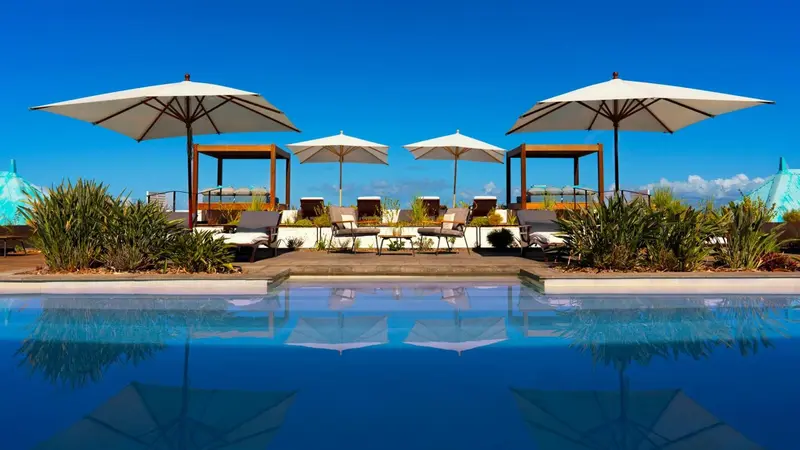
Blue Margouillat Seaview Hotel-RELAIS & CHATEAUX
Saint-Leu, La Réunion
★★★★★
Google 4.7/5 (1,132 reviews)
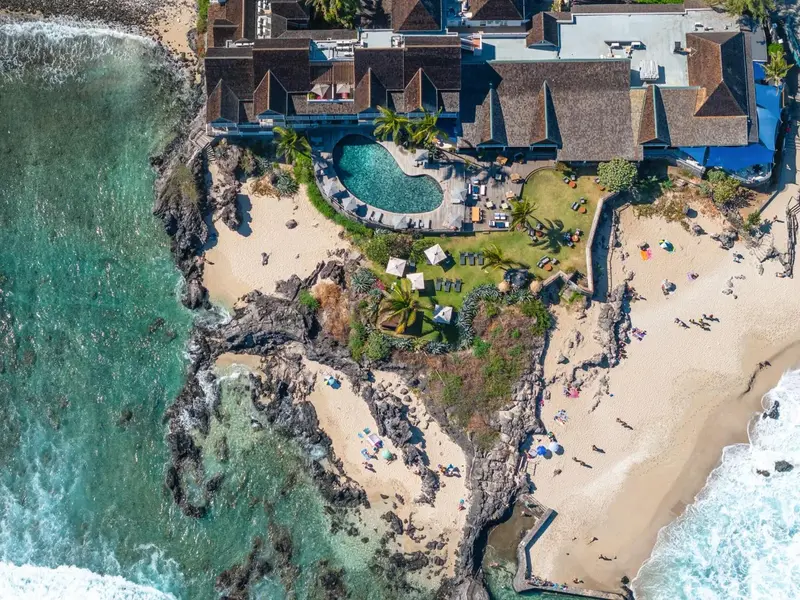
Hotel Le Boucan Canot
Le Port, La Réunion
★★★★
Google 4.4/5 (1,151 reviews)
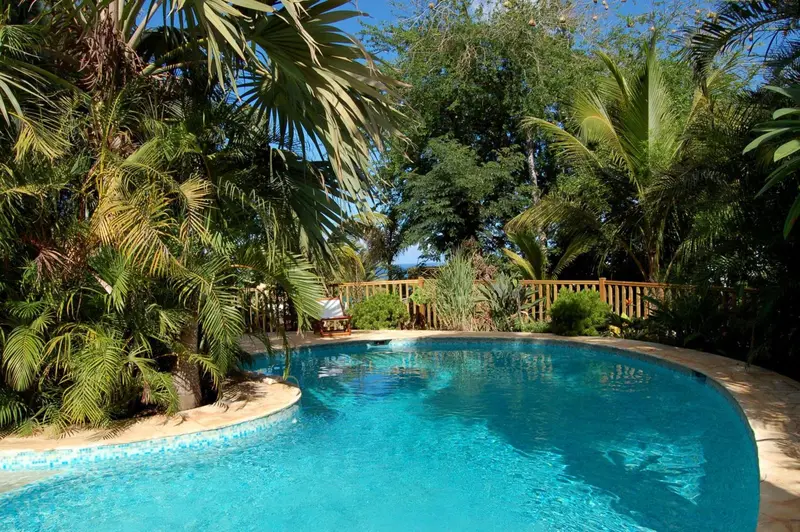
Baobab et Palmiers
Saint-Leu, La Réunion
Google 4.9/5 (122 reviews)
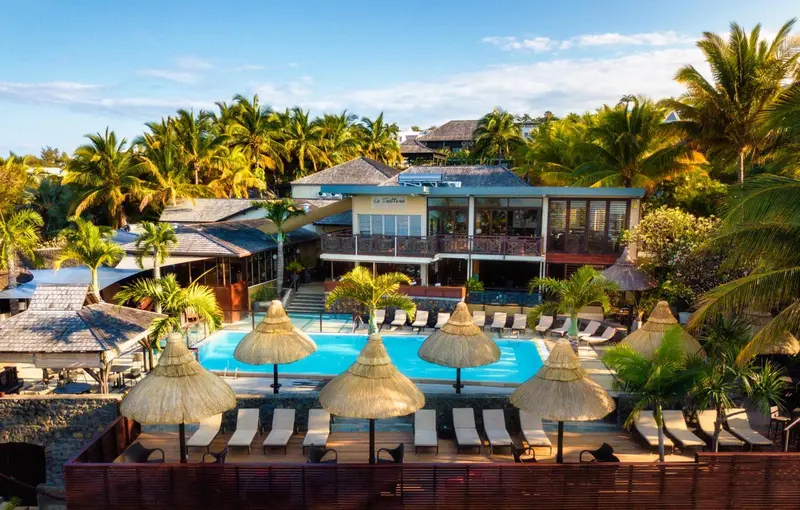
Iloha Seaview Hotel
Saint-Leu, La Réunion
★★★
Google 4.4/5 (951 reviews)
When to go, and where by month
Réunion does not lend itself to a simple month-by-month promise of one coast opening as another closes. Planning is more closely tied to the behaviour of the ocean around the island: on some coastal sectors, the afternoon swell can rise and change the shape of the day. That makes the rainy season and monsoon question less useful than a flexible itinerary with exposed or technically demanding dives placed early in the stay. A calm-looking morning should not be treated as a guarantee for the afternoon, particularly where volcanic relief and open coastal water meet. Keep a spare day for a moved or cancelled outing, and judge the final plan locally rather than committing every date to a specific site. This is especially relevant when a stay is built around La Pointe Au Sel or another exposed shoreline.
Marine life, coast by coast
The island-wide wildlife picture is tied to the marine reserve and its coral reefs, rather than to a single isolated dive setting. That reserve gives the west coast a distinct ecological identity within a holiday otherwise shaped by volcanic shores, lava and steep landforms. For itinerary planning, this means the reef environment should be treated as its own strand of the trip, while the rest of the experience is anchored more visibly in geology and landscape. The material supports a habitat-led reading of Réunion: coral reefs on the west coast, volcanic relief around the island and tropical forest inland. The contrast is useful even when the day’s priority is simply choosing between coast and mountain.
Getting between the areas
Moving between diving areas on Réunion is a question of organising a single island journey, not stitching together a chain of remote islands. Coastal sectors can be considered within one holiday, but they should not be treated as interchangeable departures on a fixed timetable. Sea conditions may shift an outing or cancel it, so changing base or crossing the island with a tightly timed dive creates unnecessary pressure. A sensible link-up leaves room for the ocean to dictate the day and avoids placing the most exposed plan at the end of the stay. Divers considering La Pointe Au Sel alongside L'ermitage should think in terms of a flexible coastal itinerary, with the interior landscapes providing a useful alternative when the sea does not cooperate.
Take off your mask
Away from the water, Réunion is defined by landforms rather than by a single resort strip. The cirques bring vertiginous scenery, while the Piton de la Fournaise gives the island its most recognisable volcanic presence. Along the coast, lava flows meet the sea; inland, the Plaine des Sables changes the tone completely with a lunar landscape. Cascades cut through tropical forest, offering a very different day from the dark rock and open ocean of the shoreline. The island’s character also extends beyond the main landscape circuit: a stay can be framed around the contrast between the coast, the highlands and the prospect of discovering nearby Rodrigues. The result is a country whose strongest non-diving experiences are shaped by altitude, lava, forest and water in the landscape.
What holds true everywhere here
Several practical points belong to Réunion as a whole. Coastal conditions can change during the day, with afternoon swell affecting whether an outing goes ahead, so the technically demanding or more exposed dives deserve an early place in the stay. A safety stop is not the moment to discover that poor buoyancy has brought you into volcanic relief, an overhang or a rocky section of reef. These formations offer less forgiveness than a broad sandy bottom. Treat the ocean margin as changeable, build a weather buffer into the itinerary and keep enough flexibility to move a dive rather than forcing it. On this island, good planning means respecting both the sea’s timing and the coast’s hard geology.
Frequently asked questions about Réunion
When should you plan a trip to Réunion for diving and island landscapes?
Réunion combines a west coast marine reserve and coral reefs with volcanic shores, lava flows, steep cirques and tropical forest. You can organize your trip around the landscapes you want to experience, treating the reef environment as one part of the itinerary and the island’s geology as another.
What diving level is Réunion best suited to?
Réunion’s destination profile centers on the west coast marine reserve, coral reefs and volcanic coastal scenery. You can use those settings to decide whether the destination matches your interests, while the broader island experience includes lava landscapes, steep landforms, tropical forest and inland cascades.
What can you see while diving and exploring Réunion?
You can experience coral reefs in the west coast marine reserve, alongside volcanic coastal scenery such as La Pointe Au Sel and Le Sec Jaune. Above and around the water, Réunion features Piton de la Fournaise, lava landscapes, the lunar Plaine des Sables, vertiginous cirques and tropical forest cascades.
How should you plan your stay in Réunion?
Build your Réunion itinerary around two contrasting strands: the marine reserve and coral reefs on the west coast, then the volcanic and inland landscapes elsewhere. Allow space for lava shores, Piton de la Fournaise, the Plaine des Sables, vertiginous cirques and tropical forest scenery.