
Corail Plongee
Google 4.9/5 (838 reviews)
Réunion · Indian Ocean
Volcanic walls, yellow coral shoals, wrecks down to 55 metres, turtles and humpback whales shape La Réunion’s distinctive west-coast diving.
For subtitles in English: start the video firstthen click the gearat the top right of the video, select “Subtitles/CC”, then “Auto-translate” and choose “English”.
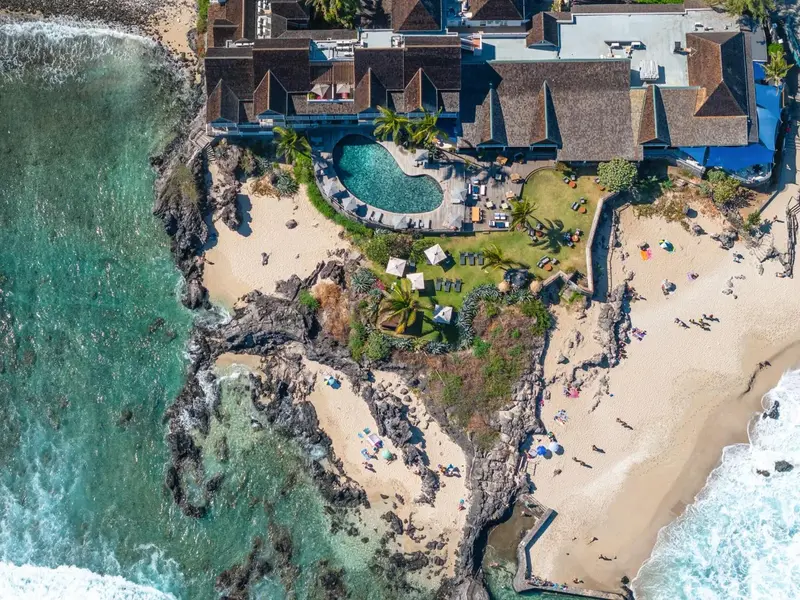
La Réunion is a shore-based diving destination built around the volcanic west coast. Between dives, the island’s cirques, lava shoreline and viewpoints make a proper land holiday rather than a cruise itinerary. Underwater, the character changes from the quiet macro hunting of La Pierre Du Prefet to deep walls, wrecks, arches and caves. It suits experienced autonomous divers particularly well, but beginners can also find suitable water when the sea is settled and the site is properly matched.
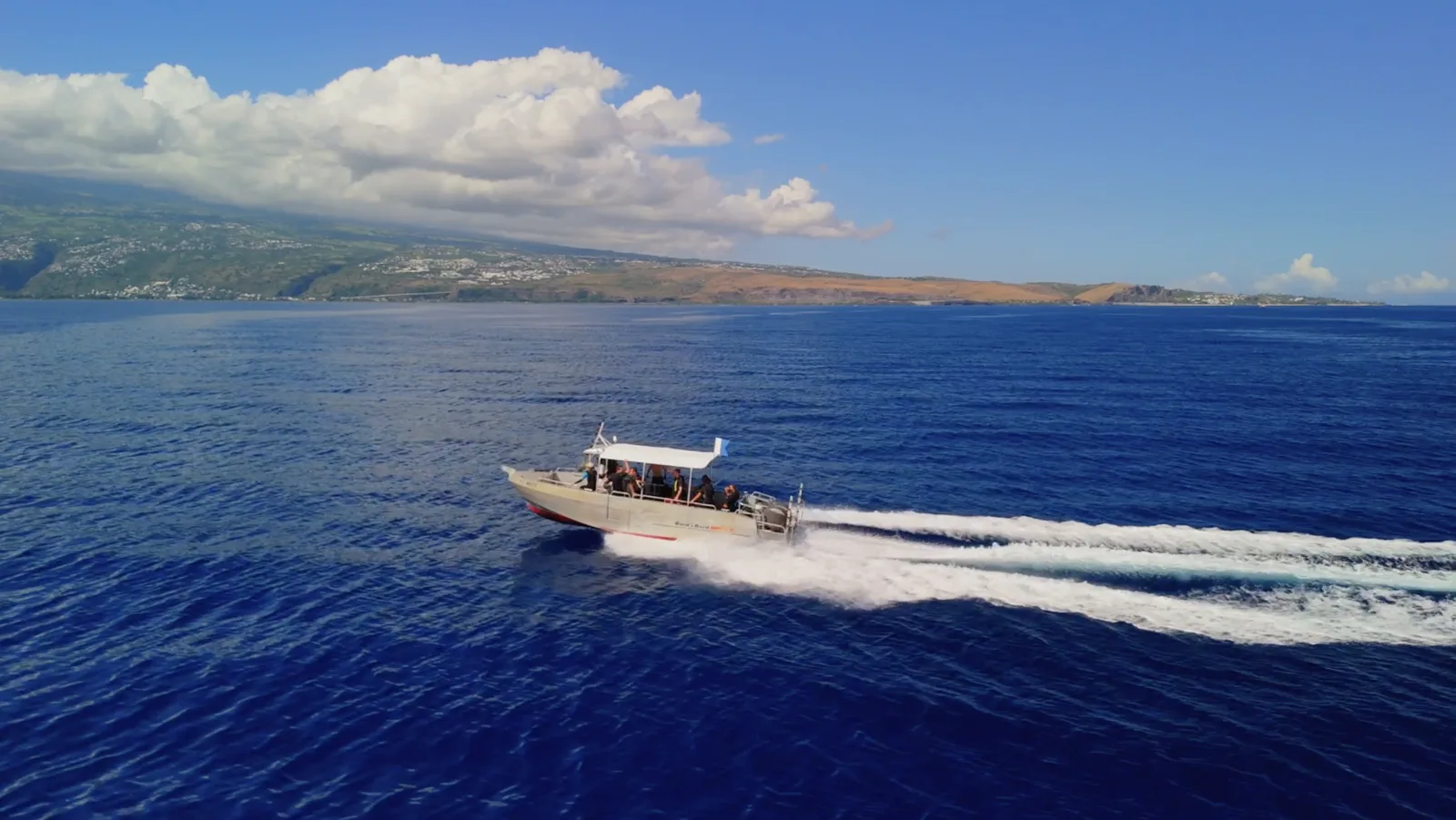
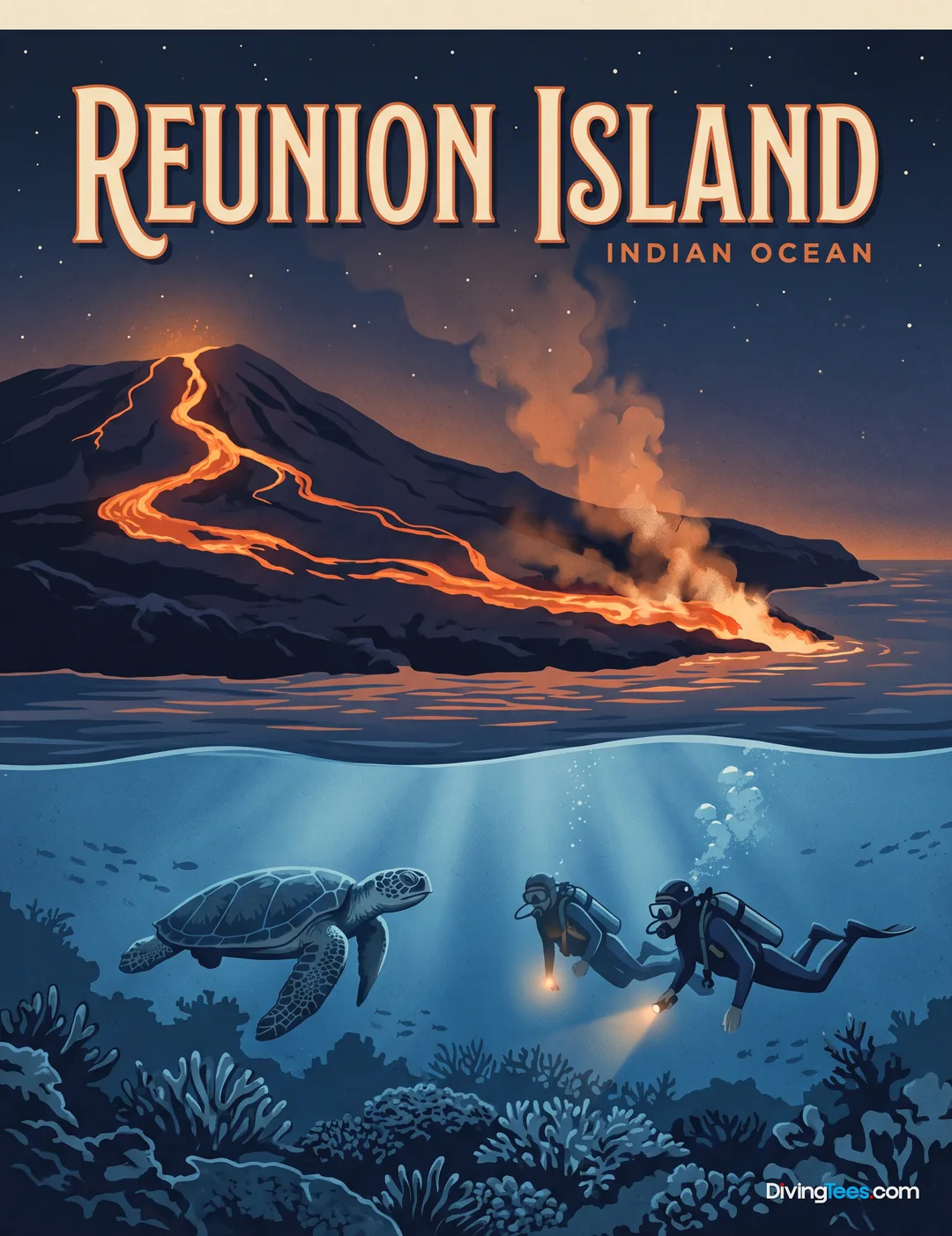
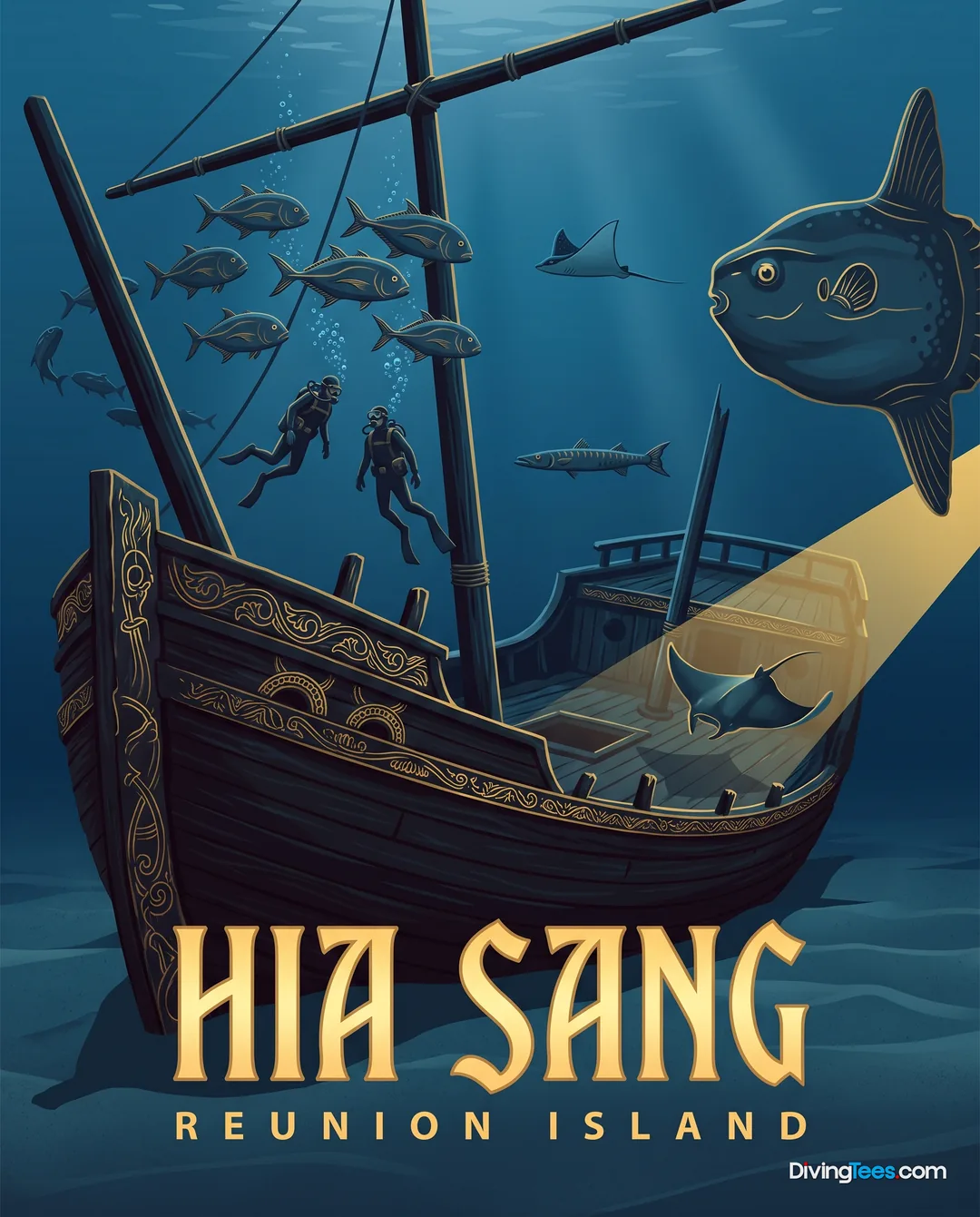
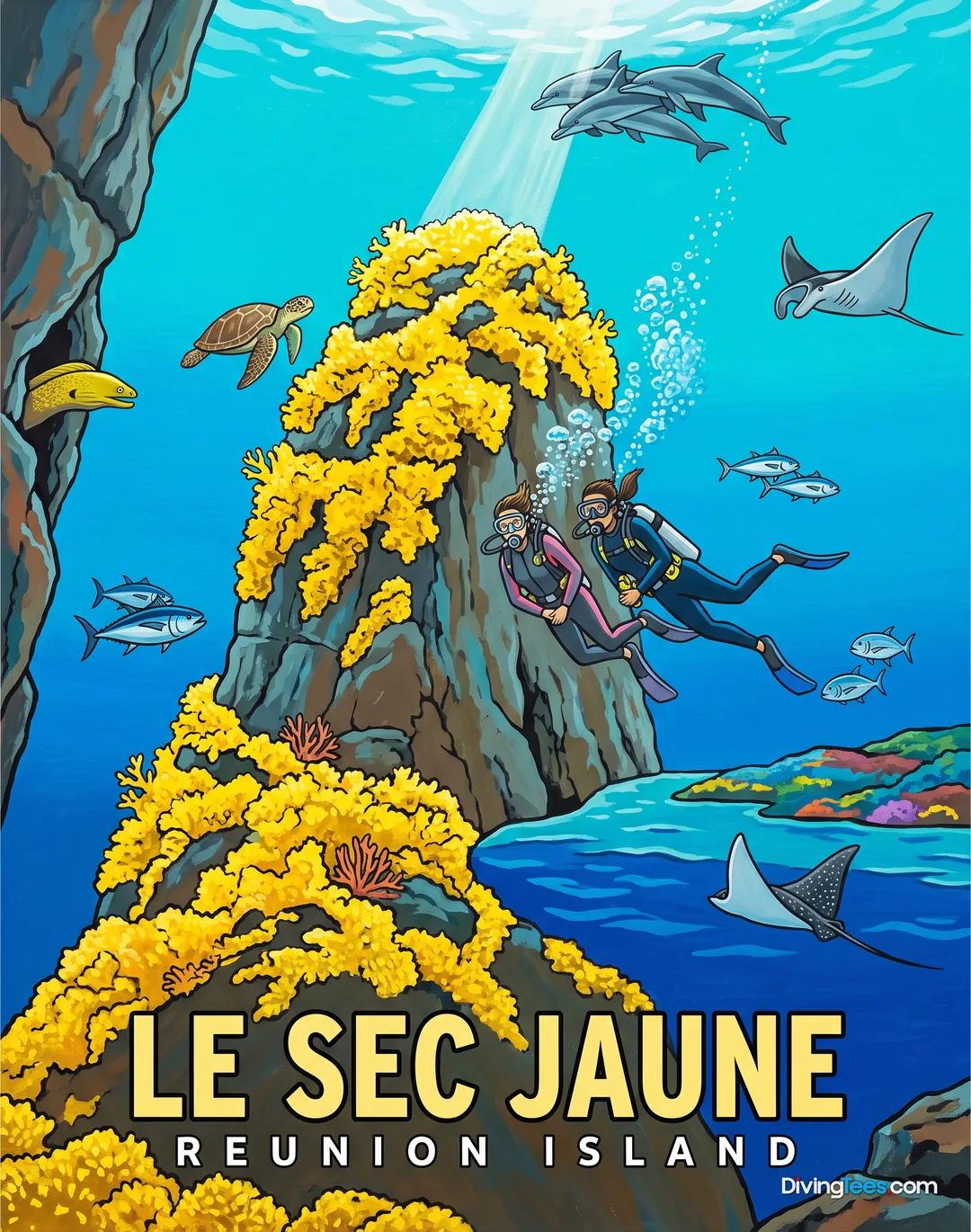
The underwater landscape is volcanic rather than a continuous postcard reef: steep walls, rocky pinnacles, overhangs, arches, tunnels and caves provide the main visual structure. Bossy’s Canyon moves from a shallow coral plateau into drop-offs reaching 45 metres, while Passe de l’Ermitage threads through tunnels, canyons and grottoes between 6 and 25 metres. Le Sec Jaune rises from 5 metres to 50 metres, its yellow coral standing out against the rock. Deeper dives become serious propositions: La Pointe Au Sel falls from roughly 20–25 metres beyond 70, and the Hia Sang lies at 54–55 metres. Many outings leave from the shore, with boat diving adding offshore walls and wrecks. Currents are often light on the easier coastal sites, but exposed walls, passes and shoals can become strong or variable. Surface swell and surf may matter more than a steady current, especially for beach entries. Visibility can be very good, but rain, swell and coastal surge can reduce it quickly.
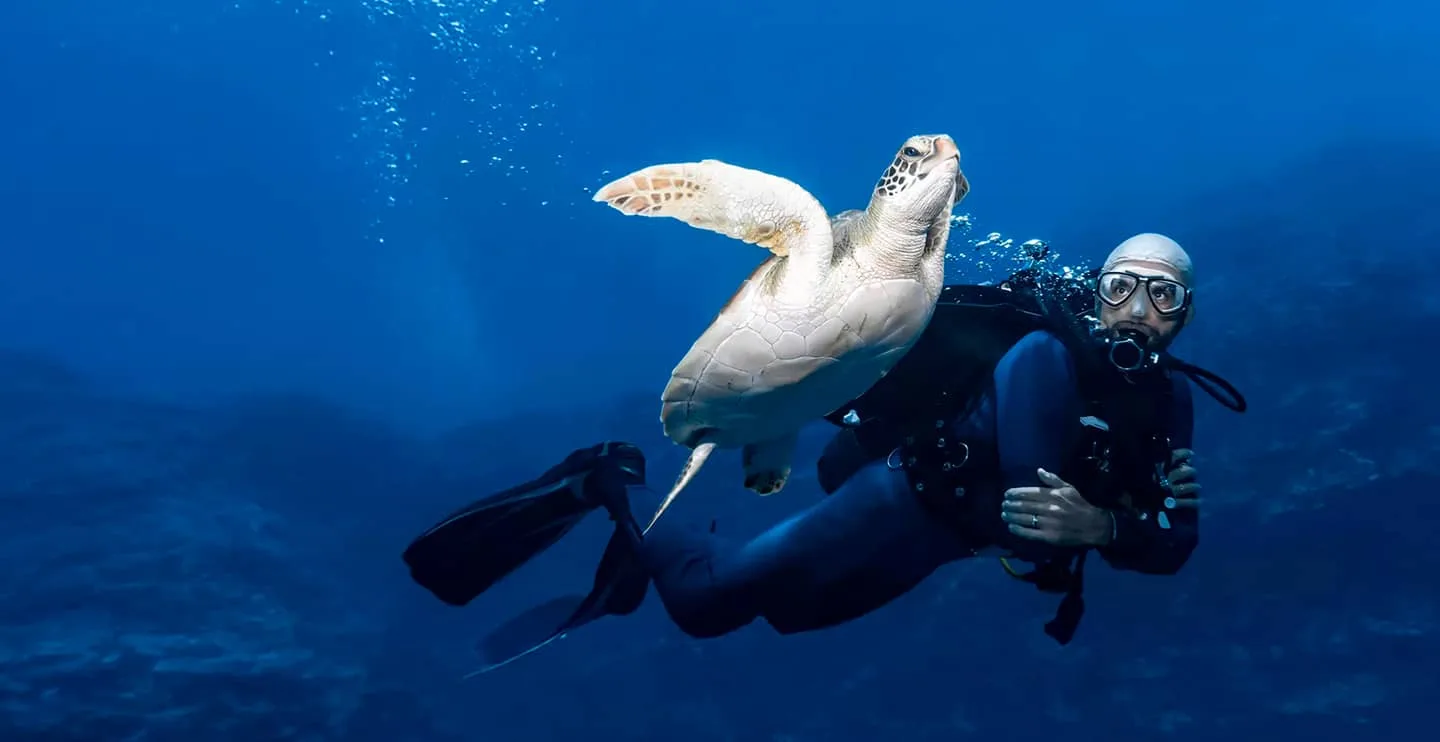
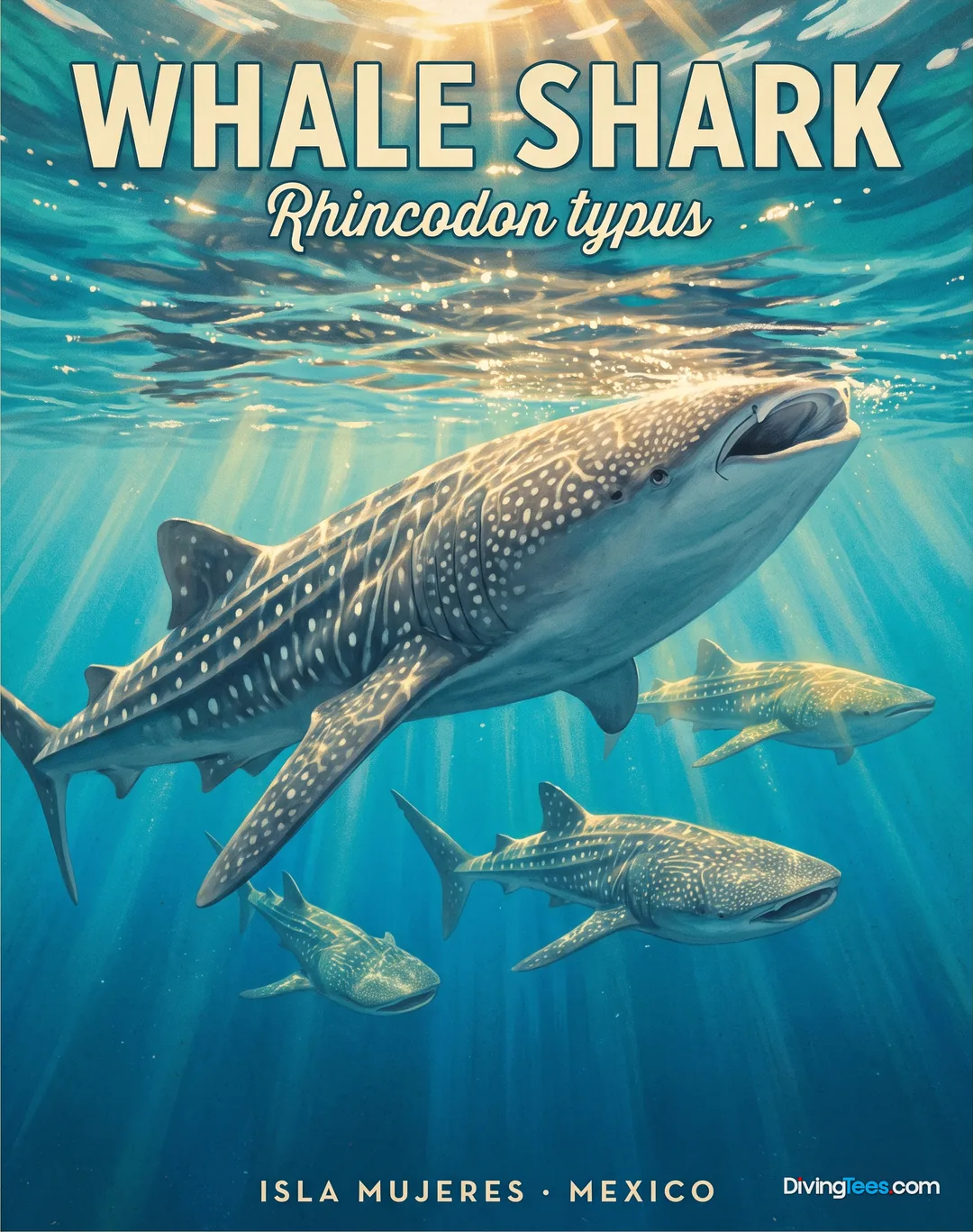
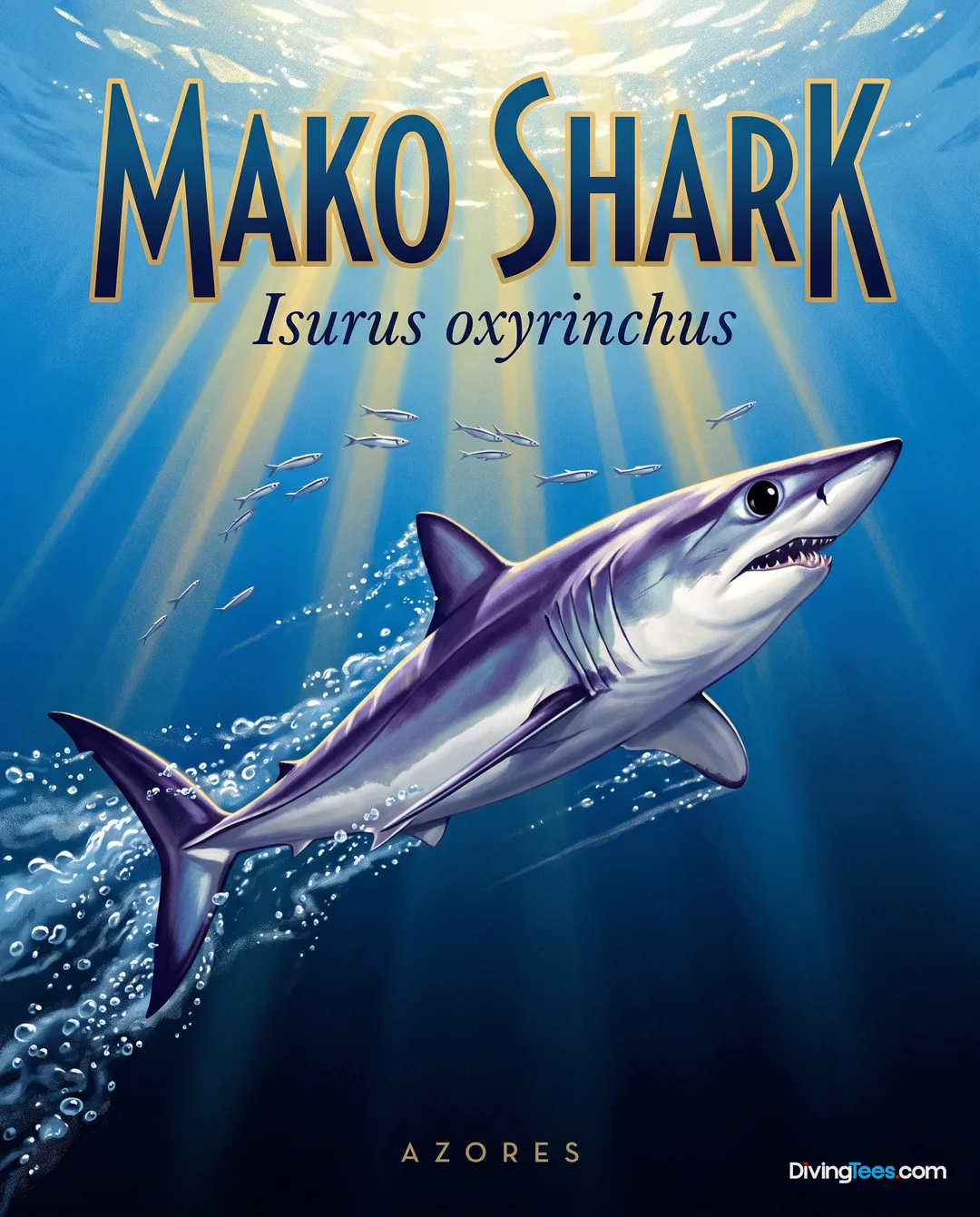
The wildlife changes with the way a diver approaches the reef. Slow observation pays at La Pierre Du Prefet, where a resident leaf fish rewards careful searching, and at Le Chien, where nudibranchs and other small life suit a night dive. Passe de l’Ermitage has schooling fish and a turtle cleaning station; green sea turtles and eagle rays are also associated with the pass. Open water around the deeper walls and wrecks brings tuna, trevally, snapper, great barracuda and sharks, with manta rays and dolphins possible rather than dependable. Whale sharks are occasional visitors. Humpback whales are the seasonal headline from July to October, when surface watching can be combined with diving. Reef sharks are encountered throughout the year, but La Réunion should not be booked on the assumption of constant large-pelagic action.
May to November is the practical window for a diving holiday, with the austral winter and spring bringing generally more favourable diving conditions and the humpback season adding a reason to look up between immersions. July to October is the period to combine underwater days with whale watching. January to March is less attractive because the austral summer is wetter and more exposed to weather disruption. The west coast still depends on the sea rather than the forecast on land: swell, rain and afternoon deterioration can alter coastal plans. A seven-to-ten-day stay leaves room to move dives, keep a rest day, and avoid turning a long journey into a rigid run of cancelled bookings.
Open Water divers can enjoy suitable coastal sites such as Le Chien, while Passe de l’Ermitage is aimed at divers with an appropriate PE20 qualification. Advanced certification is useful for the passes, deeper walls and variable current, and BSAC, PADI and SSI equivalents should be considered alongside logged experience. La Pointe Au Sel, Les Trois Failles and the deeper wrecks require more than a card: current awareness, buoyancy and deep-diving discipline matter. Hia Sang, Navarra and similar profiles are for advanced or technical divers, with decompression planning required at the greater depths. Nitrox is useful where the centre and dive profile allow it.
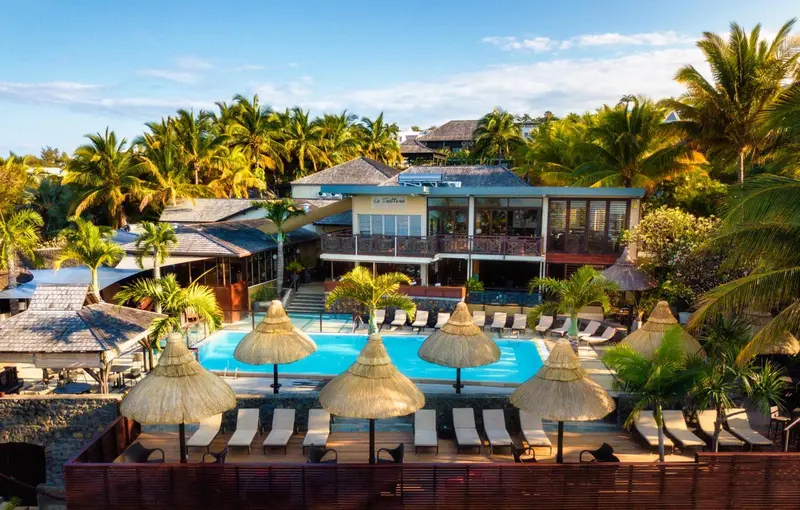
From London Heathrow, London Gatwick or Manchester, the journey is an international flight to Saint-Denis, usually with a connection, taking about 13 to 16 hours overall. Once on the island, the main diving coast is reached by road from the airport; the drive to the west takes roughly 45 to 90 minutes depending on the chosen base. There is no compulsory sea crossing. Accommodation is best arranged on the west coast, where divers can reach centres on foot, by a short shuttle or by taxi according to the sector. Arriving during the day makes the transfer less tiring and leaves time to settle in before diving. For a short stay, the Saint-Gilles, La Saline and Saint-Leu axis keeps daily road transfers manageable.
Treat the sea state as the day’s deciding factor, not as an afterthought. A west-coast beach entry can become awkward when swell and surf rise, even if the weather inland looks fine, so leave flexibility around shore dives and keep a buffer day at the end. Put the more exposed or technical dives early in the holiday, before a run of rougher conditions can eat into the plan. Ask whether a proposed outing leaves from the coast or by boat: the difference affects departure time, fatigue and the sort of terrain reached. Divers with particular preferences should bring their own fins and mask, since island rental sizes and models may be limited. During whale season, arrange surface and diving plans ahead of time, but keep expectations realistic: the attraction is the passing humpback season, not guaranteed underwater encounters. Stay on the west coast rather than commuting from Saint-Denis or the interior.
A sensible stay lasts seven to ten days, with diving arranged around the west-coast base and several land days built in. Shore dives and boat trips can be mixed so that the holiday is not dependent on one launch point or one sea state. A day on land can mean a cirque hike, a volcanic viewpoint, a lava shoreline or a west-coast market. The final day should remain flexible, both for weather-related changes and for a comfortable interval before the flight home.
Hello, I'm Marina, DivingDeal.com's AI assistant. I guide you through destinations, areas and countries.
Thinking about the whole trip and the flights? Talk it over with Edith →
Marina is an AI. Some links are affiliate links: DivingDeal may earn a commission, at no extra cost to you. Bookings are made with the partner.
Your last day stays dry: no diving in the 18-24 hours before a flight, the perfect window to see the destination from another angle.
 Adventure
⏱ 4 h
from £234$313€280
see on Viator ↗
 Culture
⏱ 3 h
from £150$200€179
see on Viator ↗
 Nature
⏱ 7 h · ★ 5.0 (41 reviews)
from £105$140€125
see on Viator ↗
 Culture
⏱ 8 h · ★ 5.0 (25 reviews)
from £460$614€549
see on Viator ↗
Ratings and reviews collected by Viator and Tripadvisor.
May to November is the practical window for diving, with generally more favourable conditions during the austral winter and spring. From July to October, humpback whales pass the island, adding a surface-watching opportunity between dives. January to March is wetter and more exposed to weather disruption, while swell can still change plans.
La Réunion offers suitable coastal sites for Open Water divers, including Le Chien, when the sea is settled and the site is properly matched. Passe de l’Ermitage requires an appropriate PE20 qualification. Advanced or technical experience is needed for deeper walls, variable currents and wrecks such as Hia Sang, with decompression planning.
Diving in La Réunion reveals volcanic walls, rocky pinnacles, overhangs, arches, tunnels and caves, alongside yellow coral shoals and deep wrecks. You may find leaf fish, nudibranchs, turtles, schooling fish, eagle rays, tuna, trevally, barracuda and sharks. Humpback whales pass from July to October, while manta rays and dolphins are possible.
Plan a seven-to-ten-day stay on the west coast, around Saint-Gilles, La Saline or Saint-Leu, so daily transfers remain manageable. Mix shore dives with boat trips and keep flexibility for swell, rain and coastal surge. Arrange technical or whale-season outings ahead, include a rest day, and leave the final day flexible.