Sri Lanka · Indian Ocean
Diving Great Basses: an exposed wreck and reef
An offshore Sri Lankan outing of walls, ridges and pinnacles, with the Triton wreck, 20–30-metre visibility and currents that demand respect.
What makes this destination special
- The Triton, a British-built steamship wreck offshore
- Great Basses Reef walls, ridges and pinnacles
- Diveable terrain from three to 24 metres
- Visibility commonly reaching 20 to 30 metres
- Strong currents and powerful surge over the reef
- Passing sharks, rays and other pelagic life
- A narrow inter-monsoon window beginning in mid-March
For subtitles in English: start the video firstthen click the gearat the top right of the video, select “Subtitles/CC”, then “Auto-translate” and choose “English”.
Overview
Great Basses is defined by the Triton wreck and the offshore reef around it, rather than by a shore-based circuit of easy coral dives. Great Basses Reef rises through walls, ridges and pinnacles, with the diveable ground extending from three to 24 metres. The setting suits divers who enjoy a planned boat outing, open water and a site where sea conditions are part of the decision. It is a specialised addition to a Sri Lankan trip, not a casual afternoon in sheltered water.
Diving here
Great Basses Reef gives the dive its shape: walls, ridges and pinnacles create a broken underwater landscape rather than a flat reef slope. Depths range from three to 24 metres, while visibility is typically reported at 20 to 30 metres, allowing the larger outlines of the terrain and wreck to show clearly when conditions cooperate. Currents can be fierce, and powerful surge may push divers across the structure or make a planned route difficult to hold. This is therefore a boat dive built around sensible assessment, controlled descents and clear awareness of the team. The main attraction is wreck diving on the Triton, with the surrounding reef providing the setting and the open water providing the uncertainty. A compact slate or spool has a practical role here: it helps with orientation and communication when movement through the site becomes less straightforward.
One dive not to miss

The underwater wildlife
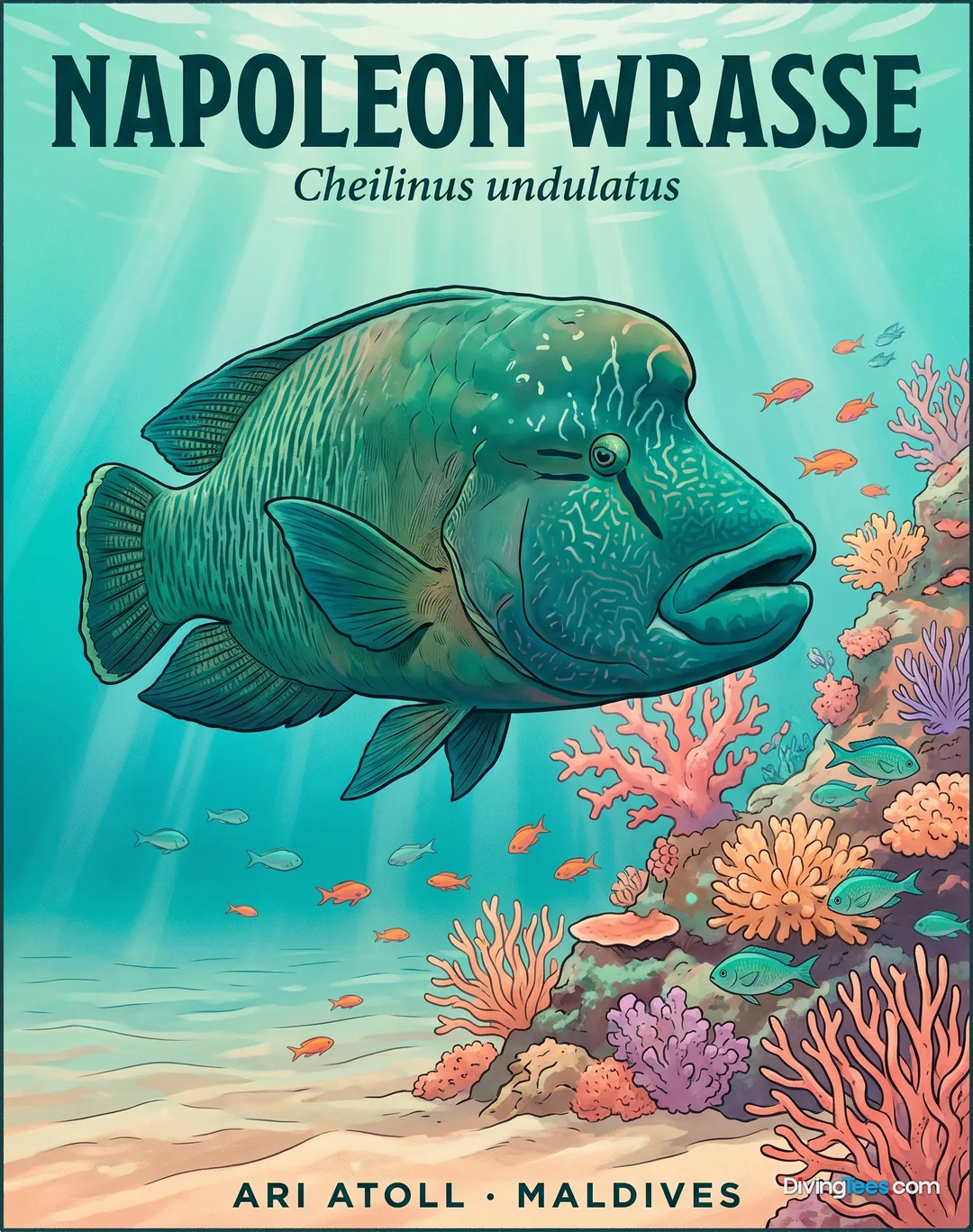
The marine life is described in broad but appealing terms: pelagic fish passing through open water, reef fish around the structure, and the possibility of sharks and rays. Great Basses is not presented as a site where one particular animal appears to a fixed timetable. The interest lies in scanning beyond the wreck and reef, especially when visibility opens the water column around the walls and pinnacles. Encounters are most sensibly linked to the workable inter-monsoon diving window, when the offshore crossing and the dive itself are more likely to be practical. Divers should arrive ready to look both at the steel of the Triton and into the blue around it; the latter is where a passing pelagic animal may appear.
Possible underwater encounters

When to go
The practical season is a narrow inter-monsoon window beginning in mid-March. That timing matters because Great Basses is exposed offshore: swell, wind and current can decide whether the boat can make the crossing and whether the site is enjoyable once reached. It is worth fitting the trip around the calmest sea window available in the wider Sri Lankan itinerary, rather than treating the dive as a fixed date. A shore-based plan with some flexibility is more sensible than booking every day around Great Basses, since this is precisely the sort of outing that can be lost to sea conditions.
Level required
Great Basses is for experienced divers, particularly those comfortable with open-water boat diving, current and surge. Advanced Open Water is useful, and a Wreck qualification is directly relevant to the Triton. BSAC divers should bring the equivalent evidence of experience; PADI and SSI divers should carry their certification cards and logbook. Good buoyancy, trim and situational awareness matter more here than simply meeting a minimum depth requirement. It is not a sensible first wreck outing for a diver still finding their feet in moving water.
On the ground
From London Heathrow, Gatwick or Manchester, the journey needs to be planned in two distinct stages: reach Colombo, then travel by road to Sri Lanka’s southern coast before making the offshore crossing by boat. Great Basses cannot be reached from the beach, so the final leg is compulsory and sea-state dependent. The long road transfer should be treated as part of the dive logistics, not as an afterthought between flights and a boat departure. Once on the coast, the important practical movement is between accommodation, the departure point and the boat; the destination itself is not a walk-in site. Allowing a spare day around the crossing is more useful than arranging a tightly packed schedule that leaves no room for a changed boat day.
Local tips
Treat Great Basses as a one-off offshore wreck outing, not as a standard reef day. The Triton is the reason to make the journey, but the crossing and the exposed water determine whether the plan works. Keep the day flexible and place it in the calmest sea window available; if the wider itinerary includes other south-coast diving, do not make Great Basses the only day that matters. Bring certification cards and logbook evidence for wreck and deep diving, as well as a compact slate or spool for orientation and communication around the structure. Good trim is particularly useful when surge or current moves across the walls and pinnacles. Do not assume that clear water makes the site easy, or that a shallow starting depth removes the need for experience. Avoid filling the immediate itinerary with tiring land activities: the long road transfer and offshore boat day deserve a rested diver. It is also worth checking that every diver is genuinely comfortable with an exposed, current-influenced wreck before committing the group.
Planning your stay
A sensible stay is a short shore-based visit of two to four days, with the Great Basses boat day placed inside the most favourable sea window. The coast provides the base, while the destination itself is reached offshore rather than from a local beach. Keep at least one day adaptable for weather or boat changes, and use a non-dive day for rest and coastal travel. Great Basses works best as the wreck-focused part of a broader southern Sri Lankan journey.
Hello, I'm Marina, DivingDeal.com's AI assistant. I guide you through destinations, areas and countries.

Thinking about the whole trip and the flights? Talk it over with Edith →
Marina is an AI. Some links are affiliate links: DivingDeal may earn a commission, at no extra cost to you. Bookings are made with the partner.