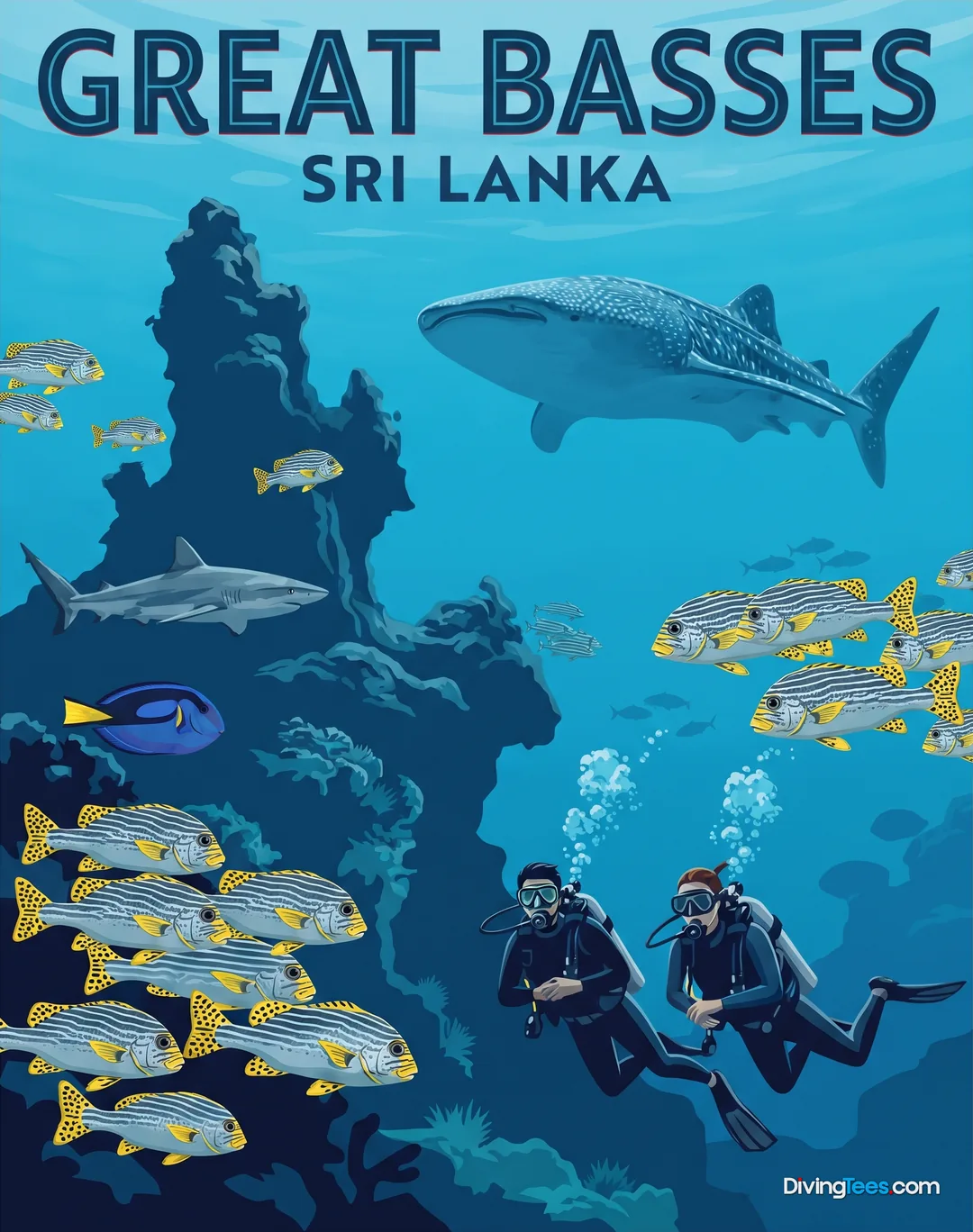
Great Basses · Sri Lanka · Indian Ocean
Max. depth · 24 mGreat Basses Reef, Sri Lanka: Walls, Current, and Pelagics
Great Basses Reef offers energetic dives along its shallow, surge-exposed walls and ridges, presenting a highly seasonal but rewarding experience for divers comfortable with strong currents.
What makes this site special
- Dramatic sandstone and rock reef topography
- Vertical walls, caves, and pinnacles
- Frequent strong currents and surge
- Consistent 20-30 metres visibility
- Grey reef and white-tip reef sharks
- Regular manta ray sightings
- Schools of tuna, trevally, and fusiliers
- Archaeological wreck sites
Great Basses Reef about the site
Great Basses Reef, sometimes known as The Basses, is an extensive offshore sandstone and rock reef system off the coast of Kirinda, Sri Lanka. The diving here is focused around the Great Basses Lighthouse, where the reef structure forms a dramatic landscape of vertical walls, shallow ridges, and isolated pinnacles. You'll navigate through numerous caves, ravines, and surge-prone passages, all carved by the relentless push and pull of the strong tides that define this site.
The topography is complex and varied, with depths ranging from 3 metres on the shallowest ridges down to 24 metres at the base of some walls. Descending, you will encounter diverse coral formations, from high wall corals and soft corals to intricate black corals, fan corals, and whip corals. Sand pockets are interspersed among the rock formations, and crevices provide shelter for smaller reef inhabitants, offering a dynamic environment that constantly reveals new features.
Diving Great Basses means being prepared for strong currents and significant surge. These forces are a constant presence, creating a washing-machine effect, particularly over shallower sections and near wall tops. The currents are frequently fierce, with powerful forward-and-backward surges. This active water movement is a key characteristic of the site and plays a significant role in shaping both the reef and the marine life found here.
Visibility at Great Basses is consistently good, often ranging between 20 and 30 metres, which allows for expansive views of the reef structure and approaching pelagics despite the dynamic water movement. The strong currents bring in nutrient-rich water, supporting a rich food chain. You will frequently encounter large schools of goatfish, snappers, trevally, and fusiliers moving through the open water.
The reef is a magnet for larger marine life, especially pelagic species. Tuna are common, often seen hunting in the currents. Grey reef sharks and white-tip reef sharks patrol the deeper sections and along the walls. Keep an eye out for porpoises in the blue, and various rays, including manta rays, are known to pass through, making encounters with these larger creatures a regular highlight of the dive.
Beyond the pelagics, the reef also supports a healthy population of resident fish. Groupers hide in the larger crevices and under ledges, while angelfish and various wrasses add colour to the reefscape. Lobsters can be found tucked into the protected areas, and turtles are often seen grazing or resting, adding to the diversity of marine life you will encounter here.
Great Basses Reef is renowned for its remote, offshore location and the energetic nature of its dives. The combination of strong surge, excellent visibility, and abundant pelagic life sets it apart. It’s not a dive for the faint-hearted, but for those experienced in variable conditions, it offers a distinct challenge and a unique underwater landscape that is hard to match in the region.
In addition to the natural reef, there are archaeological wreck sites, including a historical Moghul treasure ship, adding another layer of intrigue to the area. These historical remains are integrated into the reef system, providing additional structures for marine life and offering glimpses into the past within this vibrant ecosystem.
Diving Great Basses Reef: the marine life you’ll meet

Diving conditions
Diving at Great Basses Reef is accessible from a minimum depth of 3 metres down to 24 metres. Due to frequently fierce currents and powerful surge, this site requires advanced certification and experience, particularly comfort with strong water movement. Visibility typically ranges between 20 and 30 metres. The dive season is primarily limited to a narrow inter-monsoon window from mid-March to mid-April, when sea conditions are calmer, though strong currents remain characteristic of the site even then.