

Divinguru Nilaveli
Google 4.9/5 (887 reviews)
Sri Lanka · Indian Ocean
Navy Island’s coral caves, Swami Rock’s submerged statues and a 14-metre sailing-ship wreck frame a shore-based Sri Lankan diving stay.
For subtitles in English: start the video firstthen click the gearat the top right of the video, select “Subtitles/CC”, then “Auto-translate” and choose “English”.
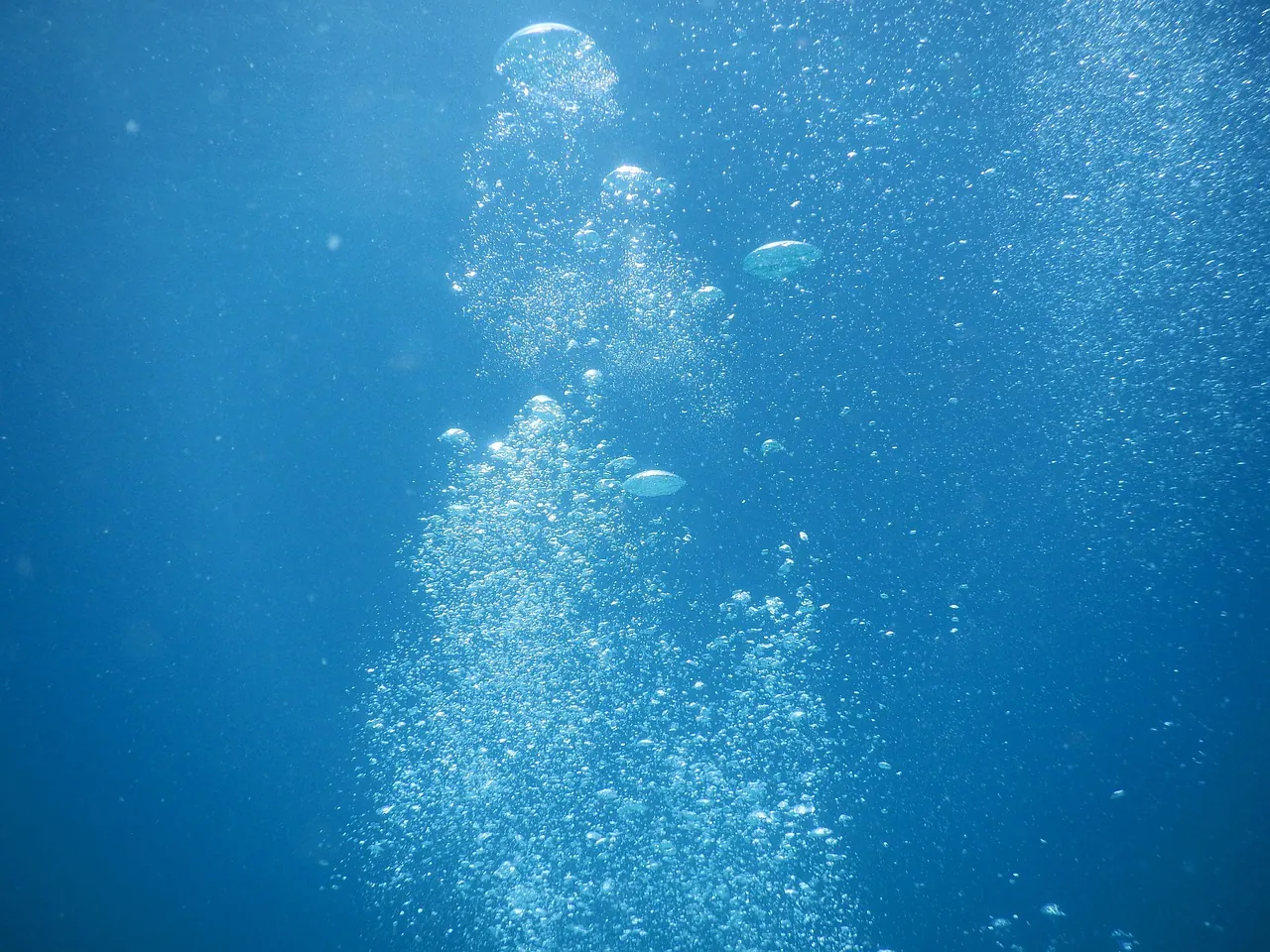
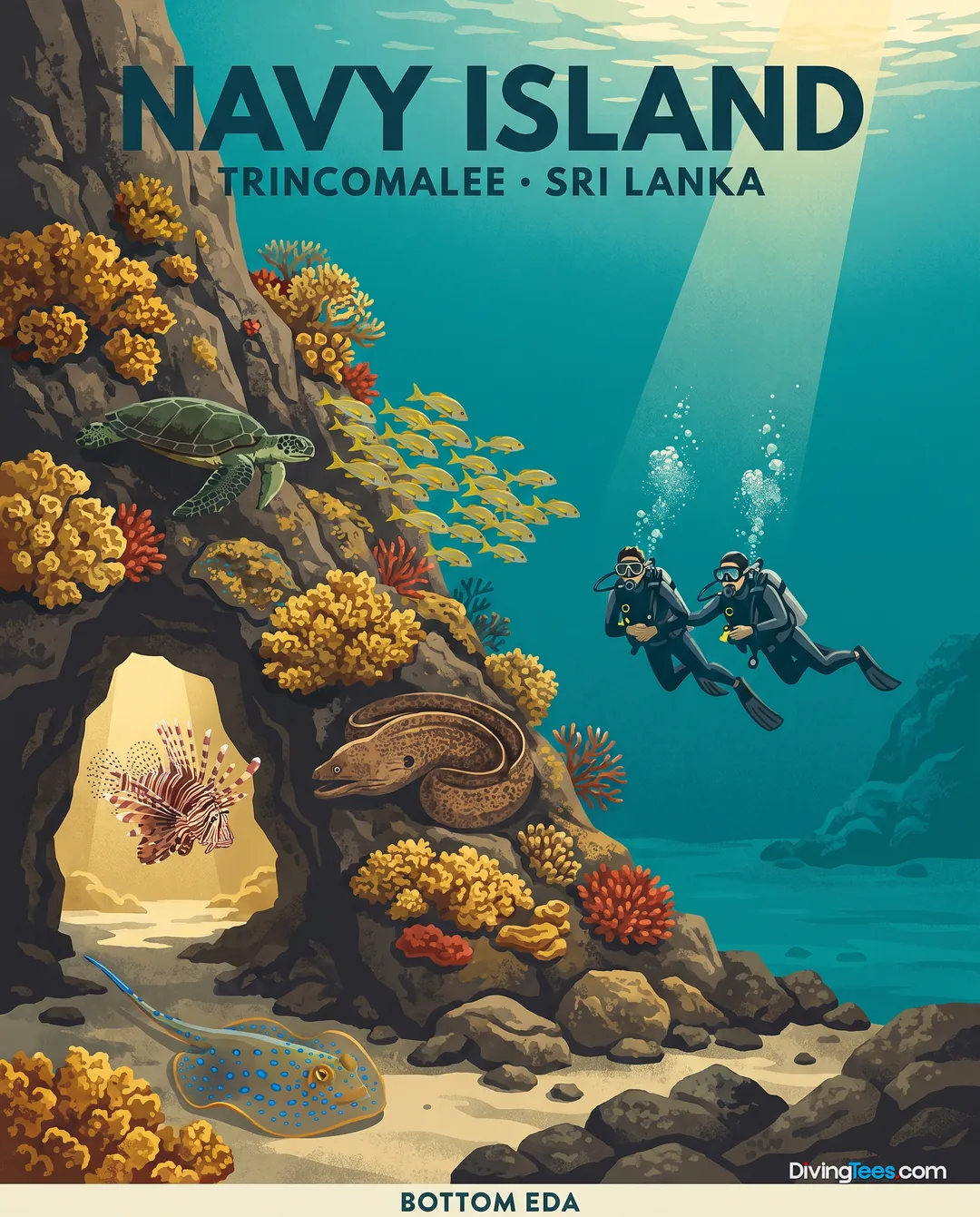
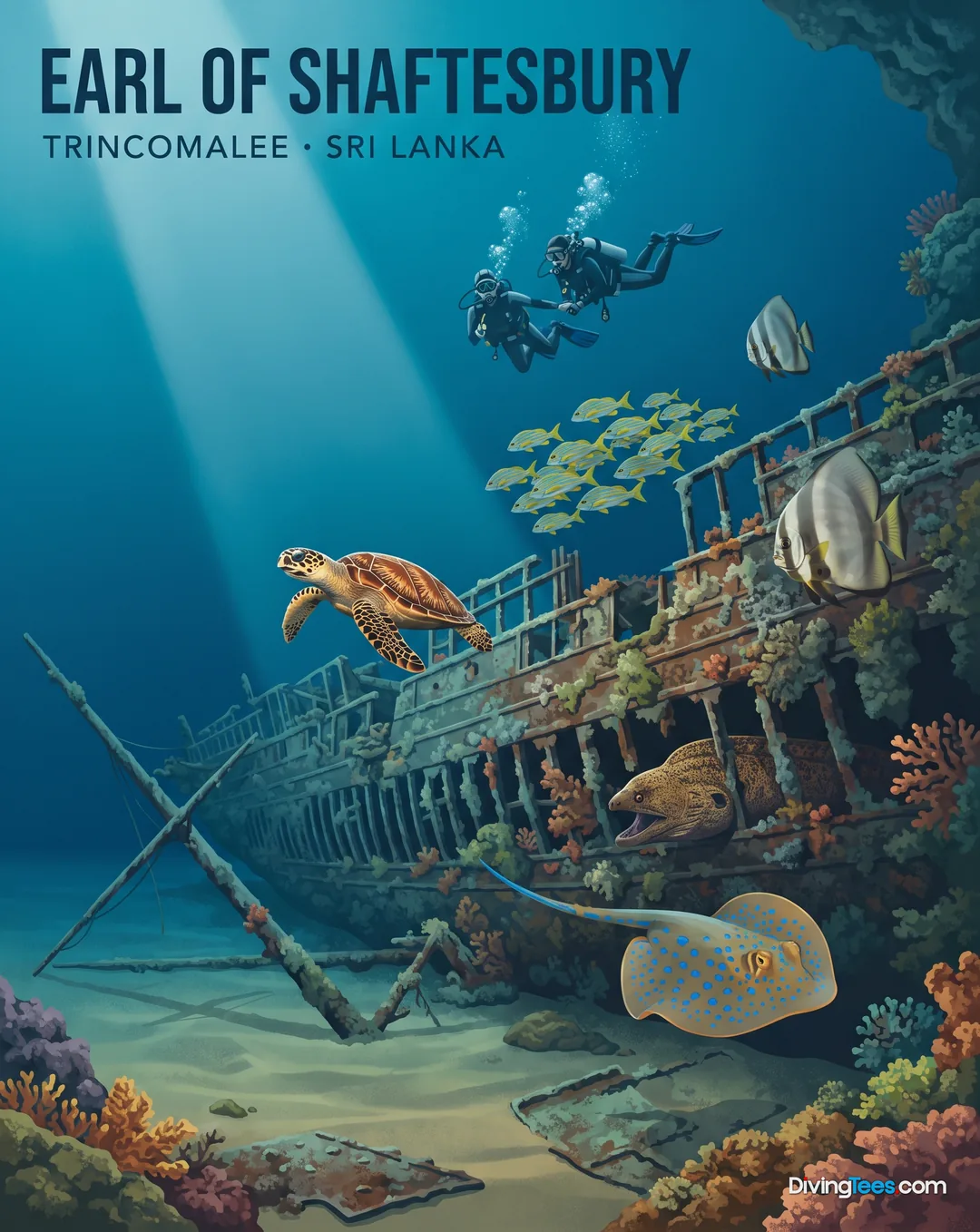
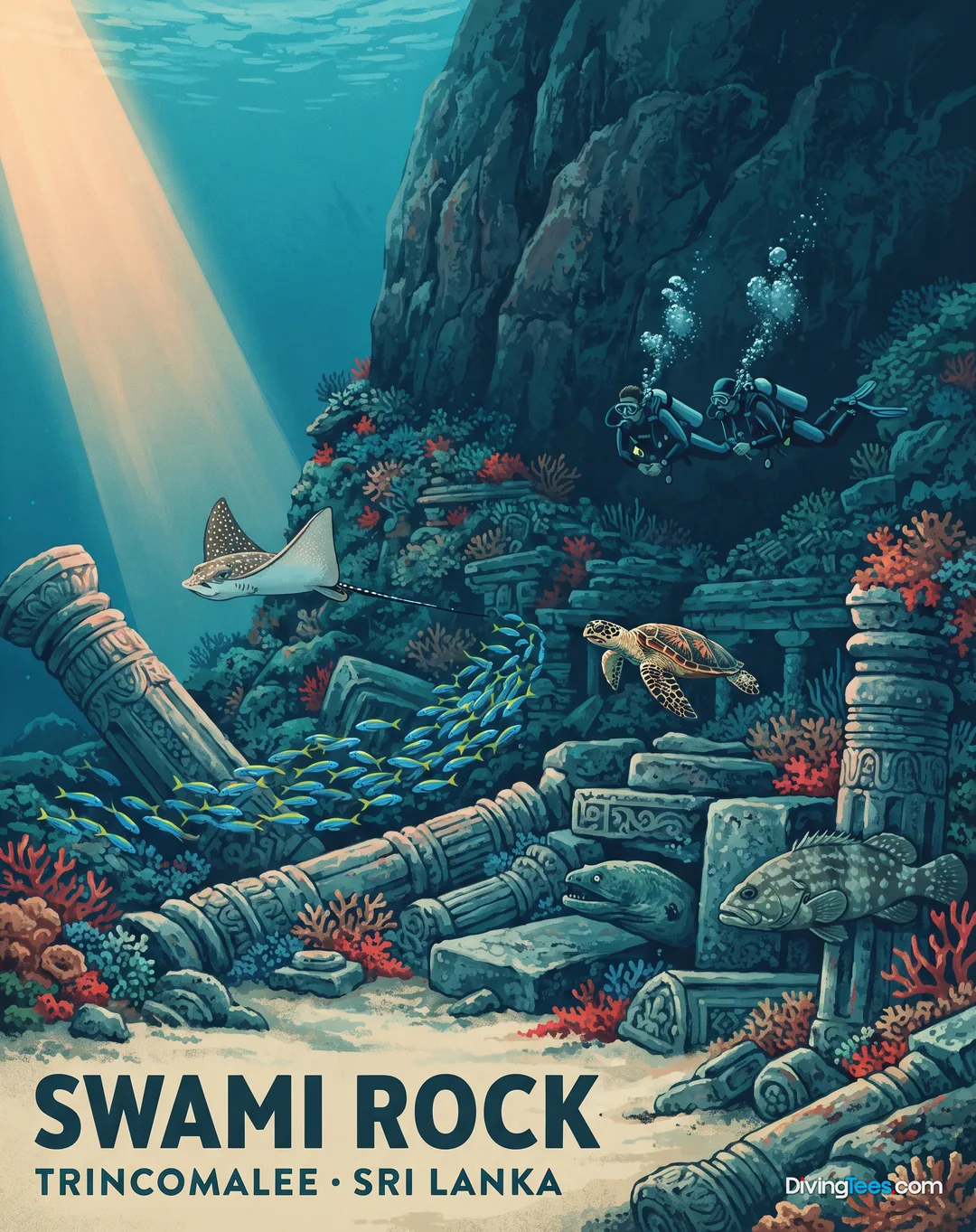
Navy Island brings coral formations, igloo-like caves and schools of reef fish into a shallow dive reaching 12 metres. Around Trincomalee, the diving is arranged as a land-based coastal stay, with boat trips to nearby reefs and islands rather than a liveaboard itinerary. Swami Rock adds submerged Hindu statues to the underwater scenery, while the Earl of Shaftesbury provides a quiet 14-metre wreck dive. Pigeon Island National Park brings a more carefully managed setting, with beaches and the bay keeping non-divers occupied.
The underwater character changes between shallow coral scenery, rocky reef and historical features. Navy Island is the straightforward, shallow option: coral formations, cave systems and reef fish occupy water down to 12 metres, with weak to moderate currents. White Rock works in a similar depth bracket, generally between 10 and 15 metres, where rocky surfaces and coral formations provide shelter for stingrays and schooling fish. Swami Rock is more demanding in depth, reaching 35 metres, although its submerged statues are mainly explored between 5 and 24 metres. The Earl of Shaftesbury lies intact on sand at 14 metres, with sections of hull, masts and cabins to investigate. Conditions vary with exposure and season; visibility is generally described as good, but can suffer when the sea becomes unsettled or coastal water is stirred. Most diving is by day boat or from the coast, with sheltered areas useful when the open sites are less comfortable.
Reef fish are a constant part of the scenery, particularly around Navy Island’s coral formations and caves. Moray eels are associated with the island’s reef, while grouper and schooling fish add movement around the rocky sites. White Rock is the place to look more carefully over the bottom for Southern stingray, with different stingray species resting around its coral and rock. Navy Island is also known for turtle encounters, although sightings should be treated as part of the character of the site rather than a timetable. The documented sites do not establish a reliable seasonal calendar for individual species. What is clearer is the seasonal opportunity to dive: the eastern coast is most workable from roughly March to October, with Navy Island and Swami Rock particularly highlighted from May to September. Pigeon Island’s protected status makes careful observation especially important.
The practical window for Trincomalee runs from March to October, when the sea is measured as calmest and the regional diving season is established. Rainfall is lowest from February to September, which supports easier days on the coast. For the most reliable diving programme, May to September is the clearest choice: the eastern side is then favoured while the south-west monsoon affects Sri Lanka’s western coast. October through January is a poor match for a dive-focused visit, as the eastern coast becomes more exposed to less useful seasonal conditions and local dive activity reduces. A five- to seven-day stay leaves room to use the better weather windows rather than committing every day to the sea.
Trincomalee can suit all levels, provided beginners remain with an instructor and start on the more sheltered, shallow sites. Navy Island and the Earl of Shaftesbury are manageable choices for Open Water divers, with depths of 12 and 14 metres respectively. White Rock is also within that general range. Advanced Open Water, or an equivalent BSAC qualification and experience, is useful for deeper planning at Swami Rock, whose maximum depth reaches 35 metres. Current is variable rather than consistently strong, so comfort with changing exposure matters more than chasing a qualification alone.
From London Heathrow, London Gatwick or Manchester, the usual international gateway is Colombo. The onward journey to Trincomalee is then made by road, or by a domestic flight towards the east when a suitable service is operating; the final connection still involves arranging the onward road transfer. There is no single fixed Europe-to-Trincomalee routing to rely on, so the domestic timetable and the road connection need checking when the trip is planned. Once in the destination, the practical base is the coastal strip around Trincomalee, rather than an inland location. Staying along that coastal axis reduces the amount of daily road logistics before boat departures and makes shore access and seaside activities simpler. A taxi or arranged local transfer is the sensible assumption for the arrival and for any movement beyond walking distance.
Build the itinerary around the eastern-coast season, rather than treating Trincomalee as a year-round Sri Lankan alternative. Put the first dives early in the stay and leave spare days: a weather change can reduce both sea conditions and the availability of departures. When the exposed sites are calm, use that window for them; if swell rises, sheltered bays and protected sectors are the practical fallback. Pigeon Island is a managed national park, not an unrestricted reef stop. Allow for regulated entry, a permit and a park fee, and follow the no-touching, no-collecting and no-disturbance rules. Keep expectations realistic at the end of the year, when conditions do not match the main eastern-coast season. Staying on the coastal axis also avoids turning each diving day into unnecessary inland transport. For a first visit, the useful sequence is to secure the better sea window first, then fit in Navy Island, White Rock or the Earl of Shaftesbury according to exposure and depth, with Swami Rock reserved for suitable experience and conditions.
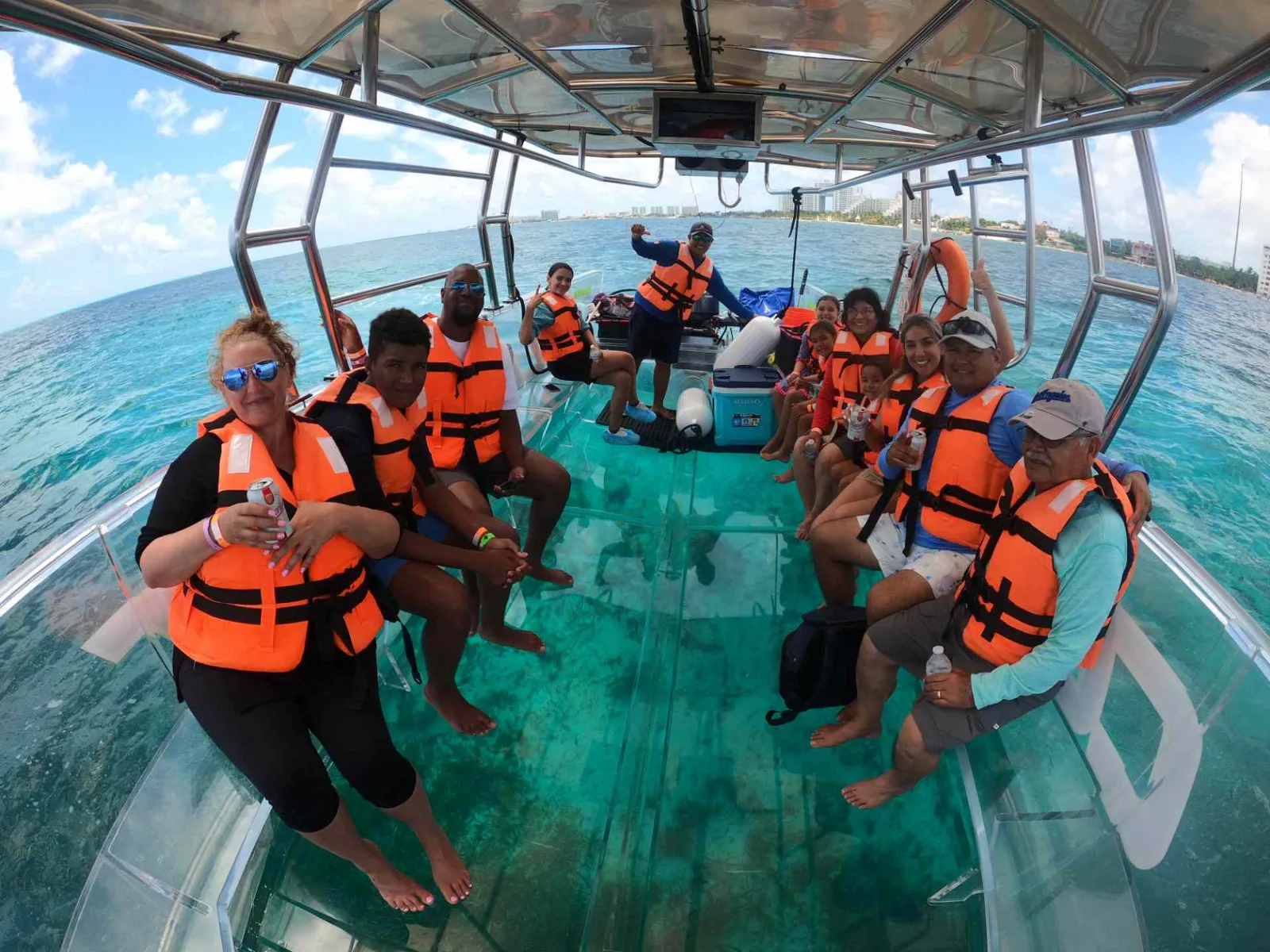
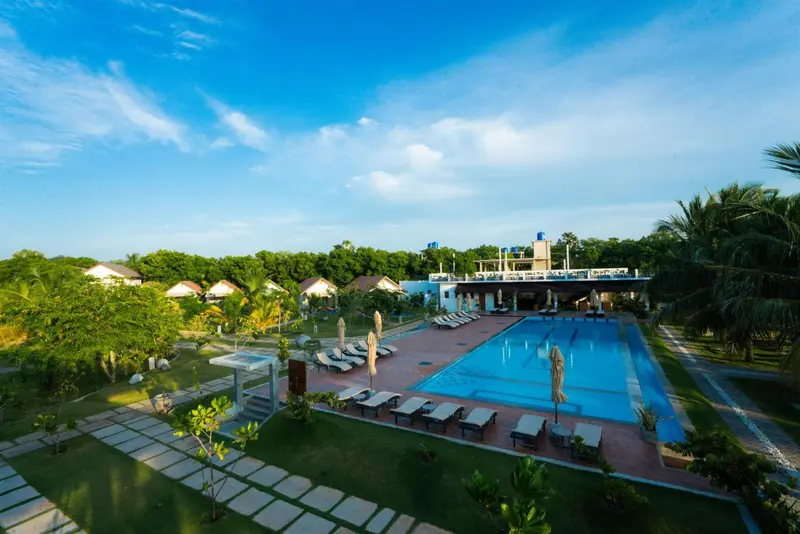
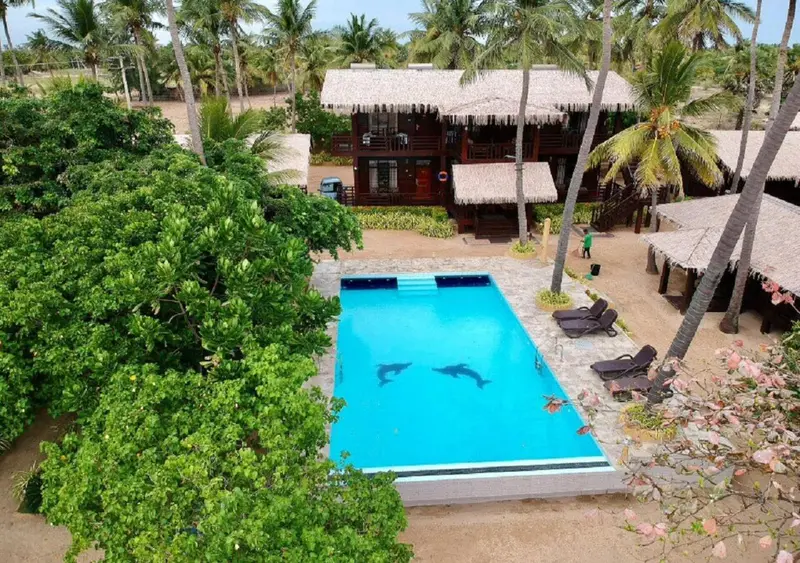
Trincomalee works best as a five- to seven-day stay on land. Several day boats can be combined with shallow coastal dives, while Pigeon Island gives the trip a distinct protected-site outing. A non-diving companion has beaches, swimming, the bay and light coastal visits available on non-diving days. Keeping one day flexible before flying home is sensible, both for weather and for an easier end to a schedule shaped by the seasonal sea. The destination is better suited to a relaxed run of diving days than to a tightly packed expedition.
Hello, I'm Marina, DivingDeal.com's AI assistant. I guide you through destinations, areas and countries.
Thinking about the whole trip and the flights? Talk it over with Edith →
Marina is an AI. Some links are affiliate links: DivingDeal may earn a commission, at no extra cost to you. Bookings are made with the partner.
Your last day stays dry: no diving in the 18-24 hours before a flight, the perfect window to see the destination from another angle.
 Nature
⏱ 8 h · ★ 5.0 (3 reviews)
from £61$81€73
see on Viator ↗
 Culture
⏱ 7 h · ★ 5.0 (1 reviews)
from £53$71€64
see on Viator ↗
 Culture
⏱ 13 h
from £26$35€31
see on Viator ↗
Ratings and reviews collected by Viator and Tripadvisor.
Trincomalee’s eastern-coast diving season runs from March through October, with May through September highlighted for Navy Island and Swami Rock. Rainfall is lowest from February to September. October through January is a poor match for a dive-focused visit, as eastern conditions become less useful and local dive activity reduces.
Trincomalee can suit divers of all levels when beginners stay with an instructor and start on sheltered, shallow sites. Navy Island, the Earl of Shaftesbury and White Rock suit Open Water divers. Advanced Open Water, or equivalent experience, is useful for deeper planning at Swami Rock, which reaches 35 metres.
Trincomalee offers coral formations, igloo-like caves and reef fish around Navy Island, including moray eels and possible turtles. White Rock has rocky coral formations, schooling fish and Southern stingrays. Swami Rock features submerged Hindu statues, while the intact Earl of Shaftesbury rests at 14 metres with hull, masts and cabins.
Plan Trincomalee as a land-based coastal stay of five to seven days, using day boats and coastal dives rather than a liveaboard. Stay along the coastal strip to simplify departures and shore access, build in spare weather days, and allow regulated entry, a permit and a park fee for Pigeon Island National Park.