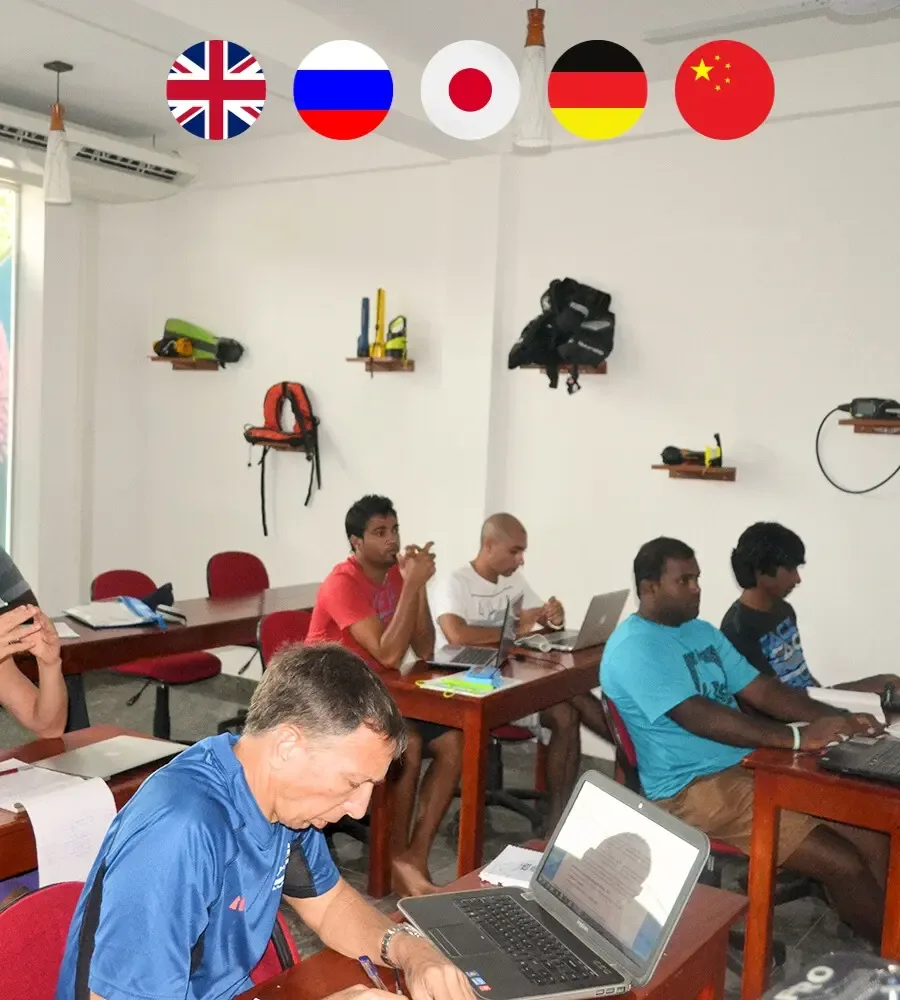

Poseidon Diving Station, Ltd.
Google 4.6/5 (510 reviews)
Sri Lanka · Indian Ocean
Shallow coral gardens, the wrecks Conch and Earl of Shaftesbury, turtles and offshore visibility reaching 25 metres define Hikkaduwa’s seasonal diving.
For subtitles in English: start the video firstthen click the gearat the top right of the video, select “Subtitles/CC”, then “Auto-translate” and choose “English”.
Hikkaduwa is a beach-based Sri Lankan destination where a morning can mean coral gardens in the Hikkaduwa Coral Sanctuary and a boat trip can lead to the Conch or Earl of Shaftesbury wrecks. The coastal diving is shallow enough for beginners when the sea is settled, while deeper wrecks and changing currents give experienced divers more to work with. It is a practical place for a week or more, with diving balanced by beaches, snorkeling, Galle and ordinary life along the coast.
Underwater, Hikkaduwa moves from shallow coastal coral gardens and rocky reliefs to boat dives on the Conch and Earl of Shaftesbury. The sanctuary is the easy-going end of the range, particularly for newly qualified divers, while the wrecks and deeper sections call for better buoyancy control and more comfort in open water. Currents are variable and can be moderate, so a drift dive is possible rather than guaranteed. Visibility commonly falls between 10 and 25 metres, with the clearer water generally found offshore. After rain, swell or a period of monsoon weather, the coastal reef can look markedly less inviting than the wrecks. Most diving is organised as day outings from the shore, leaving room for a safety stop, a surface interval and a return to town rather than life aboard a boat.
Turtles are the encounter many visitors have in mind, and they are generally seen more consistently on scuba than from the surface. Around the coral gardens, expect reef fish among the shallow structure, with rays, barracudas and occasional sharks adding interest to the wider sites. These are encounters, not a timetable, and Hikkaduwa does not offer a dependable wildlife calendar to plan a trip around. The useful distinction is between the coastal sanctuary and the offshore wrecks: the latter usually benefit from better visibility when the sea has settled, while the shore reef is more exposed to swell and land run-off. Snorkeling can work in calm conditions, but it should not be treated as a reliable substitute for the underwater view.
Plan Hikkaduwa for November through April, after the south-west monsoon has eased. December to March usually offers the better visibility, while the sea is more likely to support boat trips to the Conch and Earl of Shaftesbury. From May to October, swell, rougher water and rain can bring sediment from the land, reducing visibility on the coastal reef and sometimes stopping wreck outings altogether. The rainy season is therefore not simply a quieter alternative. It can remove the very offshore diving that makes Hikkaduwa more than a beach and snorkeling stop.
Hikkaduwa works for certified beginners on shallow reef dives when sea and visibility are favourable. PADI, SSI and BSAC divers with comparable experience can use the sanctuary and coral gardens to settle in, while the wrecks and deeper sites suit those with stronger buoyancy skills and more open-water confidence. Advanced Open Water is useful for the deeper diving and some wreck outings. Variable currents mean that a calm introductory reef dive should not be taken as preparation for every boat site.
From London Heathrow, London Gatwick or Manchester, allow roughly a day for the journey from Britain to Sri Lanka, before the final overland leg. Hikkaduwa is reached from Colombo by road transfer or the coastal train, with traffic and the chosen connection affecting the journey time. No ferry or domestic flight is needed to reach the resort. Once there, the central part of this compact beach town is walkable, including some accommodation and diving bases. For places farther along the coast, a tuk-tuk or taxi is the usual answer. Build in connection time rather than fixing a tight arrival plan, particularly if a road transfer follows an international flight.
Keep several spare days in the itinerary. A spell of south-west monsoon swell can cancel a boat trip, and it is unwise to place the last dive immediately before a flight or onward connection. Ask what has been running after the latest rough weather, rather than assuming that a return to sunshine means the wrecks are accessible. Do not judge Hikkaduwa solely by a cloudy coastal reef: offshore visibility can recover sooner once the sea has settled. Early departures may help avoid the busiest period on the better-known reef sites. If turtles are a priority, dive rather than relying on surface snorkeling, but treat every sighting as luck rather than a promise. Divers using an unusual configuration should bring their own small specialist items, as local availability may be limited.
A seven- to ten-day stay gives Hikkaduwa enough breathing space for several diving days, weather delays and time out of the water. Stay near the central strip if walking between accommodation and the diving base matters; elsewhere, allow for short tuk-tuk or taxi journeys. Non-diving days can combine the beach, calm-water snorkeling, local markets or a trip to Galle Fort. Keep the final day free of immersion before flying, rather than trying to use every available morning.
Hello, I'm Marina, DivingDeal.com's AI assistant. I guide you through destinations, areas and countries.
Thinking about the whole trip and the flights? Talk it over with Edith →
Marina is an AI. Some links are affiliate links: DivingDeal may earn a commission, at no extra cost to you. Bookings are made with the partner.
Plan Hikkaduwa between November and April, after the south-west monsoon has eased. December to March usually brings clearer visibility and better conditions for boat trips to the Conch and Earl of Shaftesbury. From May to October, swell, rain and land run-off can reduce coastal visibility and stop wreck outings.
Hikkaduwa suits certified beginners for shallow sanctuary and coral-garden dives when the sea is settled. Wrecks and deeper sites require stronger buoyancy control and greater open-water confidence. Advanced Open Water is useful for deeper diving and some wreck outings, while variable currents mean not every boat site suits an introductory diver.
Hikkaduwa offers shallow coral gardens, rocky reliefs and offshore wrecks including the Conch and Earl of Shaftesbury. Turtles are generally seen more consistently on scuba than from the surface. Reef fish occupy the coral structure, while rays, barracudas and occasional sharks may appear around wider sites. Visibility can reach offshore.
Allow a week or more, with several spare days for weather delays and time away from diving. Most outings return to shore, leaving room for beaches, snorkeling, markets or Galle Fort. Stay near the central strip for walkable access to bases, keep the final day free of immersion, and allow extra connection time.